
Ecological Impact and Recycling of Shipping Containers in Modern Architecture
Ecological impact and recycling of shipping containers in modern architecture is a dynamically developing multidisciplinary field focused on the reuse (upcycling) of decommissioned steel shipping containers as building modules. This approach is known as cargotecture and responds to fundamental environmental challenges associated with the global maritime industry and the unsustainability of traditional construction methods.
Key aspects of the introduction:
- Waste transformation: Millions of containers end up unused in world ports after their logistics cycle. Instead of demanding recycling or long-term storage, they become the foundation for eco-friendly construction in modern architecture.
- Environmental benefits: Reusing containers reduces primary raw material consumption, minimizes construction waste, and significantly reduces carbon footprint.
- Economic and design advantages: Containers enable fast, flexible, and affordable construction with unique industrial aesthetics.
- Global phenomenon: Cargotecture influences modern lifestyle and construction on all continents and is considered one of the pillars of sustainable architecture.
Key Terms and Definitions
Shipping Container
Definition and basic information:
- Standardization: A shipping container is a solid steel box manufactured according to international standard ISO 668 (most commonly 20′ and 40′ length).
- Material: Use of Corten steel (weathering steel), which through its patina reduces maintenance needs and extends service life.
- Construction: Self-supporting, designed for stacking up to 9 units, resistant to twisting, vibrations, and extreme humidity.
Technical parameters:
| Parameter | 20′ Container | 40′ Container | High Cube (40′ HC) |
|---|---|---|---|
| Outer length | 6.06 m | 12.19 m | 12.19 m |
| Outer width | 2.44 m | 2.44 m | 2.44 m |
| Outer height | 2.59 m | 2.59 m | 2.89 m |
| Frame material | Corten steel | Corten steel | Corten steel |
| Average load capacity | 28,200 kg | 26,700 kg | 26,700 kg |
| Empty weight | 2,200–2,400 kg | 3,700–4,200 kg | 3,900–4,300 kg |
Service life and usage cycle:
- Maritime service life: Average of 10–15 years in intensive transport.
- Total service life: With proper maintenance, up to 25–30 years, often longer.
- End of service life: After decommissioning from maritime transport, the container remains suitable for construction purposes, storage, and other applications due to its robustness.
Container types:
- Standard (Dry Van): Most commonly used, suitable for most construction applications.
- High Cube (HC): Higher variant, ideal for residential spaces.
- Reefer: Refrigerated containers, also suitable for special architectural purposes.
- Open Top, Flat Rack: Special variants allowing greater design variability.
Cargotecture / Container Construction
Definition and main principles:
- Cargotecture: An architectural direction that uses shipping containers as the basic building block.
- Modularity: Containers can be stacked, layered, cut, and connected into diverse configurations.
- Prefabrication: Most modifications occur off-site, reducing construction time and improving quality.
- Portability: Projects can be designed as demountable and mobile, which is advantageous for pop-up structures, temporary offices, and emergency housing.
Advantages over traditional construction:
| Property | Cargotecture (container construction) | Traditional construction |
|---|---|---|
| Construction speed | 30–70% faster | Longer process |
| Material savings | High (recycling, upcycling) | High raw material consumption |
| Flexibility | High, easy expandability | Limited |
| Ecological footprint | Lower embodied energy | Higher embodied energy |
| Design | Industrial, modular | Practically unlimited |
Ecological Impact (Containers Environmental Impact)

Positive environmental effects
- Upcycling instead of recycling: Each repurposed 40′ container saves approximately 3,500–4,000 kg of steel. Melting and recycling a single container would require approximately 8,000 kWh of energy.
- Reduction of construction waste: The “rough construction” is already complete, significantly reducing waste on the construction site.
- Long service life: Corten steel containers last up to 30 years with minimal maintenance and without significant degradation.
- Recyclability: Steel can be recycled at the end of its service life with virtually no loss of quality.
- Reduced carbon footprint: Energy-intensive production of new building materials is eliminated, repurposing significantly reduces embodied energy.
Negative environmental impacts and challenges
- Emissions from transport: Container transport (especially empty containers) is a source of CO2, NOx, and SOx emissions. The GHG footprint of transport is significant, especially during repositioning of empty units.
- Chemical contamination: Older containers often have floors impregnated with pesticides (e.g., arsenic, chromium, copper), coatings may contain lead. When used for construction, professional decontamination and floor replacement are necessary.
- Energy intensity of modifications: Sandblasting, cutting, and welding are energy and material-intensive processes.
- Problem of empty containers: Uneven distribution of global trade leads to accumulation of empty containers in some ports, resulting in further unnecessary movement and environmental burden.
Sustainable solutions and new technologies
- Green shipping: Use of low-emission vessels, route optimization, and logistics digitalization reduce the environmental footprint of container transport.
- Circular economy: Creating systems for systematic repurposing and recycling of containers at the end of their service life.
- Local use: Minimizing transport distances in container construction applications.
Sustainability and Energy Efficiency
Insulation challenges and solutions
- Thermal properties: Steel is an excellent heat conductor, so quality insulation is absolutely essential for comfort and energy efficiency.
- External insulation: Interrupts thermal bridges, protects the structure, but changes external appearance.
- Internal insulation: Preserves appearance but reduces interior volume.
- Insulation materials: Most commonly sprayed polyurethane foam (SPF), PIR/EPS panels, ecological insulation (cellulose, sheep’s wool).
Integration of green technologies
- Solar panels: Flat roof ideal for photovoltaics.
- Green roofs: Improve insulation, support water retention and biodiversity.
- Rainwater systems: For garden or utility use.
- Passive design: Orientation, shading, natural ventilation to minimize operational energy.
Energy efficiency
- A properly designed and executed container house can achieve low-energy standards (e.g., passive house).
Applications in Modern Architecture
Overview of uses
| Type of application | Description | Advantages |
|---|---|---|
| Residential homes | From tiny houses to multi-story villas | Speed, affordability, ecology |
| Offices and studios | Mobile, garden, administrative spaces | Flexibility, relocation option |
| Commercial buildings | Pop-up shops, cafes, restaurants, markets (e.g., Boxpark) | Unique design, fast construction |
| Public buildings | Kindergartens, community centers, libraries | Fast implementation, expansion option |
| Emergency and temporary housing | Humanitarian projects, post-disaster accommodation | Immediate availability, modularity |
| Storage solutions | Basic use, still very popular | Durability, security, variability |
Real examples:
- Boxpark London: Europe’s first pop-up shopping center made from containers.
- Urban Rigger (Copenhagen): Floating student housing made from recycled 20′ containers.
- Cité A Docks (Le Havre): University dormitories made from containers with emphasis on acoustics and thermal comfort.
Comparison with traditional construction
| Aspect | Container construction | Traditional construction |
|---|---|---|
| Speed | Weeks to months | Months to years |
| Costs | Lower (material/labor) | Higher (material/labor) |
| Waste | Minimal | Significant construction waste |
| Flexibility | High, modular | Limited, changes expensive |
| Sustainability | Upcycling, recycling | High raw material consumption |
| Design | Industrial, modular | Unlimited shapes, traditional |
| Challenges | Special modifications | Standardized procedures |
Conclusion
Ecological impact and recycling of shipping containers in modern architecture represents an innovative and genuinely sustainable way to reduce the environmental burden of construction, efficiently utilize the global surplus of containers, and offer fast, flexible, and economical solutions for housing, commerce, and the public sector. However, the key is responsible design, quality insulation, professional remediation, and integration of modern technologies.
Repurposing shipping containers is an exemplary case of circular economy in practice: it saves resources, minimizes waste, reduces carbon footprint, and simultaneously offers inspiring architectural solutions for the future.
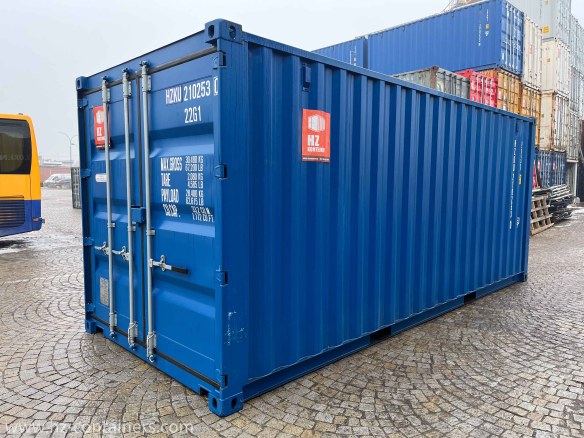
 Czech Republic, Vimperk
  FREE SHIPPING
Other container news...

The OPNBar leverage tool
The OPNBar leverage tool is a professional-grade, multi-purpose hand tool designed specifically for the shipping container and trucking industry. Manufactured by Shipping Container Safety International (SCS International) and proudly Made in the USA, the OPNBar is fundamentally a 3-in-1 trucker tool that combines a shipping container door leverage bar, a tire thumper, and a 5th wheel pull hook into a single, compact steel implement. The name “OPNBar” is a direct reference to its primary function: it is the bar that “opens” containers.

40 Foot Container Dimensions
If you have ever booked ocean freight, planned a warehouse layout, or designed a modular building project, you have asked the same question: what are the exact 40 foot container dimensions — and what do they mean for what you can actually load? The numbers are standardized worldwide, but the practical implications of those numbers are surprisingly nuanced. A 40-foot container is not simply 40 feet of usable space, and its weight limits are not what most people assume. This guide covers every measurement, every weight rating, and every loading consideration you need to make informed decisions about the world’s most common shipping container.
Quick Answer: A standard ISO 40-foot shipping container measures 12.19 m (40 ft) long × 2.44 m (8 ft) wide × 2.59 m (8 ft 6 in) high externally and provides approximately 67.7 m³ (2,390 ft³) of usable internal volume. The maximum gross weight is 30,480 kg (67,200 lbs), with a typical payload capacity of approximately 26,700–26,800 kg (58,900–59,000 lbs).
Shipping container wheels
Moving a 12-meter-long steel box that weighs up to 67,200 pounds was, for decades, exclusively a job for a crane and a licensed operator. That reality has changed. Shipping container wheels — an umbrella term covering a family of mobility solutions — now let a single person reposition a 20ft or 40ft container across a yard, warehouse, or construction site without calling in heavy equipment. This guide covers every aspect of container wheel systems: what they are, how they work, the types available, what they cost, and how to choose the right kit for your container.
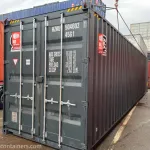
Can You Modify a 40ft High Cube Container?
The short answer is yes — you absolutely can modify a 40ft high cube container, and it is one of the most popular container types for modification projects worldwide. But the real question is not whether you can modify one; it is how to do it correctly, safely, legally, and within budget. This guide answers every dimension of that question, drawing on engineering principles, real-world pricing data, and the collective experience of thousands of modified container projects.
Key Takeaway: A 40ft high cube container offers 320 square feet of floor space with an extra foot of ceiling height compared to a standard container — making it the ideal canvas for offices, workshops, homes, retail spaces, and industrial applications. The extra height is particularly valuable when you add insulation and still want comfortable headroom.