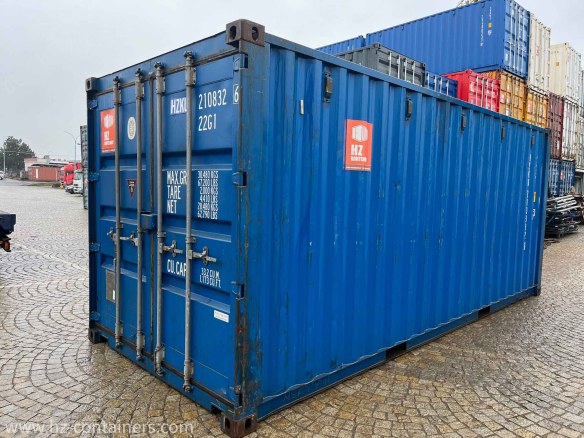
Tolerance of Deformation of Shipping Containers
What is Tolerance of Deformation of Shipping Containers?
Tolerance of deformation of shipping containers represents a set of strictly established limits that determine the maximum permissible deviations, deformations, and damage to structural and secondary parts of containers. These limits are precisely defined in international standards, particularly ISO 1496-1, which are legally binding within the International Convention for Safe Containers (CSC). The aim is to ensure that the container remains safe, operational, and compatible with the global transport system even with minor damage that may occur during normal operation.
Key points of tolerance of deformation:
- Established in millimeters, degrees, or specific physical values.
- Apply to all key components: corner fittings, posts, beams, floors, doors, walls, roof.
- Deformation beyond limits means the need for repair or retirement from service of the container.
- Regularly inspected by certified inspectors as part of periodic inspections according to CSC.
Why is tolerance of deformations key?
- Safety: Prevention of collapse, cargo loss, damage to transport vehicles, and crew endangerment.
- Standardization: Ensuring compatibility with handling equipment and transport systems worldwide.
- Cargo Protection: Maintaining water-tightness, protection against weather, theft, and damage.
- Logistics Efficiency: Automated handling requires precise dimensions – any major deformation means risk of blockage or delay.
- Legal Compliance: Every container in international transport must have a valid CSC Safety Approval Plate and meet all technical requirements of standards.
Key Terms and Definitions Related to Tolerance of Deformation
Primary Structural Components
| Component | Description | Maximum tolerance of deformation (ISO 1496-1, CSC) | Special notes |
|---|---|---|---|
| Corner Fittings | Steel castings at eight corners, used for handling, stacking, securing twist-locks. | No cracks, deformations, or damage to holes that would prevent handling. | Critical for safety and stackability! |
| Corner Posts | Four vertical beams connecting upper and lower corner fittings, bearing the weight of the stack. | Denting max. 20 mm, deflection max. +5 mm front, +10 mm side, no cracks or breaks. | Exceeding limit = immediate repair or decommissioning! |
| Side Rails | Upper and lower horizontal beams along the entire length of the container. | Bottom: deformation max. 50 mm; Top: max. 30 mm; all cracks affecting the profile radius must be repaired. | Damage means risk to stability and load capacity. |
| Cross Members | Load-bearing structure under the floor. | Deflection max. 75 mm; upward deflection max. 50 mm; must not be below the level of lower corners. Separation from floor max. 10 mm. | Common problem in older containers – monitor corrosion! |
| Headers & Sills | Door frame and front wall frame. | Upper beam: max. 40 mm; lower sill: max. 50 mm. No holes, cracks, or breaks. | Deformation may prevent door closure. |
Secondary and Non-Structural Components
| Component | Description | Maximum tolerance of deformation | Note |
|---|---|---|---|
| Walls and roof panels | Profiled sheets (usually COR-TEN), forming the container envelope. | Denting inward: max. 50 mm width, 70 mm height; denting outward: max. 40 mm (must not exceed the plane of corners). Holes and cracks must be repaired. | Extensive denting reduces volume and load capacity. |
| Floor | Usually laminated plywood, attached to cross members. | Holes except from nails, grooves deeper than 15 mm, grooves deeper than 6 mm and wider than 150 mm – require repair. Height difference between boards max. 10 mm. | Floor damage = risk of injury, cargo loss. |
| Doors and locking mechanism | Two-part doors with locks and sealing. | Doors must open/close without resistance, sealing must be intact. Any deformation threatening function is unacceptable. | Non-sealing doors = cargo devaluation! |
International Standards and Certification
ISO Standards
- ISO 1496-1: Defines construction and strength requirements, precise tests, and deformation limits for general cargo containers.
- Rigidity test: Transverse rigidity – change in diagonal lengths of front frame max. 60 mm; longitudinal rigidity – deflection of upper part max. 25 mm.
- Floor strength test: Under load of 1.8 times maximum weight, no part of the floor must drop more than 6 mm below the level of lower corners.
- ISO 668: Establishes dimensions and maximum weights, tolerance of external length, width, height (for example, a 20-foot container has a length of 6058 mm with tolerance -10 mm / 0 mm).
- ISO 1161: Specifies requirements for corner fittings.

CSC – Convention for Safe Containers
- Every container must be certified and marked with a CSC plate, which confirms that the unit meets all safety requirements and deformation limits.
- Regular inspections (at least every 30 months) verify that deformation limits according to ISO standards have not been exceeded.
- Exceeding limits leads to immediate retirement from service or repair of the container; a container without a valid CSC must not be used in international transport.
Process of Inspection and Assessment of Deformations
Inspection procedure
- Visual inspection of geometry: Check whether the container is twisted, bent, or tilted.
- Detailed examination of key components: Focus on cracks, dents, corrosion, leaks, door and lock functionality.
- Measurement of dimensions and deformations: Calibrated instruments verify dimensions against ISO 668 and 1496-1 limits.
- Light-tightness test: Detection of light penetration into the interior signals possible leaks in walls or roof.
- Classification of damage:
- Acceptable damage: Minor dents, surface corrosion, scratches – within tolerance.
- Unacceptable damage: Cracks in load-bearing elements, deformations exceeding limits, holes in shell, non-functional doors.
Typical tolerances for various containers
- Tank containers: Emphasis on tank integrity, frame deformation must not stress the tank.
- Refrigerated containers: Insulation layer and cooling equipment function must not be compromised by any deformation.
- Open-top and Flat Rack containers: Key is floor strength and end wall strength.
Most common causes of exceeding tolerance of deformation
- Improper stacking (e.g., outside corner fittings).
- Impact from handling equipment (crane, forklift).
- Overloading with cargo/exceeding maximum permitted weight.
- Repeated exposure to extreme weather conditions.
- Improper repairs and modifications.
Practical examples from practice
- Container with dented corner post (25 mm) is immediately retired from service and must be repaired.
- Doors that cannot be safely closed due to frame deformation mean a failed inspection.
- Crack in cross member under floor = prohibition of use until repair.
Tolerance of deformation of shipping containers is one of the pillars of safe and efficient global logistics. Compliance with these tolerances is required by law (according to CSC and ISO), is regularly inspected, and has a direct impact on the safety of people, goods, and the smooth operation of transport chains. All operators, owners, and users of containers are recommended to regularly perform detailed inspections according to ISO and CSC standards, archive inspection reports, and in case of doubt always consult an authorized inspector.
 Czech Republic, Český Krumlov
  FREE SHIPPING