
What is the stacking strength of ISO containers?
Understanding ISO Container Stacking Strength
Stacking strength of ISO containers refers to the maximum load or weight that a certified ISO container can safely bear when stacking in a vertical direction. This strength is critical in the transport, logistics and storage industries, where containers are often stacked several levels high on ships, storage areas or during intermodal transport.
Container stacking strength is governed by international standards, such as ISO 1496-1 and ISO 668, which establish the load capacity of container corner posts – the main structural elements ensuring stability during stacking.
Key Components of Stacking Strength
1. Corner Posts
Four vertical posts at the corners of the container are designed to bear vertical loads during stacking. The strength and structural integrity of these corner posts directly determines what weight the container can safely bear from above.
2. Maximum Overstacked Load
This parameter refers to the total weight that can be safely placed on a container during stacking. For standard ISO containers:
- 20-foot or 40-foot containers typically have stacking strength of 192 metric tons.
- This strength assumes a dynamic force corresponding to 1.8 times the maximum gross weight (MGW) of the container, as specified in ISO 1496-1 standard.
3. Load Distribution
Proper load distribution is critical during stacking. Uneven weight distribution inside the container can compromise structural integrity and lead to instability. Heavier cargo must be placed at the bottom and lighter cargo at the top to maintain balance.
4. ISO Standards
ISO standards that determine stacking strength include:
- ISO 668: Governs the classification, dimensions and maximum gross weight of containers.
- ISO 1496-1: Specifies construction requirements, including stacking strength and load distribution.
Factors Affecting Stacking Strength
1. Container Dimensions
Standard ISO containers are manufactured in sizes such as 20 feet, 40 feet and 45 feet. Stacking strength is generally consistent across these sizes, but actual strength depends on the construction of corner posts and construction quality.
2. Maximum Gross Weight (MGW)
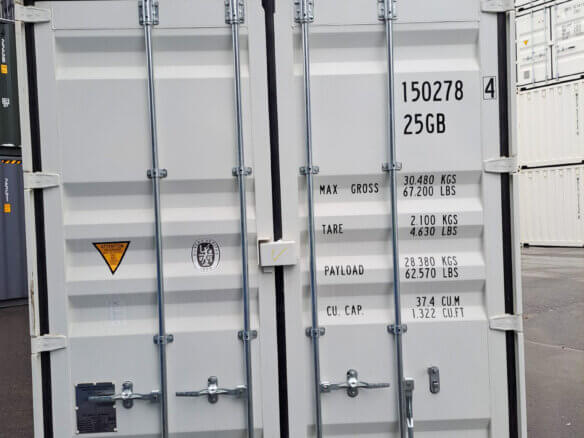
MGW is the total weight of the container including its contents. For most standard containers, MGW is 36,000 kg (79,370 pounds). Stacking strength calculations take this maximum weight into account to ensure safety.
3. Environmental Conditions
- Wind Load: Strong winds can destabilize container stacks, especially in ports or storage areas.
- Dynamic Forces: Containers on ships experience dynamic forces caused by wave motion, which increases the load on corner posts and fastening mechanisms.
4. Fastening Mechanisms
To ensure stability during stacking, containers are secured using:
- Twist Locks: Secure containers at their corner fittings against lateral movement.
- Lashing Rods and Tensioners: Secure containers on ships or in warehouses.
- Stacking Cones: Provide additional stability by aligning containers and preventing shifting.

Testing Stacking Strength
Containers certified to ISO standards undergo rigorous testing to meet stacking strength requirements. Key tests include:
- Application of vertical load to corner posts.
- Simulation of real conditions, such as overstacked weight of 1.8 times MGW.
For example, a standard 20-foot container must withstand a load of 192 metric tons during testing.
Real-World Applications and Considerations
1. On Ships
- Containers on container ships are typically stacked up to 9 levels, depending on stacking strength, ship construction and weather conditions.
2. In Storage Areas
- Containers in warehouses are stacked up to 6 levels to ensure safety and easy access.
3. Modular Construction
- Container stacking is also used in modular construction, for example for offices, homes or commercial spaces.
Safety Procedures for Container Stacking
1. Inspection
Before stacking, containers must be checked for structural damage, corrosion or deformation of corner posts and panels.
2. Proper Alignment
Corner posts must be perfectly aligned to ensure stability. Improper alignment can lead to uneven weight distribution and collapse.
3. Securing Containers
The use of tools such as twist locks, lashing rods and stacking cones is essential for stability during transport or storage.
4. Load Distribution
Cargo inside containers must be evenly distributed to prevent shifts that would destabilize the stack.
Common Stacking Mistakes
1. Overloading
Exceeding stacking weight or MGW can lead to structural failure.
2. Ignoring Environmental Conditions
Strong winds can destabilize stacks if containers are not properly secured.
3. Uneven Surface
Stacking on an unstable surface can compromise safety.
4. Improper Stacking
Poor alignment of corner posts increases the risk of collapse.
Container Stacking Equipment
For safe stacking, specialized equipment is used, such as:
- Gantry Cranes: For high-volume stacking in ports.
- Straddle Carriers: Used in large container warehouses.
- Reach Stackers: Efficient for stacking and unloading.
- Forklifts: Versatile and cost-effective for smaller warehouses.

 Czech Republic, Třebíč
  FREE SHIPPING

Other container news...
Corner casting steel vs aluminum
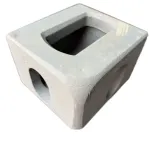
Every shipping container in the world — all 40 million of them — rests on eight critical components. Corner castings are the load-bearing blocks at each corner of an ISO shipping container, and they are the universal interface between the container and every crane, twistlock, spreader, and chassis on the planet. When you lift a container, stack it nine high on a ship, or lock it to a truck trailer, every ton of force flows through these fittings.

Construction cabin – selection, tips, dimensions and prices
Every construction project – whether a family house, a development project or a reconstruction – starts with the infrastructure. No construction manager, craftsman or investor who needs an on-site office, a changing room for workers or a safe storage for tools can do without a quality construction cell. But navigating the offer is not easy: residential containers, sanitary cells, storage modules, rental, purchase, refurbished pieces… This guide will give you answers to all the essential questions in one place.
Storage container
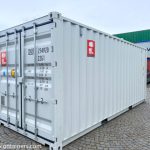
A storage container is a lockable steel box designed for the safe and dry storage of materials, tools, goods or equipment. Originally created as a shipping container for maritime transport, its durability and versatility have found their way onto construction sites, corporate premises and private land.
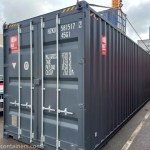
Shipping container 12m (40 ft)
A 12m shipping container is an investment that, if properly selected and cared for, will pay off in decades of trouble-free use. Whether you plan to use it as a warehouse, workshop, garage or the basis for a residential module — the key is careful selection of the condition, a thorough inspection before purchase and high-quality preparation of the base for placement. Take the time to compare offers, check the seller’s references and do not hesitate to personally inspect the container before buying. A properly selected 40-foot container will serve you reliably for many years.