
Do Shipping Containers Catch Fire?
At first glance, the question “Do shipping containers catch fire?” may seem simple. However, the answer is much more complex. The steel box itself, from which the shipping container is made, is completely non-flammable. Nevertheless, container fires and subsequent catastrophic fires on container ships are one of the largest and growing threats to modern global logistics.
A container fire is defined as uncontrolled burning inside a container, usually caused by ignition of the cargo. The steel structure itself does not burn, but functions as an oven – it maintains heat, increases temperature and pressure inside to extreme values and can lead to explosion. These incidents pose enormous risks to the lives of crew members, cause cargo and ship losses worth hundreds of millions of dollars, and have devastating impacts on the environment.
Anatomy of a Shipping Container and Its Fire Resistance
Materials and Construction
| Component | Material | Properties and Fire Risks |
|---|---|---|
| Outer structure | Corten steel | Non-flammable, high thermal conductivity, loses strength in heat, can collapse |
| Floor | Marine plywood, bamboo | Flammable, acts as fuel during fire, supports fire intensity |
| Seals and coatings | Rubber, protective coatings | Flammable, release toxic smoke at high temperatures |
| Insulation (special) | Glass/mineral wool (sometimes) | Non-flammable, slows fire spread in residential containers |
Corten Steel in Shipping Containers
- Corten steel (COR-TEN) is a special alloy with additions of copper, chromium, nickel and phosphorus, which ensures high resistance to atmospheric corrosion.
- It forms the outer shell of almost all ISO containers. It meets ISO standards and CSC (Container Safety Convention).
- When exposed to intense heat, microstructure degradation, loss of strength and possibility of stack collapse occur.
- Advantage: long service life, ecological recyclability, high load capacity.
- Disadvantage: does not burn itself, but conducts heat into the interior – accelerates floor and cargo degradation.
Floors and Internal Elements
- Floors are made of layers of marine plywood (usually 28 mm thick), impregnated with insecticides and against moisture.
- Modern containers also use bamboo plywood.
- These materials are flammable and release toxic gases during fire.
- Floors support fire intensity and duration.
Seals and Coatings
- Rubber seals and protective door coatings are necessary for water-tightness, but degrade quickly during fire and release dense, toxic smoke.
Fire Resistance vs. Non-Flammability
It is essential to distinguish between the concepts:
- Non-flammability: Steel never burns.
- Fire resistance: Container construction often has low fire resistance – it is not designed as a fire protection element, but for strength and tightness.
Typical fire resistance values:
- Standard ISO container (steel + plywood): wall resistance 15–30 minutes depending on type of internal linings (source: Seidl.cz).
- Residential/building containers may have increased resistance (use of drywall, mineral insulation).
Phases of Fire Inside a Container
- Oxygen-limited: Fire quickly consumes oxygen in an enclosed space, which can lead to self-extinguishing (common materials, low moisture).
- Temperature and pressure increase: Storage of reactive materials (chemicals, lithium-ion batteries) leads to rapid temperature and pressure increase.
- Explosion risk: The structure can withstand pressure only up to a certain limit, after which explosive failure, door rupture and scattering of burning contents occurs.
Causes of Container Fires
Statistics and Current Trends
- In 2023, on average one container cargo fire occurred every 9 days (CINS, IIMS 2025).
- In 2024, 576 containers were lost at sea (out of 250 million transported), an increase from 221 in 2023 (MaritimeCyprus, 2025).
- The main cause of fires remains poor declaration of dangerous goods (source: Allianz/Safety4Sea 2024).
Main Causes
Dangerous Goods (Hazardous/Dangerous Goods)
- Transport is governed by the IMDG code (International Maritime Dangerous Goods Code).
- The most common cause of fire is intentional or unintentional misdeclared shipment.
- The shipper declares dangerous goods as ordinary cargo to save on fees and circumvent special procedures.
- Such a container is stored in an unsuitable location on the ship – more difficult intervention, greater risk of spread.
- Improper packing, securing and separation of chemicals and reactive materials leads to leakage, spontaneous ignition and exothermic reactions.
High-Risk Commodities (“Cargoes of Concern”)
According to Cargo Integrity Group (ICHCA, CINS):
| Commodity | Risk |
|---|---|
| Lithium-ion batteries | Thermal runaway, reactivity, cannot be extinguished with water, strong gas emissions |
| Charcoal (wood coal) | Spontaneous ignition, high thermal energy, poor cooling |
| Calcium hypochlorite | Strong oxidizing agent, exothermic reaction on contact with water |
| Seed cake, fishmeal, cotton | Spontaneous ignition by biological and chemical processes |
| Cotton, wool | Easily flammable, prone to spontaneous ignition |
External Factors and Human Error
- Temperature changes: Containers exposed to sun, especially in tropics, can reach temperatures over 70 °C.
- Insufficient training and inspection: Personnel without training in packing and declaration increases the risk of misdeclared shipments.
- Combination of reactive substances: Failure to maintain separation of chemicals in one container can cause mutual reactions.
Fire Dynamics on Container Ship Decks
Risk Concentration and Intervention Complexity
- Modern container ships transport up to 24,000 TEU (20-foot containers) on a single ship.
- Risk is extremely concentrated – one fire can destroy goods worth hundreds of millions of dollars.
- Difficult detection: Fire deep in a stack is often detected only after it breaks out.
- Intervention is complicated:
- The crew consists of 20–30 people, mostly not professional firefighters.
- In confined conditions, physical access to the fire source is almost impossible.
- Firefighting capacity is limited (CO₂ in holds, water on deck).
Fire Suppression Systems and Limits
| Space | Typical System | Limitations |
|---|---|---|
| Hold | CO₂ flooding | Leaks, some substances produce their own oxygen during burning |
| Deck | Water | Water does not reach inside the container, risk of ship capsizing |
- Large amounts of firefighting water increase the risk of loss of ship stability and environmental burden (“chemical soup”).
Consequences and Liability
Direct Losses
- Loss of life: The most tragic consequences of fires (e.g., Maersk Frankfurt 2024, loss of crew member).
- Loss of cargo and ships: Damage commonly in hundreds of millions of USD, fire often destroys not only burning containers but also surrounding ones (heat, water, smoke).
- Environmental damage: Release of toxic substances into the sea, air pollution.
Legal and Financial Liability: General Average
- Definition: If property is intentionally sacrificed to save the ship and remaining cargo (throwing containers overboard, flooding with firefighting water), all owners of saved cargo and the ship share proportionally in the costs incurred.
- Lien: The ship owner has the right to retain all cargo until security is deposited.
- Insurance: Without insurance, the obligation to deposit security can be liquidating (up to 90% of cargo on some routes is uninsured!).
Regressive Proceedings
- If the cause of fire is determined (e.g., misdeclared shipment), insurers and shipowners recover costs from the culprit (shipper).
Prevention and Risk Mitigation
Regulations and Standards
| Regulation/Standard | Significance and Requirements |
|---|---|
| IMO | Establishes global fire safety standards |
| IMDG Code | Classification, packing, marking, storage of dangerous goods (mandatory) |
| ISO 668, 1496, 1161 | Dimensions, strength, load capacity and handling devices of containers |
Industry Initiatives
- Enhanced cargo screening: AI, software for detecting fraudulent shipments.
- Physical inspections: Inspections, “vanning surveys” with inspector during packing.
- New firefighting technologies: Detection (thermal, gas sensors), remote-controlled systems.
- Crew training: Intervention and prevention drills, IMDG training.
Shipper Responsibility
| Obligation | Significance |
|---|---|
| Truthful, accurate declaration | Key to proper storage and handling |
| Proper packing, separation | Use of certified packaging, separation of reactive substances |
| Personnel training | Required for all those handling IMDG cargo |
| Arrange insurance | Protection against financial impacts of general average and losses |
 Czech Republic
  WITHOUT SHIPPING
Other container news...
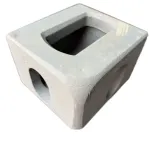
Corner casting steel vs aluminum
Every shipping container in the world — all 40 million of them — rests on eight critical components. Corner castings are the load-bearing blocks at each corner of an ISO shipping container, and they are the universal interface between the container and every crane, twistlock, spreader, and chassis on the planet. When you lift a container, stack it nine high on a ship, or lock it to a truck trailer, every ton of force flows through these fittings.

Construction cabin – selection, tips, dimensions and prices
Every construction project – whether a family house, a development project or a reconstruction – starts with the infrastructure. No construction manager, craftsman or investor who needs an on-site office, a changing room for workers or a safe storage for tools can do without a quality construction cell. But navigating the offer is not easy: residential containers, sanitary cells, storage modules, rental, purchase, refurbished pieces… This guide will give you answers to all the essential questions in one place.
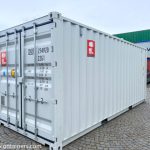
Storage container
A storage container is a lockable steel box designed for the safe and dry storage of materials, tools, goods or equipment. Originally created as a shipping container for maritime transport, its durability and versatility have found their way onto construction sites, corporate premises and private land.
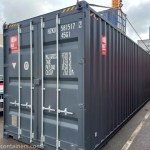
Shipping container 12m (40 ft)
A 12m shipping container is an investment that, if properly selected and cared for, will pay off in decades of trouble-free use. Whether you plan to use it as a warehouse, workshop, garage or the basis for a residential module — the key is careful selection of the condition, a thorough inspection before purchase and high-quality preparation of the base for placement. Take the time to compare offers, check the seller’s references and do not hesitate to personally inspect the container before buying. A properly selected 40-foot container will serve you reliably for many years.