
What is IICL (Institute of International Container Lessors)
Institute of International Container Lessors (IICL) is the world’s most significant trade association that unites and represents major global companies in the field of maritime container and chassis leasing. It was founded in 1971 in Delaware, USA, and today not only determines the direction of the container industry, but primarily defines technical and inspection standards that have global impact.
Key Aspects of IICL:
- Standardization: Creates standards for inspection, maintenance and repairs of containers (e.g. IICL-6).
- Certification: Operates globally recognized tests for inspectors and technicians.
- Safety: Promotes safe use of containers and chassis.
- Representation of Interests: Actively negotiates with governments, regulators and global organizations (IMO, ISO, WCO).
- Digitalization: Introduces digital standards and online education.
IICL is simultaneously a knowledge and training center that, through expert publications, online courses and certification exams, increases professionalism across the entire container industry. IICL Standards are considered the “gold standard” – a container with IICL certification is perceived as a guarantee of maximum safety, quality and reliability.
History and Development of IICL
The development of containerization in the 1960s and 1970s brought unprecedented growth in the volume of goods transported and an increase in the number of containers in global circulation. This was associated with the need to standardize inspection and repair procedures – until then each entity determined its own criteria, which caused confusion, delays and disputes in ports.
Key Milestones:
| Year | Event |
|---|---|
| 1971 | Founding of IICL in Delaware, USA |
| 1980 | First edition of global inspection manuals |
| 1990 | Launch of inspector certification exams |
| 2000 | Cooperation with ISO on harmonization of standards |
| 2016 | Release of IICL-6 – current global standard |
| 2020 | Digitalization of training and online testing |
Reason for Creation:
IICL unified the fragmented environment and established objective, technically sound criteria for acceptance, inspection and repairs of containers and chassis. As a result, today most containers in global transport meet the same quality requirements – regardless of where they were repaired or inspected.
Main Goals and Mission of IICL
IICL’s mission can be summarized as follows:
- Equipment Standardization: Ensuring that each container and chassis meets fixed safety and quality requirements.
- Increasing Safety: Reducing risks associated with transport, handling and repairs of containers.
- Operational Efficiency: Reducing downtime, accelerating inspections and reducing disputes between lessors and carriers.
- Ecology: Emphasis on extending the life of containers and limiting the ecological footprint of the industry.
- Education: Continuous improvement of professional skills in the field.
Benefits of IICL Standardization:
- Equal Conditions: Ensures that a container inspected in Europe has the same level as one from Asia or America.
- Dispute Limitation: Reduction in the number of complaints and legal disputes over container condition.
- Investment Protection: Extended service life and increased residual value of containers.
Main Functions and Activities of IICL
Standardization and Technical Development
IICL creates and updates technical manuals and inspection criteria that serve as a global standard. The most well-known is IICL-6 Guide for Container Equipment Inspection – today the most widely used standard for inspection of dry containers.
Main Areas of Standards:
- Inspection Criteria: Tolerances and limits for various types of damage (dents, rust, deformation, floor damage, door seals, etc.).
- Repair Procedures: Prescribed repair methods – from welding, floor replacement to procedures for restoring water tightness.
- Specific Standards: For refrigerated (reefer), open-top, flat-rack containers and chassis.
| Container Type | Key IICL Criteria |
|---|---|
| Standard Dry (DV) | Max. dents, corrosion, floor condition, door seals |
| Refrigerated (Reefer) | Insulation condition, cooling unit functionality, tightness |
| Flat Rack | Floor condition, frame, folding parts |
| Open Top | Roof/tarp condition, frame, water tightness |
| Chassis | Tire condition, brakes, frame, safety elements |
IICL-6 is a widely recognized standard by which containers intended for further transport, export and long-term leasing are evaluated.
Education and Certification
IICL organizes prestigious certification exams for inspectors and technicians in the field of:
- Dry Containers (Dry Van Container Inspector)
- Refrigerated Containers (Reefer Container Inspector)
- Chassis (Chassis Inspector)
Certification Process:
- Exams are online, consisting of 100 questions (in English, Spanish, Chinese for some types).
- Certification validity is 5 years, then recertification is required.
- Preparation takes place through self-study of IICL manuals and online courses.
- Certification is recognized worldwide and increases the value of an employee on the market.
| Exam Type | Language | Validity (years) | Number of Questions | Where it Takes Place |
|---|---|---|---|---|
| Dry Van Container Inspector | EN, ES, ZH | 5 | 100 | Online / Pearson |
| Reefer Container Inspector | EN, ES, ZH | 5 | 100 | Online / Pearson |
| Chassis Inspector | EN | 5 | 100 | Online / Pearson |
Publications and Technical Documentation
Key IICL publications include:
- IICL-6 Guide for Container Equipment Inspection (latest inspection standard)
- Repair Manual for Steel Freight Containers
- General Guide for Container Equipment Inspection
- Container Chassis Inspection & Maintenance Guide
- Manuals for specific container types
Publications are available in printed and digital form and contain detailed diagrams, photographs and repair examples.
Representation and Advocacy of Interests

IICL represents its members in negotiations with:
- International Organizations (IMO, ISO, WCO, UNCTAD)
- National and Regional Regulators on issues of safety, taxes, import duties and ecology
- Container and Chassis Manufacturers – in the development of new standards and technical requirements
Importance of IICL Certification: Why Does It Matter?
1. Ensuring Quality and Safety
A container with IICL certification is structurally sound, water-tight and fully functional. It guarantees:
- Safety for crews, drivers, port workers
- Protection of transported cargo
- Reduced risk of complaints and damage
2. Efficiency and Cost Reduction
Thanks to standardization, containers are returned to circulation faster, delays and unnecessary repairs are minimized. Most disputes between leasing companies and carriers are eliminated.
3. Sustainability and Ecology
Quality maintenance and repairs extend the service life of containers (typically 15–20 years). This reduces the need for manufacturing new units and limits the burden on the environment.
Types and Condition of IICL Containers
IICL containers are divided in practice according to age and condition:
| Type | Description |
|---|---|
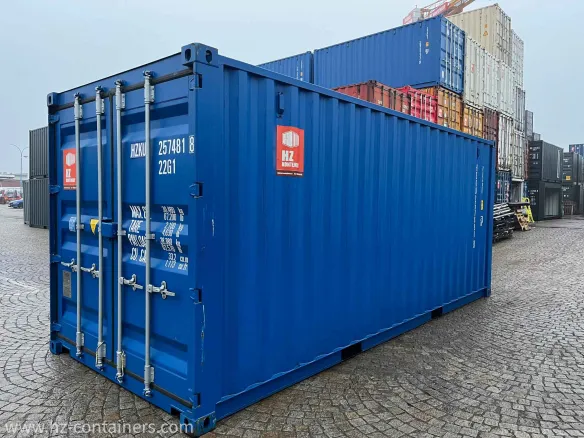
| IICL New (One Trip) | Newly manufactured container, used once (from Asia to USA/EU), minimal signs of use |
| IICL Used | Complies with IICL-6 standard, often younger than typical Cargo Worthy containers, higher residual value |
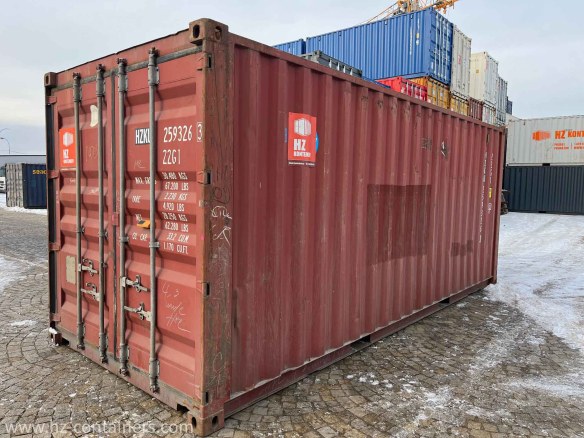
| Cargo Worthy (CW) | Suitable for transport, but does not have such strict condition requirements as IICL container |
| Wind & Water Tight (WWT) | Guaranteed tight against wind and water, not intended for export transport |
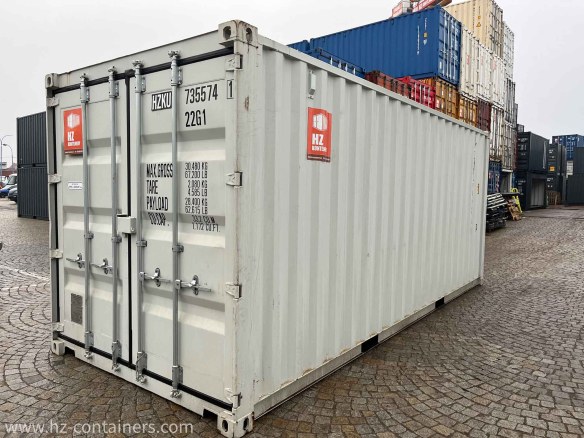
IICL containers have higher value and better appearance than WWT or typical CW containers. They are preferred for export, long-term leasing and demanding customers.
Container Inspection and Certification Process According to IICL
Main Inspection Steps:
- Visual Inspection: Condition of surfaces, frame, doors, floor, roof, seals
- Deformation Measurement: Dents, bends, cracks, corrosion – all according to IICL-6 limits
- Tightness Check: Water tightness test (so-called “light test” or “water test”)
- Floor Condition: Load capacity, damage, rot, strength
- Door and Lock Functionality: Smooth operation, complete closure, seal condition
- Identification Data Check: Readability of CSC plate, container number, etc.
Result:
A container that meets all requirements receives a certificate and (in case of export) an updated CSC plate.
Structure and Membership in IICL
IICL unites the world’s largest container and chassis leasing companies – they own or manage more than 50% of the global fleet.
Notable Members:
- Triton International
- Textainer Group Holdings
- Seaco Global
- SeaCube Containers
- CAI International
- DCLI (Direct ChassisLink Inc.)
- TRAC Intermodal
- FlexiVan
Due to this concentration, IICL has a decisive influence on standards and practices throughout the industry.
IICL and Digital Transformation
Modern IICL emphasizes digitalization:
- Digital Publications: Manuals and guides available online
- Online Education: E-learning, webinars and online certification exams
- Data Standardization: Preparation for unification of data formats from smart containers (IoT sensors, location monitoring, temperature, vibrations)
- Data Protection: Rigorous security and protection of personal and business data
In the future, IICL can be expected to determine not only technical but also data standards within global logistics.
Comparison of IICL Containers vs. Other Standards
| Criterion | IICL Container | Cargo Worthy (CW) | Wind & Water Tight (WWT) |
|---|---|---|---|
| Quality of Construction | Highest | Satisfactory | Basic |
| Suitable for Export | Yes | Yes | No |
| Price | Higher | Medium | Lower |
| Residual Value | High | Medium | Low |
| Surface and Interior Condition | Minimal Damage | Acceptable Defects | Significant Wear |
Frequently Asked Questions and Answers
How Long is IICL Inspector Certification Valid?
Certification is valid for 5 years, after which recertification is required.
Is it Possible to Buy a Used IICL Container?
Yes, but most IICL containers are still in active circulation. Availability is limited, price is higher than typical CW containers.
What is the Difference Between IICL and CSC?
IICL is a standard for inspection and maintenance; CSC (Container Safety Convention) is an international convention on container safety. A container after IICL inspection usually also receives an updated CSC plate.
 Czech Republic, Hradec Králové
  FREE SHIPPING
Other container news...

The OPNBar leverage tool
The OPNBar leverage tool is a professional-grade, multi-purpose hand tool designed specifically for the shipping container and trucking industry. Manufactured by Shipping Container Safety International (SCS International) and proudly Made in the USA, the OPNBar is fundamentally a 3-in-1 trucker tool that combines a shipping container door leverage bar, a tire thumper, and a 5th wheel pull hook into a single, compact steel implement. The name “OPNBar” is a direct reference to its primary function: it is the bar that “opens” containers.

40 Foot Container Dimensions
If you have ever booked ocean freight, planned a warehouse layout, or designed a modular building project, you have asked the same question: what are the exact 40 foot container dimensions — and what do they mean for what you can actually load? The numbers are standardized worldwide, but the practical implications of those numbers are surprisingly nuanced. A 40-foot container is not simply 40 feet of usable space, and its weight limits are not what most people assume. This guide covers every measurement, every weight rating, and every loading consideration you need to make informed decisions about the world’s most common shipping container.
Quick Answer: A standard ISO 40-foot shipping container measures 12.19 m (40 ft) long × 2.44 m (8 ft) wide × 2.59 m (8 ft 6 in) high externally and provides approximately 67.7 m³ (2,390 ft³) of usable internal volume. The maximum gross weight is 30,480 kg (67,200 lbs), with a typical payload capacity of approximately 26,700–26,800 kg (58,900–59,000 lbs).
Shipping container wheels
Moving a 12-meter-long steel box that weighs up to 67,200 pounds was, for decades, exclusively a job for a crane and a licensed operator. That reality has changed. Shipping container wheels — an umbrella term covering a family of mobility solutions — now let a single person reposition a 20ft or 40ft container across a yard, warehouse, or construction site without calling in heavy equipment. This guide covers every aspect of container wheel systems: what they are, how they work, the types available, what they cost, and how to choose the right kit for your container.
Can You Modify a 40ft High Cube Container?
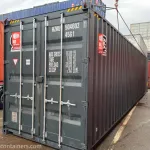
The short answer is yes — you absolutely can modify a 40ft high cube container, and it is one of the most popular container types for modification projects worldwide. But the real question is not whether you can modify one; it is how to do it correctly, safely, legally, and within budget. This guide answers every dimension of that question, drawing on engineering principles, real-world pricing data, and the collective experience of thousands of modified container projects.
Key Takeaway: A 40ft high cube container offers 320 square feet of floor space with an extra foot of ceiling height compared to a standard container — making it the ideal canvas for offices, workshops, homes, retail spaces, and industrial applications. The extra height is particularly valuable when you add insulation and still want comfortable headroom.