
Shipping Containers Naples Italy
Shipping containers in Naples represent the backbone of one of the most important Mediterranean ports, which processes hundreds of thousands of units annually and serves as a key gateway for international trade. The Naples port is not just infrastructure for handling containers — it is a complex logistics ecosystem that connects Europe with the entire world. In this guide, we will take a detailed look at everything you need to know about shipping containers in Naples, from their technical specifications through port infrastructure to practical aspects of transport and future trends in maritime shipping.
What are shipping containers and why do they play a key role in Naples?
What is a shipping container?
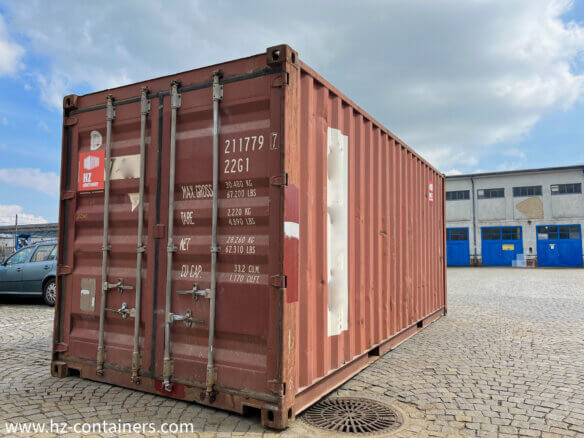
A shipping container is a standardized metal unit designed for transporting goods by sea, road, and rail. It is a robust structure typically made of steel or aluminum alloy that is resistant to extreme sea conditions, mechanical damage, and long-term storage. Containers are designed to be easily handled using special equipment (spreaders and cranes), stacked on top of each other, and safely secured on ships, vehicles, and railway cars.
Standardization of shipping containers is key to the efficiency of global trade. The International Organization for Standardization (ISO) defines precise dimensions and parameters that enable compatibility between different carriers, ports, and logistics operators worldwide. Without this standardization, transporting goods would be significantly more complex and expensive.
In Naples, as in every major container port, millions of tons of goods are handled annually in these standardized units. Containers enable efficient handling, minimize the risk of cargo damage, and reduce transportation costs compared to traditional cargo loading methods.
Why is the Naples Port important for global trade?
The Naples Port (Porto di Napoli) is one of the oldest and most important ports in the Mediterranean. Its strategic location on the western coast of Italy on the Bay of Naples makes it a natural gateway to the Mediterranean and further into Europe. The port serves as a connection point for shipping routes from Asia, Africa, and America heading to Europe.
Naples is not only a commercial hub but also a key point in global supply chains. Many European companies, particularly those based in Italy, Central Europe, and the Balkans, use the Naples Port for importing goods from Asia because it offers a good balance between distance, price, and capacity. The port is also important for exporting European products to the rest of the world.
Annually, the port processes approximately 500,000 TEU (Twenty-foot Equivalent Units), a unit measuring container capacity. This number ranks it among the most important Mediterranean ports and makes it indispensable for European trade.
| Aspect | Description |
|---|---|
| Strategic location | Gateway to the Mediterranean, connection between Asia and Europe |
| Annual capacity | Approx. 500,000 TEU |
| Geographic area | Western coast of Italy, Bay of Naples |
| Key partners | Asian ports (Shanghai, Ningbo), African and American ports |
| Economic impact | Billions of euros annually, thousands of jobs |
What is the history of the Naples Port and how has it developed?
Ancient roots and medieval development
The history of the Naples Port dates back deep into antiquity. The port originated in Greek colonization in the 9th century BC, when sailors from Rhodes sailed to the area and established a settlement. Later, in the 7th and 6th centuries BC, the Greeks established an important trading center there.
During the Roman Empire, the Naples Port became one of the most important trading hubs in the Mediterranean. The Romans developed the port’s infrastructure and used it for transporting goods throughout their empire. Naples became a prosperous city with a rich culture and commerce. The port handled everything from luxury goods to basic foodstuffs intended for supplying Rome.
During the Middle Ages and Renaissance, the Naples Port maintained its importance. The city became one of the most important centers of commerce and culture in Europe. In the 15th and 16th centuries, during the Renaissance, Naples experienced a golden age, ruled by various dynasties (Aragonese, Spanish). The port was modernized and expanded to accommodate growing trade volumes.
Modern era: From the Industrial Revolution to the present
With the arrival of the Industrial Revolution in the 18th and 19th centuries, the Naples Port was transformed again. The introduction of steam ships and later motorized vessels revolutionized maritime transport. The Naples Port became a modern facility with new docks, storage facilities, and handling equipment.
During World War II, the port was severely damaged by bombing. Much of the infrastructure was destroyed. However, after the war, the port was quickly restored and rebuilt. The Italian government and local authorities invested considerable resources in modernizing the port.
The revolution in transport was brought by containerization in the 1960s and 1970s. The introduction of standardized shipping containers fundamentally changed the way goods are transported. The Naples Port gradually adapted to this new standard. New container terminals were built, modern handling equipment (cranes, spreader systems) was acquired, and storage capacity was expanded.
In recent decades, the Naples Port has been continuously modernized. Digitalization, automation, and the introduction of new technologies improve operational efficiency. The port is investing in more environmentally friendly solutions, such as electrification of handling equipment and emission reduction.
What is the infrastructure and capacity of the Naples Port?
Physical parameters of the port
The Naples Port is an extensive complex with a total area of approximately 408.6 hectares. Of this, 266 hectares comprise water area (the bay itself and port waters) and the remaining 142.6 hectares is land, where terminals, warehouses, and other infrastructure are located.
The port has 70 mooring positions, meaning it can simultaneously serve up to 70 ships. This number is relatively high and allows the port to process a large number of ships throughout the day. Each mooring position is assigned specific equipment and personnel for unloading and loading.
The water depth in the port is sufficient for modern container ships, including the largest ones (Panamax and Post-Panamax class). This means the port can accept ships with a capacity of 14,000+ TEU without problems.
The annual capacity of the Naples Port is estimated at 500,000 TEU. This number represents the maximum number of twenty-foot equivalent units the port can process in a year under normal operating conditions. In practice, the port often operates below this capacity due to fluctuating trade volumes, seasonal variations, and maintenance.
| Parameter | Value |
|---|---|
| Total area | 408.6 hectares |
| Water area | 266 hectares |
| Land area | 142.6 hectares |
| Number of mooring positions | 70 |
| Storage capacity | 1,336,000 m² |
| Annual capacity (TEU) | 500,000 |
| Minimum water depth | 12–14 meters (depends on sector) |
| Maximum ship length | 365 meters |
Storage and handling equipment
The Naples Port is equipped with the most modern handling equipment. Key infrastructure elements include:
Ship-to-Shore cranes (STS): These are enormous cranes that stand on rails next to the docks. They are capable of lifting containers from ships and placing them on the ground or on vehicles. These cranes have a reach of up to 65 meters and can lift a container weighing up to 65 tons. The Naples Port is equipped with dozens of such cranes.
Rubber Tyred Gantry cranes (RTG): These are mobile cranes on pneumatic tires that move around the terminals. They are used for handling containers in storage and moving them between different locations.
Handling vehicles (Automated Guided Vehicles, AGVs): Some terminals in Naples use computer-controlled automated vehicles. These vehicles transport containers from docks to warehouses and back.
Spreader systems: These are devices that attach to cranes and enable safe gripping and handling of containers. Modern spreader systems are hydraulic and can automatically adapt to different container sizes.
Storage spaces: The port has 1,336,000 square meters of storage space. These spaces are divided into several categories: open storage (for standard containers), covered storage (for sensitive goods), refrigerated warehouses (for reefer containers), and special warehouses (for hazardous materials).
How are shipping containers in Naples handled and transported?
Process of unloading and loading containers
The process of handling containers in the Naples Port is precisely orchestrated and follows strict rules and procedures. Here is a step-by-step breakdown of how it works:
Ship arrival: The ship arrives at the port and is assigned a mooring position. The port communicates with the ship via radio communication and guides it to the correct location. Once the ship is settled and anchored, unloading can begin.
Unloading preparation: Before unloading begins, safety checks are performed. Port personnel check that all safety elements are in place, that equipment is in good condition, and that the weather is suitable for work (strong winds or storms can stop unloading).
Container unloading: Enormous Ship-to-Shore cranes (STS) begin lifting containers from the ship. One crane can lift one container at a time. The container is placed on a handling vehicle (AGV or traditional vehicle with a hydraulic arm) or directly on the ground. This process continues without interruption until all containers designated for unloading in Naples are removed from the ship.
Transfer to warehouse: Containers are moved to appropriate warehouses based on their destination and type. Containers designated for further transfer are stored in open warehouses, while sensitive goods or reefer containers go to special spaces.
Container loading: When a ship needs containers to be loaded, the process is reversed. Containers are picked up from warehouses, moved to docks, and gradually loaded onto the ship using the same cranes.
The entire process is highly efficient and automated. Modern terminals in Naples can unload and load hundreds of containers per day. On average, one container is unloaded or loaded during 5–10 minutes (including transfer time).
Logistics services and documentation
Container transport through the Naples Port involves many logistics services and administrative procedures:
Customs clearance: Every container entering or leaving Naples must go through customs control. Italian and European customs authorities check the container’s contents, verify documentation, and ensure that goods meet all regulatory requirements. This process can take from several hours to several days, depending on the type of goods and the scope of inspection.
Documentation: The shipper must provide a number of documents, including:
- Bill of Lading — official document confirming that the ship has accepted the goods
- Commercial Invoice — document with details about the goods and price
- Packing List — list of everything in the container
- Certificate of Origin — document confirming where the goods originate
- Import/Export declarations — documents required by customs authorities
Insurance: The shipper or recipient typically insures the goods during transport. Insurance covers risks such as damage, loss, or theft.
Freight forwarding services: Many companies in Naples provide freight forwarding services that handle all aspects of transport. The freight forwarder communicates with the shipping company, arranges documentation, organizes transport, and manages customs procedures.
Door-to-Door services: Some freight forwarders offer door-to-door services, meaning they handle goods from pickup in Asia to delivery in Europe.
What types of shipping containers are used in Naples?
Standard containers
The most common types of containers used in Naples are standard dry cargo containers. There are two primary sizes:
20-foot container (20 ft or TEU): This container has external dimensions of 6,058 × 2,438 × 2,591 mm. Internal volume is approximately 33 cubic meters. Maximum cargo weight is around 21,600 kg. This type is ideal for smaller shipments and is very popular for transport to and from Europe.
40-foot container (40 ft or FEU — Forty-foot Equivalent Unit): This container has external dimensions of 12,192 × 2,438 × 2,591 mm. Internal volume is approximately 67 cubic meters. Maximum cargo weight is around 28,300 kg. This type is suitable for larger shipments and is more economical for long distances.
40-foot High Cube container (40 HC): This is a taller version of the 40-foot container. External dimensions are 12,192 × 2,438 × 2,896 mm (note the greater height). Internal volume is approximately 76 cubic meters. This type is ideal for bulky goods, such as furniture, textiles, or light plastic products.
| Container type | External dimensions (mm) | Internal volume (m³) | Max. weight (kg) | Common use |
|---|---|---|---|---|
| 20 ft | 6,058 × 2,438 × 2,591 | 33 | 21,600 | Smaller shipments, household goods |
| 40 ft | 12,192 × 2,438 × 2,591 | 67 | 28,300 | Industrial goods, electronics |
| 40 HC | 12,192 × 2,438 × 2,896 | 76 | 28,300 | Bulky goods, textiles, furniture |
Special containers
In addition to standard containers, various special types are used in Naples for specific types of goods:
Refrigerated containers (Reefer containers): These containers are equipped with a cooling system and maintain internal temperature at a preset level. They are used for transporting food, medicines, and other temperature-sensitive goods. Reefer containers are connected to electrical outlets on the ship and at the port.
Open-top containers: These containers do not have a fixed roof; instead, they have a canvas tarp or folding roof. They are used for goods that are difficult to load in the traditional way, such as heavy pieces or building materials.
Flat-rack containers: These are containers without walls and roof. They are used for transporting large or unusual items, such as machinery, vehicles, or heavy pieces.
Tank containers: These containers are designed for transporting liquids, such as oil, chemicals, or water. They have an internal tank with valves and are equipped with safety systems.
Ventilated containers: These containers have a special ventilation system that allows air circulation. They are used for goods that need ventilation, such as cocoa, coffee, or fruit.
What are the prices and costs of transporting containers to and from Naples?
Transport from Asia (China, India)
Container transport prices from Asia to Naples vary depending on many factors, including distance, ship type, season, and global market conditions. Here are typical rates based on current data:
From Shanghai to Naples:
- 20-foot container: 2,050–4,050 USD
- 40-foot container: 2,250–5,050 USD
From Ningbo to Naples:
- 20-foot container: 2,050–4,050 USD
- 40-foot container: 2,250–5,050 USD
From India (Delhi/Mumbai) to Naples:
- 20-foot container: 1,500–3,000 USD
- 40-foot container: 2,000–4,000 USD
These prices can vary significantly depending on:
- Season: High season (September–December) is more expensive than low season (January–June)
- Global market: If demand for transport is high, prices rise
- Ship type: Ships with lower fuel consumption may offer lower prices
- Contract length: Long-term contracts may have better rates
| Route | 20 ft (USD) | 40 ft (USD) | Average time (days) |
|---|---|---|---|
| Shanghai → Naples | 2,050–4,050 | 2,250–5,050 | 35–40 |
| Ningbo → Naples | 2,050–4,050 | 2,250–5,050 | 35–40 |
| Mumbai → Naples | 1,500–3,000 | 2,000–4,000 | 30–35 |
| Hong Kong → Naples | 2,200–4,200 | 2,400–5,200 | 35–40 |
Local transport and handling fees
In addition to international transport, there are additional costs associated with handling and storage in Naples:
Port charges: The shipping company pays a fee for entering the port. This fee varies depending on the ship’s size and cargo type. Typically it ranges from 10,000 to 50,000 EUR per ship.
Handling charges: The port charges a fee for unloading and loading containers. Typically this is 100–200 EUR per container.
Storage charges: If a container remains in the port longer than a certain period (usually 3–5 days), storage charges begin to accrue. Typically this is 10–20 EUR per day per container.
Terminal charges: The port charges a fee for using terminals and infrastructure. Typically this is part of handling charges.
Customs and administrative fees: Customs clearance and administration can cost 200–500 EUR depending on complexity.
Insurance: Insuring goods during transport typically costs 1–3% of the goods’ value.
The total cost of transporting a 40-foot container from Shanghai to Naples and handling it at the port can thus range from 3,000 to 6,500 USD (excluding insurance and other services).
How does the Naples Port compare to other European ports?
Comparison with the Genoa Port
The Naples and Genoa ports are the two most important ports in Italy and compete for trade. Here is their comparison:
| Aspect | Naples | Genoa |
|---|---|---|
| Annual capacity (TEU) | 500,000 | 2,700,000 |
| Location | Southern Italy, Mediterranean | Northwestern Italy, Ligurian Sea |
| Distance from Germany | ~1,500 km | ~900 km |
| Distance from Central Europe | ~1,200 km | ~700 km |
| Main specialization | General trade, tourism | Containers, cars, chemicals |
| Transport price from Asia | Medium | Higher (higher capacity) |
| Competitive advantage | Lower prices, Mediterranean | Higher capacity, northern Italy |
The Genoa Port is larger and has higher capacity. It is suitable for large volumes and is preferred for transport to Central Europe and Germany. Prices in Genoa, however, are typically higher due to higher demand and capacity.
The Naples Port is smaller but has lower prices and is suitable for trade with the Mediterranean and southern Europe. It is also popular with smaller shippers who need more flexible services.
Position among European container hubs
In Europe, there are several large container ports that compete with Naples:
- Rotterdam (Netherlands): Europe’s largest port with a capacity of ~15 million TEU annually. It is the dominant hub for northern Europe.
- Antwerp (Belgium): Second largest port with a capacity of ~10 million TEU annually.
- Hamburg (Germany): Third largest with a capacity of ~9 million TEU annually.
- Genoa (Italy): Fourth largest in Europe with a capacity of ~2.7 million TEU annually.
- Naples (Italy): Fifth to eighth largest, depending on the year, with a capacity of ~500,000 TEU annually.
The Naples Port is therefore not among the largest, but plays an important role in the Mediterranean and for southern Europe. It is an ideal entry point for trade with the Mediterranean and the Balkans.
What are practical tips for shipping containers from Naples?
How to choose the right container type?
Choosing the right container type is key to efficient and cost-effective transport. Here are factors you should consider:
Type of goods: What goods are you transporting? If it is standard industrial goods (electronics, textiles, machinery), a standard dry container is sufficient. If it is food, medicines, or other temperature-sensitive goods, you need a reefer container.
Volume of goods: How much space do you need? If it is small quantities, a 20-foot container is sufficient. If it is larger quantities, a 40-foot or 40 HC container is a better choice.
Weight of goods: What is the total weight of your goods? You must ensure that the weight does not exceed the maximum capacity of the container. If the goods are light but bulky, a 40 HC is a better choice.
Price: A 40-foot container is usually cheaper per unit of volume than a 20-foot. If you have enough goods, a 40-foot is more economical.
Delivery time: If you need to deliver goods quickly, you may have to pay more for express transport.
Shipping route: If you are transporting to more distant places in Europe, a larger container may be a better choice.
Documentation and customs procedures
Container transport through the Naples Port requires proper documentation. Here is a list of documents you will likely need:
Bill of Lading (B/L): This is the most important document. It confirms that the shipping company has accepted the goods. There are three copies: for the shipper, for the recipient, and for the shipping company.
Commercial Invoice: Trade invoice with details about the goods, price, terms of sale, and information about the shipper and recipient.
Packing List: Detailed list of everything in the container, including number of pieces, weight, and dimensions.
Certificate of Origin: Document confirming in which country the goods originate. This document is important for customs purposes and can affect tariffs.
Import/Export declarations: Documents required by Italian and European customs authorities. These documents are completed in electronic form through the NCTS (New Computerized Transit System).
Insurance certificates: If the goods are insured, you must provide an insurance certificate.
Technical certificates: Depending on the type of goods (e.g., electronics, chemicals), you may need technical certificates confirming safety and quality.
We recommend that you work with a freight forwarder or logistics company that will help you prepare all documents and ensure that everything is completed correctly.
What is the future development of container transport in Naples?
Digitalization and automation
The future of container transport in Naples is inextricably linked with digitalization and automation. The Naples Port is investing in technologies that will improve efficiency and reduce costs:
Blockchain and digital documentation: Implementation of blockchain technology for documentation and container tracking. This will enable instant access to information about containers and goods, reduction of paperwork, and acceleration of customs procedures.
Internet of Things (IoT): IoT sensors placed in containers enable real-time monitoring of location, temperature, humidity, and other parameters of goods. This is especially important for reefer containers and sensitive goods.
Artificial Intelligence (AI): AI algorithms can optimize container handling, predict problems, and improve operational planning.
Automated vehicles (AGVs and AVs): More automated vehicles and potentially autonomous vehicles will handle containers without human assistance.
Robotics: Robots can perform certain tasks, such as packing, inspection, and maintenance, more efficiently than humans.
Environmental initiatives and sustainability
Maritime transport is responsible for a significant share of global emissions. The Naples Port and shipping companies are focusing on reducing environmental impact:
Electrification of handling equipment: Replacement of diesel cranes and vehicles with electric versions. This reduces emissions and improves air quality at the port and surrounding areas.
Cleaner fuels for ships: Introduction of LNG (Liquefied Natural Gas) and biofuel for ships. These fuels have lower sulfur and carbon content.
Shore Power: Allowing ships to connect to the electrical grid during their stay at the port instead of running engines. This reduces emissions and noise.
Terminal greening: Planting trees and plants at the port improves air quality and visual appearance.
Container recycling: Old containers are recycled and materials are used for new purposes.
Carbon Offset programs: The port and shipping companies invest in projects that reduce emissions in other areas to offset their own emissions.
The Naples Port has committed to becoming one of Europe’s most environmentally friendly ports by 2030.
Frequently Asked Questions
What is a shipping container and what are its basic dimensions?
A shipping container is a standardized metal unit designed for transporting goods by sea. The most common sizes are the 20-foot container (6,058 × 2,438 × 2,591 mm, volume 33 m³) and the 40-foot container (12,192 × 2,438 × 2,591 mm, volume 67 m³). There is also a 40-foot High Cube container with greater height (76 m³).
What is the annual capacity of the Naples Port?
The Naples Port has an annual capacity of approximately 500,000 TEU (Twenty-foot Equivalent Units). It has 70 mooring positions and storage capacity of 1,336,000 square meters.
What are typical container transport prices from Asia to Naples?
Prices vary depending on the place of origin and season. From Shanghai or Ningbo to Naples, a 20-foot container ranges from 2,050 to 4,050 USD and a 40-foot from 2,250 to 5,050 USD. From India, prices are lower, typically 1,500–3,000 USD for 20 ft and 2,000–4,000 USD for 40 ft.
How long does transport from Asia to Naples take?
Transport from Shanghai or Ningbo to Naples typically takes 35–40 days. From India, it takes approximately 30–35 days. Time can vary depending on the number of stops and weather conditions.
What documents do I need for container transport to Naples?
You need Bill of Lading, Commercial Invoice, Packing List, Certificate of Origin, and Import/Export declarations. Depending on the type of goods, you may also need technical certificates and insurance certificates.
What types of special containers are there?
Special containers include refrigerated containers (reefer) for temperature-sensitive goods, open-top containers for large pieces, flat-rack for unusual items, tank containers for liquids, and ventilated containers for goods that need ventilation.
How does the Naples Port differ from the Genoa Port?
The Genoa Port is larger (2.7 million TEU annually) and is suitable for large volumes and transport to Central Europe. The Naples Port is smaller (500,000 TEU) but has lower prices and is suitable for trade with the Mediterranean and southern Europe.
How much does container handling cost in Naples?
Handling charges typically range from 100 to 200 EUR per container. Additional costs include storage charges (10–20 EUR per day), terminal charges, and customs fees (200–500 EUR).
What are future trends in container transport in Naples?
Main trends include digitalization and automation (blockchain, IoT, AI), introduction of electrification of handling equipment, transition to cleaner fuels for ships, and increased emphasis on sustainability and emission reduction.
How long does it take to unload or load a container in Naples?
On average, one container is unloaded or loaded during 5–10 minutes, including transfer time. The total time a container spends at the port varies depending on the number of containers and port capacity, but is typically 1–3 days.
What are the most common problems when shipping to Naples?
Common problems include delays caused by weather, port capacity limitations during high season, complications with customs clearance, and additional storage costs if the container is not processed on time.
Can I rent a container instead of buying it?
Yes, many companies offer container rental. Rental is usually cheaper than purchase if you do not need the container long-term. Rental is typically charged per day or per month.
 Italy, Naples
  WITHOUT SHIPPING


Other container news...

What is the floor load capacity of a shipping container (kg/point)
The load capacity of a shipping container floor — and especially its expression in kg/point — is one of the least understood, yet essential, technical parameters encountered by anyone who handles, loads, or uses containers for storage or modular construction. While the total payload of a 20-foot container of 28,000 kg is generally known, the point load value determines whether the floor will survive the concentrated pressure of a single wheel of a forklift or the foot of a heavy machine — and this is often the decisive parameter for safe operation.

Shipping Containers Komárno Slovakia
Shipping containers are standardized metal transport units designed primarily for the transport of goods by waterways, especially rivers and seas. In the context of Komárno, located at the confluence of the Váh and Danube rivers in Slovakia, shipping containers play a key role in the logistics infrastructure of the region. They are robust, closed containers that enable the safe and efficient transport of various types of goods. Shipping containers in the city of Komárno are an essential part of the functioning of the local port, which is among the second largest port and transport hubs in Slovakia.

Shipping Containers in the City of Dunajská Streda Slovakia
Shipping containers in Dunajská Streda represent a flexible, economical and ecological solution for logistics, storage and construction. Their popularity is growing, both in traditional applications and in innovative architectural projects. Whether you are looking for a solution for storage, transportation or want to build a modern space, shipping containers offer countless options with an excellent price-quality ratio.

Shipping Containers Dubnica nad Váhom Slovakia
Shipping containers are a fundamental building block of modern international trade and logistics. In Dubnica nad Váhom, a town in Slovakia near the Váh River, they are playing an increasingly important role in transport and storage solutions. Whether it is for transporting goods, storing goods or innovative construction projects, shipping containers have become an indispensable tool for the local business community.