
Shipping Containers Dubnica nad Váhom Slovakia
Shipping containers represent the fundamental building block of modern international trade and logistics. In the city of Dubnica nad Váhom, located in Slovakia near the Váh River, these containers play an increasingly important role in transport and storage solutions. Whether it is the transport of goods, storage, or innovative construction projects, shipping containers have become an indispensable tool for the local business community.
What exactly are shipping containers and how do they differ from other types of containers?
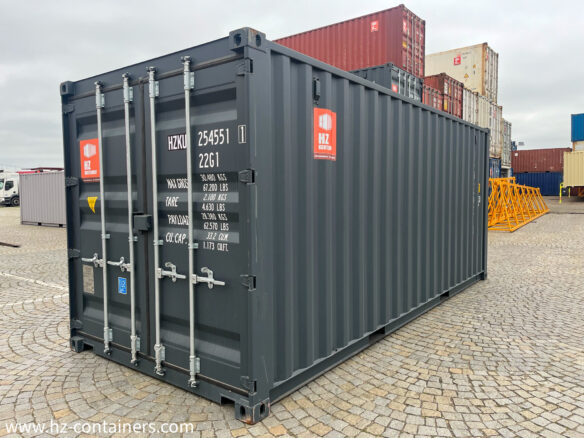
Shipping containers are standardized steel boxes designed primarily for transporting goods by sea, but nowadays they are also used for land transport and storage. Most commonly, we encounter two basic sizes: 20-foot (TEU) and 40-foot (FEU) containers, with special variants of 45 feet also existing.
Differences between shipping containers and other types
| Container type | Primary use | Material | Typical dimensions | Capacity |
|---|---|---|---|---|
| Shipping containers | International transport, storage | Steel, aluminum | 20′ / 40′ / 45′ | 20–30 tons |
| Refrigerated containers | Transport of goods requiring cooling | Steel + insulation | 20′ / 40′ | Various |
| Residential containers | Housing, offices | Steel + interior modifications | 20′ / 40′ | Variable |
| Storage containers | Ground storage | Steel, plastic | Various | Various |
| Open-top containers | Transport of oversized goods | Steel | 20′ / 40′ | Variable |
Shipping containers differ from other types primarily in their robust construction, which allows them to be stacked on top of each other and safely transported by sea, by rail, and by road. Their standardization is key to the efficiency of global trade.
What is the history of shipping containers and how have they evolved?
The concept of shipping containers is not a modern invention. Its origins date back to the 1950s, when American entrepreneur Malcolm McLean revolutionized transport by introducing the first standardized containers. In 1956, the ship Ideal X sailed from Newark to Houston and became the first vessel to transport shipping containers in the modern sense of the word.
Evolution of standardization
In the 1960s, the International Organization for Standardization (ISO) came up with a unified standard for container dimensions. This decision was fundamental – it enabled the seamless transfer of containers between different carriers and modes of transport. In the Czech Republic and Slovakia, shipping containers spread especially after the fall of the Iron Curtain in the 1990s, when new trade routes opened up.
Dubnica nad Váhom gradually became part of these logistics networks, mainly thanks to its geographic location in the northwestern part of Slovakia, which makes it a suitable point for the distribution of goods towards Central Europe.
How do shipping containers work in practice and what is their life cycle?
The life cycle of a shipping container is long and effective. A typical container lasts 10–15 years of active service, during which it undergoes many transformations.
Phases of the life cycle
- Production – Containers are manufactured in modern factories, usually in Asia. A new 20-foot container weighs approximately 2.3 tons, a 40-foot one weighs 3.8 tons.
- Active service – The container is loaded with goods, transported by sea, rail, or road, and unloaded. During this period, the container can circumnavigate the Earth many times.
- Maintenance and repairs – Regular inspections, painting, and repairs ensure functionality. Used containers are often cheaper than new ones, but they require thorough inspection.
- Secondary use – Once the container is no longer suitable for international transport, it can be converted into a living space, office, shop, or warehouse.
- Recycling – At the end of its life, the container is dismantled and the steel is recycled.
In the city of Dubnica nad Váhom, a growing trend of secondary use of containers can be observed. Local entrepreneurs and developers are increasingly using converted containers to create modern commercial spaces and warehouses.
What are the practical applications of shipping containers in Dubnica nad Váhom?
Shipping containers are used in Dubnica nad Váhom and its surroundings in a number of practical applications:
Logistics and storage
Small and medium-sized enterprises in Dubnica nad Váhom are increasingly choosing to rent or buy used shipping containers for storing their goods. Containers offer a cheap solution with low maintenance costs and flexible placement options.
Transport of goods
Thanks to Slovakia’s proximity to the Czech Republic, Poland, and Hungary, road transport of shipping containers in the region is very active. Local freight companies provide container transport from ports to warehouses and production facilities.
Construction and housing
The trend of building modular houses and office spaces from converted containers is gradually gaining ground in Dubnica nad Váhom. Ecological builders and architects see containers as a cheap and sustainable building material.
Special storage solutions
Refrigerated and heated containers are used for storing food, medicines, and other sensitive materials. Dubnica nad Váhom, which has a tradition in the food industry, finds practical applications in these solutions.
What are the key differences between new and used shipping containers?
The choice between new and used containers is one of the most important decisions for businesses in Dubnica nad Váhom.
| Aspect | New containers | Used containers |
|---|---|---|
| Price | 2.5–4.5 thousand EUR | 800–2 thousand EUR |
| Condition | Perfect, without defects | Various, requires inspection |
| Lifespan | 10–15 years | 3–10 years |
| Appearance | Glossy, without rust stains | Patina, possible contamination |
| Environmental friendliness | New production process | Secondary use |
| Availability | Longer delivery time | Immediate availability |
Many small entrepreneurs in Dubnica nad Váhom choose used containers precisely because of their availability and affordability. If the container is lightly used and in good condition, it can provide the same service as a new one at a fraction of the price.
What are the most common mistakes and misconceptions about shipping containers?
In practice, we encounter a number of misconceptions that can lead to wrong decisions.
Myth 1: All shipping containers are the same
The reality is more complex. Containers differ according to their history, condition, and purpose. Some have been used to transport chemicals and are not suitable for food storage. Inspection and knowledge of the history of a particular container is important.
Myth 2: Shipping containers are a cheap solution without compromises
Although containers are economical, their installation, connection of utility networks, and possible conversions can be expensive. It is necessary to reckon with the costs of transport, placement, and modifications.
Myth 3: Containers are only for storage
Modern architecture proves the opposite. Containers are suitable for housing, offices, shops, and even cultural spaces. In Dubnica nad Váhom, examples of their creative use can be seen.
Myth 4: Transport of containers is complicated and expensive
Thanks to standardization and developed infrastructure, transport of shipping containers in the Czech Republic and Slovakia is very efficient. Specialized freight companies offer competitive prices and professional services.
Myth 5: Older containers are always worse
A container of an older date does not have to be necessarily worse. If it has been well maintained and has not been used for dangerous goods, it can be just as reliable as a newer model.
What are the future trends and developments in the field of shipping containers?
The shipping container sector is undergoing a period of dynamic change, which will also affect Dubnica nad Váhom.
Digitalization and tracking
Modern GPS tracking and IoT sensors make it possible to monitor the location, temperature, and humidity inside the container in real time. This technology is gradually becoming the standard for local carriers as well.
Ecological trends
The pressure to reduce the carbon footprint leads to the development of containers from recycled materials and to the prioritization of multimodal transport (a combination of sea, rail, and road transport).
Modular construction
The trend of building from containers is spreading. In the coming years, more projects focused on modular housing and workspaces can be expected. Dubnica nad Váhom has the potential to become a center for these innovative buildings.
Automation in ports
Increased automation in ports and warehouses means that containers will be handled faster and with fewer errors, which will contribute to lower logistics costs.
Circular economy
Secondary use and recycling of containers will become increasingly important. Companies in Dubnica nad Váhom will be able to participate in this trend by renting and selling renovated containers.
How to choose the right shipping container for your needs in Dubnica nad Váhom?
Choosing the right container requires taking several factors into account:
1. Determine your capacity
Do you need a 20-foot or 40-foot container? A 20-foot container is more compact and easier to handle, a 40-foot container offers more capacity.
2. Consider the type
Standard dry container, refrigerated, open-top, or special? The type must match your goods.
3. Assess the budget
Do you have enough funds for a new container, or will a quality used one be enough for you?
4. Check availability
Contact local suppliers in Dubnica nad Váhom or the surrounding area. Compare prices and services.
5. Arrange transport
Arrange reliable transport. Special chassis are essential for road transport of containers.
6. Plan maintenance
Regular maintenance extends the life of the container. Arrange maintenance even before purchase.
Frequently asked questions
What is the typical content of a shipping container?
Shipping containers transport everything – from clothing, electronics, and furniture, through building materials, to industrial machines. A typical 40-foot container can hold up to 30 tons of goods.
How long does a shipping container take to transport from the port to Dubnica nad Váhom?
The transport time depends on the place of origin. From European ports (e.g., Rotterdam, Hamburg), road transport takes 2–4 days. From more distant places (Asia, America), it is necessary to reckon with weeks of sea transport plus additional days for land transport.
Is it possible to rent a shipping container instead of buying it?
Yes, renting is a popular option, especially for short-term needs. The rental price usually ranges between 50–150 EUR per month depending on the type and location.
What are the costs of transporting a shipping container?
Costs vary according to distance and type of vehicle. Road transport within the Czech Republic and Slovakia usually ranges between 500–2000 EUR. International transport is more expensive.
Are shipping containers safe for food storage?
Standard shipping containers are not designed for food storage. For this purpose, special refrigerated or food-grade containers with appropriate certificates are used.
How is the quality of a used container checked?
A quality supplier performs an inspection including checking the structure, tightness of doors, absence of rusty spots, and cleanliness. The CSC Certificate (Container Safety Convention) confirms the safety of the container.
Can a shipping container be converted into a dwelling?
Yes, but it is a demanding process. It requires a building permit, insulation, installation of windows, doors, and utility networks. The conversion price usually equals or exceeds the price of the container itself.
What are the environmental impacts of shipping containers?
Secondary use of containers is ecological. Recycling steel from retired containers saves natural resources. Efficient transport of containers reduces emissions compared to other transport methods.
Where in Dubnica nad Váhom can I buy or rent a shipping container?
You can contact local freight companies, business partners in neighboring cities (Trenčín, Žilina), or online platforms specializing in the purchase and rental of containers.
How does international transport of containers differ from domestic?
International transport requires more documentation, customs formalities, and coordination between different carriers. Domestic transport is simpler and faster, but it is subject to local regulations and road restrictions.
 Dubnica nad Váhom, Slovakia
  FREE SHIPPING
 Other container news...
Corner casting steel vs aluminum
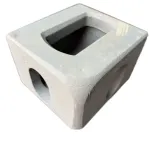
Every shipping container in the world — all 40 million of them — rests on eight critical components. Corner castings are the load-bearing blocks at each corner of an ISO shipping container, and they are the universal interface between the container and every crane, twistlock, spreader, and chassis on the planet. When you lift a container, stack it nine high on a ship, or lock it to a truck trailer, every ton of force flows through these fittings.

Construction cabin – selection, tips, dimensions and prices
Every construction project – whether a family house, a development project or a reconstruction – starts with the infrastructure. No construction manager, craftsman or investor who needs an on-site office, a changing room for workers or a safe storage for tools can do without a quality construction cell. But navigating the offer is not easy: residential containers, sanitary cells, storage modules, rental, purchase, refurbished pieces… This guide will give you answers to all the essential questions in one place.
Storage container
A storage container is a lockable steel box designed for the safe and dry storage of materials, tools, goods or equipment. Originally created as a shipping container for maritime transport, its durability and versatility have found their way onto construction sites, corporate premises and private land.
Shipping container 12m (40 ft)
A 12m shipping container is an investment that, if properly selected and cared for, will pay off in decades of trouble-free use. Whether you plan to use it as a warehouse, workshop, garage or the basis for a residential module — the key is careful selection of the condition, a thorough inspection before purchase and high-quality preparation of the base for placement. Take the time to compare offers, check the seller’s references and do not hesitate to personally inspect the container before buying. A properly selected 40-foot container will serve you reliably for many years.