
20-foot shipping container
The 20-foot shipping container is one of the most common transport and storage containers in the world. In practice, it is used in maritime, rail, and road transport, and equally often as a secure storage, technical facility, workshop, or base for container conversions. If you are looking for a clear explanation of its dimensions, load capacity, how many pallets fit inside, and when it is better than a 40-foot version, you will find a complete overview here.
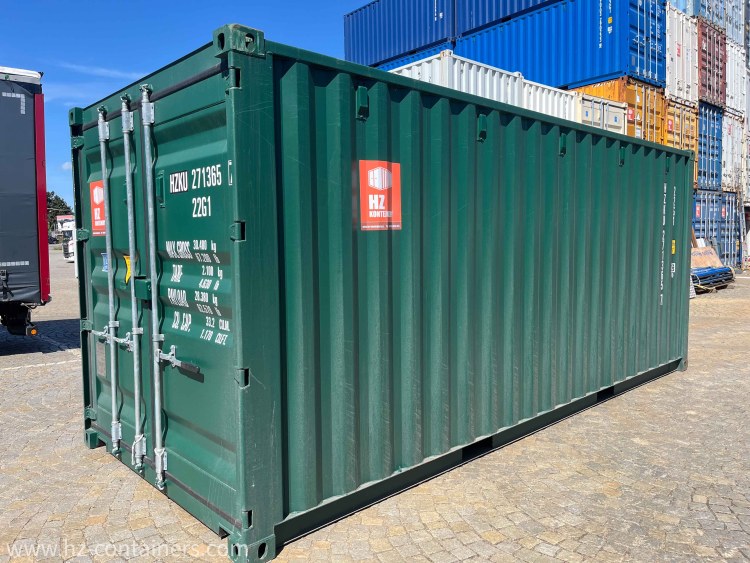
A 20-foot shipping container is a standardized ISO container with a length of approximately 6 meters, designed for intermodal transport and universal storage.
At first glance, it may seem simple: a steel box with doors. In reality, however, the details matter. The difference between new, used, and “one-trip” can mean tens of thousands of crowns. The difference between the standard and High Cube version, on the other hand, will determine whether specific technology, palletized cargo, or a planned interior fit inside.
What is a 20-foot shipping container?
The 20-foot shipping container is a standard transport unit that was created for easy handling between ship, train, truck, and terminal without the need to rehandle the goods themselves. It is precisely this standardization that transformed modern logistics: instead of manually reloading individual shipments, the entire closed container is moved.
How is a 20ft container defined in practice?
The designation “20-foot” is based on a length of approximately 20 feet, or roughly 6.06 meters. In commercial and logistics practice, you may also encounter the designations 20 ft container, 20′ container, or simply 20ft shipping container. In Czech, the term 6m shipping container is also used, although technically this is not a completely exact rounding.
This type belongs to the family of ISO containers, i.e., containers manufactured according to international standards. Thanks to this, they have compatible corner fittings, structural parameters, and dimensional tolerances for handling in the global transport network.
What do the designations DV, DC, GP, and SD mean?
With a 20-foot shipping container, abbreviations often appear that can confuse buyers:
- DV / DC – dry van / dry container, i.e., a standard dry container
- GP – general purpose, universal use
- SD – sometimes used as a designation for standard height or storage category depending on the specific seller
- HC – high cube, i.e., the raised version
In practice, these abbreviations partially overlap, and different sellers use them somewhat differently. Therefore, it is always more important to check the actual technical parameters than just the commercial name.
Where did the 20-foot shipping container come from and why did it become the standard?
The 20-foot shipping container is not a random size. It is the result of standardization that was meant to speed up transport, reduce cargo damage, and lower handling costs.
How did containerization come about?
Before the container era, goods were loaded piece by piece: crates, bags, barrels, and pallets were reloaded individually. That was slow, expensive, and risky. With the advent of containerization, the entire flow of goods began to be managed according to uniform transport modules. Ships, ports, wagons, and chassis gradually adapted to this.
The standard 20ft format became one of the fundamental building blocks of this system. In logistics, the unit TEU (Twenty-foot Equivalent Unit) is also derived from it, i.e., the equivalent of one 20-foot container.
Why exactly 20 feet?
Twenty feet represents a good compromise between capacity, weight, and handling. The container is large enough for a significant amount of cargo, yet compact enough for easier placement, transport, and use outside of large logistics areas.
This is also why the 20-foot shipping container is popular not only in transport but also in construction, industry, agriculture, and among companies that need a mobile or secure storage.
What are the dimensions, weight, and volume of a 20-foot shipping container?
Dimensions are the first thing most people address. However, knowing just the length is not enough. For real use, the internal length, width, height, door opening dimensions, and weight limits are equally important.
What are the external and internal dimensions?
A standard 20-foot shipping container usually has these parameters:
| Parameter | Approximate value |
|---|---|
| External length | 6,058 mm |
| External width | 2,438 mm |
| External height | 2,591 mm |
| Internal length | approx. 5,900 mm |
| Internal width | approx. 2,350 mm |
| Internal height | approx. 2,390 mm |
| Door opening width | approx. 2,340 mm |
| Door opening height | approx. 2,280 mm |
| Volume | approx. 33 m³ |
Specific numbers may vary slightly depending on the manufacturer, age of the container, or the type of flooring and interior lining. Therefore, when making a purchase decision, it is wise to use the table as an approximate basis and request the technical sheet of the specific unit before final ordering.
How much does it weigh and how much can it carry?
In addition to dimensions, the weight specification is also essential. It determines how much you can safely load and whether the container will be suitable for heavy or light bulky cargo.
| Weight parameter | Approximate value |
|---|---|
| Tare (empty container) | approx. 2,200 to 2,300 kg |
| Maximum gross weight | approx. 28,000 to 30,480 kg |
| Payload / load capacity | approx. 25,000 to 28,000 kg |
For common use, the most practical way to think about it is this: a 20-foot shipping container is very suitable for heavier and compact cargo, because it offers a high load capacity relative to its volume. This is also one of the main differences compared to the 40ft version, which tends to be more advantageous for bulky but light goods.
Why is it not enough to look only at volume?
Many buyers look only at the figure in cubic meters. That is a mistake. If you transport heavy materials, machinery, or dense goods, you will hit the weight limit sooner than the space limit. Conversely, for light but bulky goods, volume is decisive.
In other words: a 20-foot shipping container is not “a small 40ft container,” but a distinct solution for a different type of logistics and storage scenario.
How many pallets and what kind of cargo fit in a 20-foot shipping container?
Pallet capacity is one of the most common questions, because it translates technical numbers into practice.
How many pallets fit in a 20-foot container?
It is usually stated that a 20-foot shipping container holds approximately:
- 10 to 11 EUR pallets depending on the dimensions, height of the cargo, and the method of stacking
- more pieces of smaller standardized packaging if stacking is optimized
What matters is not just the floor area. The handling space, the ability to open the doors, the height of the cargo, and whether the goods are to be loaded manually, by forklift, or as a complete unit are also important.
What kind of cargo is typically placed in it?
A 20-foot shipping container is used for a wide range of cargo:
- dense and construction materials
- machinery and parts
- archive materials
- spare parts
- consumer goods
- construction site equipment
- seasonal storage stocks
It works well wherever a combination of durability, lockability, mobility, and high load capacity is needed. That is why it is popular beyond pure maritime transport.
How does the construction of a 20-foot shipping container work?
The durability and safety of a container rest on the quality of its construction. A container is not just a sheet metal box, but a precisely designed whole that must withstand loading, stacking, vibrations, and weather influences.
What makes up a 20-foot shipping container?
The base consists of:
- a steel frame
- corner castings for attachment and handling
- profiled walls and roof
- solid flooring, often on a wooden base
- double-wing lockable doors
Corten steel is often used, which is more resistant to corrosion than ordinary structural steel. This does not mean the container does not rust at all, but that it handles the demanding conditions of long-term operation better.
Why is a container so durable?
The durability stems from the fact that the load is transmitted mainly through the frame and corner parts. Thanks to this, containers can be stacked, lifted by crane, and safely transported between different modes of transport. The standardization of the corner fittings also enables easy attachment with twist locks and other handling techniques.
If you are buying a container for stationary use, construction quality remains important. It determines how well the doors will work, whether the skeleton will retain its geometry, and how long the floor and roof will last without major repairs.
What is the difference between a 20-foot and 40-foot shipping container?
This is a key decision when purchasing. Many people automatically assume that a larger container is always more advantageous. That is not true.
When does a 20-foot shipping container make sense?
The 20ft version is suitable when:
- you need high load capacity relative to volume
- you have limited space on the property
- you want simpler transport and handling
- you store dense or heavy materials
- you are looking for more flexible placement
It is precisely in these situations that a 20-foot shipping container is more practical than a longer alternative.
When does the 40ft version make sense?
The 40-foot container is more advantageous mainly where volume prevails over weight. Typically this is lighter but larger goods, or projects where the priority is as much internal space as possible per unit.
| Property | 20-foot standard | 20-foot High Cube | 40-foot standard |
|---|---|---|---|
| Length | approx. 6.06 m | approx. 6.06 m | approx. 12.19 m |
| Height | approx. 2.59 m | approx. 2.90 m | approx. 2.59 m |
| Volume | approx. 33 m³ | higher than standard | approx. 67 m³ |
| Typical advantage | load capacity and compactness | more height | more volume |
| Typical use | heavier cargo, storage | technology, interiors | bulky goods |
The best choice, therefore, depends not only on price, but mainly on whether you are limited by weight, volume, or placement space.
What is the difference between a standard and a High Cube 20ft container?
The High Cube is a raised version of the standard 20ft container. The length and width remain essentially the same, but the height increases.
What is different about the High Cube?
The main difference is in the internal height and thus in the usable volume. This is useful where you need:
- taller cargo
- technological equipment
- conversion into a technical or operational space
- more comfort when converting to an office or workshop
Is the High Cube always worth it?
No. If you store standard palletized goods or dense materials, the taller version may not bring you a significant advantage. It is often more expensive and may not be as readily available as the standard version. The High Cube makes sense when you really use the extra height, not just because “bigger is better.”
What is a 20-foot shipping container used for?
The strength of this type of container lies in its versatility. It is standardized enough for logistics and at the same time practical enough for local operations.
How is it used in transport and storage?
The most classic use is the transport of dry cargo and safe storage. Companies use it as:
- a material storage on construction sites
- an external storage next to a production hall
- a seasonal storage of goods
- a lockable facility for tools and equipment
- an intermediate storage in logistics
The advantage is rapid deployment without the need for conventional construction. If you have a prepared place and transport, the storage can be available very quickly.
Where does conversion make sense?
The 20-foot shipping container is often the basis for:
- mobile offices
- technological containers
- workshops
- service facilities
- retail or pickup points
- temporary construction site cabins of higher quality
It is precisely here that a container is shown to be not just a transport package, but a modular structural element. In some projects it is more worthwhile than a brick building, in others it is not. The length of use, the required comfort, and the extent of modifications are what matter.
How to choose a 20-foot shipping container when buying?
When buying, price is not the only factor that matters. It is important whether you want the container for transport, storage, or conversion.
Is it better to choose new, one-trip, or used?
The following division generally applies:
- new / one-trip – the best condition, good aesthetics, higher price
- used – cheaper, but quality varies from piece to piece
- decommissioned / AS IS – low price, suitable only where significant wear is not a problem or repairs are planned
If the container will be representative, will be located at customer sites, or you want to convert it into an office, a better starting condition usually pays off. For a purely operational storage, even a used unit can make economic sense.
What to watch out for when inspecting the condition?
Before buying, check in particular:
- the tightness of the roof and corners
- the condition of the floor
- corrosion of the frame and the bottom
- functionality of the doors and locks
- deformations after handling
- odor, moisture, and signs of chemical contamination
- availability of documentation and any certification
A good container does not have to be perfectly pretty, but it should be structurally sound, closable, and watertight for the intended use.
How to handle transport and placement?
A practical mistake of many buyers is that they deal with the container before the site. Yet it is precisely transport and placement that often decide the actual price of the whole project.
It is necessary to verify:
- whether a vehicle with a container can reach the site
- whether there is space for unloading
- whether the surface is level and load-bearing
- whether the container will stand on footings, panels, or another foundation
- whether you need a hydraulic arm, crane, or just a standard unload
Without this preparation, even an advantageously purchased 20-foot shipping container can become expensive.
How much does a 20-foot shipping container cost?
Price is one of the most variable parameters. There is no one universal amount that would apply permanently.
What affects the price the most?
Most often, what decides is:
- technical condition
- age and visual wear
- standard vs. High Cube
- new, one way, used, or decommissioned unit
- location and distance of transport
- current market availability
- additional modifications, coatings, windows, electrical installation
With Czech sellers, you will often find that the price of the container itself looks attractive, but the final sum is significantly affected by transport, handling, and VAT.
Why do prices fluctuate?
The container market responds to global transport, steel prices, the availability of empty units, and regional demand. In other words: price is not just a matter of material, but also of logistics. That is why, for the same type, offers in different periods can differ noticeably.
What myths and common mistakes are associated with a 20-foot shipping container?
A number of simplifications circulate around containers. Some are harmless, others lead to costly mistakes.
What mistakes do people make most often?
Common mistakes include, for example:
- “A 20ft container fits anywhere.” – It does not. You need not only space for the footprint, but also access and handling space.
- “Every used container is automatically watertight.” – It does not have to be. That needs to be verified on a specific unit.
- “When it is shorter, it will always be cheaper than a 40ft.” – Not necessarily. It depends on the market, condition, and transport.
- “Any decommissioned container is sufficient for storage.” – Only if you do not mind reduced functionality, corrosion, or repair costs.
What needs to be checked before use?
Before deployment, it is wise to check not only the technical condition, but also the real operational scenario. Will you drive a pallet truck into the container? Will it stand in wind and rain all year round? Do you need ventilation, electrical installation, or insulation? Only these questions will reveal whether a standard unit, a better condition, or a specialized modification is more appropriate.
What is the future of 20-foot shipping containers?
Although it is a traditional logistics element, its use is expanding. The reason is simple: companies are looking for fast, mobile, and reusable solutions.
Where is their use moving?
Strong trends include:
- modular storage
- technical containers
- energy and battery containers
- mobile operational facilities
- container conversions for business
The 20-foot shipping container is very versatile in this respect, because it combines a reasonable size with market availability.
Will containers still be important?
Yes, but the way they are used outside of classical transport will probably change. The quality of modifications, energy efficiency, resistance to condensation, and easy reusability will become increasingly important. It is no longer just about transporting goods, but about flexible infrastructure.
Frequently asked questions about the 20-foot shipping container
What is a 20-foot shipping container?
A 20-foot shipping container is a standardized ISO transport container approximately 6 meters long. It is used for intermodal transport, storage, and various conversions.
What are the dimensions of a 20-foot shipping container?
It typically has external dimensions of approximately 6,058 × 2,438 × 2,591 mm. The internal space is usually around 5.9 × 2.35 × 2.39 m, depending on the specific design.
How much can a 20-foot shipping container carry?
The load capacity usually ranges approximately between 25 and 28 tons depending on the type and certification of the specific unit. An empty container weighs roughly 2.2 to 2.3 tons.
How many pallets fit in a 20-foot container?
Usually about 10 to 11 EUR pallets. The exact number depends on the pallet dimensions, cargo height, and the method of loading.
What is the difference between a 20-foot and 40-foot container?
The 20ft container is more compact and very suitable for heavier cargo or smaller spaces. The 40ft version offers significantly greater volume and is suitable for lighter, bulkier goods.
What does “one-trip” mean?
It is a container that was typically used only once for transport from production to the destination. It is usually in very good condition and represents a compromise between a new and a used unit.
Is a used 20-foot shipping container worth it?
Yes, if it is technically sound and matches the planned use. For an ordinary storage, a used unit can be a very reasonable economic solution.
Is a standard or a High Cube 20ft container better?
It depends on the use. The standard is suitable for most common purposes, while the High Cube is suitable where you need more height or are planning an interior fit-out.
What to watch out for when buying?
The most important things are tightness, condition of the floor, corrosion, functionality of the doors, frame deformation, and the logistics of transport to the destination.
How much does a 20-foot shipping container cost?
The price depends on the condition, type, availability, transport, and any modifications. Therefore, it is always better to compare the total price including transport and handling, not just the price of the container itself.
 Italy, Genova
  WITHOUT SHIPPING


Other container news...
Corner casting steel vs aluminum
Every shipping container in the world — all 40 million of them — rests on eight critical components. Corner castings are the load-bearing blocks at each corner of an ISO shipping container, and they are the universal interface between the container and every crane, twistlock, spreader, and chassis on the planet. When you lift a container, stack it nine high on a ship, or lock it to a truck trailer, every ton of force flows through these fittings.

Construction cabin – selection, tips, dimensions and prices
Every construction project – whether a family house, a development project or a reconstruction – starts with the infrastructure. No construction manager, craftsman or investor who needs an on-site office, a changing room for workers or a safe storage for tools can do without a quality construction cell. But navigating the offer is not easy: residential containers, sanitary cells, storage modules, rental, purchase, refurbished pieces… This guide will give you answers to all the essential questions in one place.
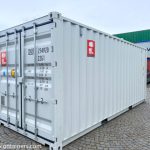
Storage container
A storage container is a lockable steel box designed for the safe and dry storage of materials, tools, goods or equipment. Originally created as a shipping container for maritime transport, its durability and versatility have found their way onto construction sites, corporate premises and private land.
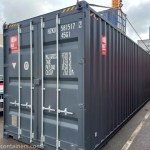
Shipping container 12m (40 ft)
A 12m shipping container is an investment that, if properly selected and cared for, will pay off in decades of trouble-free use. Whether you plan to use it as a warehouse, workshop, garage or the basis for a residential module — the key is careful selection of the condition, a thorough inspection before purchase and high-quality preparation of the base for placement. Take the time to compare offers, check the seller’s references and do not hesitate to personally inspect the container before buying. A properly selected 40-foot container will serve you reliably for many years.