
Shipping container in RAL 1014 – ivory
What is a shipping container in RAL 1014 – ivory?
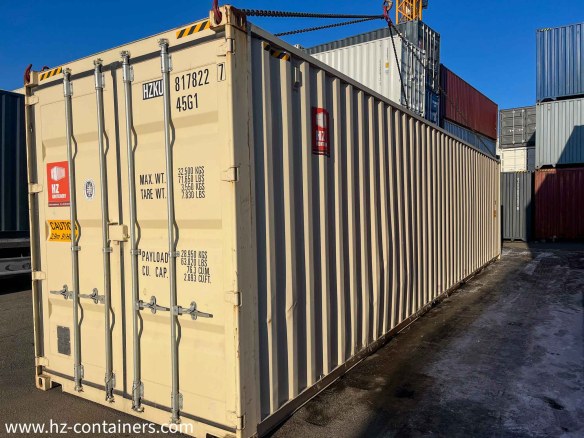
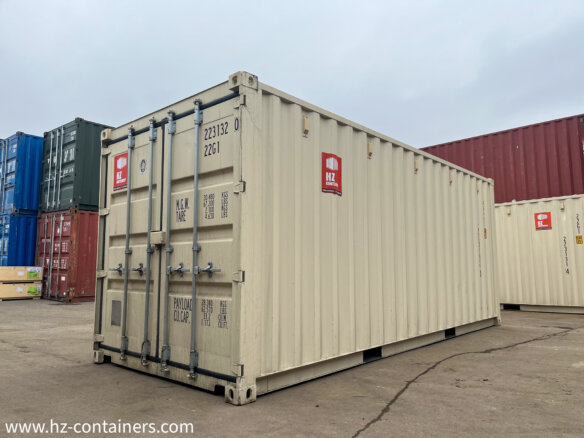
Shipping container in RAL 1014 – ivory is a standardized intermodal container whose outer surface is coated in the shade RAL 1014 according to the international colour system. This shade is known as “ivory” and represents a light, softly creamy colour with a warm tone.
It combines two basic values:
- Industrial robustness: Construction from Corten steel according to ISO standards, with high resistance to corrosion, mechanical damage and weather influences. Shipping containers are designed for global transport and repeated stacking.
- Aesthetic and functional surface treatment: A specific coating in the ivory shade that is not only a design element but also significantly influences practical properties of the container (e.g., thermal reflectivity, visibility, branding possibilities).
Such a container is ideal not only for transport and storage but also for architectural conversions – offices, apartments, shops or public spaces. The choice of RAL 1014 is common especially where a combination of elegance, neutrality and functionality is required.

Detailed definition and components
Physical structure of a shipping container
Standardization, standards and materials
| Property | Description |
|---|---|
| Standards | ISO 668 (dimensions and types), ISO 1496 (construction, strength), ISO 6346 (identification) |
| Material | Corten steel – self‑regenerating surface, high resistance to atmospheric corrosion |
| Dimensions (most common) | 20 ft (6.06 × 2.44 × 2.59 m), 40 ft (12.19 × 2.44 × 2.59 m), High Cube height: 2.89 m |
| Load capacity | 20′ DC: approx 28 000 kg, 40′ DC: approx 30 480 kg |
| Service life | 15–25 years with proper maintenance and quality surface treatment |
| Construction | Welded frame structure, steel walls, doors with sealing. Corner castings enable stacking, crane handling, and securing on a trailer. |
| Advantages of Corten steel | Forms a protective patina that significantly slows further corrosion. Often combined with multi‑layer coating for maximum lifespan. |
Types of containers suitable for RAL 1014
- Standard (DC – Dry Container) – most common, suitable for ordinary cargo.
- High Cube (HC) – increased height, more volume – suitable for residential and office modules.
- Specials – side‑door, open‑top, reefer (refrigerated) – individual colour can also be ordered.
RAL 1014 – Ivory
What is the RAL system?
- RAL Classic – the most widespread industrial colour standard, originated in Germany in 1927. Each shade has a four‑digit code that ensures consistency across manufacturers and countries.
- Use – paints, coatings, powder coats, plastics, industrial products, construction, architecture.
- Benefit – minimizes errors when specifying a shade. RAL 1014 is precisely defined for repeat production.
Characteristics of the RAL 1014 shade
| Property | Description |
|---|---|
| Name | Ivory |
| Appearance | Light yellow to creamy with a subtle warm undertone. Luxurious, soft, natural effect. |
| Comparison | Warmer than RAL 1015 (Light Ivory), less earthy than RAL 1001 (Beige). |
| Use | Interiors, exteriors, houses, commercial spaces, containers, design projects. |
Why choose RAL 1014 for containers?
- Aesthetics – neutral and elegant appearance, suitable for modern architecture, shipping container homes, offices, public spaces.
- Thermal reflectivity – light shade reflects solar radiation, reducing interior heating by up to 8–12 °C compared with dark colours.
- Practicality – better masks dust and minor dirt than pure white.
- Branding – excellent background for advertising, logos, wraps.
Importance of coating and surface treatment of the container
The coating is a key element that extends the service life and preserves the value of the container.
Functions of the coating
- Protection of steel from corrosion – quality coating system protects against aggressive influences (salt, water, UV radiation, chemicals, mechanical damage).
- Aesthetics – maintains a uniform appearance, increases resale value, allows for custom design.
- Safety and identification – specific colours for different cargo types, enhanced visibility.
Types of coatings on containers
| Layer | Purpose and properties |
|---|---|
| Surface preparation | Thorough cleaning, sandblasting to bare metal – essential for coating adhesion. |
| Primer | Anti‑corrosion primer (often epoxy). Provides long‑term protection and adhesion for subsequent layers. |
| Intermediate coat | Increases thickness of protective film, improves barrier effect against moisture. |
| Top coat | Polyurethane or acrylic enamel – high UV stability, colour stability, mechanical resistance, aesthetics. |
| Powder coating | Modern method with high durability, uniformity and environmental efficiency (cured in a furnace). |
Recommended total coating system thickness: 120–180 µm.
Selected coating systems for containers (according to Colorlak)
- Epoxy base + polyurethane top coat
- Acrylic systems for rapid drying and good resistance
- Special anti‑corrosion systems for extreme conditions
Influence of colour on temperature and service life
- Light shades (including RAL 1014) – significantly reduce overheating, suitable for residential and office conversions, storage of sensitive goods.
- Dark colours – absorb more heat, better suited for technical or anonymous storage.
- Coating lifespan – a quality multi‑layer system combined with regular maintenance can extend the container’s service life to up to 25 years.
Comparison of RAL 1014 with other colours in practice
| RAL code | Name | Appearance / Use | Advantages of RAL 1014 |
|---|---|---|---|
| RAL 1015 | Light Ivory | Slightly lighter, gentle tone | Warmer, less sterile |
| RAL 9010 | Pure White | Bright white, maximum reflectivity | Less conspicuous, more practical |
| RAL 5010 | Gentian Blue | Strong blue, corporate fleets | Less industrial, warmer |
| RAL 6005 | Moss Green | Dark green, nature, farms | Modern, neutral |
| RAL 7016 | Anthracite Grey | Modern dark grey, architecture | Lighter, “softer” effect |
| RAL 3001 | Signal Red | Vivid red, safety | Decent, non‑intrusive |
Trends – Growing demand for light and neutral shades in the architectural conversion and residential project segments.
Purchasing or refurbishing a container in RAL 1014
Acquisition options
- New container from factory – colour selection directly from the manufacturer/supplier. Coating warranty, factory quality.
- Used container – refurbishment
- Complete cleaning, sandblasting/grinding
- Repair of damaged areas
- Multi‑layer coating (primer + 2× top coat in RAL 1014)
- Visual and functional rejuvenation, price lower than a new container
Refurbishment procedure (summary)
- Mechanical cleaning (sandblasting/grinding)
- Degreasing
- Application of anti‑corrosion primer
- Two layers of RAL 1014 top coat
Regular inspection and maintenance (repair of damage, local touch‑up) significantly increase service life and aesthetic value.
RAL 1014 in architecture and practical conversions
Areas of use
- Shipping container homes, tiny houses – modern, light and pleasant appearance.
- Offices, studios, showrooms – emphasis on elegance and representation.
- Pop‑up shops, cafés, exhibition stands – attractive background for branding and wraps.
- Premium storage – units in RAL 1014 look luxurious and unobtrusive in modern corporate areas and private properties.
- Public spaces and urban furniture – discreet integration into surroundings (park storage, event infrastructure, etc.).
Benefits compared with other colours
- Universality – can be combined with wood, metal, glass or natural stone.
- Thermal comfort – suitable even for warmer climate zones.
- Marketing value – logos, wraps and graphic elements stand out well.
Technical tips and recommendations for customers
- When selecting a colour, always request a sample (RAL colour chart) – monitors distort shades.
- For refurbishment, verify the type of coating system used and the thickness of layers.
- Regularly check the condition of the coating, especially at welds, corners and doors.
- For architectural projects, consult the colour with the designer to ensure it fits the surrounding environment.
 Czech Republic, Vlašim
  FREE SHIPPING

Other container news...

Obligation to Check Tightness When Selling a Reefer Container
Who is responsible for the refrigerant leak check when selling a refrigerated container? Find out what obligations the seller has at the time of handover and why they must provide a PTI report along with the technical data plate. Learn which regulatory requirements and F-gas record-keeping duties become the sole responsibility of the new owner.

New shipping containers
If you are currently considering purchasing a new shipping container, you are not alone. While just twenty years ago containers were used almost exclusively for maritime transport, today they have found their way into construction, storage, business, and even housing. This growing popularity brings with it a host of questions: Which type should you choose? How much does it cost? How do you recognize quality? How can you avoid falling victim to scammers?
New sea shipping containers
If you are currently considering purchasing a new shipping container, you are not alone. While just twenty years ago containers were used almost exclusively for maritime transport, today they have found their way into construction, storage, business, and even housing. This growing popularity brings with it a host of questions: Which type should you choose? How much does it cost? How do you recognize quality? How can you avoid falling victim to scammers?

6m shipping container
Are you thinking about buying a 6-meter shipping container but aren’t sure what to look for? You are not alone—this 20-foot container is the best-selling size on the Czech market, and the differences between various types, conditions, and prices can be significant. In this guide, you will find everything you need to know: from exact dimensions and a comparison of categories (such as “one-way,” refurbished, and “Cargo Worthy”) to current prices and shipping advice.