
Construction container
Every construction project, whether it’s a family home, apartment renovation, or a large development project, needs a base of operations. And a construction container is the most practical solution — the question is not whether you need one, but what type and under what conditions. In this guide, we will explain step by step what types of construction containers exist, how much their rental or purchase costs, how the ordering process works, and what legal requirements to pay attention to.
Types of Construction Containers — Overview and Comparison
The term construction container actually encompasses several completely different products. Each serves a different purpose and has different technical parameters. Let’s break them down clearly.
Storage Container — A Secure Safe for Tools and Materials
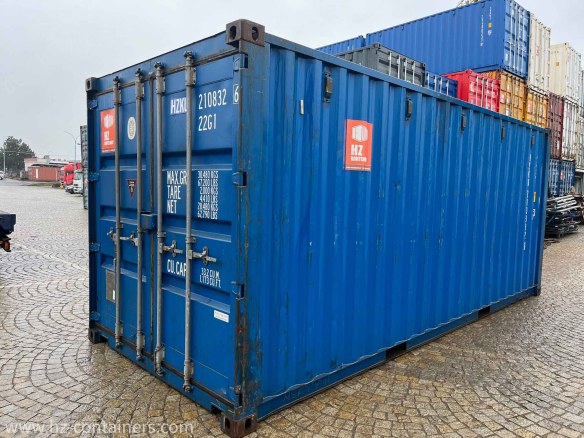
A storage container is the most common choice for securing tools, construction materials, machinery, and other equipment directly on the construction site. It is based on the design of a shipping container — it is an all-steel, robust box that withstands weather conditions and attempts at break-ins.
The most common size is 20 feet (approximately 6 × 2.4 × 2.6 meters), offering roughly 33 m³ of storage space. Smaller 10-foot variants (approx. 3 × 2.4 × 2.6 m) are suitable for smaller projects or tight spaces. There are also larger 40-foot containers, which are, however, used less frequently on typical construction sites.
Storage containers differ according to their condition — we distinguish three main categories:
- One Way: Practically new containers with minimal wear. Suitable for representative purposes or long-term use.
- Cargo Worthy: Used but fully functional containers with mild wear. The most common choice for construction sites — the price/performance ratio is the best here.
- As Is: Cheap containers with visible wear that may have minor defects. Suitable mainly for short-term storage of durable materials.
Czech Republic, Ostrava — Shipping container Ostrava, 20 feet, IICL 6 quality, 274 716-9 — Without transport — 55 500 CZK excl. VAT — 67 155 CZK incl. VAT — ORDER — Inquire
Czech Republic, Třebíč — Construction container BASIC 6×2.4m — insulated, with electrical installation, 182531504 — Without transport — 139 500 CZK excl. VAT — 168 795 CZK incl. VAT — ORDER — Inquire
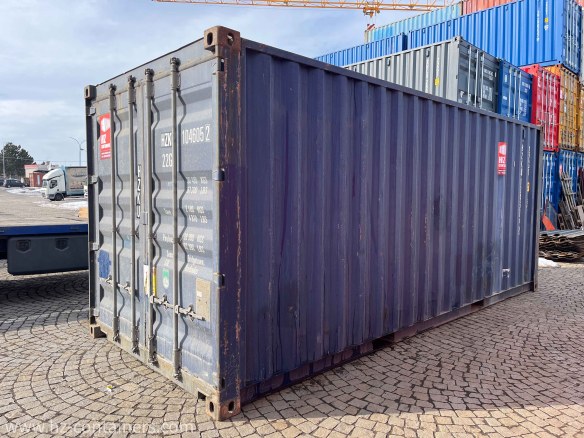
Czech Republic, Rožnov pod Radhoštěm — Cargo container 20 feet — CW quality, 104 605-2 — Free transport — 49 500 CZK excl. VAT — 59 895 CZK incl. VAT — ORDER — Inquire
Czech Republic, Plzeň — FOR SALE: Residential container / Construction cabin — TOP condition (see photos), 182531499 — Without transport — 139 500 CZK excl. VAT — 168 795 CZK incl. VAT — ORDER — Inquire
Residential / Office Container — Facilities for People
While a storage container protects things, a residential container (often referred to as a construction cabin) protects people. It is an insulated, equipped unit that serves as a site manager’s office, a changing room for workers, a rest area, or even as temporary accommodation.
The key difference from a shipping/storage container lies in the insulation. Construction cabins have a sandwich construction with an insulating core (most often polyurethane foam or mineral wool), windows, doors, and electrical installation. Thanks to this, they are habitable year-round — keeping warmth in winter and cool in summer.
The standard size of a residential cabin is 6 × 2.5 meters (approximately 15 m² of floor area). Manufacturers offer a wide range of equipment — from basic models with bare walls and electricity to fully equipped offices with tables, chairs, heating, and air conditioning.
A modular system allows combining multiple units into larger complexes. Do you need an office for two site managers and a changing room for 10 workers? Just connect three cabins and you’re set.
Sanitary Container — Hygiene on the Construction Site
Sanitary containers address one of the most underestimated needs on a construction site: sanitary facilities. Depending on the type, they may contain:
- Toilets (chemical or connectable to the sewer system)
- Urinals
- Sinks with hot water
- Shower stalls
- Water heaters
For the operation of a sanitary container, it is necessary to ensure water supply and waste disposal — either by connection to existing infrastructure or by using mobile tanks and reservoirs. Some models have integrated tanks for clean and wastewater, making them partially self-sufficient.
Debris Container — Waste Removal from the Construction Site
Although it differs significantly from the previous types, a debris container (waste container) is indispensable on construction sites. It is used for the removal of construction debris, soil, wood, plastics, and other waste.
Common sizes range from small 3–5 m³ containers (so-called Avia, load capacity around 3–5 tons) to large-volume 10–40 m³ containers. An important parameter: weight. Never load heavy debris (concrete, bricks) into a large-volume container to the brim — the truck couldn’t lift it.
Most companies charge rental per day (the first few days are usually included in the removal price) plus a fee for waste disposal at the landfill based on weight.
Comparison of All Types of Construction Containers
| Container type | Main purpose | Common dimensions | Insulated | Rental price (from) | Purchase price (from) |
|---|---|---|---|---|---|
| Storage 10′ | Tool and material storage | 3 × 2.4 × 2.6 m | No | 1 500 CZK/month | 35 000 CZK |
| Storage 20′ | Larger equipment storage | 6 × 2.4 × 2.6 m | No | 2 000 CZK/month | 55 000 CZK |
| Residential cabin | Office, changing room, accommodation | 6 × 2.5 × 2.8 m | Yes | 2 900 CZK/month | 120 000 CZK |
| Sanitary cabin | Toilets, showers, washrooms | 6 × 2.5 × 2.8 m | Yes | 3 500 CZK/month | 160 000 CZK |
| Debris 5 m³ | Debris removal | 3.4 × 1.9 × 0.8 m | — | 3 500 CZK/removal | — |
| Debris 10 m³ | Bulky waste removal | 5 × 2.2 × 1 m | — | 5 000 CZK/removal | — |
Prices are indicative and may vary depending on the season and current price. For an exact calculation, contact us or view our current price list.
Rental or Purchase of a Construction Container?
One of the first decisions you have to make: rent or buy? The answer depends on three factors — the length of the project, the type of container, and your future needs.
When Rental Pays Off
Rental is an ideal choice if:
- The construction lasts less than 12 months. For shorter projects, buying simply doesn’t pay off. Renting a storage container will cost you approximately 2 000 CZK per month, so for a half-year project you’ll pay 12 000 CZK — a fraction of the price of a new container.
- You don’t want to deal with logistics after the construction ends. A rented container will be delivered by the supplier and taken away after the construction is completed. No worries about selling or transport.
- You need specific equipment only temporarily. Sanitary cabins or fully equipped office containers are worthwhile to rent exclusively.
When Buying Is Better
Buying makes sense if:
- You are a construction company with multiple projects. Owning a fleet of containers pays off quickly with repeated use.
- The project lasts more than 2 years. With long-term use, the purchase price is spread out and exceeds the cumulative rental costs.
- You want to use the container differently afterwards. A storage container can later become a garden house, workshop, or storage. A construction cabin can be used as a recreational building.
Approximate Cost Comparison: Rental vs. Purchase
| Duration of use | Storage 20′ — rental | Storage 20′ — purchase | Office cabin — rental | Office cabin — purchase |
|---|---|---|---|---|
| 3 months | 6 000 CZK | 55 000 CZK | 8 700 CZK | 120 000 CZK |
| 6 months | 12 000 CZK | 55 000 CZK | 17 400 CZK | 120 000 CZK |
| 12 months | 24 000 CZK | 55 000 CZK | 34 800 CZK | 120 000 CZK |
| 24 months | 48 000 CZK | 55 000 CZK | 69 600 CZK | 120 000 CZK |
| 36 months | 72 000 CZK | 55 000 CZK | 104 400 CZK | 120 000 CZK |
Indicative prices excl. VAT. For rentals, volume discounts are often provided for longer rental periods.
How to Order a Construction Container — Step by Step
Ordering a construction container is not complicated, but it pays off to proceed systematically. Here is a proven procedure that will save you inconvenience.
Step 1: Determine the Purpose and Type of Container
Before you start calling suppliers, clarify three things:
- What will you store in the container? Tools and material → storage container. People → residential cabin. Hygiene → sanitary cabin. Waste → debris container.
- How much space do you need? For a typical family home construction, one storage 20′ container and one office cabin are usually sufficient.
- How long will you need it? This determines the economics of rental vs. purchase (see previous chapter).
Step 2: Check the Access Road and Placement Location
This is the step that beginners most often underestimate. The truck delivering the container (carrier or hydraulic arm) is heavy and wide — it needs:
- A paved road with a load capacity of at least 20 tons. Soft terrain, mud, or a broken dirt road can mean the truck gets stuck.
- A passage width of at least 3 meters. Gates, fences, and narrow streets must be measured in advance.
- Sufficient space for handling. A container carrier needs space for tipping and setting down the container — count on an area of approximately 15 × 5 meters.
- A level, paved base under the container. For long-term placement, we recommend concrete panels, gravel bedding, or at least wooden beams to prevent subsidence.
Step 3: Arrange Permits and Public Space Occupation
This is where it gets serious. If you place the container on your own property, you don’t need any permit. But if it has to stand on a sidewalk, street, or other public space, you need an occupation permit.
- You submit the application at the local authority (transport department or public space administration).
- The fee is calculated based on the area of occupation and the duration — in Prague, count on 5–15 CZK/m²/day, less in smaller towns.
- Processing usually takes 2–4 weeks, so plan ahead.
- For the application, you need: a site plan with the marked placement, consent of the owner of the affected road, and in the case of sidewalk occupation, a statement from the Czech Police.
Step 4: Clarify These Points
- Rental/purchase price — basic rate per month or piece
- Transport price — delivery and pickup — the price is determined by the destination
- Rental conditions — minimum period, notice period, penalties for damage
- Availability — how quickly they can deliver the container
Among the main suppliers of construction containers in the Czech Republic is, for example, HZ-Containers.
Step 5: Site Preparation and Transport
Before the container arrives, ensure:
- A cleared and leveled area
- A prepared base (panels, gravel, beams)
- An open gate and clear access road
- The presence of a responsible person on site
The actual placement of the container takes 10–20 minutes. After placement, check that the container stands level and that the doors open properly.
Permits and Legislation — What You Need to Know
The legal side of placing a construction container is often overlooked but essential. Let’s break it down clearly and comprehensibly.
Public Space Occupation — When and How to Apply
A container standing on public space (sidewalk, road, public parking, municipal land) is subject to a permit. Without it, you risk a fine and forced removal.
Procedure:
- Contact the relevant municipal/city authority — the transport or public space administration department.
- Submit a written application stating: the exact location, dimensions of the occupation, reason, and duration.
- Attach a site plan and consent of the road owner.
- After approval, you will receive a decision on special use of the road and a fee assessment.
Important: You must have the occupation permit arranged before the container is placed, not afterwards. Authorities are usually strict about this.
Building Law and Containers — What Is and Isn’t a Building
A shipping container placed on land without a permanent connection to the ground usually does not require a building permit — it is considered mobile equipment, not a building within the meaning of the building law.
The situation changes if:
- You permanently connect the container to the ground (foundations, concrete slab with anchoring elements)
- You connect it to utility networks (water, sewer, electricity from a permanent connection)
- You plan to use it as a permanent building (housing, office)
In such a case, it is already a building requiring at least a zoning consent, often also a building permit. Always consult your intention with the local building authority.
Placement on Your Own Property
If the construction container stands on your private property, you do not need an occupation permit. However, the following obligations still apply:
- Do not violate the rights of neighbors (noise, shading, odor)
- Comply with any restrictions from the zoning plan
- Ensure that the container does not interfere with protective zones of networks
The Most Common Mistakes When Choosing and Renting a Construction Container
Over the years of practice in the field, we have seen recurring mistakes that you can easily avoid.
Underestimating the Access Road
The most common problem: the truck with the container cannot reach the destination. The access road must be paved and wide enough. If you are not sure, send the supplier photos of the road in advance — you will save yourself complications on the day of delivery.
Wrong Size Estimate
“A 20-footer is small, let’s take a 40-footer right away.” — And then you find out that a 40-foot colossus doesn’t fit on the property, or that you use only half of it. For a typical family home construction, a 20-foot storage container and one office cabin are optimal. Only take a larger container if you have a specific plan for what to put in it.
Ignoring Insulation and Heating
A storage container is not a residential cabin. In winter, it freezes inside; in summer, it’s a sauna. If people will be working in it, you need an insulated variant with heating and ventilation. An uninsulated container is suitable exclusively for storing materials and tools that are resistant to temperature fluctuations.
Not Securing Against Break-Ins
A standard shipping container has massive doors, but the lock is only as secure as its quality. Invest in a security padlock with cut protection and ideally also in a lock box that protects the lock from direct attack.
FAQ
What Is the Difference Between a Shipping Container and a Construction Cabin?
A shipping container is an all-steel, uninsulated box originally designed for maritime transport. On a construction site, it serves as a storage for tools and materials. A construction cabin (residential container), on the other hand, is an insulated unit with windows, doors, and electrical installation, designed for the stay of persons — an office, changing room, or accommodation. The main difference is therefore in the insulation and equipment for people.
How Much Does It Cost to Rent a Construction Container?
The rental price depends on the type: a 20′ storage container costs approximately 2 000–3 000 CZK/month, an office cabin 2 900–5 000 CZK/month, a sanitary cabin 3 500–6 000 CZK/month. For debris containers, a one-time fee is paid for removal (3 500–8 000 CZK depending on size and type of waste). All prices are excl. VAT and indicative.
Do I Need a Permit to Place a Container on My Own Property?
On your own private property, you do not need a permit, provided the container is not permanently connected to the ground and does not serve as a permanent building. However, if the container stands on public space (sidewalk, street, municipal land), you need an occupation permit from the local authority.
How Far in Advance Should I Order a Construction Container?
Ideally 3–4 weeks in advance. If you only need a storage container from a larger supplier, it may be available within a week. But if you need to arrange public space occupation, count on a reserve of at least 4 weeks.
What Is Needed for the Occupation of Public Space for a Container?
You need a written application at the local authority, a site plan with the marked placement of the container, consent of the road owner, and in the case of sidewalk occupation, a statement from the Czech Police. The fee is calculated based on the area of occupation and the duration — usually 5–15 CZK/m²/day.
Can a Construction Container Also Be Used for Living?
In the short term, yes — residential cabins are designed for year-round stay. For permanent living, however, you need a building permit and must meet all the requirements as for a classic building (thermal-technical standards, hygienic requirements, connection to networks). A cabin without a building permit cannot serve as permanent housing.

 Czech Republic, Třebíč
  WITHOUT SHIPPING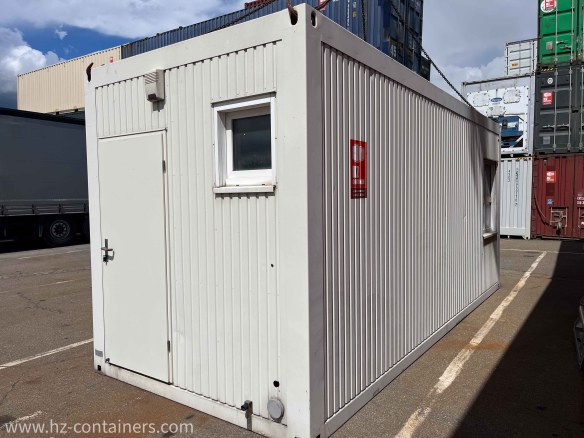
Other container news...

Obligation to Check Tightness When Selling a Reefer Container
Who is responsible for the refrigerant leak check when selling a refrigerated container? Find out what obligations the seller has at the time of handover and why they must provide a PTI report along with the technical data plate. Learn which regulatory requirements and F-gas record-keeping duties become the sole responsibility of the new owner.

New sea shipping containers
If you are currently considering purchasing a new shipping container, you are not alone. While just twenty years ago containers were used almost exclusively for maritime transport, today they have found their way into construction, storage, business, and even housing. This growing popularity brings with it a host of questions: Which type should you choose? How much does it cost? How do you recognize quality? How can you avoid falling victim to scammers?
New shipping containers
If you are currently considering purchasing a new shipping container, you are not alone. While just twenty years ago containers were used almost exclusively for maritime transport, today they have found their way into construction, storage, business, and even housing. This growing popularity brings with it a host of questions: Which type should you choose? How much does it cost? How do you recognize quality? How can you avoid falling victim to scammers?

6m shipping container
Are you thinking about buying a 6-meter shipping container but aren’t sure what to look for? You are not alone—this 20-foot container is the best-selling size on the Czech market, and the differences between various types, conditions, and prices can be significant. In this guide, you will find everything you need to know: from exact dimensions and a comparison of categories (such as “one-way,” refurbished, and “Cargo Worthy”) to current prices and shipping advice.