
Shipping Container in Gray Color RAL 7035
This dictionary article presents a shipping container in gray color RAL 7035 from the perspective of materials engineering, color standards, maintenance and practical use. We will focus on why this particular shade of light gray is so widespread in the container industry, what technical and operational advantages it has, and what role it plays in global logistics.
What is a Shipping Container in Gray Color RAL 7035?
Shipping container in gray color RAL 7035 is a standardized transport unit made of Corten steel (weather-resistant steel), whose surface is covered with a multi-layer protective coating in the precise shade of light gray according to the European RAL system. Typically, this is a so-called general purpose shipping container, used in maritime, rail and road transport. It can also serve as a warehouse, workshop, garage or the basis for residential (shipping container homes) and office modules.
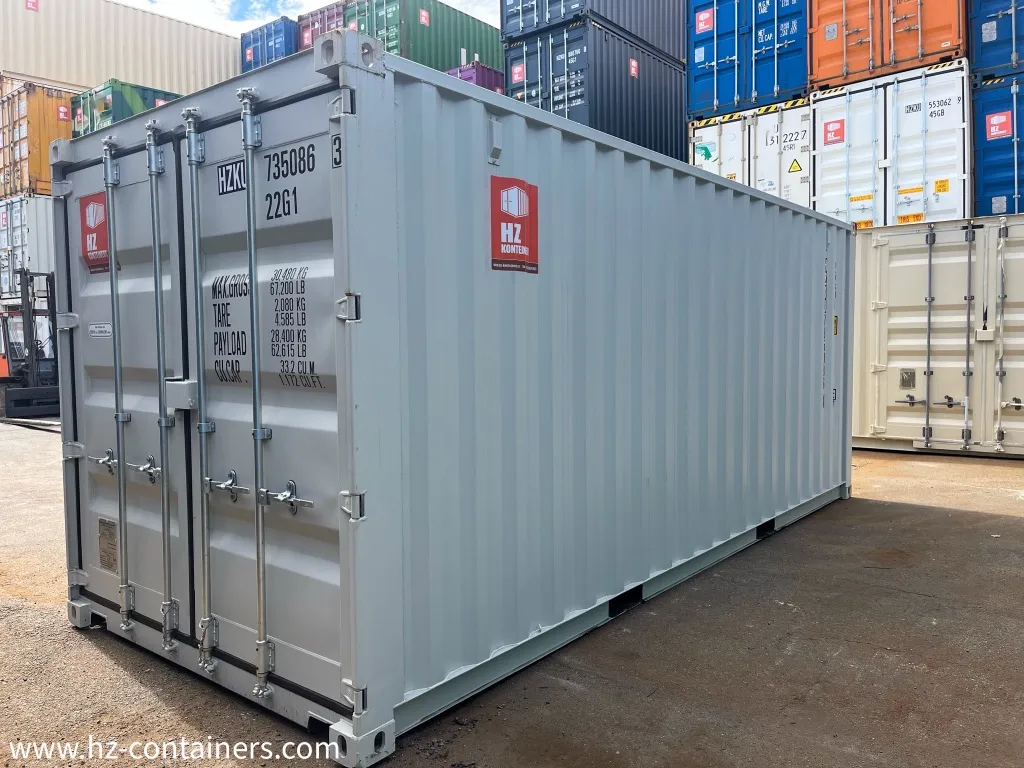
Key Features:
| Component | Meaning | Technical Standards |
|---|---|---|
| Shipping Container | Reusable steel structure for global transport | ISO 668, ISO 6346, CSC label |
| Gray Color | Protection against corrosion, visual neutrality, identification | RAL 7035 |
| RAL 7035 Code | Guaranteed color consistency across manufacturers and batches | RAL Classic, Light Grey |
Anatomy and Construction of Shipping Containers
Material and Structural Elements
- Corten Steel (Weathering Steel): Special alloy with copper, chromium and nickel admixtures. Creates a protective oxidation layer (patina) that prevents deeper corrosion.
- Frame: Robust steel profiles, corner elements (corner castings) allow lifting, stacking and securing the container in transport.
- Walls and Roof: Corrugated steel sheet, typically 1.6–2.0 mm thick, ensures high strength with low weight.
- Floor: Multi-layer plywood from tropical wood (e.g., Keruing, Apitong), typically 28 mm thick. Treated against fungi, insects and moisture.
- Doors: Double-leaf, with opening capability up to 270°, equipped with massive locking bars and sealing for water-tightness.
Typical Dimensions and Categories
| Container Type | External Dimensions (L x W x H, m) | Internal Volume (m³) | Max. Load Capacity (t) | Note |
|---|---|---|---|---|
| 8′ Container | 2.44 x 2.20 x 2.26 | approx. 9 | approx. 8 | Warehouse, small transport |
| 20′ GP (Standard) | 6.06 x 2.44 x 2.59 | approx. 33 | approx. 28 | Most commonly used type |
| 40′ GP (Standard) | 12.19 x 2.44 x 2.59 | approx. 67 | approx. 28 | Transport of bulky goods |
| 40′ High Cube (HC) | 12.19 x 2.44 x 2.89 | approx. 76 | approx. 28 | 30 cm higher |
All containers must comply with international ISO standards, have a valid CSC label (Convention for Safe Containers) and be easily handled by standard container equipment.
RAL System and the Importance of Container Color
What is the RAL System?
- RAL (Reichs-Ausschuss für Lieferbedingungen): German standard for industrial colors, established in 1927.
- RAL 7035 – Light Grey: Four-digit code designating the precise shade of light gray. Ensures color consistency in the production and maintenance of millions of containers worldwide.
Most Commonly Used RAL Colors on Containers
| Color | RAL Code | Typical Use |
|---|---|---|
| Blue | 5010 | Brand containers (Maersk) |
| White | 9003 | Refrigerated containers, interiors |
| Beige | 1015 | Special orders |
| Green | 6007 | Storage and military applications |
| Gray | 7035 | Standard interior, neutral exterior coating |
| Black | 9005 | Specific customer projects |
Importance of Color for Operations and Maintenance
- Protection Against Corrosion: Color acts as the first protective layer against moisture, salts and UV radiation. Modern coatings are multi-layer (base anti-corrosion, intermediate layer, top enamel or polyurethane).
- Visual Identification: Color facilitates distinguishing containers in ports, on construction sites and in warehouses; companies often choose their own corporate color.
- Heat Reflection: Light shades (especially RAL 7035) reflect more solar radiation than dark ones, reducing interior overheating.
- Easy Maintenance and Inspection: Surface rust, scratches and liquid leaks are clearly visible on light gray. This allows for timely maintenance and repairs.
Technical Aspects of Container Coatings in RAL 7035
Composition and Application of Coating
- Base Coat (Primer): Highly anti-corrosive, often epoxy-based.
- Intermediate Layer: To increase resistance to mechanical damage and UV.
- Top Enamel or Polyurethane: Final color layer in the precise RAL 7035 shade.
Manufacturers use both water-based and solvent-based systems depending on environmental and durability requirements.
Advantages of Light Gray RAL 7035
- Versatility: Fits into any environment (industrial areas, cities, nature).
- Standard for Interior: Practically all new and refurbished containers have an interior coating in RAL 7035. The reason is not only neutrality, but also easy inspection of cleanliness and damage.
- Thermal Comfort: Reduces temperature fluctuations inside the container compared to dark shades.
- Marketing and Aesthetics: Clean, professional appearance suitable for companies and private users, easy application of logos and inscriptions.
Maintenance, Repairs and Modification Options
Coating Maintenance
- Regular surface inspection (especially for refurbished containers).
- Removal of surface rust with a wire brush, followed by repainting with base color and final RAL 7035 layer.
- It is recommended to perform a comprehensive inspection every few years and possibly repaint the entire container.
Interior Improvement Options
| Type of Modification | Advantages | Note |
|---|---|---|
| Repainting RAL 7035 | Restoration of original appearance, protection against rust spread | Suitable especially for older containers |
| Insulation + Plywood | Thermal insulation, protection against condensation, better appearance | Interior coating refurbishment not necessary |
| Melamine Board | Easy maintenance, washable surface, suitable for offices | Higher acquisition cost |
| Graphotherm | Anti-condensation spray on ceiling, absorbs moisture | Cheaper than plywood insulation |
Especially when converting containers into offices, warehouses or workshops, it is advisable to combine a refurbished interior in RAL 7035 with additional insulation and aesthetic modifications.
Examples of RAL 7035 Container Use in Practice
- Storage Containers: Ideal for companies that need a neutral appearance and easy maintenance.
- Construction Cabins and Workshops: RAL 7035 color fits into various locations, does not disturb the surroundings.
- Container Cafes and Offices: Light interior looks clean, increases perceived space and is suitable for furniture installation.
- Maritime Transport: Light coating allows quick inspection of cargo condition and possible damage.
Comparison with Other Container Colors
| Color | Advantages | Disadvantages |
|---|---|---|
| RAL 7035 | Versatility, thermal reflectivity, easy maintenance | Less distinctive, may appear dull |
| RAL 9010 | Highest light and heat reflectivity | Very prone to soiling |
| RAL 5010 | Distinctive, corporate identity, easy identification | Overheating in the sun |
| RAL 6007 | Blends with nature, military and forestry applications | Scratches poorly visible |
Frequently Asked Questions and Manufacturer Recommendations
- Is RAL 7035 standard only for interior? No, many manufacturers offer containers with exterior coating in RAL 7035, but it is practically the exclusive choice for interior.
- Why is this shade so popular?
It combines practical properties with a neutral appearance, is readily available and reduces maintenance costs.
- How does interior coating renovation proceed? Surface rust is removed, a base anti-corrosion coating is applied, and then two layers of RAL 7035 color.
Summary and Recommendations
Shipping container in gray color RAL 7035 represents an ideal combination of universal design and high durability. This shade is, due to its properties, a standard not only for interior but increasingly also for exterior of containers used in construction, storage and for conversion into residential (shipping container houses) and commercial spaces.
If you are looking for a container that will look good, is easy to maintain and at the same time offers protection against corrosive influences, RAL 7035 is the right choice. This color is recommended by sellers such as HZ Containers and sellers in the Czech Republic (see Containers Store), who offer it especially for one-way containers and for new pieces.

 Czech Republic, Litoměřice
  FREE SHIPPING

Other container news...

Obligation to Check Tightness When Selling a Reefer Container
Who is responsible for the refrigerant leak check when selling a refrigerated container? Find out what obligations the seller has at the time of handover and why they must provide a PTI report along with the technical data plate. Learn which regulatory requirements and F-gas record-keeping duties become the sole responsibility of the new owner.

New sea shipping containers
If you are currently considering purchasing a new shipping container, you are not alone. While just twenty years ago containers were used almost exclusively for maritime transport, today they have found their way into construction, storage, business, and even housing. This growing popularity brings with it a host of questions: Which type should you choose? How much does it cost? How do you recognize quality? How can you avoid falling victim to scammers?
New shipping containers
If you are currently considering purchasing a new shipping container, you are not alone. While just twenty years ago containers were used almost exclusively for maritime transport, today they have found their way into construction, storage, business, and even housing. This growing popularity brings with it a host of questions: Which type should you choose? How much does it cost? How do you recognize quality? How can you avoid falling victim to scammers?

6m shipping container
Are you thinking about buying a 6-meter shipping container but aren’t sure what to look for? You are not alone—this 20-foot container is the best-selling size on the Czech market, and the differences between various types, conditions, and prices can be significant. In this guide, you will find everything you need to know: from exact dimensions and a comparison of categories (such as “one-way,” refurbished, and “Cargo Worthy”) to current prices and shipping advice.