
Refrigerated Container for Rent from HZ KONTEJNERY s.r.o.
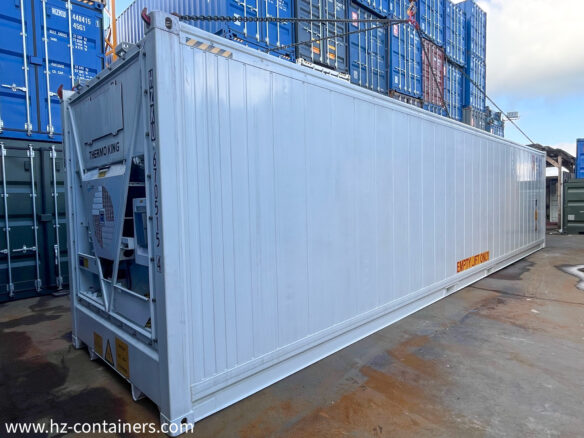
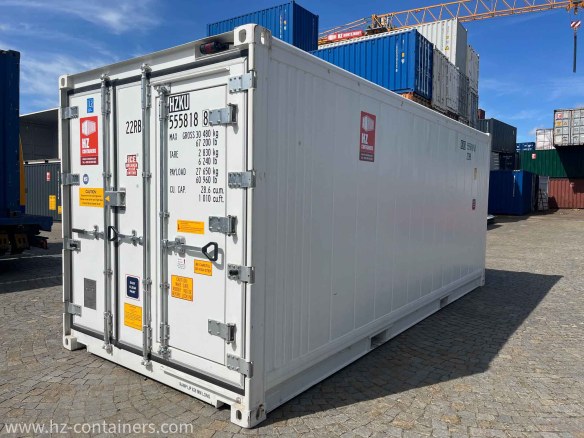
Refrigerated container for rent from HZ KONTEJNERY s.r.o. is specialized equipment – a so-called reefer container – designed for temporary, mobile and fully controlled storage of temperature-sensitive goods. This service represents a comprehensive solution for businesses and individuals who need to quickly and efficiently increase cooling capacity without high investments in building permanent warehouses. The container is equipped with its own cooling and heating unit, allows you to set and maintain precisely defined temperature ranges (usually from -25 °C to +25 °C), and is suitable not only for food, but also for pharmaceuticals, chemicals, agricultural products or technical materials.
The advantage of renting is maximum flexibility – the ability to choose the length of use (from a few days to months), placement of the container practically anywhere (with electricity and hardened surface availability), and guaranteed service and technical support from the provider.
Technological Description of Refrigerated Container (Reefer Container)
Construction and Materials Used
The refrigerated container is made on the basis of a robust shipping container (mostly in 20′ and 40′ HC sizes), whose construction meets ISO 6346 standards. For maximum efficiency and durability, it uses:

- Frame: Steel, hot-dip galvanized skeleton designed for stacking and transport in demanding conditions (maritime, road and rail transport).
- Insulation: Walls, ceiling and floor are sandwich-type, filled with polyurethane foam with high insulation coefficient (λ approx. 0.021–0.023 W/mK), insulation thickness typically 75–100 mm.
- Interior surface: Stainless steel or aluminum – ensures easy maintenance, hygienic safety and resistance to acids, fats and other contaminants.
- T-floor type floor: Specially profiled aluminum floor ensures perfect air circulation and even temperature distribution throughout the container volume.
Cooling and Heating Unit
- Technology: State-of-the-art units (e.g. Thermo King, Carrier with Microlink 3 control electronics) enable not only cooling, but also temperature control or heating – suitable for storing goods in winter months.
- Temperature range: -25 °C to +25 °C, with accuracy ±0.5 °C.
- Refrigerant: Environmentally friendly refrigerants (R134a, R452A, R404A) with low GWP, in accordance with European F-Gas legislation.
- Control and monitoring: Digital control, possibility of remote monitoring of parameters via GSM or internet, alarms for temperature deviations, temperature history recording (important for HACCP).
Safety and Comfort Equipment
- Lockable doors with internal emergency opening (against trapping people).
- Interior and exterior LED lighting for safe handling even in the dark.
- Anti-slip floor finish.
- Safety sensors and alarms – door opening control, power failure, temperature fluctuations.
Energy Consumption and Power Supply

- Power supply: 3×400 V, 50 Hz, protection usually 32 A (industrial five-pin socket), minimal energy consumption thanks to quality insulation and inverter technology of units.
- Consumption: Depends on ambient temperature, required internal temperature and container filling – typically 4–8 kW/h.
- Ecology: Modern containers are designed with regard to low consumption and minimization of carbon footprint.
Rental Model and Its Advantages
How Does Refrigerated Container Rental Work?
HZ KONTEJNERY s.r.o. offers refrigerated container rental in several variants and durations:
| Type of service | Description |
|---|---|
| Short-term rental | Suitable for seasonal events, festivals, emergencies or renovations (days/weeks) |
| Long-term rental | For businesses with permanent needs (months/years), often with lower rates |
| Full-service | Including service, regular maintenance, possibility of replacement in case of failure |
| Turnkey installation | Transport, assembly (hydraulic arm), connection, staff training |
Advantages of renting over buying:
- No high initial investment – you only pay a monthly fee.
- Maximum flexibility – possibility of quick expansion (adding additional containers).
- Elimination of concerns about service and maintenance – the provider handles everything.
- Tax and accounting benefits – rental is an operating expense.
Technical Specifications and Standards
Most Common Sizes and Parameters
| Container type | External dimensions (LxWxH) | Internal volume | Pallets (EU) | Weight empty/total |
|---|---|---|---|---|
| 20′ Reefer | 6 058 x 2 438 x 2 591 mm | 28–33 m³ | 10 | 3 000 / 30 480 kg |
| 40′ HC Reefer | 12 192 x 2 438 x 2 896 mm | 65–76 m³ | 22 | 4 500 / 34 000 kg |
- IICL6 Standard: Containers in this condition are almost new, without significant damage, suitable for pharmaceuticals and international transport.
- RAL 9010 Color (white): Reduces heating from solar radiation, thus also cooling consumption.
- Stackability: Possibility to store up to 8 containers on top of each other (according to ISO).
Possibilities and Examples of Use
Overview of Application Scenarios
| Sector | Typical use |
|---|---|
| Food industry | Storage of meat, milk, fruit, vegetables, semi-finished products, fish |
| Gastronomy, hotels | Temporary capacity expansion, events, weddings, festivals |
| Pharmacy, laboratories | Storage of medicines, vaccines, samples, chemicals |
| Agriculture | Fruit ripening, seedlings, storage of seeds, growth slowdown |
| Breweries, wineries | Storage of hops, yeast, fermentation tanks, barrels |
| Construction, events | Temporary facilities during renovations, mobile warehouse |
| E-commerce, logistics | Goods transshipment, buffer before dispatch, backup capacity |
Specifics for Individual Segments
- Pharmacy: Monitoring and archiving temperature, validation for inspections, possibility of backup power supply.
- Gastronomy: Quick installation directly at the kitchen, easy cleaning, possibility of renting by the day.
- Agriculture: Controlled ventilation, possibility of air humidification, adjustment of internal climate for various crops.
Latest Trends and Technologies in Refrigerated Containers
- Energy efficiency: New unit models use inverter technology and intelligent control, reducing consumption by up to 30%25 compared to older types.
- Ecological refrigerants: Transition to refrigerants with lower GWP (Global Warming Potential) – e.g. R452A, R290 (for some smaller units).
- Telematics and IoT: Possibility of online monitoring of container condition, remote parameter adjustment, mobile alarms.
- Wireless sensors: For monitoring temperature, humidity, door opening.
- Recycling and refurbishment: Older containers are refurbished, insulation replaced with more environmentally friendly materials.
Safety and Hygiene
- All refrigerated containers must meet strict hygiene standards for food storage (HACCP, EU directives).
- Surface finish of stainless steel and easily cleanable joints, condensate drainage.
- Possibility of equipment with UV disinfection or ozone generator against mold and bacteria.
Choosing the Right Refrigerated Container – Practical Guide
When choosing the right unit, consider:
- Required internal volume (depending on quantity/nature of goods)
- Required temperature range and control accuracy
- Length and place of use (transport options, electricity access)
- Industry specifics (e.g. pharmacy – temperature validation, gastronomy – easy cleaning)
- Monitoring and alarm requirements
- Possibility of backup power supply (in case of power failure)
Frequently Asked Questions (FAQ)
How quickly can a container be delivered?
Most providers (including HZ KONTEJNERY s.r.o.) are able to deliver and commission a container within a few days of ordering.
Can the container be placed indoors?
Yes, provided minimum ventilation conditions and electricity availability are met.
What happens if the unit fails?
Service is included in the rental, most faults are resolved within 24 hours. In case of serious failure, a replacement container is provided.
What are the hygiene requirements?
All containers intended for food storage meet HACCP, have smooth surfaces and are regularly disinfected.

 Czech Republic, Třebíč
  WITHOUT SHIPPING
Other container news...
Corner casting steel vs aluminum
Every shipping container in the world — all 40 million of them — rests on eight critical components. Corner castings are the load-bearing blocks at each corner of an ISO shipping container, and they are the universal interface between the container and every crane, twistlock, spreader, and chassis on the planet. When you lift a container, stack it nine high on a ship, or lock it to a truck trailer, every ton of force flows through these fittings.

Construction cabin – selection, tips, dimensions and prices
Every construction project – whether a family house, a development project or a reconstruction – starts with the infrastructure. No construction manager, craftsman or investor who needs an on-site office, a changing room for workers or a safe storage for tools can do without a quality construction cell. But navigating the offer is not easy: residential containers, sanitary cells, storage modules, rental, purchase, refurbished pieces… This guide will give you answers to all the essential questions in one place.
Storage container
A storage container is a lockable steel box designed for the safe and dry storage of materials, tools, goods or equipment. Originally created as a shipping container for maritime transport, its durability and versatility have found their way onto construction sites, corporate premises and private land.
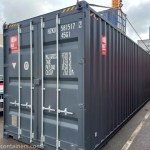
Shipping container 12m (40 ft)
A 12m shipping container is an investment that, if properly selected and cared for, will pay off in decades of trouble-free use. Whether you plan to use it as a warehouse, workshop, garage or the basis for a residential module — the key is careful selection of the condition, a thorough inspection before purchase and high-quality preparation of the base for placement. Take the time to compare offers, check the seller’s references and do not hesitate to personally inspect the container before buying. A properly selected 40-foot container will serve you reliably for many years.