
Reefer container uses
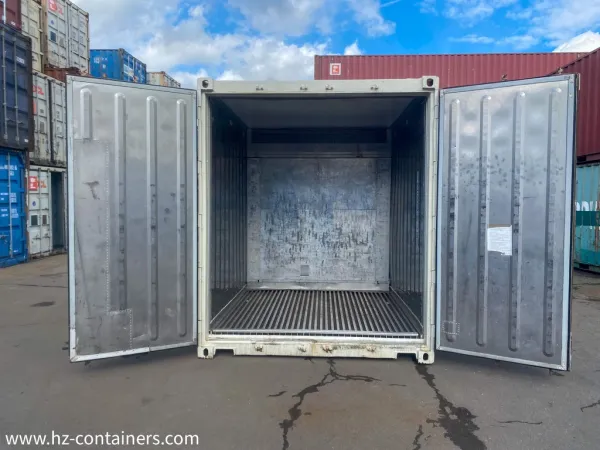
A reefer container—short for “refrigerated container”—is an intermodal shipping container fitted with an integrated refrigeration unit that keeps temperature-sensitive cargo at a precise, controlled temperature throughout transport and storage. While a standard dry container simply protects goods from weather and impact, a reefer container actively maintains chilled, frozen, or even heated conditions, making it the backbone of the global cold chain.
What Is a Reefer Container Used For?
At its most basic level, a reefer container is used for one core job: keeping temperature-sensitive cargo within a tightly controlled temperature band from origin to destination. The word “reefer” has no connection to cannabis in this context—it is simply the shipping industry’s shorthand contraction of “refrigerated container.” Every use case for these containers flows from that single capability of active thermal control, whether the goods need to be kept chilled (above freezing), frozen (below freezing), or warmed (above ambient conditions).
The practical applications fall into several broad categories:
- Transporting perishable food across oceans and continents without spoilage
- Protecting pharmaceuticals, vaccines, and biologics that degrade outside narrow temperature windows
- Preserving flowers, plants, and other horticultural cargo during long transit times
- Maintaining the stability of temperature-sensitive chemicals and industrial materials
- Providing temporary or permanent cold storage on land, from restaurants to construction sites
- Carrying dry cargo as a non-operating reefer (NOR) when there is a shortage of standard boxes
The unifying principle is simple: if a product’s quality, safety, or efficacy depends on staying within a specific temperature range, a reefer container is the standard tool for moving or storing it. This is why reefers sit at the center of what the logistics industry calls the “cold chain”—the unbroken sequence of temperature-controlled production, storage, and distribution activities that carries perishable goods from farm or factory to the end consumer.
Where Did Reefer Containers Come From?
Reefer containers did not appear overnight. They are the direct descendants of more than a century of experimentation with refrigerated transport, and understanding that history clarifies why the modern reefer looks and works the way it does.
The Pre-Container Era
Long before the standardized shipping container existed, perishable goods moved in “reefer ships”—vessels with entire refrigerated holds. As early as the late 19th century, refrigerated steamships carried chilled and frozen meat from Australia and New Zealand to Britain, and from South America to Europe. The German engineer Carl von Linde developed the first practical ammonia-compression refrigeration system in 1876, and by the 1880s refrigerated cargo holds were cooling meat, butter, and fruit on long ocean voyages. In 1938, Frederick McKinley Jones invented the first portable air-cooling unit for trucks, which paved the way for refrigerated road transport.
These systems worked, but they had a fundamental limitation: cargo had to be loaded and unloaded piece by piece, and each mode of transport—ship, rail, and truck—required its own handling. The goods themselves stayed cold, but the transfer between modes was slow, labor-intensive, and a major source of temperature breakage.
The Container Revolution
The standardization of shipping containers in the late 1950s and 1960s transformed dry cargo, but refrigerated cargo was slower to adapt. The challenge was that a refrigerated container needs both heavy insulation and a reliable, continuous power supply, and it must withstand the punishing environment of an ocean voyage while being stackable and portable.
Purpose-built refrigerated containers designed specifically for container ships arrived in the 1970s. Their breakthrough was the “all-electric” design: instead of relying on a ship’s centralized brine or ammonia refrigeration system, each reefer container carried its own self-contained, electrically driven refrigeration unit. On board a ship, each container plugs into the vessel’s power supply through individual electrical sockets. This made reefers fully intermodal—the same box could travel by ship, rail, and truck while maintaining temperature the entire way, with no repacking.
The Rise of the Cold Chain
The share of refrigerated maritime cargo carried in containers climbed rapidly—from roughly one-third of capacity in 1980 to more than 80% by the late 2010s. Today the reefer fleet numbers in the millions of units globally, and the continued growth of international trade in fresh produce, frozen food, and temperature-sensitive pharmaceuticals keeps demand rising. The COVID-19 vaccine rollout, which required ultra-cold shipping at temperatures as low as -70°C, demonstrated just how far reefer technology has come since the first ammonia-chilled holds.
How Does a Reefer Container Work?
A reefer container is often described as “a big fridge,” and that is accurate as far as it goes. But there is an important nuance that separates a reefer from the refrigerator in your kitchen.
A Heat-Removal System, Not an Air Conditioner
A common misconception is that a reefer container “pumps in cold air.” In reality, a reefer works by removing heat from the cargo space. It uses a vapor-compression refrigeration cycle—the same physical principle as a household refrigerator or air conditioner, but scaled up and built to survive the marine environment.
The cycle has four core stages:
- Compression: A compressor squeezes a refrigerant gas, raising its temperature and pressure.
- Condensation: The hot, high-pressure gas flows through a condenser coil, where it releases heat to the outside air and condenses into a liquid.
- Expansion: The high-pressure liquid passes through an expansion valve, dropping suddenly in pressure and temperature.
- Evaporation: The cold, low-pressure liquid flows through an evaporator coil inside the container, absorbing heat from the cargo space. The refrigerant evaporates back into a gas and returns to the compressor to repeat the cycle.
Airflow Is Everything
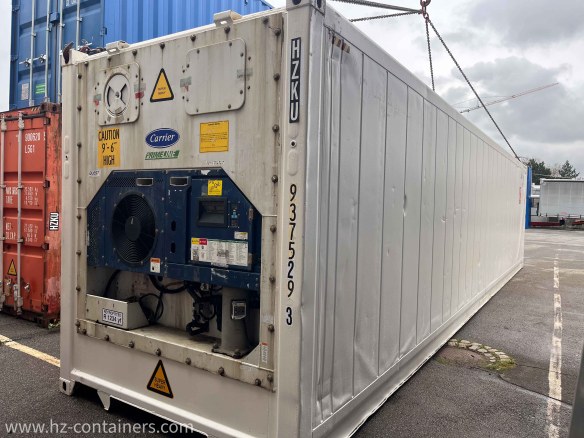
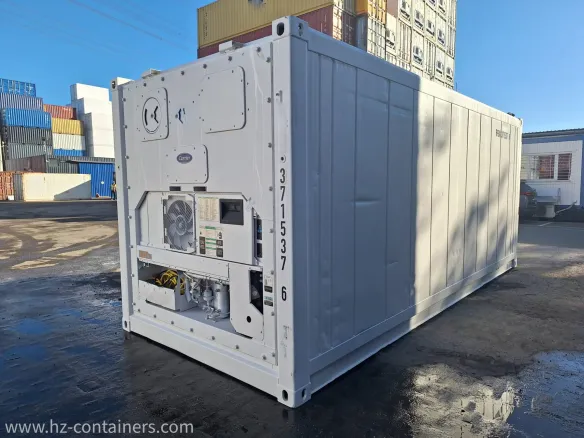
The refrigeration unit is mounted at the front end of the container, and it is designed as a “bottom air delivery” system. Chilled air is forced from the unit through T-shaped decking in the floor, which directs the air down and along the container’s length. The air then rises through and around the cargo and returns to the unit through vents near the top.
This airflow design is not a minor detail—it is the single most important factor in keeping cargo at a uniform temperature. Without proper circulation, warm spots can develop, and goods packed too densely in the center may never reach the target temperature. This is why correct stowage inside a reefer is just as important as the refrigeration unit itself.
The Critical Rule: Reefer Units Maintain, They Do Not Reduce
Perhaps the most important operational fact about reefers is this: a reefer unit is designed to maintain the temperature of pre-cooled cargo, not to cool warm cargo down from ambient temperature. If you load warm produce into a reefer and expect it to chill the load en route, you will likely be disappointed—and your cargo may spoil.
The practical implication is that goods should be pre-cooled to their target temperature before loading. The reefer then holds that temperature steady for the duration of the journey. This distinction matters because airflow patterns differ by cargo type:
- Chilled cargo (such as fruit and vegetables) must have air flowing through it at all times. Produce generates heat and gases as it respires, so cartons must have ventilation holes and be stowed so that air can pass between and through them.
- Frozen cargo (such as meat and seafood) needs air flowing around the outside of the block. Frozen goods should be block-stowed with no gaps between the cargo and the walls, so the cold air forms a protective envelope around the load.
Power: Electricity and Gensets
A reefer container is useless without power. On board a ship or in a terminal yard, reefers plug directly into an electrical supply—typically a 480-volt, 32-amp, three-phase connection. But during road or rail transit, or in locations without a fixed power supply, the container needs a portable generator set, or “genset.” A genset is a diesel-powered (or sometimes hybrid) unit that supplies electricity to the reefer unit, ensuring the refrigeration cycle never stops, even on the back of a truck traveling across a continent.
What Are the Main Reefer Container Uses by Industry?
Reefer containers are not limited to a single industry. Their active temperature control makes them essential wherever product integrity depends on stable thermal conditions. The following sections break down the major use cases.
Food and Beverage
Food is by far the largest and most familiar use for reefer containers. The global trade in fresh and frozen food would be impossible at its current scale without them. Common food cargoes include:
- Fresh produce: fruits, vegetables, leafy greens, and salad items
- Meat and poultry: both chilled and frozen
- Seafood: chilled and frozen fish, shellfish, and high-value species such as tuna
- Dairy: milk, cheese, butter, and yogurt
- Frozen foods: ice cream, frozen ready meals, and frozen vegetables
- Beverages: juices and certain wines that benefit from temperature-controlled transport
Each commodity has its own ideal temperature and airflow requirements, which is why reefer operators maintain detailed “set point” guidance for hundreds of individual products.
Pharmaceuticals and Medical Supplies
Pharmaceuticals are the fastest-growing and most demanding reefer cargo category. Many drugs, vaccines, blood products, and biologics lose potency—or become dangerous—if exposed to temperatures outside a narrow window. Reefer containers provide the climate-controlled environment needed to preserve their efficacy and safety during transit.
This use case gained global visibility during the COVID-19 pandemic, when reefer containers helped move billions of vaccine doses. Some vaccines required storage as cold as -70°C, which pushed the limits of standard reefers and drove demand for specialized ultra-freezer units capable of reaching -40°F and below. Laboratory samples, plasma, and certain blood products also travel in reefers under strict temperature monitoring.
Floriculture and Horticulture
Fresh flowers and live plants are among the most delicate cargoes in global trade. They are sensitive not only to temperature but also to humidity and ethylene gas, which accelerates ripening and wilting. Reefer containers allow shippers to hold flowers in a controlled, low-temperature environment that slows respiration and keeps blooms vibrant during long journeys from equatorial flower farms to markets around the world.
Chemicals and Industrial Materials
Some chemicals, adhesives, films, and industrial materials must be kept within a specific temperature range to remain stable and usable. Reefer containers are used in this sector to transport temperature-sensitive substances safely, preventing degradation or hazardous reactions that could occur if the material overheated or froze.
Cold Storage and On-Site Applications
Beyond transportation, reefers serve as flexible cold storage on land. Because they are portable, stackable, and weatherproof, a reefer container can function as a temporary or semi-permanent cold room almost anywhere there is a power source. Typical on-site uses include:
- Restaurants and catering companies needing overflow refrigerator or freezer space
- Event organizers managing perishable food at festivals and large gatherings
- Construction and mining sites storing food for remote work crews
- Food processing facilities staging ingredients before production
- Retailers handling seasonal inventory surges
Non-Operating Reefer (NOR) Use
A less obvious but economically important use of reefers is the “non-operating reefer,” or NOR. When there is an imbalance in container supply—for example, more import cargo into a region than export cargo out—empty reefers may be used to carry dry cargo with the refrigeration unit switched off. A NOR container is essentially an insulated dry box, and using it this way helps reposition empty equipment efficiently while moving cargo that does not require temperature control.
What Is the Temperature Range of a Reefer Container?
Reefer containers are far more versatile than a simple freezer. Their usable temperature range depends on the specific model and its intended duty, but the broad picture is consistent across the industry.
Standard Reefer Range
A standard marine reefer can typically maintain temperatures from about -30°C to +30°C (-22°F to +86°F). This wide band is why the same basic machine can carry frozen meat at -18°C, chilled produce at +2°C, and even temperature-sensitive goods that need to be kept warm in cold climates. The ability to heat as well as cool is a key feature: many reefer units can hold temperatures above ambient when required, which matters for certain cargoes transiting very cold regions.
Specialized Ultra-Low Units
For goods that demand extreme cold—such as certain vaccines, biological samples, and high-value tuna destined for sushi markets—specialized ultra-freezer containers push well below the standard floor. These “superfreezer” units can reach -40°C, -60°C, or in some configurations as low as -70°C and beyond. They are used for niche, high-value cargo where even a few degrees of deviation means the difference between a salable product and a total loss.
Cargo Temperature Reference Table
| Cargo Type | Typical Storage Temperature |
|---|---|
| Frozen meat, seafood, ice cream | -18°C to -25°C (-0°F to -13°F) |
| Ultra-low pharmaceuticals, tuna | -40°C to -70°C (-40°F to -94°F) |
| Chilled produce, dairy, fresh meat | 0°C to +4°C (+32°F to +39°F) |
| Bananas and tropical fruit | +13°C to +15°C (+55°F to +59°F) |
| Wine and certain beverages | +10°C to +16°C (+50°F to +61°F) |
| Heated / warm cargo | Up to +30°C (+86°F) |
It is worth repeating that these figures represent holding temperatures. The cargo should be pre-cooled (or pre-warmed) to its target before loading; the reefer’s job is to keep it there.
How Is a Reefer Container Different from a Dry Container?
The most direct way to understand what makes a reefer container special is to compare it side by side with a standard dry container—the ordinary, uninsulated steel box that carries the vast majority of the world’s freight.
| Feature | Dry Container | Reefer Container |
|---|---|---|
| Power required | No | Yes (electricity or genset) |
| Temperature control | None (ambient only) | Active heating and cooling |
| Insulation | None | Thick insulated walls, floor, doors, roof |
| Internal capacity | Larger for same footprint | Reduced by insulation and unit |
| Weight | Heavy | Very heavy (lower payload for same size) |
| Cost | Low | Significantly higher |
| Typical cargo | Non-perishable goods | Perishable and temperature-sensitive goods |
The core difference is environmental control. A dry container protects cargo from weather and physical damage but cannot change the temperature inside. A reefer container adds two things: heavy thermal insulation that resists heat transfer, and an active refrigeration unit that maintains a chosen temperature regardless of outside conditions.
This added capability comes at a cost. Reefer containers are more expensive to buy, heavier (which reduces the maximum payload a truck or ship can legally carry), and they consume energy continuously. Their insulation also eats into internal volume—a 20-foot reefer holds about 28 cubic meters of cargo, versus roughly 33 cubic meters for a standard 20-foot dry container.
What Are the Sizes and Specifications of Reefer Containers?
Reefer containers follow the same ISO dimensional standards as dry containers, but their insulation and refrigeration machinery reduce internal capacity. The three most common sizes are the 20-foot, the 40-foot high cube, and—less commonly—the 45-foot model.
Standard Reefer Dimensions
| Specification | 20′ Reefer | 40′ High Cube Reefer |
|---|---|---|
| Internal length | 5.44 m (17.9 ft) | 11.58 m (38.0 ft) |
| Internal width | 2.29 m (7.5 ft) | 2.29 m (7.5 ft) |
| Internal height | 2.27 m (7.5 ft) | 2.40 m (7.9 ft) |
| Cubic capacity | ~28.3 m³ (999 cu ft) | ~67.3 m³ (2,380 cu ft) |
| Tare weight | ~3,080 kg (6,790 lbs) | ~4,480 kg (9,880 lbs) |
| Typical payload | ~27,400 kg (60,400 lbs) | ~29,520 kg (65,080 lbs) |
These figures are representative rather than exact; specific values vary by manufacturer, container age, and owner. The key takeaways are that a 40-foot high cube offers more than double the cubic capacity of a 20-foot unit, and that the tare weight of a reefer is substantially higher than that of a comparable dry container, which lowers the available payload.
How Much Does a Reefer Container Cost?
Reefer containers are among the most expensive types of shipping containers, reflecting their machinery, insulation, and ongoing energy requirements. Prices vary widely by condition, age, and market conditions, so the figures below should be treated as ranges rather than fixed quotes.
Purchase and Rental Costs
- New 40-foot reefer containers can cost on the order of $30,000 to $45,000 or more, with specialized ultra-low units priced even higher.
- Used or decommissioned reefers range dramatically. A functional used unit may cost several thousand dollars, while a non-functional unit sold as an insulated shell can be had for as little as a few thousand dollars.
- Rental rates typically run from roughly $450 to $950 per month depending on size, location, and market demand, with high-demand periods pushing rates toward or above the top of that range.
Total Cost of Ownership
The sticker price is only part of the story. A reefer container also carries ongoing costs that a dry container does not:
- Electricity to run the refrigeration unit around the clock
- Maintenance and repair of compressors, fans, and electrical systems
- Monitoring equipment and any telematics subscriptions
- Certification and inspection for units carrying regulated cargo such as pharmaceuticals
These operating costs are why many businesses choose to rent reefers for short-term or seasonal needs rather than buying. Rental avoids the capital outlay and shifts maintenance responsibility to the owner, while purchase makes sense for long-term, continuous cold storage.
What Are the Most Common Misconceptions About Reefer Containers?
Several persistent myths surround reefer containers, and correcting them helps explain why they are used the way they are.
Misconception 1: “A Reefer Container Will Cool My Warm Cargo”
As explained earlier, a reefer unit is engineered to maintain temperature, not to rapidly cool a warm load. Loading room-temperature produce and expecting it to be chilled by the time the ship arrives is a recipe for spoiled cargo. Goods must be pre-cooled before loading.
Misconception 2: “All Cargo Is Stowed the Same Way”
The optimal stowage depends entirely on whether the cargo is chilled or frozen. Chilled cargo requires air to flow through the load, while frozen cargo requires air to flow around a solid block. Treating both the same way can produce uneven temperatures and product loss.
Misconception 3: “Reefers Only Carry Food”
While food dominates, reefers also carry pharmaceuticals, vaccines, blood products, flowers, chemicals, and—when used as NOR boxes—even ordinary dry cargo. The defining requirement is temperature sensitivity, not edibility.
Misconception 4: “Bigger Is Always Better”
A larger container is only better if you can fill it efficiently and maintain proper airflow. An under-filled 40-foot reefer can be harder to keep uniformly cold than a correctly stowed 20-foot unit, and oversized containers waste energy and money.
Misconception 5: “All Reefers Reach the Same Temperatures”
Standard reefers share a similar range, but ultra-low-temperature cargo demands specialized units. Assuming a standard reefer can hold -70°C is a dangerous error for high-value pharmaceuticals.
What Is the Future of Reefer Container Technology?
The reefer fleet is evolving rapidly in response to several pressures: rising energy costs, tighter regulatory requirements for temperature-sensitive cargo, and growing demand for visibility across the cold chain.
Real-Time Monitoring and Telematics
Modern reefers increasingly ship with IoT sensors and telematics that stream temperature, humidity, and location data to cloud platforms. Shippers can monitor and even adjust set points remotely, receive alerts if temperatures drift, and produce auditable records proving that cargo stayed within its required range. This traceability is becoming mandatory for pharmaceutical and high-value food cargo.
More Efficient Refrigeration
Refrigerant regulations are phasing out high-global-warming-potential gases in favor of lower-impact alternatives, and manufacturers are designing compressors and airflow systems that consume less electricity per unit of cooling. Some newer designs incorporate features that reduce energy draw during low-load conditions.
Greener Gensets and Power Sources
The diesel gensets that power reefers on the road are themselves being re-engineered for lower emissions, and hybrid or fully electric gensets are emerging for short-haul and yard operations. In ports, shore power—plugging reefers into the grid rather than idling generators—continues to expand.
Cold Chain Growth
Global demand for fresh and frozen food, plus the expansion of temperature-sensitive biologics and cell and gene therapies, points to continued growth in the reefer fleet. The cold chain that reefers enable is no longer a niche; it is a foundational layer of modern global trade, and the container at its center will only become more instrumented, more efficient, and more capable.
Frequently Asked Questions
What is the difference between a reefer container and a refrigerated container?
They are the same thing. “Reefer” is simply the shipping industry’s shorthand for “refrigerated container.” The term applies to any intermodal container equipped with an integrated refrigeration unit for transporting or storing temperature-controlled cargo.
What is a reefer container temperature range?
A standard reefer container typically maintains temperatures from about -30°C to +30°C (-22°F to +86°F). Specialized ultra-freezer units can reach -40°C, -60°C, or even lower for cargo such as certain vaccines and high-value tuna.
Can a reefer container be used for storage?
Yes. Beyond transport, reefer containers are widely used as portable cold storage on land. Restaurants, caterers, event organizers, food processors, and remote work sites use them as temporary or semi-permanent cold rooms wherever a power source is available.
How much does a reefer container cost?
Costs vary widely. New 40-foot reefer containers can exceed $40,000, functional used units may cost several thousand dollars, and rentals typically range from roughly $450 to $950 per month depending on size and location. Ongoing electricity and maintenance add to the total cost of ownership.
What is a genset for a reefer container?
A genset (generator set) is a portable power unit—usually diesel-powered—that supplies electricity to a reefer’s refrigeration unit during road or rail transit, or anywhere a fixed electrical supply is unavailable. It keeps the cooling cycle running when the container is not plugged into a ship or terminal power source.
What does “NOR” mean in reefer shipping?
NOR stands for “non-operating reefer.” It refers to a reefer container whose refrigeration unit is switched off so it can carry ordinary dry cargo. Shipping lines use NOR containers to reposition empty reefers efficiently when there is an imbalance in container supply.
Why must cargo be pre-cooled before loading into a reefer?
A reefer unit is designed to maintain the temperature of already-cooled cargo, not to rapidly reduce the temperature of a warm load. Pre-cooling the cargo to its target temperature before loading ensures the reefer can hold that temperature steadily throughout transit and prevents spoilage.

 Hamburg, Germany
 WITHOUT SHIPPING

Other container news...

Used 40 foot High Cube container
A used 40 foot high cube container is one of the most versatile and cost-efficient storage and shipping assets you can buy. It is a standard-length 40-foot intermodal container with one crucial difference from its “standard” sibling: it stands one extra foot tall, at a nominal 9 feet 6 inches instead of 8 feet 6 inches. That single additional foot of vertical clearance changes how the unit is priced, how it loads, and what it can do. This guide covers everything you need to know about dimensions, weight ratings, pricing, condition grades, and the buying process, so you can make a confident decision whether you are storing tools, expanding a warehouse, shipping cargo overseas, or planning a container-built structure.

How much does a 40 foot shipping container cost?
A 40 foot shipping container is the single most common large-format steel container in the world. Whether you are adding on-site storage, moving freight overseas, or converting a unit into a home or workshop, the first question almost everyone asks is the same: how much does a 40 foot shipping container cost?
The short answer is that a 40 foot shipping container price in the United States typically lands between $1,500 and $7,000 depending on condition, height, location, and delivery. Used, wind-and-watertight 40ft units often start near $1,500–$2,700, while a brand-new one-trip 40ft high cube can exceed $4,000–$6,500. The gap between those two ends of the range is wide because a “shipping container” is not one product—it is a graded commodity whose value shifts with its physical condition, its market, and even the distance from your site to a major port.

Where Can I Buy a 40ft High Cube Container?
A 40ft high cube container represents one of the most versatile and cost-effective storage and shipping solutions available today. Whether you are expanding warehouse capacity, starting a container home project, or need secure on-site storage for a construction site, knowing where to buy one — and what to expect — can save you thousands of dollars and weeks of frustration. This guide walks you through every aspect of purchasing a 40ft high cube container, from understanding what it actually is to comparing sellers, navigating delivery logistics, and handling permits.
How to move a shipping container
Moving a shipping container is rarely as simple as “put it on a truck and drive.” A standard steel container weighs over two tons even when empty, spans 20 to 40 feet (or more), and has no wheels, no hitch, and no built-in way to attach to standard equipment. Whether you are repositioning a storage container across a jobsite, delivering one to a rural property, or relocating a loaded unit across the country, the method you choose determines your cost, your timeline, and whether the move succeeds at all.