
How to Properly Select a Used Shipping Container?
Are you planning to purchase a used shipping container and want to be truly prepared? This detailed glossary will help you navigate technical terms, standards, conditions, and pitfalls of purchasing. You will find here not only answers to the question “What is it?”, but especially deeper context: why a particular term is important, what to watch out for, and how to evaluate quality.
A
As-Is (As Stands and Lies)
What is it?
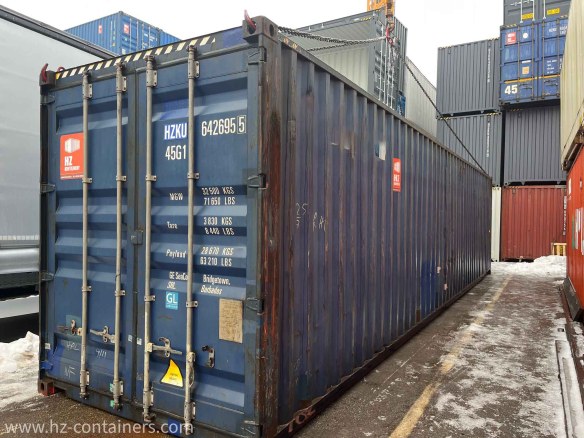
A container in “As-Is” condition means it is sold in the state it is currently in – without warranty for functionality, watertightness, or structural integrity. Common are larger dents, holes, advanced corrosion, non-functional doors or floor. The age of these containers often exceeds 15 years, they are after many transport cycles and often have demanding storage use behind them.
Why is it important?
- The cheapest option on the market – suitable only for those planning complete reconstruction, or who don’t mind potential leaks, drafts, and aesthetic defects.
- Risk: Repairs may exceed the price of a better container, you have no assurance whether the container is even safe for further use (load capacity, stacking, handling).
- Experts recommend personal physical inspection – look primarily for holes in the roof/floor, frame bending, and serious damage to corner elements.
See also: Cargo Worthy (CW), Wind and Watertight (WWT), Structural Integrity
B
Buy Shipping Containers
What is it?
The process from selecting the type and condition through choosing a supplier to transport and placement of the container on site.
Important steps:
- Define the purpose: Do you need a standard size, High Cube, open top, or special container (e.g., with side doors, insulated, refrigerated)?
- Select a supplier: Verify references, request real photographs of the specific unit (not illustrative!), ask about the possibility of personal inspection.
- Verify the condition: Always insist on inspection – check the roof, floor, door seals, corner elements. Request information about the condition (One-Trip, CW, WWT, As-Is).
- Transport and placement: Find out whether your property has suitable access, what type of vehicle is necessary, who will help with unloading and placement.
- Legislation: For permanent placement, building permission or notification is often required! (see blogs and customer experiences).
- Price: In addition to the container price, include transport, possible modifications, repairs, and substrate preparation.
C
Cargo Containers
What is it?
Standardized steel boxes for safe transport of goods by sea, rail, and road. Most common lengths: 20′ (6.06 m), 40′ (12.19 m), height standard 8’6″ (2.59 m) or High Cube 9’6″ (2.90 m). Construction and dimensions are determined according to ISO standards, which guarantees interchangeability, stackability, and safety in global transport.
Why is it important?
- Robustness – containers are built for extreme loads (stacking up to 9-10 units, transport by waves at sea, handling by cranes).
- After the end of “life” in transport (usually after 10–15 years) ideal for storage, building foundations, residential modules, workshops, etc.
See also: Shipping Containers, Storage Containers, ISO Container
Cargo Worthy (CW)
What is it?
An official classification that confirms the container meets international shipping standards (according to CSC). It must pass certified inspection, be free of serious deformations, structural damage, have a valid CSC plate.
Technical parameters of CW condition:
- Without holes and essential deformations, load capacity verified on the label (usually up to 30,480 kg)
- Functional doors and seals, walls without massive bending
- Floor without cracks and collapses, minimal signs of rot
- Possibility of stacking on ship (up to 9–10 units)
Why is it important?
- Higher assurance for the safety of stored goods, possibility of reuse in transport and in case of export.
- If you perform building modifications (e.g., windows, doors), the validity of CW certification is lost!
Corten Steel
What is it?
Special high-strength steel with additions of copper, nickel, chromium, and phosphorus, which when exposed to weather forms a protective patina (oxide layer). This prevents deeper corrosion and extends lifespan.
Why is it important?
- Surface rust is not a problem – it protects the internal material, it is a natural phenomenon.
- It is essential to distinguish surface rust from deep corrosion with peeling scales!
- Therefore, containers last up to 30 years even in aggressive environments.
CSC Plate
What is it?
A metal plate (usually on the left doors), which according to the “Convention for Safe Containers” contains manufacturing data, maximum load capacity, permitted stacking height, date of last inspection. CSC validity is a condition for transport in international shipping.
Why is it important?
- Allows verification of container age and origin.
- For storage, valid inspection is not necessary, but the existence of the plate is a sign of a genuine shipping container.
D
Delivery
What is it?
Transport of the container to the destination – most commonly using a truck with a hydraulic arm, tipping platform, or trailer with the ability to shift the container.
Tips for preparation:
- Access path: minimum width 3 meters, load capacity for 18–32 ton vehicle, height minimum 4 meters (trees, power lines).
- Substrate: level, preferably concrete pads, tiles, compacted gravel – the container must not stand directly on soil (risk of waterlogging, floor corrosion).
- Handling: minimum 2 m space in front of the container for unloading.
H
High Cube (HC) Containers
What is it?
A container one foot (30 cm) higher than standard – height 2.90 m (interior approximately 2.70 m). Otherwise the same lengths (20′, 40′) and width.
Why is it important?
- Greater interior volume (approximately 12–15% more than standard).
- Ideal for modifications for living, office, workshop, storage of tall goods.
- Higher ceiling allows better insulation, more comfortable movement.
I
International Shipping
What is it?
The primary purpose of containers – transport of goods on a global scale, most containers serve in this role for 10–15 years before being sold for secondary use.
Why is it important?
- Explains why a used container has dents, scratches, and rust – these are common signs of operation in demanding conditions.
- Each container travels thousands of kilometers at sea, in ports, on rail.
ISO Container
What is it?
A container manufactured according to strict ISO standards (ISO 668 and others), which determine dimensions, durability, load capacity, placement of corner castings.
Why is it important?
- Guarantees mutual compatibility – each ISO container can be stacked, handled, and transported using standard equipment.
- All commonly sold “shipping containers” on the market are ISO containers.
O
Open Top Containers
What is it?
A special type of container without a fixed roof – the upper part is covered with a durable tarpaulin. Allows loading of oversized goods from above.
Why is it important?
- Suitable for machinery, bulk materials, handling by crane.
- Less common for storage, but often desired in construction or recycling.
One-Trip Containers
What is it?
Practically new containers – manufactured in Asia, used only for one trip to Europe/USA and subsequently sold.
Why is it important?
- Best price/appearance/lifespan ratio – almost without scratches, with perfect floor, seals, and paint.
- Ideal for projects where aesthetics and maximum lifespan are key (living, offices, shops).
P
Place Container
What is it?
Physical placement of the container on a prepared site – essential for long-term functionality.
Recommended procedure:
- Prepare the substrate – gravel, concrete pads, or tiles. Ideal is when the container stands approximately 10–20 cm above ground level.
- Check the level (with a spirit level) in both longitudinal and transverse directions.
- Ask the driver to possibly support the corners during unloading so the frame is not twisted.
Surface Rust
What is it?
A thin layer of oxidation on the surface of Corten steel (orange-brown, matte), which forms naturally due to moisture and oxygen.
Why is it important?
- Not a problem – it is a protective function of Corten steel.
- The problem is deep, lamellar corrosion (peeling layers, holes) – there repair and repainting are necessary.
- Surface rust is easily cleaned and covered with a new coat.
R
Reputable Sales Company
What is it?
A supplier with a long history, references, transparent business conditions, and professional service.
Signs of a reputable seller:
- Clearly states the container condition, allows physical inspection or sends detailed photographs.
- Has verified reviews (on Google, business directories, etc.), uses real photos, provides warranty on watertightness (for WWT).
- Helps with transport and advises on site preparation.
- Avoid suspiciously cheap offers and anonymous websites!
S
Standard Containers
What is it?
The most common type – 20′ and 40′ length, fixed roof and walls, double-leaf doors on one side. Height 2.59 m (standard) or 2.90 m (High Cube).
Why is it important?
- Best availability and lowest price per cubic meter.
- Suitable for 90% of storage and construction projects.
Storage Containers
What is it?
Used shipping containers utilized for storage outside of transport – protect contents from moisture, pests, and theft.
Key features:
- Durability, tightness, easy mobility, wide range of modification options (shelves, electrical installation, insulation…).
Structural Integrity
What is it?
Overall strength of the structure – frame, corner elements, walls, roof, and floor. It means the absence of serious deformations, cracks, bending, and damage to load-bearing parts.
Why is it important?
- Essential for safety (stacking, handling, incorporation into a building).
- Damaged frame = risk of leaks, poor door closure, danger during handling.
- Check especially at the corners (corner castings), on the roof, and under the floor.
W
Wind and Watertight (WWT)
What is it?
The most common category of used container for storage – guarantees that the container has no holes, cracks, and door seals are functional.
Technical parameters:
- Without light leaks on walls/roof/floor (test inside with doors closed).
- Doors can be closed and locked, sealing rubber is not cracked.
- Cosmetic defects are allowed (rust, dents, scratches).
Why is it important?
- Ideal price/quality ratio for most storage purposes.
- Not intended for further transport in international shipping without additional certification.
 Czech Republic, Třebíč
  FREE SHIPPING
Other container news...
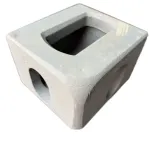
Corner casting steel vs aluminum
Every shipping container in the world — all 40 million of them — rests on eight critical components. Corner castings are the load-bearing blocks at each corner of an ISO shipping container, and they are the universal interface between the container and every crane, twistlock, spreader, and chassis on the planet. When you lift a container, stack it nine high on a ship, or lock it to a truck trailer, every ton of force flows through these fittings.

Construction cabin – selection, tips, dimensions and prices
Every construction project – whether a family house, a development project or a reconstruction – starts with the infrastructure. No construction manager, craftsman or investor who needs an on-site office, a changing room for workers or a safe storage for tools can do without a quality construction cell. But navigating the offer is not easy: residential containers, sanitary cells, storage modules, rental, purchase, refurbished pieces… This guide will give you answers to all the essential questions in one place.
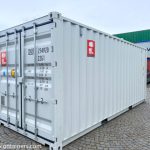
Storage container
A storage container is a lockable steel box designed for the safe and dry storage of materials, tools, goods or equipment. Originally created as a shipping container for maritime transport, its durability and versatility have found their way onto construction sites, corporate premises and private land.
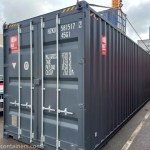
Shipping container 12m (40 ft)
A 12m shipping container is an investment that, if properly selected and cared for, will pay off in decades of trouble-free use. Whether you plan to use it as a warehouse, workshop, garage or the basis for a residential module — the key is careful selection of the condition, a thorough inspection before purchase and high-quality preparation of the base for placement. Take the time to compare offers, check the seller’s references and do not hesitate to personally inspect the container before buying. A properly selected 40-foot container will serve you reliably for many years.