
Horizontal Connection of Shipping Containers with Bridge Fitting
In the dynamic world of global transport, logistics and modern modular architecture, the stability and safety of shipping containers is ensured not only by the container itself, but also by a range of specialized connecting elements. One of the most essential is Bridge Fitting (often called “container connector”, “bridge clamp”, “horizontal lock” in English). This robust metal part is the foundation for safe horizontal connection of shipping containers – at sea, on rail, in warehouses and in the construction of modular buildings.
This article provides a detailed, technically substantiated view of Bridge Fitting: its definition, construction, technical parameters, practical applications, safety aspects, differences compared to other connectors, recommended installation and maintenance procedures. The article is expanded with insights from industry websites, manufacturers and certification companies.
What is Bridge Fitting? Definition and basic purpose
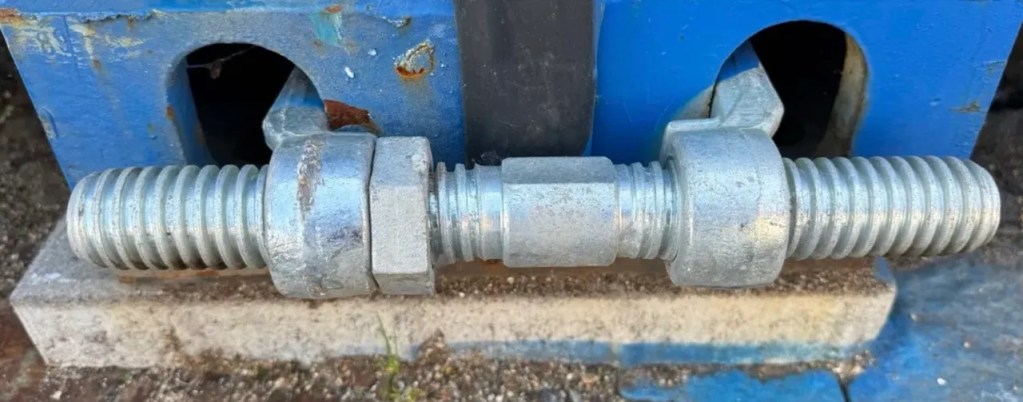
Bridge Fitting is a heavy, highly durable connecting mechanism designed exclusively for horizontal connection of two (or more) shipping containers. Its main function is to firmly and safely pull adjacent containers together, through their standardized corner elements (corner castings).
Why Bridge Fitting is key:
- Increases assembly stability – during transport by ship, rail and when stacking in warehouses.
- Prevents shifting or overturning of containers due to vibrations, waves, wind or during handling.
- Ensures content safety – by connecting containers, it minimizes gaps that could be exploited for unauthorized access.
- Enables quick connection/disassembly in modular architecture – e.g. when building container offices, shipping container houses, shipping container homes, schools, hospitals, temporary structures.
Bridge Fitting is a fundamental element without which flexible, safe and efficient container handling in modern logistics and construction would not be possible.
Construction and operating principle: Anatomy of strength
Operating principle: Pulling force in practice
Bridge Fitting functions as a tensioning mechanism – simple, but extremely effective:
- Two robust hooks (jaws): Precisely shaped to fit into oval holes in corner castings.
- Central threaded rod: Usually with counter-threaded threads (right and left), allows tightening or loosening the distance between hooks.
- Central nut: By rotating the central hexagonal nut (with a wrench, ratchet), the hooks move towards each other and firmly pull the containers together.
- Lock nut: After tightening, it is fixed against loosening due to vibrations.
The average installation time for one Bridge Fitting is up to 2 minutes with operator experience.
Material and surface treatment: Guarantee of longevity
Due to extreme loading and aggressive environment (salt water, UV, rain, frost), Bridge Fittings are manufactured from the most durable materials:
- High-quality cast or forged steel (often according to EN 10025 standard or equivalent).
- Hot dip galvanizing: Provides barrier and cathodic protection against corrosion. The zinc layer must be at least 70 µm according to ISO 1461 standard.
- Alternatively electroplating for cheaper products, less suitable for marine applications.
Bridge Fitting lifespan with proper maintenance exceeds 15 years even in demanding marine operations.
Technical specifications and dimensions
| Parameter | Standard model (260 mm) | Extended model (380 mm) |
|---|---|---|
| Total length | 260 mm | 380 mm |
| Adjustable range | 180–260 mm | 250–380 mm |
| Weight | 3–4 kg | 4–5 kg |
| Material | Forged/cast steel | Forged/cast steel |
| Surface treatment | Hot dip galvanizing | Hot dip galvanizing |
| Breaking Load | 100 kN (approx. 10 tons) | 100 kN (approx. 10 tons) |
| Safe Working Load (SWL) | 50 kN (approx. 5 tons) | 50 kN (approx. 5 tons) |
| Certification | DNV, ABS, CCS, Lloyd’s | DNV, ABS, CCS, Lloyd’s |
Note: Always verify the certification of the specific product according to the requirements of your transport or construction project.
Corner castings: Basic building block
Bridge Fittings are designed to fit perfectly into standardized corner castings – steel blocks at all corners of a shipping container. These elements are:
- Certified according to ISO 1161
- Universally compatible with all ISO containers (20′, 40′, 45′, high cube, open top, etc.)
- Enable horizontal and vertical connection, crane handling, attachment to chassis or foundation.
Hole dimensions and their placement are precisely defined, which allows the use of Bridge Fittings across all manufacturers and container types.
Bridge Fittings vs. Twist Locks: Fundamental difference
Although both types serve to connect containers, their purpose, construction and safety requirements are completely different.
| Connecting element | Direction of connection | Typical use | Key property |
|---|---|---|---|
| Bridge Fitting | Horizontal | Side by side, surface connection, construction, warehouses | Adjustable pull, frame tightening |
| Twist Lock | Vertical | Stacking containers on top of each other (ships, terminals) | Rotating locking mechanism |
- Bridge Fitting is designed only for horizontal connection – NEVER use it for vertical stacking!
- Twist Lock is certified exclusively for vertical connection – its rotating mechanism resists shear and lifting forces.
Safety standard: Each element must comply with the relevant part of ISO 1161 standard and be approved by a classification society (DNV, ABS, Lloyd’s, etc.).
Practical applications and examples of use
Logistics and maritime transport
On ships and in ports, Bridge Fittings are used for:
- Creating stable blocks of containers (e.g. 2×2, 2×4, 3×3) for better force distribution during transport.
- Minimizing movement of individual containers due to sea waves, wind and vibrations.
- Increasing safety – minimizing the risk of containers falling overboard.
Storage and security
- Compact storage blocks – elimination of gaps, greater protection against theft and vandalism.
- Space optimization – better utilization of storage areas in logistics centers.
Modular architecture and construction
- Office complexes – connecting multiple containers into open-space areas.
- Residential units – expanding floor space by removing walls between connected containers in a shipping container home.
- Schools, hospitals, temporary structures – possibility of quick assembly/disassembly.
- Festivals, trade fairs – easy transport and assembly of mobile facilities.
Industrial and special applications
- Mobile technical containers (generators, filtration, workshops)
- Construction equipment – connecting storage and changing room containers into larger units
- Temporary bridge structures – use in crisis areas, military and humanitarian missions.
Installation guide: How to properly connect containers
Required equipment
- Sufficient number of Bridge Fittings (usually 2–4 per connection)
- Large adjustable wrench (min. 32 mm) or ratchet wrench
- Lubricant for threads (technical vaseline)
- Protective equipment (gloves, glasses)
Step-by-step procedure
- Container preparation: Check the flatness of the base, push containers together with minimal gap.
- Pre-setting the connector: Loosen the central nut, adjust the distance between hooks according to the specific gap.
- Inserting the hooks: Insert the hooks into the holes in the corner castings of both containers.
- Tightening the connection: Rotate the nut until the containers are firmly pulled together.
- Securing with lock nut: Tighten firmly; prevent automatic loosening.
- Inspection: Visually and manually verify tightening and proper securing.
Most common mistakes and their consequences
- Insufficient tightening – possibility of movement and container damage.
- Incorrectly inserted hooks – risk of connector being torn out.
- Missing lock nut – connector loosening during transport.
- Damaged or corroded connectors – reduced load capacity, risk of fatal failure.
Safety, maintenance and recommendations
Safety recommendations
- Regularly check the tightening of connectors (especially after transport).
- Never exceed the maximum working load (SWL).
- Do not use deformed, cracked or heavily corroded Bridge Fittings.
- Always use certified products (DNV, ABS, CCS, Lloyd’s, etc.).
Maintenance
- Regularly clean threads and apply lubricant.
- If the zinc coating is damaged, apply local anti-corrosion paint.
- Store Bridge Fittings in a dry place, away from aggressive chemical environments.
Recommended number of connectors
| Type of connection | Recommended number of Bridge Fittings |
|---|---|
| Two 40ft containers | 4 pcs (each corner of the connected side) |
| Two 20ft containers | 2–4 pcs |
| Larger assemblies | 2–4 pcs per connection + Twist Locks for vertical stacking |
Standards, certification and legislation
- ISO 1161 – Dimensions and requirements for corner castings.
- ISO 3874 – Container handling and safety measures.
- CSC (International Convention for Safe Containers) – Mandatory safety requirements for transport.
- Certification: DNV-GL, ABS, CCS, Lloyd’s Register require regular inspection and verification of mechanical properties of connectors.

 Czech Republic
  WITHOUT SHIPPING

Other container news...

Storage of Flammable Materials in a Shipping Container
Storing flammables in a shipping container is a topic where it is necessary to distinguish between dangerous improvisation and an approved professional solution: A standard container is completely unsuitable and dangerous for storing flammables. A certified fire-resistant storage container is the only legal, safe and flexible way to meet the requirements of the standards and protect health, property and the environment. Every company that handles flammables should understand the investment in a certified solution not only as an obligation, but also as a fundamental expression of responsibility.

Used Shipping Containers Livorno – Italy
If you are looking for reliable used shipping containers, a warehouse in Livorno in Italy represents a strategic choice. Livorno is one of the main Italian ports and an international logistics center, which means access to a wide range of containers, competitive prices and fast delivery times. In this guide, you will learn how to choose the right container for your needs, what quality standards are applied, how to evaluate the price and what practical information you need to pick up your container from the warehouse. Whether you need storage space, a mobile office, temporary housing or industrial solutions, you will find detailed information here for an informed decision.

What Happens When I Return a Damaged Rental Container?
Returning a damaged container from a rental is a process that requires clear documentation, consistency and fair communication. A quality rental agreement and handover protocol play a key role. Responsibility always lies with the tenant, unless proven otherwise – therefore prevention, insurance and proper administration are essential. Problems can be prevented by thorough inspection, staff training and friendly communication between both parties.

Used Shipping Containers Genoa – Italy
Used shipping containers from Genova are a key element connecting global logistics with local needs. They offer robust, variable and environmentally friendly solutions – from storage to construction to creative projects. They are available to companies and individuals, and the market in Italy and the Czech Republic is extremely flexible thanks to digital sales.