
Corner Casting – Dimensions
Corner Casting (also called corner connector or corner element) is a robust cast steel cube that forms the structural foundation of every ISO shipping container. These essential components are located at eight corners of a standard ISO container – four on the top and four on the bottom – and create an interconnection system that enables safe lifting, stacking, and transportation of containers across various modes of transport, including ships, trains, and road vehicles. Corner Casting is much more than just a simple connection point; it represents one of the most critical innovations in modern logistics, enabling containers manufactured at different times, by different companies, and in different geographic locations to be mutually compatible with precision and reliability.
The primary function of corner casting is to serve as a structural element that enables container attachment to the chassis for transport, lifting by crane using special equipment, and connection with other containers during stacking operations. Without properly functioning corner castings, containers cannot be safely moved or secured, which would pose serious risks to cargo, infrastructure, and personnel throughout the global supply chain. Standardization of these components through ISO 1161 standard enabled intermodal transport, which allows a container to begin its journey in Shanghai, be transferred between ships, trains, and cargo vehicles without mechanical incompatibilities, and arrive in Rotterdam with complete compatibility with all equipment and systems.
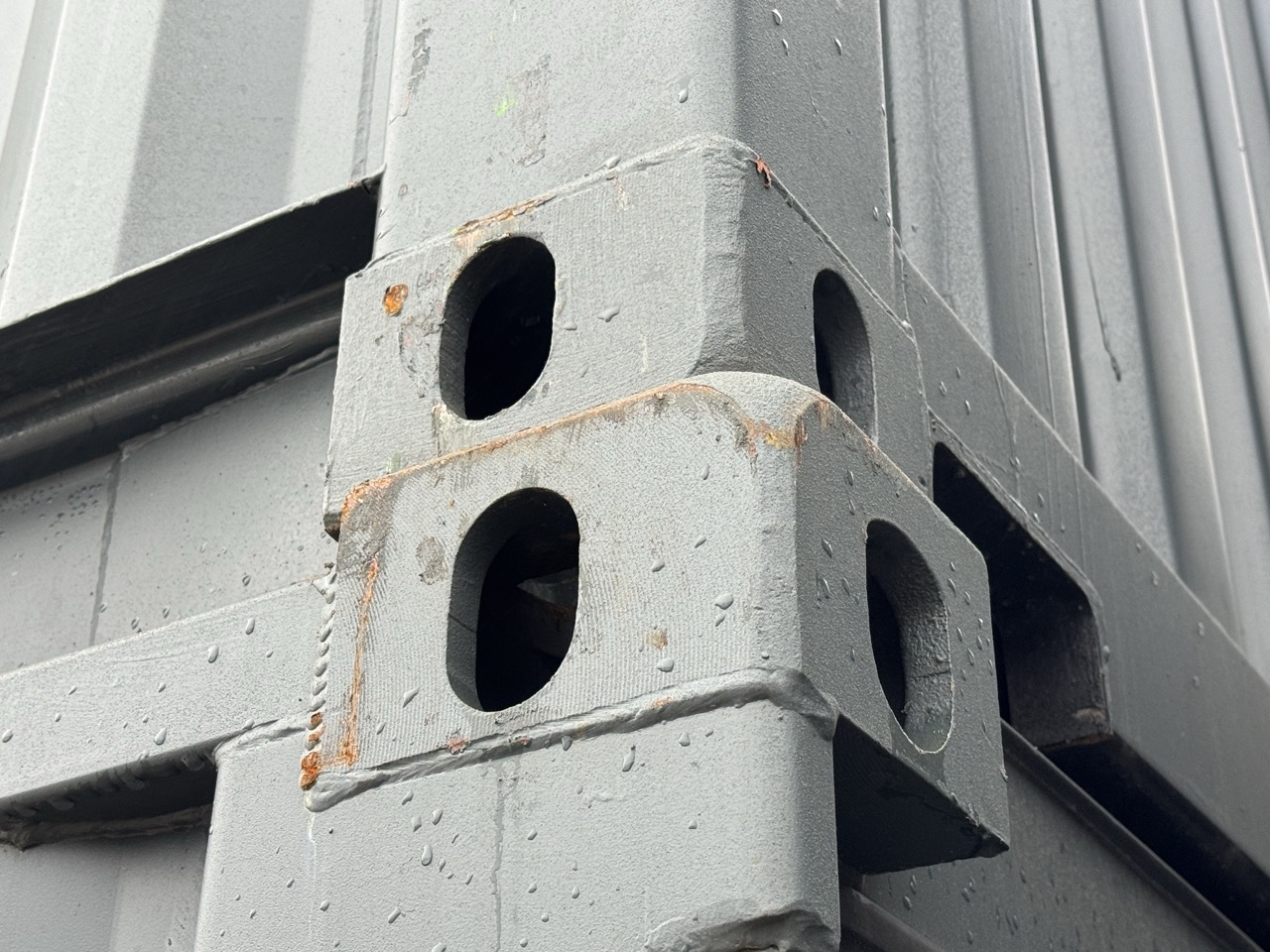
The design philosophy of corner castings reflects decades of maritime engineering and standardization efforts. When shipping containers were first introduced in the 1950s, the lack of standardization led to significant inefficiencies in port operations and cargo handling. The introduction of ISO standards, particularly ISO 1161, revolutionized the industry by establishing precise specifications for corner connectors. This standardization ensures that every corner casting, regardless of manufacturer or place of manufacture, meets the same dimensional, material, and performance requirements. The result is a truly global logistics ecosystem where equipment and containers from various sources can work seamlessly together.
What are the standard dimensions of corner castings?
Standard dimensions of corner castings are precisely defined by ISO 1161:2018 standard, which governs all aspects of corner connector design and manufacture. The most commonly cited dimensions for ISO shipping containers are 178 millimeters in length, 162 millimeters in width, and 118 millimeters in height, which corresponds to approximately 7.0 inches by 6.4 inches by 4.65 inches in imperial units. These dimensions represent the external bounding surface of the casting, but the actual functional specifications are far more complex and precise.
The wall thickness of standard corner castings is typically 3/4 inch (approximately 19 millimeters), which provides the structural strength necessary to withstand the dynamic loads that containers experience during lifting, stacking, and transport operations. Each corner casting weighs approximately 11 to 12 kilograms (24 to 25 pounds), which means that a complete set of eight castings for an entire container adds approximately 88 to 96 kilograms to the container’s structural weight. This weight is distributed across the corners in such a way that it does not significantly affect the container’s cargo capacity while still providing the necessary structural integrity.
The dimensions of openings in corner castings are equally critical to their function. The top opening (opening at the top of upper corner castings) is designed to accept crane spreader bar pins and typically measures approximately 185 millimeters in diameter, allowing engagement of special lifting equipment. Side openings, which accept twist locks for horizontal connection between containers, have more complex geometry. Rather than simple circular openings, they are typically stadium-shaped openings (rectangle with rounded ends) or shield-shaped openings, depending on whether they are located on the long sides or short ends of the container. The bottom cavity of lower corner castings engages with corner posts of the chassis or trailer for road transport and also has a large opening approximately 185 millimeters to accommodate the chassis corner post.
The precision required in these dimensions cannot be underestimated. ISO 1161 standard specifies tolerances measured in fractions of a millimeter, ensuring that lifting equipment, twist locks, and chassis corner posts engage with the castings properly every time. The maximum width of the top opening of corner connector must not exceed 66 millimeters and its length must remain bounded by 127 millimeters. A minimum thickness of 23 millimeters is required for the top plate. These tight tolerances were established through decades of operational experience and engineering analysis, ensuring that equipment designed to work with corner castings will function reliably in the global transport network.
| Dimension Parameter | Standard Measurement (Metric) | Standard Measurement (Imperial) | Tolerance Range |
|---|---|---|---|
| Total Length | 178 mm | 7.0 inches | ±0.5 mm |
| Total Width | 162 mm | 6.4 inches | ±0.5 mm |
| Total Height | 118 mm | 4.65 inches | ±0.5 mm |
| Wall Thickness | 19 mm | 3/4 inch | ±1 mm |
| Top Opening Diameter | 185 mm | 7.28 inches | ±1 mm |
| Side Opening Width (Stadium) | 66 mm | 2.6 inches | ±0.5 mm |
| Side Opening Length (Stadium) | 127 mm | 5.0 inches | ±0.5 mm |
| Bottom Cavity Diameter | 185 mm | 7.28 inches | ±1 mm |
| Weight per Unit | 11–12 kg | 24–25 pounds | ±0.5 kg |
| Weight of Standard Set | 88–96 kg | 194–211 pounds | ±4 kg |
How do different types of corner castings differ in design and placement?
An ISO shipping container requires eight corner castings total, consisting of four different types based on their location: top left (TL), top right (TR), bottom left (BL), and bottom right (BR). Each location requires two castings per container, meaning a complete container uses two of each type. The distinction between these types is not random; rather, it reflects different functional requirements at each corner position and the orientation of openings necessary for proper engagement with lifting and securing equipment.
The most important difference in corner casting design is between upper castings and lower castings. Upper castings have a large opening on the top side that accepts the conical bottom of a crane spreader bar or similar lifting equipment. This top opening is the primary interface for vertical lifting operations. Conversely, lower castings have a large cavity on the bottom side that engages with the corner post of a chassis or trailer during road transport. Side openings also differ between upper and lower castings. Upper castings typically contain a stadium-shaped opening on the long side of the container (side opening) and a shield-shaped opening on the short side, while lower castings maintain similar configurations but with different orientations to accommodate the specific engagement patterns of twist locks used to secure containers to other containers or to the ship’s securing system.
Left and right designations refer to the orientation of the casting as viewed from outside the container. Top left and bottom left castings are mirror images of top right and bottom right castings. This left and right distinction is critical because the openings must be oriented correctly to engage with twist locks that approach the casting from specific directions depending on the container’s position in the stack or on the ship. The internal geometry of each casting type was precisely designed to ensure smooth engagement of twist locks, their rotation into the locked position, and to prevent accidental unlocking during transport.
Each casting is typically marked with designations indicating its type: TL for top left, TR for top right, BL for bottom left, and BR for bottom right. These designations are essential for proper installation and maintenance, allowing port workers, container manufacturers, and maintenance technicians to quickly identify the correct casting for replacement or repair operations. When a corner casting is damaged or worn, replacement with the correct type is critical; using the wrong type in the wrong location could compromise the container’s structural integrity and create serious safety risks.
| Casting Type | Location | Primary Opening Orientation | Secondary Characteristics | Key Function |
|---|---|---|---|---|
| Top Left (TL) | Top left corner (external view) | Stadium opening on long side, shield opening on short side | Large top opening for lifting | Vertical lifting and stacking of containers |
| Top Right (TR) | Top right corner (external view) | Stadium opening on long side, shield opening on short side | Large top opening for lifting | Vertical lifting and stacking of containers |
| Bottom Left (BL) | Bottom left corner (external view) | Stadium opening on long side, shield opening on short side | Large bottom cavity for chassis | Chassis connection and road transport |
| Bottom Right (BR) | Bottom right corner (external view) | Stadium opening on long side, shield opening on short side | Large bottom cavity for chassis | Chassis connection and road transport |
What materials are used in the manufacture of corner castings?
The material composition of corner castings is fundamental to their ability to perform their critical structural functions. The vast majority of corner castings are manufactured from cast steel, specifically grades such as SCW 480 and SCW 490, which are high-strength cast steels with excellent mechanical properties. Cast steel is the material of choice for several compelling reasons: it contains no alloying elements, meaning it has excellent machinability and weldability while maintaining a high degree of durability and strength. The material can be precisely cast into complex shapes with the cubic configuration, then machined to achieve the tight tolerances required by ISO 1161 standard.
Cast steel corner castings are typically subjected to heat treatment, often in a normalized or normalized and tempered condition, which improves the mechanical properties of the material and ensures consistent performance of all castings. This heat treatment process relieves internal stresses created during casting and increases the material’s resistance to impact and fatigue loading. The resulting material has tensile strength of approximately 50 tons per corner casting, meaning each casting can withstand vertical loading exceeding 15,000 kilograms per corner under dynamic conditions. This exceptional strength is necessary because during stacking operations on container ships, upper containers in a stack may experience forces equivalent to supporting the weight of 8 or 9 additional containers stacked on top of them.
Some corner castings are manufactured from weathering steel (also known as steel with enhanced weather resistance), which is a special alloy steel that forms a protective oxide layer when exposed to the elements, providing better corrosion resistance compared to standard cast steel. This material is particularly valuable for containers that will be exposed to harsh marine environments or stored outdoors for extended periods. The weathering steel option increases costs but provides significant benefits in terms of reduced maintenance and extended service life in corrosive environments.
Although less common, some specialized applications utilize aluminum or stainless steel corner castings, depending on specific requirements such as weight reduction, better corrosion resistance, or specialized industrial applications. Aluminum castings offer significant weight advantages but require careful design to meet ISO 1161 strength requirements, as aluminum is inherently weaker than steel. Stainless steel castings provide superior corrosion resistance and are sometimes used in containers for food processing or other specialized applications where corrosion resistance is critical.
Surface finishing of corner castings is also standardized. Most castings are machined on all six sides and grit-blasted to remove surface scale and impurities, then typically finished with either a raw finish or protective coating. Machining ensures that all contact surfaces are smooth and precisely dimensioned, while grit-blasting removes scale and provides a surface structure that helps with paint adhesion. Many corner castings are supplied with a primer coat to provide initial corrosion protection, although the final coating is often applied during container manufacturing or as part of container maintenance operations.
| Material Type | Typical Grade | Tensile Strength | Corrosion Resistance | Cost Level | Primary Application |
|---|---|---|---|---|---|
| Cast Steel | SCW 480/490 | 480–490 MPa | Medium (requires coating) | Standard | Standard ISO containers, general transport |
| Weathering Steel | Weather-resistant steel | 450–550 MPa | High (self-protecting) | Higher | Marine environment, long-term outdoor storage |
| Aluminum Alloy | A356 or similar | 170–230 MPa | High (natural oxide) | Highest | Specialized applications with reduced weight |
| Stainless Steel | 304/316 | 515–860 MPa | Excellent | Highest | Food processing, specialized industrial use |
How do corner castings function in stacking and transporting containers?
The functional role of corner castings in modern transport operations cannot be overstated. These components are the critical interface between the container and virtually every piece of equipment that handles it during its entire service life. When a container is lifted by a crane, the crane operator positions a spreader bar – a special piece of equipment with four conical pins – over the container. These pins are inserted into the top openings of the four upper corner castings, engage with the large opening, and distribute the container’s weight evenly across all four corners. This design ensures that the lifting load is shared evenly, preventing stress concentration at any single point and enabling safe lifting of containers even when fully loaded with cargo.
The stacking capability of corner castings is equally important. When containers are stacked on a container ship, the lower corner castings of the upper container engage with the upper corner castings of the lower container through a system of twist locks – mechanical devices that rotate into place to create a rigid connection between adjacent containers. These twist locks are inserted into the side openings of corner castings and rotated 180 degrees to lock into place, creating a connection strong enough to hold containers together even in rough seas. The geometry of the openings in corner castings is precisely designed to ensure smooth engagement of twist locks and to prevent accidental unlocking. The stacking capability is so reliable that containers can be stacked up to nine high on modern container ships, with each container capable of supporting the weight of all containers stacked above it.
For road transport, corner castings provide the interface for securing containers to the chassis or flatbed. Lower corner castings contain a large cavity that engages with the corner posts of the chassis. These corner posts may be simple fixed posts or may contain mechanical locks that engage with the bottom cavity of corner castings, creating a secure connection that prevents container shifting during transport. The side openings of lower corner castings also allow attachment of additional securing mechanisms, such as bridge fittings or lashing, providing multiple layers of security for road transport operations.
The precision of corner casting design becomes apparent when considering the forces involved in these operations. A fully loaded 40-foot container may weigh 30,000 kilograms or more. When this container is lifted, all this weight is concentrated at four points – the four upper corner castings. Each casting must distribute this load to the spreader bar pins without deformation or failure. Similarly, when containers are stacked nine high, the lower corner castings of the upper container may experience vertical loading equivalent to supporting the weight of eight additional containers. The material strength and geometric design of corner castings were engineered to reliably handle these extreme loads.
How does the twist lock mechanism work with corner castings?
Twist lock (also called rotational lock) is a fundamental mechanical connecting element in container transport that serves to securely fasten shipping containers to each other and to transport vehicles. Its simple principle – insertion and 90-degree rotation – ensures quick, safe, and universal handling of all standardized ISO containers. The twist lock is a key link in the global supply chain and enables efficient, safe, and automated transport of goods worldwide.
The invention of the twist lock in the 1950s (Keith Tantlinger, USA) revolutionized logistics, enabled ISO container standardization, and introduced rapid cargo handling. The patent was issued without fees, leading to worldwide adoption and development of intermodal transport systems. Before the introduction of twist locks, cargo transport was extremely labor-intensive – goods were loaded manually, leading to losses and damage. The twist lock together with corner castings enabled:
- Lightning-fast loading and unloading – containers can be handled without touching the cargo inside
- Secure stacking – containers can be stacked up to 9 layers, maximizing ship and terminal capacity
- Intermodality – the same container can be easily transported between ship, train, and truck without transshipment
The operation of the twist lock is based on the connection of two basic parts: the corner casting (steel casting according to ISO 1161 with dimensions 178 × 162 × 118 mm and three openings that serve as universal connection points for container handling) and the twist lock itself (male element inserted into the oval opening in the corner casting that locks after 90-degree rotation). The process of lifting and securing a container consists of the following steps:
- Container positioning – crane or mobile handler lowers the container while aligning corner castings over twist lock pins
- Insertion – gravity or manual guidance inserts the pin into the casting cavity, providing lateral stability
- Rotation – operator rotates the handle 90 degrees, locking the pin head out of alignment with the casting opening
- Locking – pin head supports the container’s weight, securing it against vertical and horizontal movement
- Release – for unloading, the handle is rotated back, aligning the pin for safe removal
What are the ISO 1161 standards that govern corner casting specifications?
ISO 1161:2018 is the current international standard that establishes basic dimensions, functional requirements, strength requirements, and testing procedures for corner connectors used in Series 1 containers (standard 20-foot and 40-foot containers used in global trade). This standard was first established in 1984 as ISO 1161:1984 and has been updated several times as technology and operational procedures evolved. The 2018 revision represents the latest development of this critical standard, incorporating lessons learned from decades of global container operations and advances in materials science and engineering.
ISO 1161 standard specifies not only the dimensions and material composition of corner castings but also strength requirements and testing procedures that manufacturers must follow. All corner castings must be tested for tensile strength to ensure they can withstand the loads encountered during service. The standard requires that corner castings be capable of withstanding vertical loading of at least 40,000 pounds (approximately 18,000 kilograms) without permanent deformation or failure. This testing is typically performed using special testing equipment that applies load to the corner casting in the same manner as load would be applied during actual container operations.
The American Bureau of Shipping (ABS) and other classification societies have developed testing and certification procedures based on ISO 1161 standard. When corner castings are manufactured, they are typically subjected to ABS testing and certification to verify that they meet all requirements of ISO 1161 standard. This certification is documented on the corner castings themselves, with markings indicating the manufacturer, date of manufacture, and certifying authority. The presence of ABS certification marks on a corner casting is a guarantee that the casting has been tested and verified to meet all requirements of ISO 1161 standard.
The global standardization provided by ISO 1161 standard is what enables modern intermodal transport. Because all corner castings manufactured anywhere in the world must meet the same ISO 1161 specifications, a container manufactured in China can be lifted by a crane in Singapore, transported by ship to Rotterdam, and then loaded onto a truck in Europe with complete confidence that all equipment will properly communicate with the corner castings. This standardization has been the foundation for the development of a truly global transport network where containers are treated as interchangeable units.
What are common issues and maintenance aspects of corner castings?
Although corner castings are robustly designed and manufactured from high-quality materials, they may experience wear, damage, and degradation during their service life. One of the most common issues is corrosion, particularly in corner castings exposed to harsh marine environments or lacking proper protective coatings. Even with protective coating, salt spray and moisture can gradually penetrate the coating and attack the underlying steel. Regular inspection and repainting are essential maintenance activities for containers that will be exposed to marine environments for extended periods.
Another common issue is mechanical damage, which can occur when containers are improperly handled during loading and unloading operations, or when they collide with other objects during transport. Bending, cracks, or denting of corner castings can compromise their structural integrity and make it unsafe to stack the container or lift it using standard equipment. In many cases, damaged corner castings must be replaced rather than repaired, because welding or other repairs may not restore the casting to its original strength and dimensional accuracy.
Opening wear can also occur over time, particularly in the side openings that engage with twist locks. Repeated engagement and disengagement of twist locks can cause rounding or wear of the opening edges, which could lead to poor engagement and difficulty locking or unlocking containers. In severe cases, worn openings may not safely hold twist locks, creating safety risks.
Regular inspection of corner castings is a critical part of container maintenance. Professional container inspection services examine corner castings for signs of corrosion, mechanical damage, wear, and other issues. When damage or excessive wear is detected, corner castings can be replaced using special equipment and techniques. The replacement process typically involves removing the damaged casting by cutting or other mechanical means, then welding a new casting in place. After replacement, the new casting must be tested to ensure it meets all requirements of ISO 1161 standard and is properly attached to the container structure.
The process of welding corner castings requires precise procedures and approved materials. Welding must use approved consumables (such as E7016/E7018 electrodes with low hydrogen content), full penetration, and without defects. Typically only the joint to the frame is welded, never the casting itself. All welding procedures must comply with ISO 1161 requirements and relevant national and international standards.
What are the advanced technical specifications and loading of corner castings?
Corner castings must meet extreme loading and performance requirements defined by international standards and classification societies. Each corner casting must be capable of supporting dynamic vertical loading exceeding 40,000 pounds (approximately 18,000 kilograms) without permanent deformation. This loading represents the weight of a fully loaded container lifted by a crane. However, loading on corner castings during stacking operations can be even greater.
When containers are stacked nine high on a container ship, the lower corner castings of the upper container must support the combined loading of all eight containers stacked above it. This means a corner casting may experience loading up to 240,000 pounds (approximately 108,000 kilograms) or more. The quality of material and precision of manufacturing of corner castings are therefore critical to the safety of the entire system. Any weaknesses in material or manufacturing can lead to failure, which could have catastrophic consequences.
ISO 1161 standard also specifies that corner castings must be capable of withstanding lateral loading and tensile loading without failure. During maritime transport, containers may experience lateral forces from waves and wind, and tensile loading can occur when containers are secured using lashing or other mechanisms. The robust construction of corner castings and their attachment to the container structure ensure that they can withstand these diverse loads without problems.
What are practical applications of corner castings beyond standard transport?
Although corner castings are primarily designed for maritime logistics, they have found their way into expanded applications due to their durability and modularity. Container housing – residential structures built from shipping containers – has become a popular trend in architecture and construction. Corner castings in these applications provide structural points for attachment of additional elements, such as windows, doors, and interior partitions.
Industrial and commercial applications include the use of containers as modular office spaces, warehouses, and specialized facilities. In these applications, corner castings serve as connection points for material handling equipment, shelving, and other internal components. Military and special operations also utilize corner castings in portable bases, medical facilities, and other specialized applications where modularity and portability are critical.
Agricultural applications include the use of containers as storage for agricultural products or as portable equipment for mechanization. In these cases, corner castings provide structural integrity and connection points for agricultural machinery. The flexibility and standardization of corner castings according to ISO 1161 standard enable containers to be adapted for various applications without loss of their basic structural integrity.
Key takeaways about corner castings:
- Corner castings are critical structural elements that enable safe lifting, stacking, and transport of containers
- Standard dimensions are precisely defined by ISO 1161:2018 standard (178 × 162 × 118 mm)
- They are manufactured from high-strength cast steel (typically SCW 480/490) capable of withstanding loading exceeding 40,000 pounds
- Each container requires eight corner castings in four different types (TL, TR, BL, BR)
- Twist locks engage with the side openings of corner castings to secure containers
- Regular inspection and maintenance are essential to ensure safety and reliability
- Global standardization enables intermodal transport without mechanical incompatibilities

 Czech Republic
 WITHOUT SHIPPING


