
Corner Castings and Production of Special Containers
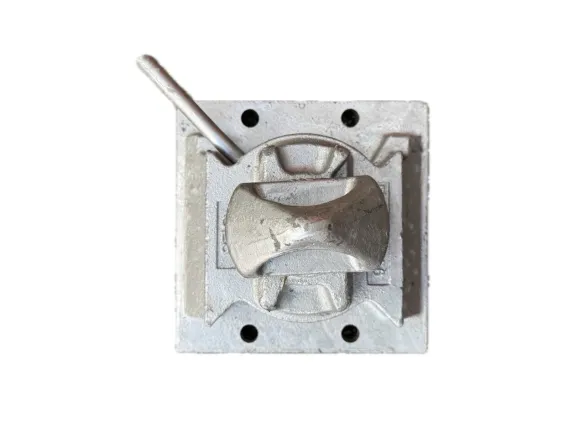
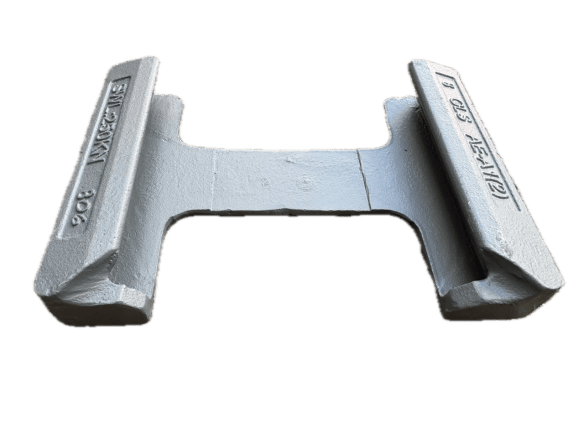
In the global world of logistics and transport technologies there are many components that are absolutely essential, yet often escape ordinary attention. One of these elements is corner castings (also called corner fittings). They form the structural basis of every ISO container and are the alpha and omega for safe lifting, stacking, securing and transport of containers across continents.
This article is a detailed glossary page that will guide you through the world of corner castings – from their anatomy, through the manufacturing process and material requirements, to their key role in the construction of special containers, maintenance and innovation in this field.
What are corner castings? Basic definition and significance
A corner casting is a robust steel casting that is precisely dimensioned according to ISO 1161 and is installed on all eight corners of each container (four on top, four on bottom). Without these components, efficient and safe handling of containers, their stacking, and connection to transport means would not be possible.
Main functions of corner castings:
| Function | Description |
|---|---|
| Lifting | Allow safe gripping of the container by a crane spreader, forklift or special handling equipment. |
| Stacking | Transfer load between containers when stacked vertically up to 8–9 units high. |
| Securing | Serve as attachment points for twistlocks that fix the container to a chassis, rail wagon or ship deck. |
| Connecting | Enable horizontal linking of containers with bridge fittings and other elements. |
Without precise standardisation of corner castings, globalised container transport as we know it today would not be possible.
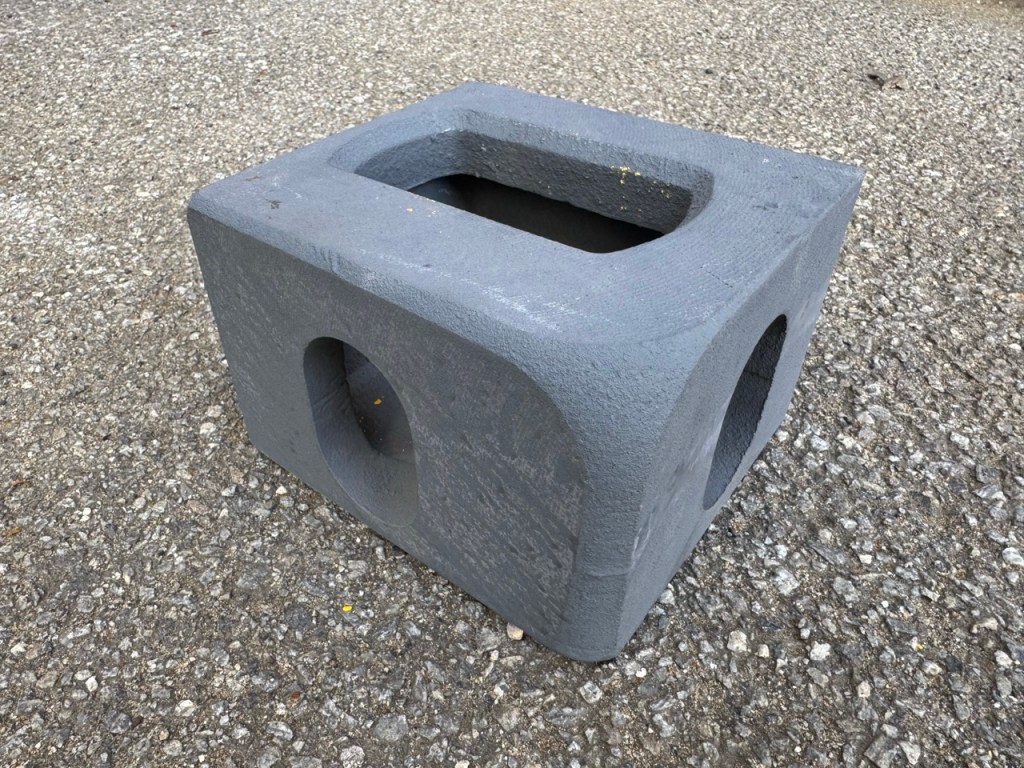
Anatomy and design of a corner casting
Standard dimensions and weight:
- Dimensions: 178 mm × 162 mm × 118 mm
- Weight: typically 11–12.5 kg (depending on type and manufacturer)
- Material: low‑alloy cast steel (usually with a surface treatment for increased durability)
A corner casting has three open sides (facing outward from the container) on which precisely defined holes of various shapes and sizes are located.
Types and placement:
On each container there are eight castings, each with a specific position and orientation:
- Top Left (TL)
- Top Right (TR)
- Bottom Left (BL)
- Bottom Right (BR)
Each type is marked with letters on the casting to avoid confusion during manufacturing, service or repair.
Specific holes and their functions
Each casting contains three types of holes:
- Top/bottom hole (stacking hole): Allows insertion of a twistlock during stacking (diameter approx. 65 mm, shape adapted to the twistlock head).
- Side hole (“stadium” or “discorectangle” shape): Used for horizontal linking, handling or securing (typically 120 × 58 mm).
- Front/rear hole (shield shape): Enables attachment to spreaders, handling hooks, or securing to a chassis.
Standard hole dimensions (according to ISO 1161):
| Opening | Dimension (mm) | Function |
|---|---|---|
| Top/bottom | 65 diameter | Twistlock, stacking |
| Side | 120 × 58 | Bridge fitting, handling |
| Front/rear | 110 × 62 (shield) | Spreader, attachment, anchoring |
Key role in the logistics chain
Structural integrity and load bearing
- Corner castings carry all load: The entire weight of the container and its cargo is transferred through these eight points.
- Durability: The design must withstand compression, tension and shear during stacking of several tons on a single point.
- Tested up to 213 000 kg (longitudinal pressure on the four lower castings) according to ISO testing standards.
Handling, lifting and transport
- Port spreaders automatically lock into the top‑corner holes and can lift a container in seconds.
- Twistlocks fix containers to transport equipment via the lower corner castings.
- Automation and safety: Standardisation enables global compatibility of handling equipment.
Container stacking
- Stacking up to nine high rows on ships is possible only because of precise corner castings and twistlocks.
- Stability of whole stacks under extreme sea conditions or railway vibrations is ensured.
ISO 1161 standard and certification
What does ISO 1161 specify?
- Dimensions and tolerances: Every dimension is precisely defined with minimum allowable deviation.
- Strength requirements: Material and construction must resist defined forces (e.g., 1500 kN on a single column of corner castings).
- Functional compatibility: Every twistlock, spreader and other device must fit a corner casting made to this standard.
- Certification: Corner castings without ISO 1161 approval must not be used in international transport.
Material and manufacturing process
Why cast steel?
- Strength: Steel is highly strong, fatigue‑resistant and has a long service life even under repeated loading.
- Weldability: Allows solid joining to the container frame.
- Corrosion resistance: Surface treatments (e.g., hot‑dip galvanising, Corten coating) extend life.
- Machinability: Enables precise drilling of holes.
- Cost vs. performance: Steel offers far better cost efficiency than aluminium for the required load capacity and durability.
Steel vs. aluminium
| Property | Cast steel | Aluminium |
|---|---|---|
| Strength | High | Lower |
| Weight | Higher | Lower |
| Corrosion resistance | Requires treatment | High |
| Cost | Lower | Higher |
| Weldability | Excellent | Good |
| Service life | Decades | Shorter in load‑bearing use |
Conclusion: Cast steel is the best choice for corner castings in terms of strength, compatibility and price.
Manufacturing process and quality control
- Casting into precise molds according to ISO 1161.
- Machining (milling) – achieving exact hole tolerances.
- Surface treatment – sandblasting, hot‑dip galvanising, coating.
- Visual and dimensional inspection.
- Non‑destructive testing – e.g., ultrasonic inspection for internal defects.
- Strength testing – samples periodically tested for compression and tension according to ISO standards.
Corner castings and production of special containers
Basis for modifications and new constructions
- Precise placement of the eight corner castings is the foundation of every design – even for atypical containers (e.g., open‑top, flat‑rack, residential or technological modules).
- They ensure compatibility with all standard handling and transport equipment.
- Flexibility – they enable multi‑storey container buildings, module connections and secure anchoring.
Examples of special applications
| Special container type | Use of corner castings |
|---|---|
| Shipping container homes | Connection and anchoring points for modules and foundations |
| Open top / flat rack | Frame strength and stacking capability without walls/roof |
| ISO tanks (cisters) | Attachment of the ISO tank frame, stacking, securing |
| Mobile workshops, offices, stalls | Handling, secure anchoring, rapid installation |
| Data centres, generator houses | Global transport and handling thanks to standardisation |
Related hardware: Twistlocks and other fittings
Twist lock
Description:
A mechanical device that joins two corner castings (e.g., during stacking) or anchors a container to a chassis.
Principle:
- The twist lock is inserted into the corner casting hole.
- Rotating 90° locks it in place.
- It firmly connects two containers or a container to a vehicle frame.
Types:
- Manual
- Semi‑automatic (for spreaders)
- Automatic
Other hardware types
| Hardware type | Function |
|---|---|
| Bridge fittings | Horizontal connection of containers side‑by‑side |
| Lashing rods / turnbuckles | Additional securing of containers on a ship |
| Container casters | Special chassis with wheels for handling |
Maintenance, common problems and lifespan
Common issues
- Corrosion: Salt water and weather gradually degrade the surface, potentially weakening the material.
- Deformation / cracks: Improper handling, overloading or impacts can cause permanent deformation.
- Wear: Repeated use may compress holes, reducing twistlock holding strength.
Maintenance and inspection
- Regular visual checks during each certification and after major transports.
- Repairs only by certified personnel in line with ISO and manufacturer guidelines – especially welding or replacement of castings.
- Selection of appropriate coatings and surface treatments to extend service life.
- Replacement when severely damaged – cut out and weld a new casting according to ISO procedures.
 Czech Republic
  WITHOUT SHIPPING


Other container news...

20 Foot shipping container cost
If you are researching the cost of a 20 foot shipping container, you have likely already encountered wildly different prices — from $999 listings online to quotes exceeding $5,500. That range is not a sign of inconsistency. It reflects real differences in container condition, location, delivery logistics, and the seller you are dealing with.
Side Opening container
A side opening container is an ISO-compliant intermodal shipping container engineered with full-length bi-fold doors along one of its long side walls, in addition to the standard cargo doors at one end. Unlike conventional containers that restrict access to a single set of rear doors, a side opening container — also widely called an open side container, open-sided shipping container, or side door container — provides unobstructed lateral access across the entire 20-foot or 40-foot length of the unit. This design transforms the container from a narrow tunnel into a wide-open space that forklifts can enter from the side, multiple workers can load simultaneously, and oversized cargo that would never fit through standard end doors can be placed without struggle.
40 Foot High Cube container cost
A 40 foot high cube container — often abbreviated as 40ft HC, 40′ HC, or 40-foot high cube — is one of the most common shipping container sizes sold on the secondary market. But if you are researching what a 40 foot high cube container costs, you have almost certainly noticed that prices are all over the map. One seller quotes $1,500. Another quotes $7,000. Both could be legitimate.
20 Foot container cost
If you have ever searched for a shipping container, you have almost certainly asked one question first: how much does a 20 foot container cost? The answer is not a single number. It is a range that spans from under $1,000 for a weathered, as-is unit to over $5,000 for a pristine, one-trip container — and that is before delivery, site preparation, or modifications enter the picture.