
Container Depot Třebíč Czech Republic
Container Depot Třebíč, Czech Republic represents a state-of-the-art logistics hub and service area – professionally known as Inland Container Depot (ICD) – located in the industrial zone of Třebíč in the Vysočina region. As a strategic point in Czech and international logistics networks, the depot serves not only for secure storage, management and distribution of containers, but also for their sale, rental, maintenance, professional certification and comprehensive modifications. The most significant operator in this location is HZ KONTEJNERY s.r.o., whose depot at the address Průmyslová 154, 674 01 Třebíč, forms the heart of the regional container market and is connected to major highway arteries, rail networks and international transport.
Key features of the depot:

- Modern handling equipment
- Extensive storage areas (15,000 m² and more)
- Powerful security and access only for authorized persons
- Customized services: sales, rental, service, container modifications
- Certification and inspection according to international standards (ISO, CSC, IICL)
- Digital catalogs, online orders, transparent documentation
Synonyms and Related Terms
- Inland Container Depot (ICD) Třebíč
- Dry Container Terminal Třebíč
- Logistics Center for Containers Třebíč
- Container Warehouse Třebíč
- Container Hub Třebíč
Detailed Explanation of the Concept
Significance of Inland Depot in the Czech Republic
An Inland Container Depot is a key element of international and domestic logistics, particularly in countries without direct access to the sea. The Czech Republic, located in the center of Europe, needs efficient connections to ports such as Hamburg, Bremerhaven, Rotterdam, Koper and Gdańsk. Depots in Třebíč and other cities enable Czech exporters and importers to:
- Accelerate container turnover between customer and port
- Minimize costs for storage in maritime ports
- Ensure flexible clearance and customs processes near manufacturing and distribution centers
Benefits for clients:
- Direct clearance and pickup of containers (with own or partner transport)
- Possibility of short-term and long-term storage
- Comprehensive service including modifications and repairs on site
- Quick availability of a wide range of containers
Strategic Location and Regional Significance
The HZ KONTEJNERY depot in Třebíč is situated in close proximity to major Czech routes (D1, I/38), which enables rapid container transport to Prague, Brno, Ostrava and abroad (Slovakia, Austria, Germany). The Vysočina region is thus becoming a significant logistics center, where not only companies dealing with containers are concentrated, but also a wide range of logistics, construction and industrial enterprises. The strategic location of the Třebíč depot is key for the construction of the Dukovany Nuclear Power Plant.
Depot infrastructure includes:
- Handling zones for heavy equipment and truck combinations
- Facilities with air-conditioned offices, service workshops, social and technical facilities
- Electronic security, camera system and controlled access
- Possibility of connection to a railway siding (upon request and projects)
Main Functions and Services of the Container Depot Třebíč
Sale and Rental of Containers
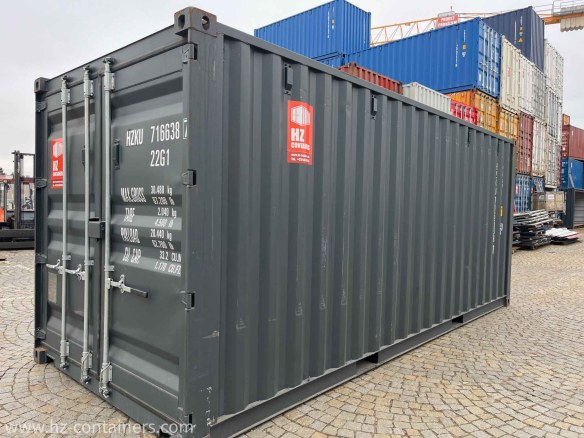
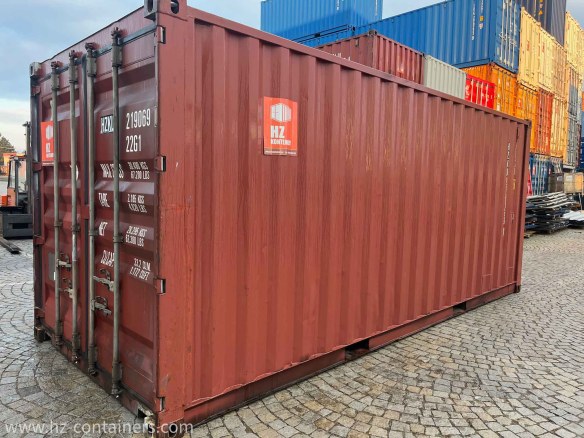
The depot offers a wide range of new (one-trip) and used maritime containers in lengths 6′, 8′, 10′, 20′, 40′, 40′ High Cube. Rental is suitable for short-term projects, construction companies, seasonal storage or temporary solutions for e-shops.
Table of most requested types and uses:
| Container Type | Use |
|---|---|
| 20′ DC Standard | Warehouse, goods transport, mobile workshop |
| 40′ HC High Cube | High-volume warehouse, building units |
| 10′ Mini | Warehouse for small construction sites, gardens, retail |
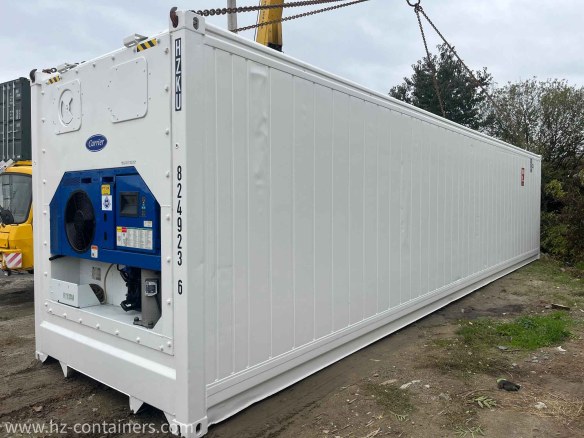
| Reefer (Refrigerated) | Food, pharmaceuticals, cold chain |
| Open Top | Machinery, bulk materials |
| Flat Rack | Machines, vehicles, oversized cargo |
| Tank Container | Liquids, gases, chemicals |
Container Modifications and Customizations
HZ KONTEJNERY performs a wide range of modifications:
- Installation of windows, doors, rolling gates
- Thermal insulation (PUR panels, mineral wool)
- Electrical installation, heating, air conditioning
- Assembly of shelves, built-ins, sanitary equipment
- Special coatings (anti-graffiti, fire-resistant)
- Conversions to offices, workshops, residential modules, shops, changing rooms
Example of modification: A 20′ container converted into a mobile office within 2 weeks.
Logistics and Handling
Handling and transport is provided by own equipment (hydraulic loading arm, sideloader), which allows placing a container exactly according to customer requirements. For transport on longer routes, it is possible to use partner forwarding services with containers on railway chassis, which reduces the carbon footprint of the entire logistics operation.
Service, Maintenance and Certification
- Regular inspections and repairs (according to IICL, ISO, CSC standards)
- Replacement of seals, floor repairs, coatings, welding of damage
- Certification for maritime transport (issuance/renewal of CSC plate)
- Preparation of container for special purposes (warehouse, residential module)
Types of Containers in the Depot Portfolio
Standard ISO Containers
- 20′ DC (Dry Cube, 6m)
- 40′ DC, 40′ HC (High Cube, 12m, increased height 2.896 m)
- Suitable for bulky goods and conversions to residential modules
Special Containers
- Reefer (refrigerated)
- Temperature range: -25 °C to +25 °C, suitable for food, pharmaceuticals
- Open Top
- Canvas roof for loading from above
- Flat Rack
- Open sides for machinery, construction parts
- Tank Container
- For transport of liquids, chemicals, food liquids
- Mini, warehouse and residential containers
- Lengths from 2 to 3 meters, ideal for small plots, small businesses
Construction, Materials and Lifespan
Materials and Corrosion Protection
Containers are made of Corten steel (S355J2W), which creates a protective layer on the surface preventing deeper corrosion. To increase durability, two-component anti-corrosion coatings are applied. The floor is typically made of 28mm water-resistant plywood, resistant to fungi and pests.
Technical Parameters and Stackability
- Corner casting load capacity: up to 96,000 kg
- Stacking: up to 8 layers according to CSC certification
- Safety locks, possibility of securing with “lock box”
Lifespan
- New container: 25+ years (during normal operation)
- Refurbished/sold: 10–20 years of usability in secondary applications
Operating Procedures and International Standards
ISO Standards
- ISO 668: Standardized dimensions, ensuring compatibility with all handling equipment worldwide
- ISO 6346: Marking and identification of containers (owner code, container number, check digit)
CSC Certification
- CSC plate (Convention for Safe Containers): Mandatory for containers in international transport. Inspection every 30 months, includes structural strength, tightness, safety elements.
IICL Standard
- Stricter than common “cargo worthy” criterion
- Required for leasing, long-term rental, special transports
Customer Process and Pickup
- Payment and reservation online (possibility of issuing a deposit invoice)
- Agreement of pickup date (own or partner transport)
- Professional loading (including fixation on transport vehicle)
- Handover of documentation, inspection of condition and dimensions
Digitalization and Online Services
Online Catalogs and Galleries
- Detailed photographs (exterior, interior, details of damage or modifications) – key for the sale of used containers
- Technical parameters available for download in PDF format
Digital Asset Management
- Web galleries use image optimization for fast loading
- All communication and orders take place via secure SSL protocol
Transparency and Customer Service
- Possibility of tracking order status online
- Direct connection to customer support (chat, phone, email)
- Access to order history and service records
Conclusion
Container Depot Třebíč is not merely a warehouse, but a highly sophisticated logistics center that:
- Ensures connection of inland regions with the global maritime network
- Offers comprehensive services from sales, rental, modifications to certification and service
- Meets the strictest international safety and quality standards
- Uses modern digital solutions for maximum efficiency and transparency
- Is a key partner for companies of all sizes in the field of logistics, construction and industry
 Czech Republic, Litoměřice
  FREE SHIPPING
Other container news...
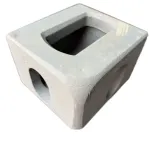
Corner casting steel vs aluminum
Every shipping container in the world — all 40 million of them — rests on eight critical components. Corner castings are the load-bearing blocks at each corner of an ISO shipping container, and they are the universal interface between the container and every crane, twistlock, spreader, and chassis on the planet. When you lift a container, stack it nine high on a ship, or lock it to a truck trailer, every ton of force flows through these fittings.

Construction cabin – selection, tips, dimensions and prices
Every construction project – whether a family house, a development project or a reconstruction – starts with the infrastructure. No construction manager, craftsman or investor who needs an on-site office, a changing room for workers or a safe storage for tools can do without a quality construction cell. But navigating the offer is not easy: residential containers, sanitary cells, storage modules, rental, purchase, refurbished pieces… This guide will give you answers to all the essential questions in one place.
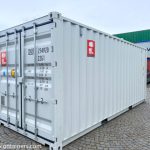
Storage container
A storage container is a lockable steel box designed for the safe and dry storage of materials, tools, goods or equipment. Originally created as a shipping container for maritime transport, its durability and versatility have found their way onto construction sites, corporate premises and private land.
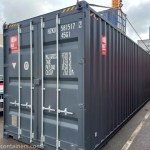
Shipping container 12m (40 ft)
A 12m shipping container is an investment that, if properly selected and cared for, will pay off in decades of trouble-free use. Whether you plan to use it as a warehouse, workshop, garage or the basis for a residential module — the key is careful selection of the condition, a thorough inspection before purchase and high-quality preparation of the base for placement. Take the time to compare offers, check the seller’s references and do not hesitate to personally inspect the container before buying. A properly selected 40-foot container will serve you reliably for many years.