
Bridge Fitting for Shipping Container
In the field of shipping containers and container logistics, small yet crucial components determine safety, efficiency and long‑term sustainability of transport and modular applications. One of the most important connecting elements is the so‑called bridge fitting (also “bridge clamp”, “bridge joint”, or simply “bridge”), which provides horizontal container connection and therefore their stability during transport, on construction sites or in industrial areas.
Definition and Basic Functions of a Bridge Fitting
A bridge fitting is a robust mechanical connecting element, designed for the safe joining of two adjacent shipping containers in a horizontal position – side‑by‑side or end‑to‑end. It ensures that two or more containers behave as a single structural unit, increasing stability, safety and efficient space utilization.
Key features and purpose:
- Horizontal connection – specially developed for joining containers side‑by‑side or end‑to‑end.
- High strength – standard bridge fitting is rated for a safe working load of 10 tons (22 046 lb / 10 000 kg), with a breaking load up to 100 kN.
- Fast installation and removal – requires no permanent modifications to the container structure (no welding, etc.).
- Compatibility – suitable for all standard ISO containers thanks to precisely shaped hooks for corner castings.
- Surface protection – hot‑dip galvanized or zinc‑coated finish protects against corrosion.
- Certification – many models are approved by classification societies DNV‑GL, ABS, CCS (especially important for maritime logistics).
Construction and Mechanism of a Bridge Fitting
Main components
| Component | Description |
|---|---|
| Central body | Robust steel piece with threads, forming the core of the connector (forged or cast, zinc‑coated). |
| Hooks (claws) | Two massive forged‑steel hooks, shaped to fit precisely into the holes of the corner castings. |
| Tensioning mechanism | Turnbuckle with two opposite threads, allowing smooth drawing of the hooks together. |
| Safety nut | Prevents the joint from loosening automatically (not always present). |
Construction principle
A bridge fitting works on the principle of a tensioning mechanism (turnbuckle): turning the central part or nut brings the hooks together, locking them firmly into the corner casting holes of two adjacent containers and pulling them together with a force of up to 10 tons. The attachment is so strong that it also prevents micro‑movements between containers – essential especially for sea transport.
Materials and Surface Treatment
- Material: Drop‑forged steel or high‑quality cast steel.
- Surface treatment: Hot‑dip galvanized – provides maximum resistance to salt water, moisture and chemicals.
- Standards: Most bridge fittings for containers comply with ISO container standards and may carry certifications from leading classification societies (DNV‑GL, ABS, CCS).
Technical Specifications and Variants
| Parameter | Value / Range | Note |
|---|---|---|
| Working load (SWL) | 10 tons (10 000 kg) | Safe load for normal use |
| Breaking load | 100 kN (≈ 10 tons) | Maximum load before failure |
| Weight (tare) | approx. 4.6–5 kg | Depends on type and manufacturer |
| Length | 260 mm / 280 mm / 380 mm | Different lengths for different container gaps |
| Max. gap between containers | up to 120 mm (type‑dependent) | Suitable for most construction and maritime applications |
| Certification | DNV‑GL, ABS, CCS | For some models |

Overview of Use – Practical Applications and Benefits
1. Maritime and Land Transport
- Safety and stability – Connected containers form a compact block resistant to lateral forces, vibrations and wind.
- Prevention of shifting – Used on ships, rail and road transport where horizontal movement must be avoided.
- Approved for sea transport – Bridge fittings used in maritime shipping are often certified according to international standards (IMO, ISO, DNV‑GL, etc.).
2. Modular and Mobile Structures
- Container assemblies – Creation of larger spaces by joining multiple containers side‑by‑side or end‑to‑end (offices, schools, apartments, warehouses).
- Temporary structures – Quick assembly and disassembly for festivals, military bases, mobile hospitals, etc.
- Fencing and barriers – Forming solid walls from containers for security, noise reduction or temporary purposes.
3. Efficient Space Utilization
- Storage optimisation – Maximum use of floor area in depots, warehouses and on ship decks.
- Easy relocatability – Fast dismantling and re‑assembly when layout changes.
Installation Guide and Safety Instructions
Recommended installation steps
- Pre‑setting – Rotate the tensioning mechanism so that the distance between the hooks roughly matches the spacing of the corner castings on the two adjacent containers.
- Placement – Insert the hooks into the corner casting holes of both containers (side or end).
- Tightening – Using a large wrench or lever, turn the central part until the joint pulls the containers tightly together (visual check – containers must touch, no gap).
- Securing – Tighten the safety nut (if provided) to prevent the joint from loosening on its own.
- Inspection – Check all connections – it is recommended to use four bridge fittings per pair of joined containers (one per corner).
Safety notes:
- Use only certified bridge fittings for containers with a valid certificate and known origin.
- Regularly inspect thread condition and surface coating (zinc).
- Do not exceed the breaking load.
- After each use, clean and, if necessary, lubricate the threads.
Comparison: Bridge Fitting vs. Twist Lock
| Feature | Bridge Fitting (Bridge Clamp) | Twist Lock |
|---|---|---|
| Purpose | Horizontal connection of containers | Vertical stacking of containers |
| Installation | Into side/end corner castings | Into top/bottom corner castings |
| Mechanism | Turnbuckle tensioner | Rotating lock |
| Use | Combining containers side‑by‑side | Stacking containers on top of each other |
| Certification | DNV‑GL, ABS, CCS | DNV‑GL, ABS, CCS |
| Reusability | Re‑usable | Re‑usable |
Maintenance, Legislative and Safety Standards
- Maintenance – After each use, inspect thread condition, clean any debris and apply lubrication. Check that the nut/hook is not worn or damaged.
- Legislation – For sea transport, bridge fittings must be certified according to IMO, ISO and any specific shipowner or classification society requirements.
- Service life – With proper maintenance and storage (dry environment, no direct contact with aggressive chemicals) a bridge fitting can last for decades.
Practical Tips and Frequently Asked Questions
How many bridge fittings do I need?
For a safe connection of two standard 20′ or 40′ containers side‑by‑side, always use 4 pieces (one per corner).
Can a bridge fitting be reused?
Yes, provided it is maintained properly and shows no deformation, a bridge fitting is reusable.
What if the gap between containers is larger?
Use a longer model (e.g., 380 mm) or consult the manufacturer about extension options.
Is a bridge fitting suitable for all containers?
Yes, if the containers have standard ISO corner castings. Non‑standard containers require a prior dimension check.
Expanded Applications – Real‑World Examples
- Festival sites – Connecting container bars, offices and storage units into larger complexes.
- Construction – Quick temporary facilities such as changing rooms, canteens, administrative offices.
- Industrial operations – Fencing, noise‑reducing walls, storage boxes.
- Military bases and emergency zones – Mobile hospitals, rescue operation centers.
Glossary of Technical Terms
- Twist Lock – Rotating lock for vertical stacking of containers.
- Corner Casting – Corner element of a container designed for handling and joining.
- Container Lashing – System for securing containers on a ship.
- ISO Container – Standardized shipping container according to ISO 668.

 Czech Republic
  WITHOUT SHIPPING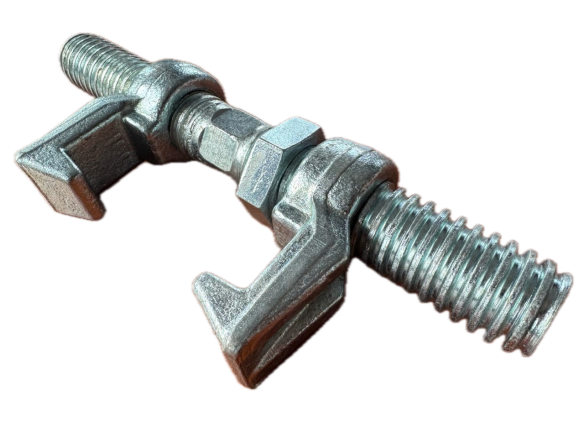
Other container news...

Obligation to Check Tightness When Selling a Reefer Container
Who is responsible for the refrigerant leak check when selling a refrigerated container? Find out what obligations the seller has at the time of handover and why they must provide a PTI report along with the technical data plate. Learn which regulatory requirements and F-gas record-keeping duties become the sole responsibility of the new owner.

New shipping containers
If you are currently considering purchasing a new shipping container, you are not alone. While just twenty years ago containers were used almost exclusively for maritime transport, today they have found their way into construction, storage, business, and even housing. This growing popularity brings with it a host of questions: Which type should you choose? How much does it cost? How do you recognize quality? How can you avoid falling victim to scammers?
New sea shipping containers
If you are currently considering purchasing a new shipping container, you are not alone. While just twenty years ago containers were used almost exclusively for maritime transport, today they have found their way into construction, storage, business, and even housing. This growing popularity brings with it a host of questions: Which type should you choose? How much does it cost? How do you recognize quality? How can you avoid falling victim to scammers?

6m shipping container
Are you thinking about buying a 6-meter shipping container but aren’t sure what to look for? You are not alone—this 20-foot container is the best-selling size on the Czech market, and the differences between various types, conditions, and prices can be significant. In this guide, you will find everything you need to know: from exact dimensions and a comparison of categories (such as “one-way,” refurbished, and “Cargo Worthy”) to current prices and shipping advice.