
Bridge Fitting and Its Practical Use
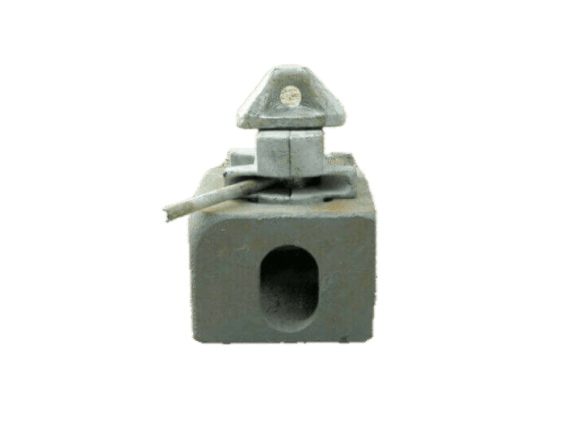
Bridge Fitting (also often called bridge clamp, bridge hardware, lashing bridge fitting or horizontal connector for containers) is a specialized, highly durable mechanical component designed for the safe horizontal connection of shipping containers. Its main function is to firmly attach two adjacent containers (side‑by‑side or end‑to‑end) by securing them to their corner castings. The design works on a force‑clamping mechanism with a reverse thread, so that turning the central nut draws the containers together and creates a stable, unified unit.
This seemingly simple component is a key building block of modern container transportation and logistics. While vertical stacking of containers uses so‑called twist locks, bridge fittings are essential for horizontal connections. This horizontal fixation is crucial for the safety and stability of container blocks on deck and in the hold of ships, on river barges, and in land applications (e.g., when constructing container‑based structures).
Alternative names in practice
- Bridge Clamp
- Container Bridge Clamp
- Lashing Bridge Fitting (binding bridge hardware)
- Horizontal Container Connector
- Securing bolt for horizontal connection of shipping containers
Significance and Function of Bridge Fittings
Ensuring Stability During Transport
The main purpose of bridge fittings is to create a safe yet easily releasable horizontal connection between ISO containers. This provides several essential benefits:
- Stability at sea: On ships, containers are exposed to extreme forces (roll, pitch, heave), especially during storms or rapid course changes. Bridge fittings eliminate the risk of shift, overturn, or fall of individual containers over the deck.
- Strength of assemblies: When multiple containers are combined into larger units (e.g., enclosures, warehouses, residential or office modules), bridge fittings ensure the assembly behaves as a single solid block, resistant to wind, vibration, and seismic effects.
- Efficient space utilization: A rigid connection allows compact stacking in port terminals, on ships, and in depots, leading to better area usage and more even distribution of forces on the securing points.
Key Areas of Application
| Environment | Purpose of Connection |
|---|---|
| Ship decks | Stabilization of container blocks |
| Barge, river transport | Preventing shift on non‑standard vessels |
| Container terminals | Long‑term/medium‑term storage in blocks |
| Construction and architectural projects | Modular joining for container buildings |
Construction and Mechanical Solution
Bridge fitting is a highly specialized product designed to withstand extreme loads and harsh environments.
Main Parts of a Bridge Fitting
| Part | Description and Function |
|---|---|
| Central body | Thick‑walled steel rod with opposite‑direction threads on each end (reverse thread), provides pulling force on both ends |
| End hooks (clamps) | Robust castings, precisely shaped to secure the corner casting openings, preventing slippage under load |
| Central nut / spindle | Hexagonal or square section for tightening with a standard or special wrench |
| Counter‑nut | After tightening it slides onto the nut and prevents automatic loosening due to vibration |
Mechanics of Tightening
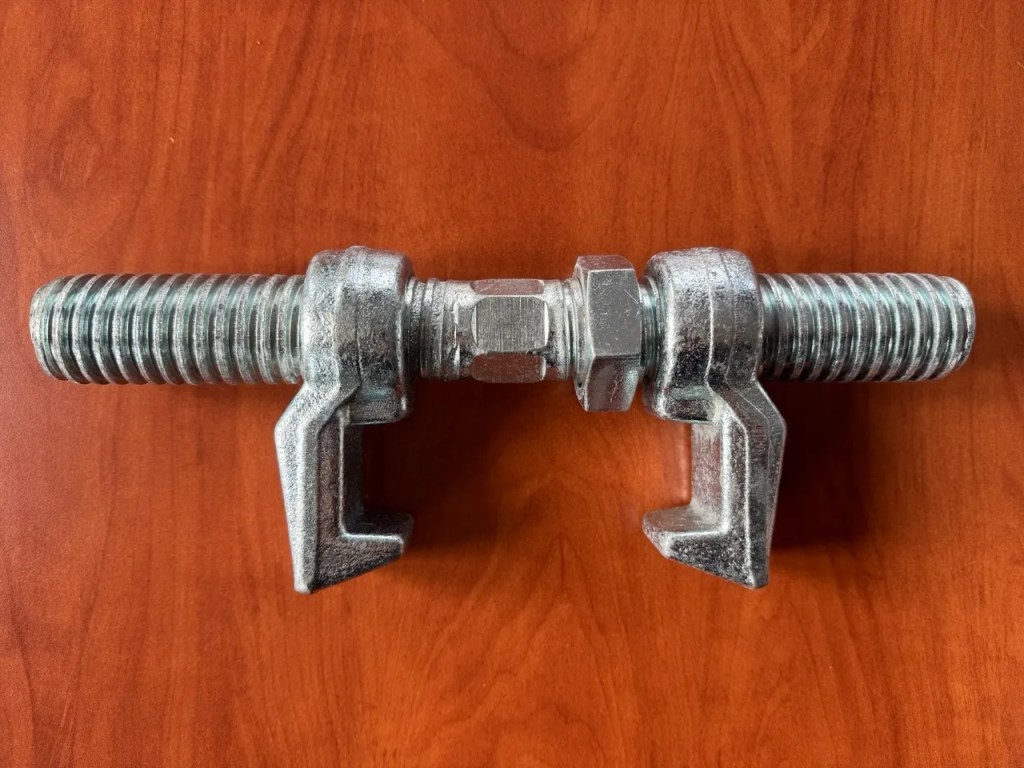
- Opposite threads on each side allow the central nut, when turned, to pull both end hooks toward each other and clamp the containers together.
- After reaching the required tension, the counter‑nut must always be tightened.
Materials, Production, and Durability
Bridge fittings are manufactured for maximum service life and resistance to all types of loads and aggressive environments.
Material Composition
- High‑strength steel: Typically alloyed, annealed, and heat‑treated to increase tensile and compressive strength.
- Cast or forged construction: Provides a seamless piece without welds, minimizing weak points.
- Surface treatment: Standard is hot‑dip galvanizing – immersion in molten zinc creates a corrosion‑protective layer even in salty environments.
Standards and Certifications
Bridge fittings for containers must comply with ISO requirements and inspection certifications such as Lloyd’s Register, DNV‑GL, Bureau Veritas, ABS, NK, KR, etc.
Typical Technical Parameters
| Property | Approximate Value |
|---|---|
| Tensile strength range | min. 100 kN (≈10 tonnes) and higher |
| Working load limit (WLL) | ≈ 50 kN (safety factor 2:1) |
| Surface | Hot‑dip galvanized |
| Weight (260 mm fitting) | ≈ 3 kg |
Types, Sizes, and Technical Parameters
Bridge fittings differ mainly in length, which corresponds to the gap width between containers.
| Length (mm) | Use | Note |
|---|---|---|
| 260 | Standard connection | Most common size for typical assemblies |
| 280 | Special applications | For wider gaps between containers |
| 380 | Extra‑long connection | When larger clearances must be bridged |
Additional Important Features
- Compatibility: All dimensions respect ISO corner casting standards.
- Hook shape: Precisely matches the internal opening of corner castings for secure fastening.
- Weight: Robust construction guarantees long service life even with repeated use.
Step‑by‑Step Usage Guide
- Prepare the fitting – Rotate the central nut and set the hook spacing slightly larger than the distance between the corner castings.
- Hang the hooks – Insert one hook into the corner casting of the first container, place the other hook on the adjacent container.
- Tighten – Using a wrench or special rod, turn the spindle and pull both containers together.
- Secure with the counter‑nut – After tightening, always tighten the counter‑nut against the central nut so the fitting does not loosen during transport.
- Repeat – For a standard connection of two 40‑ft containers, usually at least four fittings are used along the top edge.
Main Practical Applications
Overview of Major Applications
| Application | Significance and Benefit |
|---|---|
| On‑board ships | Stabilizes container blocks and prevents movement |
| River and inland transport | Fixation of containers on vessels without cells and guides |
| Container terminals | Long‑term joining of container rows in depots |
| Modular architecture | Temporary joining of containers for buildings, warehouses, offices |
Advantages in Container Architecture
- Easy disassembly: Unlike welding, bridge fittings for containers allow repeated separation without damage to containers.
- Preserves structural integrity: Does not compromise anti‑corrosion coating or load‑bearing parts of the container.
- Flexibility: Enables rapid reconfiguration of the layout.
Bridge Fitting vs. Twist Lock – Comparison
| Feature | Bridge Fitting (bridge hardware) | Twist Lock (twist lock) |
|---|---|---|
| Connection type | Horizontal (side‑by‑side) | Vertical (up/down) |
| Mechanism | Reverse thread, clamping connection | Rotating conical lock |
| Use | Joining blocks, assemblies, structures | Stacking containers on top of each other |
| Compatibility | ISO corner casting | ISO corner casting |
| Safety role | Prevents horizontal shift | Prevents vertical shift |
| Combined use | Often used together for maximum stability | Yes |
Note: In practice both devices are used simultaneously – twist locks for stacking, bridge fittings for joining blocks into larger units.
Role in the Global Transport Industry
Safety and Reliability
- Protection of cargo and vessels: A solid connection reduces the risk of containers falling overboard, protecting crew, cargo, and the environment.
- Efficiency and capacity: Allows higher and denser stacking, maximizing ship capacity.
- Supply‑chain stability: Reliable connections ensure goods arrive on time and in good condition.
Economic Impact
- Cost reduction: Minimizing damage and loss lowers insurance and operational expenses.
- Competitive advantage: Efficient handling and rapid transshipment increase the competitiveness of shipping companies.
Safety, Maintenance, and Legislation
Safety and Inspection Requirements
- Manufacturing standards: Products must meet international standards (ISO, IMO, classification societies).
- Regular inspections: Before and after use, visually inspect the fitting for cracks, deformation, thread wear, and zinc coating condition.
- Maintenance: Regular cleaning of threads and lubrication with quality grease extend service life and protect against seizing and corrosion.
Legislation and Certification
- Certification: Bridge fittings for containers must carry valid certificates (LR, DNV, BV, ABS, etc.) confirming compliance with maritime transport regulations.
- Record‑keeping: All fittings on a vessel must be logged, inspected regularly, and decommissioned when damaged.
Related Terminology
| Term | Meaning |
|---|---|
| Corner casting | Standardized ISO corner fitting of a container, used for handling and securing with connection devices |
| Twist lock | Rotating lock for vertical stacking of containers |
| Lashing rod | Binding rod used with a turnbuckle for diagonal fixation of a container to the deck |
| Turnbuckle | Tensioning device used to tighten binding rods and chains |
| ISO container | Standardized container according to International Organization for Standardization norms |
| D‑ring | Metal eye for attaching securing devices |
Future Trends and Innovations in Bridge Fittings
- New material development: Research into composite materials and innovative alloys aims to provide higher strength at lower weight and better resistance to corrosion.
- Digitization and automation: “Smart” fittings equipped with sensors for load and wear monitoring are being explored, enabling predictive maintenance and increased safety.
- Eco‑friendly production: Manufacturers are focusing on reducing carbon footprints, using greener galvanizing processes, and optimizing production workflows.
 Czech Republic
  WITHOUT SHIPPING
Other container news...
Corner casting steel vs aluminum
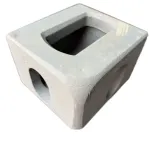
Every shipping container in the world — all 40 million of them — rests on eight critical components. Corner castings are the load-bearing blocks at each corner of an ISO shipping container, and they are the universal interface between the container and every crane, twistlock, spreader, and chassis on the planet. When you lift a container, stack it nine high on a ship, or lock it to a truck trailer, every ton of force flows through these fittings.

Construction cabin – selection, tips, dimensions and prices
Every construction project – whether a family house, a development project or a reconstruction – starts with the infrastructure. No construction manager, craftsman or investor who needs an on-site office, a changing room for workers or a safe storage for tools can do without a quality construction cell. But navigating the offer is not easy: residential containers, sanitary cells, storage modules, rental, purchase, refurbished pieces… This guide will give you answers to all the essential questions in one place.

Storage container
A storage container is a lockable steel box designed for the safe and dry storage of materials, tools, goods or equipment. Originally created as a shipping container for maritime transport, its durability and versatility have found their way onto construction sites, corporate premises and private land.
Shipping container 12m (40 ft)
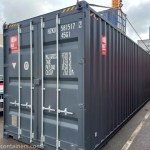
A 12m shipping container is an investment that, if properly selected and cared for, will pay off in decades of trouble-free use. Whether you plan to use it as a warehouse, workshop, garage or the basis for a residential module — the key is careful selection of the condition, a thorough inspection before purchase and high-quality preparation of the base for placement. Take the time to compare offers, check the seller’s references and do not hesitate to personally inspect the container before buying. A properly selected 40-foot container will serve you reliably for many years.