
Shipping Container Locking Mechanisms
A shipping container locking mechanism is not one single device — it is an entire ecosystem of engineered connectors and security hardware that makes global trade possible. Every day, over 5,500 container ships cross the oceans carrying more than 250 million containers between them. None of those containers would stay in place without the locking mechanisms that anchor them to ships, trucks, and each other.
This guide covers every angle of the shipping container locking mechanism: from the ISO-standard twist locks and corner castings that secure containers at sea, to the padlocks, crossbar locks, and smart locks that protect cargo on land. You will learn how each mechanism works, why it was invented, what can go wrong, and how the technology is evolving.
What Is a Shipping Container Locking Mechanism?
A shipping container locking mechanism is any device or system designed to either (a) secure containers to transport vehicles or other containers (positional locking), or (b) prevent unauthorized access to the container’s contents (security locking).
Shipping container locking mechanisms serve two fundamentally different purposes, and confusing them leads to cargo loss, theft, or structural failure.
Positional locks — primarily twist locks and bridge fittings — are engineered to handle immense dynamic forces. They transfer the weight of container stacks through corner castings into the ship’s structure or trailer chassis. A single twist lock on a container ship must withstand up to 50 metric tons of force under storm conditions.
Security locks — padlocks, crossbar locks, bolt seals — are designed to deter and delay theft. They do not contribute to the structural stability of a container stack, but they are the last line of defense for a container’s contents once it leaves the controlled environment of a port or ship.
Understanding this distinction is the starting point for every decision about container locking mechanisms.
| Feature | Positional Locks (Twist Locks, Bridge Fittings) | Security Locks (Padlocks, Crossbar Locks, Seals) |
|---|---|---|
| Primary Purpose | Secure containers structurally; prevent movement during transport | Prevent unauthorized access and theft |
| Load Bearing | Yes — up to 50 tons per lock in tension, compression, and shear | No — not designed for structural loads |
| Standardization | ISO 1161, ISO 668, ISO 3874 | No universal standard; varies by manufacturer |
| Operation | Manual, semi-automatic, or fully automatic | Keyed, combination, or electronic |
| Where Used | Ships, trains, trucks, container yards, stacking configurations | Storage yards, construction sites, remote locations, transport |
| Common Examples | Double-ended twist locks, chassis twist locks, dovetail locks, bridge fittings | Heavy-duty padlocks, crossbar locks, hidden shackle locks, bolt seals, smart locks |
Where Did the Shipping Container Locking Mechanism Come From?
The modern shipping container locking mechanism traces back to a single engineer and a deliberate act of industrial altruism.
Keith Tantlinger and the 1950s Revolution
Before the 1950s, cargo ships were loaded piece by piece — a process called break-bulk shipping. Longshoremen manually handled crates, barrels, and sacks. Loading a single ship could take over a week. Cargo was frequently damaged, stolen, or lost. The industry was bottlenecked by the ports themselves.
In 1955, trucking entrepreneur Malcolm McLean partnered with engineer Keith Tantlinger to design a standardized shipping container that could move seamlessly between trucks, trains, and ships. McLean provided the vision; Tantlinger provided the engineering.
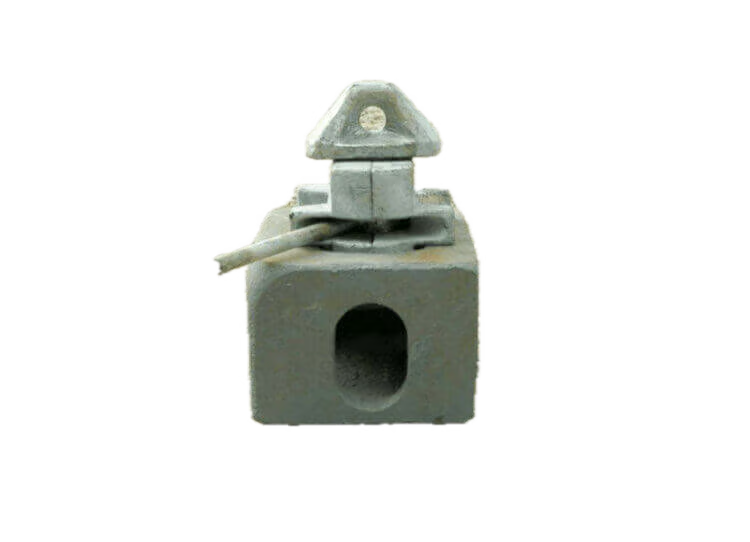
Tantlinger’s critical contribution was a locking system consisting of two parts: the corner casting — a reinforced steel block with precisely milled oval holes, welded into all eight corners of the container — and the twist lock, a rotating connector that could be inserted into the casting and turned 90 degrees to create an instantaneous, load-bearing lock.
The Patent That Changed the World
Tantlinger was granted US patent 3,456,967 for the “container coupler” in 1969. But what he did next was extraordinary: he released the patent royalty-free to the International Organization for Standardization (ISO) in 1967, actively encouraging worldwide adoption without licensing fees.
This decision meant no single company could control container locking technology. Shipbuilders in Japan, truck manufacturers in Germany, and rail operators in the United States could all adopt the same standard. The ISO 1161 standard — which defines corner casting dimensions and strength requirements — was born directly from Tantlinger’s design. By 1970, intermodal container shipping was locking the global economy together, and the cost of moving freight had fallen by more than 90% compared to break-bulk methods.
Tantlinger, who died in 2013 at age 92, is now widely recognized as one of the unsung architects of globalization.
How Does a Twist Lock Work?
The twist lock is the workhorse of the shipping container locking mechanism family. Its principle is mechanically simple, but the forces it handles are enormous.
Corner Castings: The Passive Half of the System
A corner casting is a hollow steel block measuring 178 × 162 × 118 mm, conforming to ISO 1161. Each corner casting has three openings — one on the top face, one on the side face, and one on the bottom face. The oval hole that receives the twist lock measures 124.5 mm along its long axis and 63.5 mm across its short axis.
All eight corners of every ISO-standard shipping container are fitted with identical corner castings. These castings are the universal interface point. Every crane spreader, every twist lock, every lashing rod, and every bridge fitting in the world connects through this same standardized geometry.
The 90-Degree Rotation Principle
The locking action follows four sequential steps:
- Insertion: The twist lock head, in its open (aligned) position, slides into the oval hole of the corner casting. Because the twist lock head is elliptical in cross-section and matches the casting opening dimensions, it passes through smoothly with minimal clearance.
- Rotation: The operator turns a lever (manual), or a spring-loaded mechanism triggers (semi-automatic), rotating the twist lock head 90 degrees. The head is now perpendicular to the oval opening.
- Locking: In this rotated position, the twist lock head can no longer pass back through the opening. The container above and the container below — or the container and the chassis beneath it — are now mechanically locked together.
- Release: To unlock, the process reverses. The twist lock head rotates back 90 degrees into alignment with the oval opening, and the containers can be separated.
Twist Lock Components
| Component | Material | Function |
|---|---|---|
| Body (Housing) | Forged or cast steel, hot-dip galvanized | Holds all parts together; resists corrosion in marine environments |
| Locking Head | High-strength forged steel alloy | Inserts into corner casting; rotates to lock; bears the entire load |
| Handle / Lever | Steel with grip coating | Provides mechanical advantage for manual rotation; or interfaces with spring mechanisms in semi-automatic types |
| Guide Sleeve | Machined steel | Ensures precise alignment with corner casting opening; prevents jamming |
| Spring Mechanism | Corrosion-resistant spring steel | In semi-automatic locks: tensions during insertion, releases to snap into locked position |
| Safety Latch | Hardened steel | Prevents accidental unlocking during transport; must be deliberately disengaged |
Force Transmission: How 50 Tons Per Lock Works
When a container stack encounters heavy seas, dynamic loads surge through the entire stack. The corner castings on the bottom container transmit forces from all containers above — potentially seven, eight, or nine levels — directly into the twist locks.
A single semi-automatic twist lock used on container ships is rated for 50 metric tons of load capacity and weighs approximately 6.3 kg. The force pathway is: container weight → corner casting → twist lock head → twist lock body → deck socket or lower corner casting. This direct mechanical chain is what keeps container stacks stable even when a ship rolls 30 degrees in heavy weather.
It is worth noting that containers stowed in the hull (below deck) within cell guides do not always require twist locks between every tier — the cell guide structure itself constrains lateral movement. However, containers stowed on deck always require twist locks connecting each tier to the one below.
What Are the Different Types of Twist Locks?
Twist locks are classified by operation method and by application orientation. Selecting the wrong type for a given use case can lead to handling delays, safety incidents, or structural failure.
Classification by Operation Method
| Type | How It Locks | How It Unlocks | Speed | Cost | Safety Profile | Best For |
|---|---|---|---|---|---|---|
| Manual Twist Lock | Operator inserts lock into corner casting, then turns lever by hand (usually 90°) | Operator turns lever back manually | Slowest | Lowest | Human error risk — operator may forget to lock or unlock | Small yards, ground-level storage, static configurations |
| Semi-Automatic Twist Lock (SATL) | Manually inserted into bottom corner casting; when container is lowered onto it, spring tension releases and locks automatically | Operator pulls a release cable or lever to retract spring and rotate head | Medium | Medium | Safer than manual — locks automatically, but requires manual release verification | Shipboard stacking, intermodal terminals |
| Fully Automatic Twist Lock (FATL) | Integrated into crane spreader; locks and unlocks without any human intervention at the lock itself | Controlled remotely from crane cabin | Fastest | Highest | Safest — eliminates human exposure to suspended loads | High-volume container terminals, automated ports |
Vertical, Horizontal, and Chassis Twist Locks
Vertical twist locks connect containers stacked on top of each other. Double-ended twist locks are the most common form — one head locks into the bottom casting of the upper container, the other head into the top casting of the lower container. They are essential for shipboard stacking and multi-tier yard storage.
Horizontal twist locks connect containers side-by-side. They are inserted into the side openings of adjacent corner castings. Their primary use is in container-based building construction — connecting units to form wider rooms or structures — and in securing container blocks during rail or road transport where lateral stability is needed.
Dovetail twist locks are a specialized manual variant with an angled base plate (typically 55°) that mates with dovetail sockets welded into ship decks, hatch covers, or trailer chassis. The angled fit provides additional resistance to uplift forces.
Chassis twist locks are permanently integrated into truck trailers and rail wagons. They are typically retractable — flush with the chassis floor when not in use, raised and locked when a container is loaded. These locks are the primary interface between containers and road/rail transport.
Bridge fittings are not twist locks in the strict sense but serve a related function. These heavy-duty clamps span between adjacent corner castings to connect containers longitudinally (end-to-end) or transversely (side-to-side). They use threaded bolts to draw containers tightly together and are widely used in container-based modular construction.
How Do Shipping Container Security Locks Work?
Once a container is positioned on land — at a storage yard, construction site, or remote facility — the twist lock’s job is done. Security now falls to access-control locks that prevent unauthorized entry.
Padlocks and Lock Boxes
The most common shipping container security setup is a heavy-duty padlock paired with a lock box (also called a lock shroud or padlock protector). The padlock secures the container’s door hasp. The lock box — a steel housing welded or bolted over the hasp area — encloses the padlock completely, exposing only the keyhole. This renders bolt cutters, crowbars, and angle grinders far less effective.
Container-grade padlocks use hardened steel shackles (often boron-alloy), anti-pick pin mechanisms, and weatherproof seals to resist marine corrosion. The shackle diameter is typically 10–12 mm — significantly thicker than a standard commercial padlock.
Crossbar Locks
Crossbar locks span the full width of both container doors, clamping onto the vertical locking bars. They are constructed from heavy-gauge reinforced steel and are secured with their own integrated padlock system. A properly installed crossbar lock makes it nearly impossible to pry open either door, even if the container’s own door locking bars are compromised.
Crossbar locks are considered the gold standard for stationary, long-term container security. Their visible presence is also a powerful deterrent.
Hidden Shackle and Disc Locks
Hidden shackle locks enclose the shackle entirely within the lock body, eliminating the most common attack point. Disc locks use a circular, low-profile design that resists bolt cutters — there is simply not enough exposed shackle for cutting jaws to grip.
Both types are popular for containers in exposed, high-risk locations. Their compact design also fits more easily inside lock boxes.
Bolt Seals and Cable Seals
Bolt seals are single-use, tamper-evident security devices — not locks in the traditional sense. They consist of a metal pin that snaps irreversibly into a locking barrel, and can only be removed with bolt cutters. Each seal carries a unique serial number, recorded in shipping documentation, so any tampering is immediately detectable.
Cable seals use a braided steel cable loop that threads through the container’s locking bars and secures into a locking body. They offer flexibility for irregular door configurations but provide less cutting resistance than bolt seals.
Both seal types are primarily a tamper-evidence solution, not a theft deterrent. They tell you that someone has accessed the container — they do not stop them from doing so.
Smart Locks and Electronic Access Systems
The newest category of container security lock integrates electronics. Smart locks feature:
- Keypad or biometric access — eliminating keys that can be lost or copied
- Bluetooth / mobile app connectivity — remote locking and unlocking
- GPS tracking — real-time location monitoring
- Access logging — timestamped records of every lock and unlock event
- Tamper alerts — push notifications if the lock is attacked
These systems are gaining traction in high-value cargo logistics and for containers used as remote site offices or equipment stores where access needs to be monitored and controlled from a distance.
How Does ISO 1161 Standardize Container Locking?
The interoperability that makes global container shipping possible rests on a family of ISO standards. ISO 1161 is the cornerstone.
ISO 1161: Corner Casting Geometry and Strength
ISO 1161 specifies the exact dimensions, tolerances, material requirements, and strength ratings for corner castings on Series 1 freight containers. The standard mandates that each top corner casting must withstand:
- Lifting load: 150 kN (approximately 15.3 metric tons) applied through the casting
- Stacking load: 846 kN (approximately 86.3 metric tons) in compression — representing the cumulative weight of a full nine-high container stack
- Restraint forces: both longitudinal and transverse forces from lashing systems
The standard also defines the oval hole geometry (124.5 mm × 63.5 mm) that every twist lock manufacturer in the world builds to. Without this dimensional lock between ISO 1161 corner castings and twist lock heads, the entire intermodal system would fragment.
The ISO Standards Ecosystem
ISO 1161 does not work alone. It is part of a suite:
- ISO 668 classifies container types by dimensions and ratings (20-foot, 40-foot, high-cube, etc.)
- ISO 1161 defines the corner casting interface
- ISO 3874 defines how containers should be handled, lifted, and secured — including twist lock procedures
CSC: Mandatory Safety Inspections
The Convention for Safe Containers (CSC), adopted by the International Maritime Organization in 1972, requires that every shipping container in international transport carry a valid CSC safety approval plate. The plate certifies that the container — including its corner castings and integral locking features — meets structural safety standards.
Under CSC rules, containers must undergo periodic inspections (at least every 30 months under the periodic examination scheme). Inspectors check corner castings for cracks, deformation, corrosion, and weld integrity. A container with damaged corner castings is legally prohibited from international transport until repairs are certified.
What Are Common Problems and Safety Hazards With Container Locks?
Container locking mechanisms operate in punishing environments — saltwater spray, temperature extremes, heavy impacts, and continuous vibration. Failures can be catastrophic.
Inoperable Semi-Automatic Twist Locks (SATLs)
The most dangerous recurring problem in container handling involves semi-automatic twist locks that fail to release. When a SATL jams in the locked position, the corner casting remains attached to the container below. If a crane operator attempts to lift without verifying all four corners are free, the lower container can be lifted along with the upper one — or the corner casting can tear out entirely under asymmetric load.
OSHA has issued specific guidance (FS-3583) on freeing inoperable SATLs, emphasizing that workers must never position themselves under a suspended container or attempt to manually free a jammed lock while a container is under crane tension. The recommended procedure uses a long release rod operated from a safe distance, ideally from a work platform positioned by the spreader crane itself.
Corrosion and Marine Environment Wear
Saltwater corrosion is the number-one degradation mechanism for container locks. Even hot-dip galvanized twist locks accumulate rust over years of marine exposure. Corrosion in the spring mechanism is particularly dangerous — it can cause semi-automatic locks to fail to engage, or to engage incompletely, creating a false-positive lock condition.
Regular inspection must check for:
- Pitting corrosion deeper than 1 mm on load-bearing surfaces
- Crack propagation, especially around the twist lock head neck — a high-stress point
- Spring tension loss in semi-automatic mechanisms
- Galvanization wear on contact surfaces
Misalignment and Improper Installation
A twist lock head that is only partially rotated — perhaps turned 75 degrees rather than the full 90 — may appear locked but will fail under load. This “partial engagement” condition is a known cause of container stack collapses during rough weather.
Causes include:
- Debris or ice inside the corner casting preventing full insertion
- Worn twist lock heads that no longer match the casting opening profile
- Operator error during manual locking, especially in poor visibility
- Damaged corner castings with deformed oval openings
Forced Entry Vulnerabilities in Security Locks
For stationary storage containers, the threat model shifts from structural failure to theft. Common attack vectors include:
- Shackle cutting with long-handle bolt cutters (mitigated by lock boxes and hidden shackle locks)
- Leverage attacks with crowbars against exposed padlocks (mitigated by crossbar locks)
- Lock picking of low-grade cylinder mechanisms (mitigated by disc-detainer or high-security pin-tumbler cores)
- Angle grinder attacks on the lock body itself (mitigated by hardened steel alloys and tamper-alert smart locks)
No lock is invulnerable — the goal is to make an attack so time-consuming and noisy that it is not worth attempting.
How Are Container Locking Mechanisms Evolving?
The basic geometry of the twist lock has remained unchanged since Tantlinger’s 1960s design, but the technology around it is advancing rapidly.
Smart Twist Locks and IoT Integration
The most significant innovation is sensor-equipped smart twist locks. These devices incorporate:
- Contact sensors that confirm whether the lock is in the engaged or released position
- RFID tags that transmit lock status to crane operators and terminal management systems
- GPS modules for tracking container location through the supply chain
- Load cells that measure the actual force passing through each lock, enabling overload detection before failure
The Port of Rotterdam’s automated terminals have reported up to 40% acceleration in unloading operations after adopting automatic twist lock verification systems. Maersk has documented a 30% reduction in container-shifting incidents following the implementation of stricter twist lock maintenance and monitoring protocols.
Material Innovations
Traditional forged steel remains the standard, but materials science is improving the equation. New alloy formulations offer higher strength-to-weight ratios, reducing the weight penalty of twist locks — a non-trivial consideration when thousands of locks are carried on a single vessel. Advanced hot-dip galvanizing formulations and polymer-based coatings extend corrosion protection from years to decades in some applications.
Research into composite materials for corner castings — carbon-fiber-reinforced polymers, for example — remains experimental but could dramatically reduce container tare weight. The challenge is meeting the 846 kN compression requirement of ISO 1161 in a non-metallic material.
Automated Ports and the Future
The long-term trajectory points toward fully automated container terminals where twist locks are engaged and disengaged by robotic systems integrated into crane spreaders, with zero human presence in the stacking area. Trials are underway at several major ports, including Rotterdam, Singapore, and Shanghai. The safety case is compelling: it removes workers entirely from the most dangerous zone in container handling — the interface between suspended loads and stacked containers.
How Do You Maintain and Inspect Shipping Container Locks?
Preventive maintenance on container locking mechanisms can prevent the cascade of problems that lead from a single corroded lock to a stack collapse.
Pre-Use Inspection Checklist
Before each use — whether on a ship, in a yard, or on a chassis — every twist lock should be checked for:
- Visual inspection of the head: Look for cracks, chips, or deformation. The head must be geometrically sound to engage and disengage correctly.
- Lever/mechanism freedom: On manual locks, the lever must rotate smoothly through its full 90-degree range. On semi-automatic locks, the spring mechanism must compress and release cleanly.
- Corrosion assessment: Surface rust is acceptable on non-contact surfaces. Pitting on the locking head or load-bearing surfaces is grounds for removal.
- Corner casting condition: The oval opening must be clean, free of debris or ice, and not deformed. A deformed casting can prevent full insertion and create a partial engagement.
- Safety latch function: The latch that prevents accidental unlocking must engage positively and release only with deliberate action.
Routine Maintenance Procedures
- Cleaning: Remove salt deposits, mud, and debris from the twist lock mechanism and corner casting interiors after each voyage or every 30 days of continuous exposure.
- Lubrication: Apply marine-grade grease to the twist lock head and the rotation mechanism. Do not grease the corner casting interior — this can attract grit that accelerates wear.
- Touch-up galvanizing: Use cold-galvanizing zinc spray on areas where the original hot-dip coating has worn through.
- Spring replacement: Semi-automatic twist lock springs should be replaced at manufacturer-recommended intervals — typically every 2–3 years or after 5,000 lock/unlock cycles.
When to Replace vs. Repair
Replace a twist lock immediately if any of these conditions are present:
- Any visible crack, regardless of size
- Head deformation exceeding 1 mm from original profile
- Pitting corrosion deeper than 1.5 mm on any load-bearing surface
- Spring mechanism that does not return to the locked position reliably
- Lever mechanism with excessive play or binding
The cost of a replacement twist lock — typically $50–$150 for a manual or semi-automatic unit — is negligible compared to the liability of a container stack failure.
Frequently Asked Questions
What is the difference between a twist lock and a padlock on a shipping container?
A twist lock is a structural connector that mechanically joins shipping containers together at their corner castings, bearing the weight of the container itself and any containers stacked above it. A padlock is a security device that prevents the container doors from being opened — it carries no structural load and does not connect containers to each other. The two serve entirely different functions in a shipping container locking mechanism: twist locks handle forces, padlocks handle access.
How do semi-automatic twist locks work?
A semi-automatic twist lock is manually inserted into the bottom corner casting of the upper container. When the upper container is lowered onto the lower container, the twist lock head contacts the lower corner casting, which compresses an internal spring. Once the head passes fully into the casting, the spring releases and rotates the head 90 degrees into the locked position — automatically. To unlock, an operator must manually pull a release cable or lever to retract the spring and rotate the head back to the open position. This design combines the reliability of manual insertion with the speed of automatic locking.
What is a corner casting and why is it so important?
A corner casting is a hollow steel block — 178 × 162 × 118 mm, conforming to ISO 1161 — welded into each of the eight corners of an ISO shipping container. It serves as the universal connection point for twist locks, crane spreaders, lashing rods, and bridge fittings. Without standardized corner castings, every container manufacturer, ship, truck, and crane would need custom interfaces. The corner casting is the literal and symbolic cornerstone of intermodal containerization.
Who invented the shipping container locking mechanism?
The twist lock and corner casting system was invented by American engineer Keith Tantlinger in the 1950s, while working for Malcolm McLean’s container shipping venture. Tantlinger’s critical insight was designing a simple rotating connector that could mate with a standardized corner fitting. In an act that enabled the globalization of container shipping, Tantlinger released his patent royalty-free to ISO in 1967, ensuring universal adoption without licensing barriers.
How many twist locks are needed to secure a shipping container?
Four twist locks are required to fully secure one container to another or to a transport vehicle — one at each corner. For a stack of containers, each tier requires four twist locks at the interface between it and the tier below. A stack of five containers on a ship’s deck therefore requires 20 twist locks total (four per interface, across four interfaces). Containers secured to a truck chassis typically use four chassis-integrated twist locks.
Can shipping container locks be picked or broken?
Yes. Every mechanical lock has vulnerabilities. Standard padlock shackles can be cut with bolt cutters or an angle grinder. Low-grade lock cylinders can be picked. The defense strategy is a layered approach: use a lock box to protect the padlock shackle, choose high-security cylinders (disc-detainer or high-pin-count mechanisms), add a crossbar lock as a second barrier, and — for high-value cargo — deploy smart locks with real-time tamper alerts. The goal is not invulnerability; it is making an attack too slow, too loud, and too visible to succeed.
What does ISO 1161 specify for container locks?
ISO 1161 specifies the dimensions, tolerances, material requirements, and strength ratings for corner castings on Series 1 freight containers. It mandates that top corner castings withstand 150 kN of lifting force and 846 kN of compressive stacking force. The standard also defines the oval hole geometry (124.5 mm × 63.5 mm) that all twist lock heads must fit. ISO 1161 is the standard that ensures a container built in China will lock securely to a chassis built in Germany and a ship built in South Korea.
How often should twist locks be inspected?
Pre-use visual and functional inspection should be performed every time a twist lock is installed. Formal periodic inspection of the entire locking system — including corner castings — is required under CSC (Convention for Safe Containers) rules at least every 30 months for containers in international transport. Semi-automatic twist lock springs should be replaced on a manufacturer-recommended schedule, typically every 2–3 years or 5,000 cycles. In practice, major shipping lines inspect twist locks as part of every port turnaround.
Are smart locks worth the investment for shipping containers?
For stationary containers in remote or unattended locations storing high-value goods, smart locks offer meaningful advantages: remote access control, real-time tamper alerts, and auditable access logs. For containers in active cargo rotation, the benefit is more nuanced — bolt seals already provide tamper evidence at much lower cost. Smart locks are most cost-effective when the value of the stored contents exceeds the cost of the lock system, or when access needs to be managed across multiple authorized users without physical key distribution.
What is the most secure type of shipping container lock?
For stationary containers, the combination of a crossbar lock with an integrated hidden-shackle padlock inside a welded lock box provides the highest practical level of mechanical security. This layered approach defeats bolt cutters, crowbars, and casual angle-grinder attacks. Adding a smart lock with GPS and tamper alerts provides the electronic layer. For containers in transit, high-security bolt seals with unique serial numbers, combined with properly maintained semi-automatic twist locks for structural security, is the industry standard.

 Czech Republic
 DELIVERY TO ADDRESS


