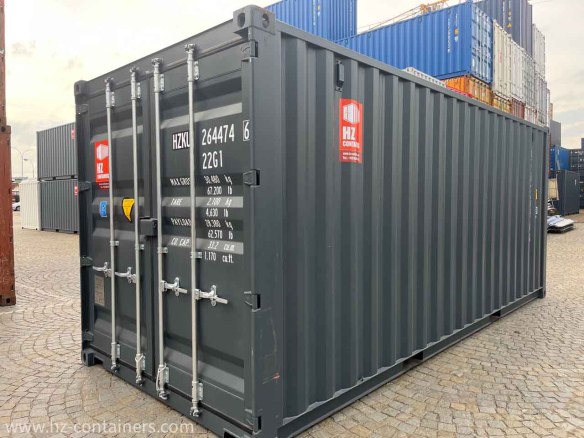
Lock on Shipping Containers HZK004 with Padlock


 Czech Republic
  WITHOUT SHIPPING
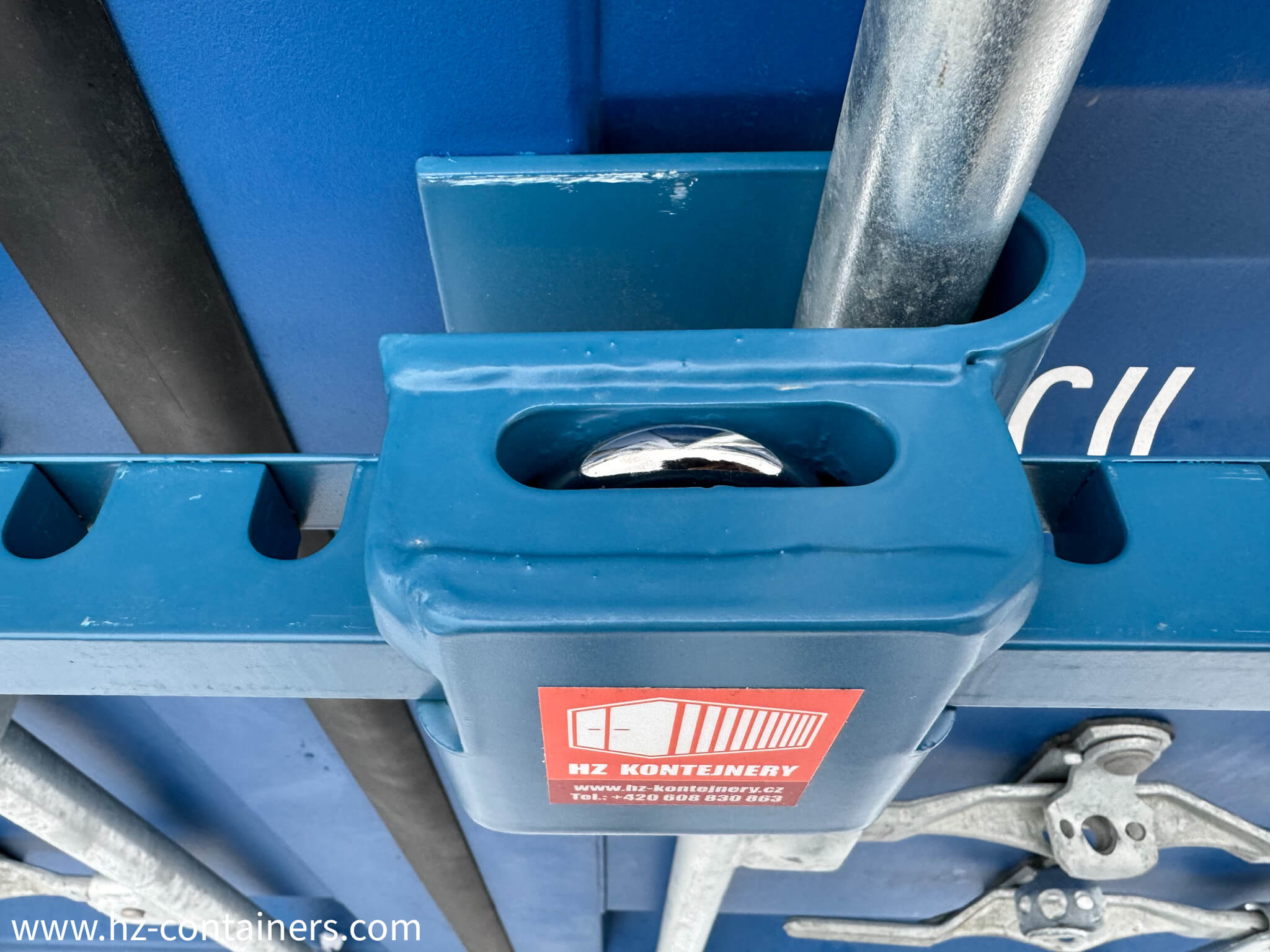
 Lock on shipping containers HZK004 with padlock / price for complete set. Price is stated per one piece.
- Weather-resistant paint
- Certified, highly secure padlock 13mm with 3 keys and 1 key card
- Suitable for rod door opening at distances from 200mm – 450mm
- Weight approx. 7.5 kg
- Security class C1
Lock on Shipping Containers HZK004 with Padlock
Possibility to send by courier service. Shipping price according to ordered quantity and specific country.
If interested, please send an inquiry and we will send you a shipping quote. Please also send the delivery address including postal code so we can send you a specific quote including shipping.
All information, services, prices, etc. may differ.
The price list may be indicative, we always charge according to actual conditions.
We offer all spare parts for shipping containers. Opening of shipping containers at great prices. Spare parts for containers are in stock, can be sent immediately. Quantity in stock upon request.
Padlock HZK004
Padlock HZK004 is one of the most important security elements in shipping and storage. It is a robust lock box system — a steel cover that protects the locking mechanism of the shipping container and prevents unauthorized opening. If you own a shipping container or work in logistics, you must understand how this padlock works, how to install it correctly, and why it is key to protecting your property.
This guide will explain everything you need to know about padlock HZK004 — from its history and technical specifications to practical installation and maintenance. You will learn why HZK004 is the most frequently chosen security system on the market and how it differs from traditional padlocks.
What is padlock HZK004 and why do you need it?
Definition and purpose of padlock HZK004
Padlock HZK004 is a lock box — a security box — that is installed on the doors of a shipping container. It is not the lock itself, but a massive steel cover that protects the locking mechanism and padlock. When the container is closed, the padlock passes through the eye of the padlock and the eyes on the container doors. The steel cover HZK004 then completely covers the lock and protects it from attempts at cutting, sawing, or prying.
Main functions of padlock HZK004:
- Physical lock protection — The steel cover protects the padlock from direct access to tools
- Increased security — The combination of lock box + padlock is more resistant than the lock alone
- Weather resistance — The painted surface protects against corrosion and rusting
- Long-term investment — Quality materials guarantee long life even in demanding environments
Components of padlock HZK004
| Component | Material | Function | Properties |
|---|---|---|---|
| Steel cover (housing) | Structural steel | Lock protection | Solid, resistant to cutting |
| Eye (eyes) | Steel | Lock guidance | Two eyes for lock securing |
| Galvanizing | Zinc | Corrosion protection | 100% rust resistance |
| Paint | Polyurethane | Additional protection | Resistant to UV and weather |
| Additional padlock | Hardened steel | Locking | Security class C1 |
| Mounting elements | ———– | Installation | ———- |
Historical development of shipping container security
Shipping container security has evolved over more than 70 years. Understanding this history will help you understand why HZK004 is the standard today.
1950s–1960s: Beginnings of containerization
When Malcolm McLean began revolutionizing transportation by introducing standardized shipping containers in the 1950s, security was not a priority. Containers were simply closed with ordinary padlocks or even just chains. Theft of contents was common.
1970s–1980s: First attempts at improvement
With the growing volume of international trade, security became critical. The first lock box systems appeared — simple steel housings on doors. They were cumbersome and inconvenient, but effective.
1990s–2000s: Standardization and standards
International organizations (ISO, IMO) began standardizing security elements. Padlocks became mandatory for cross-border transport. More resistant materials and design solutions were developed.
2010s–2020s: HZK004 and modern lock box systems
HZK004 represents the evolution of lock box technology — combining robust steel construction with modern corrosion protection and ergonomic design. Today, HZK004 is one of the most commonly used systems in Europe.
Future (2020s and beyond)
Security is gradually becoming digitalized. Smart lock box systems with RFID chips and GPS tracking are being developed, but traditional lock boxes like HZK004 will remain relevant in the future.
Why is HZK004 the most frequently chosen lock?
HZK004 dominates the market for several reasons:
1. Recommendation from shipping container manufacturers
Major manufacturers (HZ CONTAINERS and others) recommend HZK004 as a standard security element. It is a de facto standard in Europe.
2. Optimal price-to-quality ratio
HZK004 is not the most expensive option, but offers excellent security value for money. The price ranges around 8,000–10,000 CZK without VAT, which is appropriate for a long-term investment.
3. Certification and standards
HZK004 meets all relevant international standards (ISO, C1 security class) and is recognized worldwide.
4. Ease of installation
Unlike some competing systems, HZK004 is relatively easy to install and maintain.
5. Long life
Quality steel construction ensures that HZK004 lasts 10–15 years even in demanding environments.
How does padlock HZK004 and lock box system work?
Padlock mechanism — Step by step
To understand the security of padlock HZK004, you must understand how it works. Think of it this way: lock box is like an armored shell around the lock.
Step 1: Installation on doors
The lock box is installed on the outside of the container door, usually in the upper left corner. It is permanently welded or bolted to the door. It has two steel eyes — one on the lock box itself and one on the door.
Step 2: Closing the door
When you close the container door, its eye aligns with the eye on the lock box.
Step 3: Guiding the padlock
Now you take the security padlock and guide it through both eyes. The lock is now connected to both parts — the lock box and the door.
Step 4: Locking
You close the lock. Now the padlock is physically attached to the lock box and the door. If someone wanted to open the door, they would first have to cut the lock.
Step 5: Lock protection
This is where the genius of the lock box comes in. The steel cover HZK004 now completely covers the padlock. It is not visible, not accessible for cutting or sawing. The lock is protected like in an armored safe.
Result: For someone to open the container, they would either have to cut the lock box (which is very difficult — it takes a long time even with industrial tools) or cut the container doors themselves (which is even more difficult).
Difference between lock box system and traditional padlock
Many people ask: “Why not just get a quality padlock instead of a lock box?” The answer is simple — lock box is significantly more secure. Let’s look at specific differences:
| Feature | Lock Box HZK004 | Standard Padlock 92/80 |
|---|---|---|
| Dimensions | 200 × 150 mm (cover) | 92 × 80 mm |
| Weight | ~3–4 kg | ~0.5 kg |
| Lock protection | Completely hidden in steel housing | Completely visible, accessible |
| Cutting resistance | Extremely high (steel 5–8 mm) | Low (lock can be cut in minutes) |
| Prying resistance | Very high (lock box is permanently welded) | Low (lock can be pried) |
| Price | ~8,000–10,000 CZK | ~2,000–3,000 CZK |
| Installation | Permanently installed on door | Can be freely attached/removed |
| Life span | 10–15 years | 3–5 years |
| Security class | C1 (high) | C–D (medium) |
| Suitability for long-term storage | Ideal | Sufficient |
| Suitability for international transport | Recommended | Sufficient |
Practical example:
Imagine two containers — one with a standard padlock, one with HZK004. A thief with cutting tools tries to open both. With the padlock container it takes 2–10 minutes. With HZK004 it takes 25–60 minutes or longer — and the noise and vibration are much more pronounced. Thieves usually give up and move to an easier target. The stated times are individual, depending on circumstances, so take them with a grain of salt.
Technical specifications of padlock HZK004
Materials and their properties
To understand why HZK004 is so durable, you need to know the materials it is made from:
Structural steel (S355JR or similar)
This is the primary material of the lock box. It is a medium-carbon steel with high strength. It has an excellent price-to-durability ratio. It is not as hard as special tool steel, but is hard enough to withstand cutting with ordinary tools. The wall thickness of the lock box is usually 4–8 mm.
Polyurethane paint
Over the galvanizing, polyurethane paint is applied (usually in dark gray or black). The paint provides additional protection against UV radiation and mechanical damage. It also improves the appearance of the product.
Compatibility
HZK004 is compatible with virtually all standard 20′ and 40′ shipping containers (ISO 668 standard). This includes:
- Standard shipping containers (dry containers)
- Refrigerated containers (reefer containers)
- Open-top containers
- Open-side containers
HZK004 is installed directly on existing container doors. No special preparation or modifications are required.
Security certification and standards
HZK004 meets the following international standards and certifications:
ISO 1161:2020
This is the basic standard for shipping containers. It defines dimensions and security elements. HZK004 complies with this standard.
ISO 17712:2013
This standard specifically addresses security seals and container locks. It defines security classes:
- Class C1 — High security, recommended for international transport
- Class C — Medium security
- Class D — Low security
HZK004 is certified in class C1 — the highest category. This means it meets the strictest international security requirements.
How to properly install LOCK BOX?
Preparation and tools
Before installation, prepare the following:
Tools:
- Welding machine (electrode or MIG/MAG) — if you want to permanently weld the lock box
- Or drill and M10–M12 bolts — if you prefer bolting
- Square or level for alignment control
- Marking pencil or chalk
- Personal protective equipment (glasses, gloves, work clothes)
Materials:
- The lock box itself
- Security padlock (usually included in the package)
- Keys to the lock (usually 2–3 keys)
- When bolting: M10–M12 bolts, nuts, washers (stainless steel)
Safety measures:
- Work in a well-ventilated space (especially when welding)
- Wear protective clothing and glasses
- Make sure the container is empty and safe to work on
- If welding, keep a fire extinguisher nearby
Step-by-step installation
Step 1: Selecting location
The lock box is usually installed on the left side of the container door, in the upper part (approx. 150–200 mm from the top edge). This is the standard location that facilitates access and locking. Make sure the selected location is not damaged or rusty.
Step 2: Surface preparation
If the door surface is rusty or dirty, clean it. Use wire or brush. The surface should be relatively clean for the lock box to weld (or bolt) well.
Step 3: Lock box alignment
Place the lock box on the door and align it. The eyes of the lock box should be directly above the eyes on the door (if already present). If the eyes on the door are not present, you must drill them first. Use a square or level to ensure precise alignment.
Step 4A: Welding (recommended method)
If you have a welding machine, this is the safest method. Weld the lock box to the door in at least 4 points (corners or edges). Use electrode welds or MIG/MAG. The welds should be solid and continuous. Let the welds cool.
Step 4B: Bolting (alternative method)
If you don’t have a welding machine, you can bolt the lock box. Drill holes through the lock box and into the door (usually 4 holes). Use M10 or M12 bolts made of stainless steel. Tighten them firmly, but not too much (to avoid deformation).
Step 5: Installation of eyes (if missing)
If the door does not have eyes for lock guidance, you must drill them. The standard hole diameter is 12–14 mm. The eye should be positioned so that the padlock can pass through the lock box and the eye on the door.
Step 6: Testing
Insert the padlock through the eyes and lock it. The lock should be firmly attached and should not move. If it moves, the lock box is not properly aligned — return to Step 3.
Step 7: Final inspection
Check that the lock box is firmly attached and that the door still closes and opens normally. If everything is fine, the installation is complete.
Common installation mistakes
Mistake 1: Poor alignment
If the lock box is not properly aligned, the eyes will not match and the lock will not close properly. Always use a level or square.
Mistake 2: Weak welds or bolts
If the lock box is not firmly attached, it can be removed. Make sure the welds are solid and continuous, or that the bolts are firmly tightened.
Mistake 3: Installation on rusty surface
If you install the lock box on rusty doors, the weld or bolts may gradually loosen. Always clean the surface first.
Mistake 4: Using low-quality lock
HZK004 is only as secure as the padlock you use in it. Always use a quality security lock (class C1), not a cheap lock.
Mistake 5: Forgetting about maintenance
After installation, you must occasionally check and maintain the lock box. Without maintenance, it can rust or become damaged.
Comparison of padlock HZK004 with competition
What are the alternatives to HZK004?
There are several competing security systems for shipping containers on the market. Here are the main alternatives:
| Model | Type | Price | Security | Durability | Availability | Suitability |
|---|---|---|---|---|---|---|
| HZK004 | Lock box | 8–10 k CZK | C1 (high) | Very high | High | Long-term storage, international transport |
| Padlock 92/80 | Standard lock | 2–3 k CZK | C–D (medium) | Medium | Very high | Short-term storage, lower risk |
| Security seals | One-time seal | 50–200 CZK | Low | Low | High | Manipulation control, not physical protection |
| Smart lock box | Electronic lock box | 15–25 k CZK | Very high | Very high | Low | Modern logistics, real-time tracking |
| Chain lock | Chain + lock | 3–5 k CZK | Low | Medium | Medium | Emergency solution, temporary security |
| Cross lock box | Double lock box | 12–15 k CZK | Very high | Very high | Low | Ultra high security requirements |
Why choose HZK004 instead of competition?
vs. Standard padlock:
A padlock is cheaper (2–3 k CZK), but is visible and accessible. HZK004 protects the lock in a steel housing, so it is more resistant to theft attempts. If you plan long-term storage or international transport, HZK004 is the better choice.
vs. Security seals:
Seals (such as container seals) are simple and cheap, but are not physical protection. They only serve as a manipulation indicator — if the seal is broken, you know someone opened the container. HZK004, on the other hand, actively prevents opening.
vs. Smart lock box:
Modern smart lock boxes with RFID and GPS are very secure and offer real-time tracking. But they are expensive (15–25 k CZK) and require electronics maintenance. HZK004 is simpler, cheaper, and equally effective for traditional logistics.
vs. Cross lock box:
A cross lock box (two lock boxes on one container) provides ultra-high security, but is unnecessarily expensive for typical applications. HZK004 is the optimal compromise between security and price.
Conclusion:
HZK004 is the best choice for typical applications — it provides excellent security at a reasonable price and is easily available. If you need higher security, consider a cross lock box. If you have a lower budget, a standard padlock will suffice, but with higher risk.
Practical applications and use cases
Shipping of shipping containers
In international maritime transport, HZK004 is the standard. When a container is prepared for transport across the ocean, it is equipped with HZK004 and a security lock. The lock box protects the contents during:
- Ocean transport — The container is on the ship exposed to humid environment and potential theft attempts in ports
- Port handling — When the container is loaded or unloaded, it is exposed to worker access
- Land transport transit — When the container is transported by truck or train, it is exposed to theft attempts at rest areas
Practical example:
German logistics company LOGISTIK GmbH transports electronics from Asia to Europe. It uses HZK004 on all its containers. During one year, it had 0 cases of theft from containers with HZK004, while competitors (using only padlocks) had 5–10 cases. The investment in HZK004 paid for itself many times over.
Storage and long-term security
Many companies store goods in shipping containers on their premises. HZK004 is ideal for long-term storage because:
- Protects against theft — The steel lock box prevents thief access
- Withstands weather — Galvanizing and paint protect the lock box from corrosion for 10–15 years
- Requires no maintenance — Unlike electronic locks, HZK004 works without batteries or internet
- Is a visible deterrent — The mere presence of HZK004 deters potential thieves
Practical example:
Construction company STAVBY s.r.o. stores building materials (steel, cement, tools) in containers on the construction site. Without HZK004, it had 2–3 break-ins per year. After installing HZK004 on all containers, the number of break-ins dropped to 0. Workers also felt greater security and confidence.
Construction and structural applications
In construction, containers are used as temporary storage or offices on the construction site. HZK004 protects:
- Tools and machinery — Expensive construction tools and machinery are protected against theft
- Materials — Building materials (steel, copper, aluminum) are often targets of thieves
- Security documents — Security plans and documents are often stored in containers on the construction site
- Workers’ personal items — Workers store personal items in containers
Practical example:
A construction site in Prague had 3 break-ins to containers in one month. Thieves stole tools worth more than 100,000 CZK. After installing HZK004 on all containers and increasing lighting, break-ins stopped. The construction site can no longer imagine working without HZK004.
Maintenance, care and longevity
How to keep padlock HZK004 in good condition
HZK004 is robust and requires minimal maintenance. But to last 10–15 years, you should follow a few simple rules:
Monthly inspection:
- Visually inspect the lock box for visible damage, cracks, or corrosion
- Test that the lock works smoothly — insert and remove the key
- Check that the lock box is firmly attached and does not move
Quarterly maintenance:
- Clean the lock box of dirt and dust — use a soft brush and water
- If rusty spots are visible, clean them with a wire brush and apply a thin layer of oil
- Check welds or bolts — if loose, tighten them
Annual maintenance:
- Apply new paint to damaged areas — this protects the steel from corrosion
- Check galvanizing — if significantly damaged, consider applying a protective coating
- Replace the lock if it shows signs of wear (difficult opening, creaking)
What NOT to do:
- Do not use aggressive cleaning agents (acids, solvents) — they can damage the paint
- Do not attempt to repair the lock box by welding without professional knowledge — you may damage the integrity
- Do not use the lock box for other purposes (as a weight, seat, etc.) — this can lead to deformation
Life span and replacement
A quality HZK004 with good maintenance should last 10–15 years. Some lock boxes have lasted 20 years if stored in a dry environment.
Signs it’s time to replace the lock box:
- Visible cracks in the steel housing
- Extensive corrosion that cannot be removed
- Eyes are deformed or damaged so the lock does not pass smoothly
- Welds are cracked or peeling
- Lock box moves or is not firmly attached
When replacement is needed, simply cut the old welds (or remove the bolts) and install a new lock box following the same procedure as the original installation.
Future of container security
Trends in shipping container security
Shipping container security is evolving. Here are the main trends we see in the industry:
1. Digitalization and IoT
New lock boxes are equipped with IoT sensors that record opening/closing and container location. This information is sent to the cloud in real time. Logistics companies can thus track their cargo anywhere in the world.
2. RFID and NFC technology
Instead of traditional keys, RFID chips or NFC cards are used. These are harder to counterfeit and can be remotely deactivated if the container is stolen.
3. Biometric security
Some modern lock boxes have biometric readers (fingerprint, face recognition). Opening is only possible for authorized persons.
4. Blockchain and immutable records
Blockchain technology is used to create immutable records of container handling. Every opening/closing is recorded and cannot be changed retroactively.
5. Combined systems
The most modern solutions combine a traditional lock box (physical protection) with electronic sensors (digital tracking). This provides maximum security.
Will HZK004 remain relevant in the future?
Yes. Although technology is evolving, physical protection (lock box) will remain relevant. Reasons:
- Reliability — HZK004 works without electricity, internet, or batteries. In case of internet outage or electronics failure, the lock box still works.
- Cost-effectiveness — HZK004 is cheap and available. Upgrading to a smart lock box is expensive and not all companies can afford it.
- Simplicity — Many logistics workers prefer the simplicity of a lock box. They don’t need to learn a new system.
- Combination — The future is not “lock box OR smart lock box”, but “lock box AND smart lock box”. Physical protection + digital tracking.
HZK004 will therefore remain the standard for many years to come. It will be combined with new technologies, but the lock box itself will not be replaced.
Frequently asked questions
What is padlock HZK004?
Padlock HZK004 is a lock box — a steel cover that is installed on the doors of a shipping container. It protects the padlock and prevents unauthorized opening. HZK004 is the most commonly used lock box in Europe and meets international security standards (ISO, C1).
How long does padlock HZK004 last?
A quality HZK004 with good maintenance lasts 10–15 years. In a dry environment, it can last 20 years. Life span depends on maintenance and storage conditions.
What is the price of padlock HZK004?
The price ranges around 8,000–10,000 CZK without VAT (approx. 10,000–12,000 CZK with VAT). The price varies depending on the seller and quantity. Buying multiple pieces usually means a discount.
Where to buy padlock HZK004?
HZK004 can be purchased from:
- HZ CONTAINERS — Main seller in Czech Republic
- Online stores — No e-shops in Czech Republic offer it
I recommend buying directly from HZ CONTAINERS to have warranty and quality.
Is HZK004 better than a padlock?
Yes. HZK004 is more secure than a padlock alone because:
- It protects the lock in a steel housing
- It resists cutting better
- It is permanently attached to the container
- It has a longer life span
But HZK004 is more expensive. If you have a lower budget and lower risk, a standard padlock will suffice.
Can padlock HZK004 be cut?
Theoretically yes, but practically it is very difficult. The steel cover is 4–8 mm thick and resists ordinary tools. For someone to cut it, they would need:
- Industrial angle grinder (takes 30–45 minutes)
- Chainsaw (takes 45–60 minutes)
- Oxygen-acetylene torch (takes 45–60 minutes)
Such an attempt is loud, visible, and time-consuming. Thieves usually give up and move to an easier target.
What are the alternatives to HZK004?
Main alternatives:
- Standard padlock — Cheaper, but less secure
- Security seals — Simple, but not physical protection
- Smart lock box — More modern, but more expensive
- Cross lock box — Higher security, but unnecessary for typical applications
Send inquiry
Shipping container colors
RAL 1001 RAL 1003 RAL 1014 RAL 1015 RAL 1018 RAL 1023 RAL 2001 RAL 2008 RAL 2011 RAL 3000 RAL 3001 RAL 3002 RAL 3009 RAL 3013 RAL 3020 RAL 4008 RAL 5003 RAL 5005 RAL 5010 RAL 5011 RAL 5013 RAL 5017 RAL 6005 RAL 6007 RAL 6018 RAL 6029 RAL 6031 RAL 6038 RAL 7000 RAL 7004 RAL 7005 RAL 7012 RAL 7015 RAL 7016 RAL 7021 RAL 7024 RAL 7031 RAL 7032 RAL 7035 RAL 7036 RAL 7037 RAL 7038 RAL 7040 RAL 7042 RAL 8004 RAL 8008 RAL 9003 RAL 9004 RAL 9005 RAL 9010 RAL 9016 CAMOUFLAGEQUESTIONS & ANSWERS TO THE MOST FREQUENTLY ASKED QUESTIONS:
We always guarantee the size, quality, and specific type of container including the pickup location of your choice.
Why is it not possible to access the depot to inspect the container? And for what reason is it not possible to take photos of the container from the depot?
How does the self-pickup of a container from the depot work?
What if the container we came to pick up at the depot does not match the condition and quality we ordered?
Afraid of being scammed and not receiving the container? Many questions are answered in our article container purchase scams.
You can find out how to arrange for the unloading of a shipping container here.
The photos are for illustrative purposes only. Detailed information about the properties of shipping containers can be found here: shipping container quality

 Czech Republic, Ústí nad Labem