
Will a Personal Car Fit in a Shipping Container?
This article provides a comprehensive answer to the question of whether and how a personal car fits into a standard shipping container. At the same time, it expands the topic with current technical data, practical experience from the industry, and deeper connections that come from renowned Czech and international sources.
Definition and Importance of Car Transport in Containers
Car transport in a container is a logistics method in which one or more vehicles are loaded and securely fastened inside a closed, standardized intermodal container. This method of transport is considered the safest and most flexible option for international transport of personal cars, vintage vehicles, luxury cars, and electric vehicles. It is suitable for transport by sea, rail, and road.
Why is container transport popular?
- Maximum protection against weather, corrosion, theft, and mechanical damage during transport.
- Ability to transport non-operational or special vehicles.
- Flexibility in combination with other cargo (for example, personal items, spare parts, motorcycles, etc.).
- Highest ecological efficiency – container transport is the most environmentally friendly form of cargo transport with the lowest emissions per ton of transported cargo.
How Many Cars Fit in a Container?
Brief Answer
Yes, a personal car fits in a shipping container. However, the number of vehicles depends on the type of container, its dimensions, construction, the loading technology used, and the specific car model.
| Container Type | Number of Personal Cars (Common Practice) | Note |
|---|---|---|
| 20-foot container (20ft) | 1-2 | 2 cars only smaller compacts, extremely tight, usually 1 sedan/SUV |
| 40-foot container (40ft) | 2-4 | 4 cars only with frame systems, usually 2-3 |
| 40-foot High Cube (40ft HC) | 3-6 | Increased height allows stacking cars on 2 levels |
| 45-foot High Cube (45ft HC) | 4-7 | Used less frequently, especially for very large or multiple cars |
Into a standard 20-foot container fit 2 regular personal cars, in a 40-foot container it is 4 to 6 (in practice rather 2–4, with the use of special frame systems up to 6 smaller cars).
Dimensions of Typical Containers
| Container Type | Internal Length | Internal Width | Internal Height | Max. Weight | Door Height | Door Width |
|---|---|---|---|---|---|---|
| 20-foot (6 m) | 5.90 m | 2.35 m | 2.39 m | 28-30 t | 2.28 m | 2.34 m |
| 40-foot (12 m) | 12.03 m | 2.35 m | 2.39 m | 30-32.5 t | 2.28 m | 2.34 m |
| 40-foot High Cube (HC) | 12.03 m | 2.35 m | 2.69 m | 32.5 t | 2.58 m | 2.34 m |
| 45-foot High Cube (HC) | 13.55 m | 2.35 m | 2.69 m | 32.5 t | 2.58 m | 2.34 m |
Note: In practice, it is necessary to take into account the width of side mirrors and door dimensions.
Impact of Vehicle Type and Size
The dimensions and weight of a car (length, width, height, headroom) dramatically affect the number of cars in a container:
- Small cars (Smart, Fiat 500): 2 in 20ft, up to 4–6 in 40ft HC with tiered arrangement.
- Compact hatchbacks (VW Golf, Toyota Yaris): 1 in 20ft, 3–4 in 40ft, 4–5 in 40ft HC.
- Sedans (Škoda Octavia, Tesla Model 3): 1 in 20ft, 2–3 in 40ft, 3–4 in 40ft HC.
- SUVs, pick-ups (BMW X5, Ford F-150): 1 in 20ft (tight), 2 in 40ft, max. 2–3 in 40ft HC (depending on height).
| Car Model | 20ft Container | 40ft Standard | 40ft High Cube (HC) |
|---|---|---|---|
| Smart Fortwo | 2 | 4–6 | up to 8 |
| VW Golf | 1 | 3–4 | 4–5 |
| Tesla Model 3 | 1 | 2–3 | 3–4 |
| BMW X5 | 1 (tight) | 2 | 2–3 |
| Ford F-150 | 1 (tight) | 2 (tight) | 2 (tight) |
Loading Methods, Securing, and Frame Systems
Basic Methods
- Drive-on/Drive-off (direct horizontal loading): Most common, cars drive in under their own power, park tightly behind each other.
- Angled loading: Uses angled positioning of cars, which reduces unused space (requires experienced operators).
- Tiered (frame) systems: Steel frames or adjustable platforms that create a second level for cars, significantly increasing capacity (for example, so-called R-RAK, EL-RAK).
Types of Frame Systems
- R-RAK: Allows angled loading, typically up to 4 sedans or 6 compacts in 40ft HC.
- EL-RAK: Suitable for non-operational vehicles, lifting the car onto the frame using a forklift.
- Foldable frame structures: Allow transport of various sized cars including electric vehicles and SUVs.
Vehicle Securing
- Steel or textile straps over wheels
- Wooden wedges and blocks
- Protective films on sensitive parts of the body
- Securing inspection according to ISO 3874 standard (Loading and securing containers)
Safety Note: When transporting electric vehicles, battery disconnection or removal is often required and charging to a maximum of 30%25 capacity is necessary for fire safety.

Comparison with RoRo Transport
RoRo (Roll-on/Roll-off)
- Vehicles drive on and off the ship via a ramp, are not transported in a closed container.
- Most suitable for serial transport of new vehicles (e.g., dealers, manufacturers).
- Faster handling, lower unit price when transporting larger quantities of cars.
- Less protection, higher risk of damage or theft.
Container Transport
- Highest level of protection and flexibility.
- Possibility of transporting non-operational, luxury, classic, or modified vehicles.
- Higher price, but possibility of sharing a container (consolidation).
- Suitable where vehicle safety and integrity are a priority.
| Aspect | Container Transport | RoRo Transport |
|---|---|---|
| Safety | Very high | Lower (open space) |
| Price (1 car) | Higher | Lower |
| Price (multiple cars) | Advantageous when sharing | Price multiplies |
| Flexibility | Large | Limited to operational vehicles |
| Transport Time | Depending on loading/unloading | Usually shorter |
| Insurance | Recommended | Recommended |
Specifics, Limitations, and Practical Tips
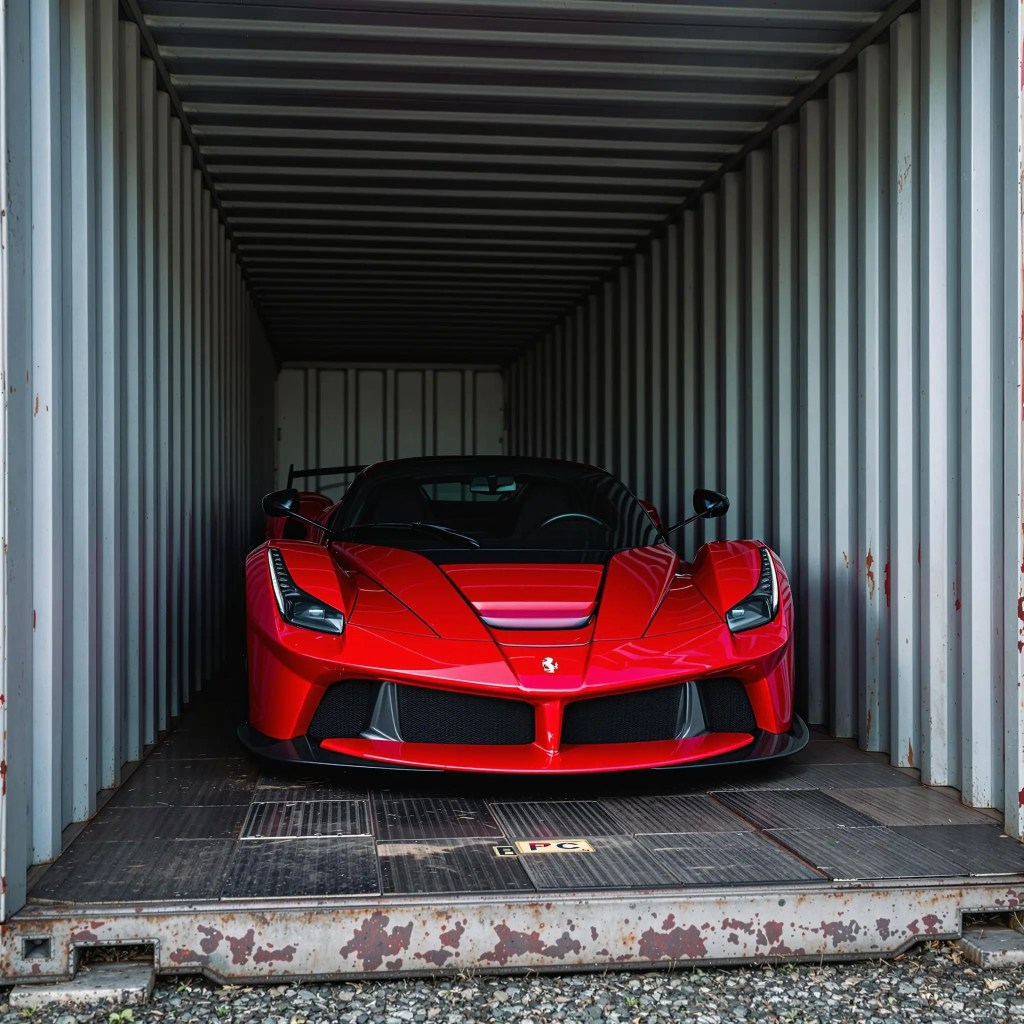
Luxury, Sports, and Special Vehicles
- Low headroom requires special ramps and careful handling.
- Body protection with films, padding, and use of textile straps.
- Individual securing and often personal presence of the owner or representative during loading.
Electric Vehicles and Hybrids
- Restrictions due to safety regulations for batteries.
- Recommended battery capacity up to 30%25, sometimes battery removal necessary.
- Some shipping companies have limits on the number of EVs in one container.
Consolidation (Container Sharing)
- Significant price reduction when transporting 2–4 cars from different owners.
- Requires perfect coordination and proper documentation of all participants.
- Any problem with documents of one car can delay the entire container.
Technical and Interesting Details About Shipping Containers
- Majority of world production: 97%25 of all containers come from China.
- Ecological footprint: Shipping is the most environmentally friendly to the environment (lowest CO2 emissions per ton of transported cargo).
- Losses during transport: Annually 2,000–10,000 containers fall into the sea, most float just below the surface and are less visible.
- Manufacturing: Highly automated factories complete the entire process in 10–11 hours.
Frequently Asked Questions (FAQ)
How do I prepare a car for transport in a container?
- Remove personal items, wash the car thoroughly (easier inspection), max. 1/4 tank, possibly disconnect the battery.
Do I need insurance?
- Strongly recommended – it will protect you against damage during loading, transport, and unloading.
Who handles documentation and customs clearance?
- Ideally an experienced freight forwarder who coordinates the entire process and minimizes the risk of delays.
Is it possible to use a container as a garage?
- Yes – 20ft serves as a garage for one car, 40ft for two cars plus storage space.

 Czech Republic
  WITHOUT SHIPPING

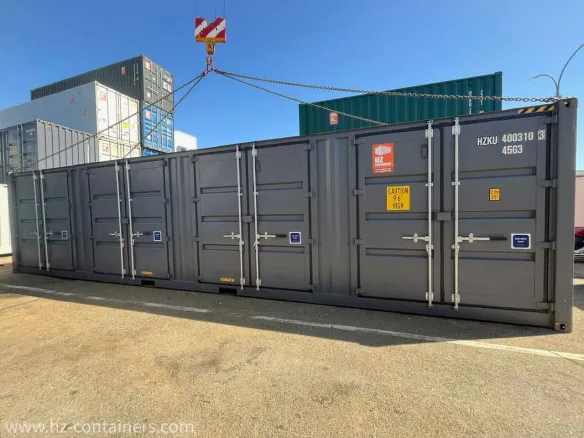
Other container news...
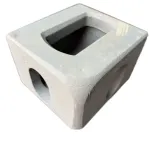
Corner casting steel vs aluminum
Every shipping container in the world — all 40 million of them — rests on eight critical components. Corner castings are the load-bearing blocks at each corner of an ISO shipping container, and they are the universal interface between the container and every crane, twistlock, spreader, and chassis on the planet. When you lift a container, stack it nine high on a ship, or lock it to a truck trailer, every ton of force flows through these fittings.

Construction cabin – selection, tips, dimensions and prices
Every construction project – whether a family house, a development project or a reconstruction – starts with the infrastructure. No construction manager, craftsman or investor who needs an on-site office, a changing room for workers or a safe storage for tools can do without a quality construction cell. But navigating the offer is not easy: residential containers, sanitary cells, storage modules, rental, purchase, refurbished pieces… This guide will give you answers to all the essential questions in one place.
Storage container
A storage container is a lockable steel box designed for the safe and dry storage of materials, tools, goods or equipment. Originally created as a shipping container for maritime transport, its durability and versatility have found their way onto construction sites, corporate premises and private land.
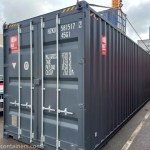
Shipping container 12m (40 ft)
A 12m shipping container is an investment that, if properly selected and cared for, will pay off in decades of trouble-free use. Whether you plan to use it as a warehouse, workshop, garage or the basis for a residential module — the key is careful selection of the condition, a thorough inspection before purchase and high-quality preparation of the base for placement. Take the time to compare offers, check the seller’s references and do not hesitate to personally inspect the container before buying. A properly selected 40-foot container will serve you reliably for many years.