
Why is a Shipping Container Inspection Report (Survey Report) so Important?
In today’s world, when millions of shipping containers are transported globally across oceans and continents, each container represents not only cargo protection, but also an important link in the security and logistics chain. To ensure that this “steel fortress” truly meets all safety, functionality, and legal certainty requirements, the shipping container inspection report (Container Survey Report) is used. This document is absolutely essential in practice – it protects all parties involved from financial losses, legal disputes, and reputational risks.
This article explains in detail what this report is, why it is key, what its content is, how the inspection process works, and why you should never underestimate it under any circumstances.
What is a Shipping Container Inspection Report (Survey Report)?
A shipping container inspection report is an official document issued by an independent, certified inspector (container surveyor). This report provides a detailed, objective description of the physical and structural condition of a container at a specific time and place. It serves as a “health card” for the container and is essential in several situations:
- when taking over/handing over a container (leasing, rental),
- before loading and after unloading,
- when there is suspicion of damage,
- as part of periodic inspections according to international legislation (e.g., CSC – Convention for Safe Containers).
Key features of the inspection report:
- It is not just a visual inspection – it is a comprehensive, systematic assessment of all key parts of the container (including hidden defects, component functionality, and compliance with international standards, particularly ISO 6346, ISO 1496, and CSC).
- The report is legally binding – it serves as evidence in complaints, insurance claims, and determining liability for damages.
- It allows tracking of container history – it helps maintain high fleet standards and optimize repair and maintenance costs.
The Role of Container Inspector: Guardian of Your Cargo
Behind every quality inspection report stands a container inspector (container surveyor), who is not an ordinary warehouse worker, but a highly qualified specialist. His main competencies are:
- deep knowledge of the construction and materials used in containers,
- understanding of international standards (ISO 6346, ISO 1496, CSC),
- experience with logistics, transport, and insurance processes,
- ability to provide independent, objective assessment and documentation of findings (including photographs, descriptions, and location of damage).
The inspector’s duties include:
- Assessment of structural integrity: Looking for cracks, deformations, corrosion, unauthorized repairs that could affect cargo and worker safety.
- Watertightness and airtightness testing: For example, a “light test” is performed – the inspector closes the container and checks whether light penetrates anywhere (and thus potentially water).
- Cleanliness check and absence of foreign substances: Including assessment of odor, presence of mold, pests, or residual chemicals.
- Functionality of doors, locks, seals, and floor: Everything must be in order for safe handling and transport.
- Verification of CSC label validity and compliance with standards: Without a valid label, the container cannot be used in international transport.
- Detailed documentation of damage: Including photographs, descriptions, and determination of severity.
Note: Inspector certification is often tied to recognized organizations (e.g., Bureau Veritas, Lloyd’s Register, IICL – Institute of International Container Lessors).
Inspection Process: Seven-Point Inspection for Maximum Certainty
For systematic container inspection, the so-called 7-point inspection checklist is most commonly used in practice, recommended by the U.S. Customs and Border Protection (CBP) and the IICL association.
7 key inspection points:
| Inspection Point | Description | Important Details and Procedures |
|---|---|---|
| Exterior / Undercarriage | Inspection of walls, corners, undercarriage for cracks, corrosion, deformations, unauthorized repairs | Pay attention to corner castings, welds, and signs of overloading |
| Doors (interior/exterior) | Testing proper function, tightness, locks, hinges, seals | Detection of deformations, water tightness, seal functionality |
| Right side wall | Inspection for cracks, dents, signs of repairs or unauthorized intervention | Often tapping on the wall to detect cavities/hidden defects |
| Left side wall | Same procedure as the right side | Symmetrical, careful inspection |
| Front wall | Inspection of panel strength, ventilation openings, absence of leaks | Special attention to ventilation openings and panel joints |
| Roof | Condition of paint, signs of water damage, holes, cracks, leaks | A “light test” from inside is often performed |
| Floor (interior) | Evenness, absence of holes, cracks, contamination with oil, chemicals, pest infestation | Inspection of load-bearing capacity, signs of delamination, moisture, odor |
Anatomy of an Inspection Report: What Must It Contain?
Structure of a quality Container Survey Report:
- Container identification data: unique number (ISO 6346), type, dimensions (standard 20’/40′, high-cube, open top, reefer…), manufacturer, year of manufacture, owner.
- Date, time, and place of inspection: clear determination of when and where the inspection was conducted.
- Inspector information: name, certification, accreditation, signature.
- Overall assessment: container is/is not suitable for transport, type of defects found.
- Detailed description of condition: breakdown by individual parts according to 7-point inspection, including location and classification of damage (by severity and repairability).
- Photo documentation: essential evidence part – photographs of the whole and damage details, often with scale.
- Recommendations: proposed steps (repairs, decommissioning, further testing), possibly repair budget.
Caution: All information must be recorded so that it is indisputable and usable in complaints or insurance claims.
Key Types of Inspections and Their Specifics
Container inspections are not universal, but differ depending on the purpose and stage of the container’s lifecycle:
| Type of Inspection | When/Why It Is Performed | Main Purpose and Benefit |
|---|---|---|
| On-Hire Survey | Before taking over a rented container | Documentation of existing damage, protection of the renter from repair costs for others’ damage |
| Off-Hire Survey | When returning a container after rental | Comparison of condition with On-Hire, determination of responsibility for damage incurred |
| Condition Survey | When buying/selling, long-term storage | Overall audit of condition, verification of transport suitability |
| Damage Survey | After an incident, suspicion of damage | Key for insurance, determination of cause and extent of damage |
| Loading/Stuffing Inspection | When loading goods into a container | Inspection of proper placement, packing, cargo securing; prevention of cargo shift, damage |
| CSC Inspection | Regularly (minimum every 30 months) | Verification of compliance with the Convention for Safe Containers, extension of CSC label validity |
Benefits: Why Is an Inspection Report an Investment That Pays Off?
1. Cargo protection and damage minimization:
The report will reveal leaks, structural weaknesses, or hidden defects that could otherwise lead to cargo damage.
2. Legal and financial protection:
The report is key evidence in complaints, insurance claim processing, and determining liability.
3. Prevention of fines and delays:
Regular inspection ensures compliance with international regulations (CSC, ISO), which is necessary for smooth passage through customs and port inspections.
4. Efficient fleet management:
It allows planning maintenance and repairs, minimizing unplanned downtime, and optimizing costs.
5. Safety assurance:
A defective container endangers not only the cargo, but also employees, crew, and other containers.
Risks of Ignoring the Inspection Report
- Loss or damage to cargo: A hidden defect (e.g., a hole in the roof) can lead to total devaluation of goods.
- Rejection at port: A container without a valid CSC label will not be loaded onto a ship.
- Legal disputes and financial losses: Without a report, you cannot prove when and where the damage occurred; the burden of proof is always on the user.
- Rejection of insurance payment: Insurance companies require detailed inspection reports.
- Damage to reputation: Delivery of damaged goods can have long-term negative impacts on customer trust.
Legislation, Standards, and Accreditation
Every container in international transport is subject to legislation:
- CSC (Convention for Safe Containers, IMO): Obligation of regular inspections (minimum every 30 months), valid CSC label with inspection date.
- ISO standards (particularly ISO 6346 and ISO 1496): Establish requirements for construction, marking, and technical parameters.
- IICL (Institute of International Container Lessors): Important standards for inspections, repairs, and maintenance.
Inspector certification and inspection company certification is often a condition for report recognition in international trade!
Practical Tips for Inspection Requesters
- Require inspection from a certified independent company/inspector.
- Insist on detailed photo documentation, description of damage, and clear conclusion about suitability.
- Keep all reports for potential complaints or insurance proceedings.
- When buying a used container, always request a Condition Survey Report.
- When renting, compare On-Hire and Off-Hire Surveys so you are not forced to pay for others’ damage!
 Czech Republic
  WITHOUT SHIPPING


Other container news...
Corner casting steel vs aluminum
Every shipping container in the world — all 40 million of them — rests on eight critical components. Corner castings are the load-bearing blocks at each corner of an ISO shipping container, and they are the universal interface between the container and every crane, twistlock, spreader, and chassis on the planet. When you lift a container, stack it nine high on a ship, or lock it to a truck trailer, every ton of force flows through these fittings.

Construction cabin – selection, tips, dimensions and prices
Every construction project – whether a family house, a development project or a reconstruction – starts with the infrastructure. No construction manager, craftsman or investor who needs an on-site office, a changing room for workers or a safe storage for tools can do without a quality construction cell. But navigating the offer is not easy: residential containers, sanitary cells, storage modules, rental, purchase, refurbished pieces… This guide will give you answers to all the essential questions in one place.
Storage container
A storage container is a lockable steel box designed for the safe and dry storage of materials, tools, goods or equipment. Originally created as a shipping container for maritime transport, its durability and versatility have found their way onto construction sites, corporate premises and private land.
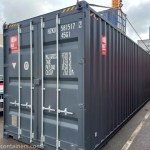
Shipping container 12m (40 ft)
A 12m shipping container is an investment that, if properly selected and cared for, will pay off in decades of trouble-free use. Whether you plan to use it as a warehouse, workshop, garage or the basis for a residential module — the key is careful selection of the condition, a thorough inspection before purchase and high-quality preparation of the base for placement. Take the time to compare offers, check the seller’s references and do not hesitate to personally inspect the container before buying. A properly selected 40-foot container will serve you reliably for many years.