
Where is a transport container used?
A transport container (shipping container) is an ingenious standardized product that fundamentally changed the face of global trade, logistics, and architecture. However, its use extends far beyond mere cargo transportation – it becomes a universal building element, storage unit, mobile facility, or foundation for innovative projects. This glossary examines in detail where and how transport containers are utilized, including important technical details and practical examples.
Definition: What is a transport container?
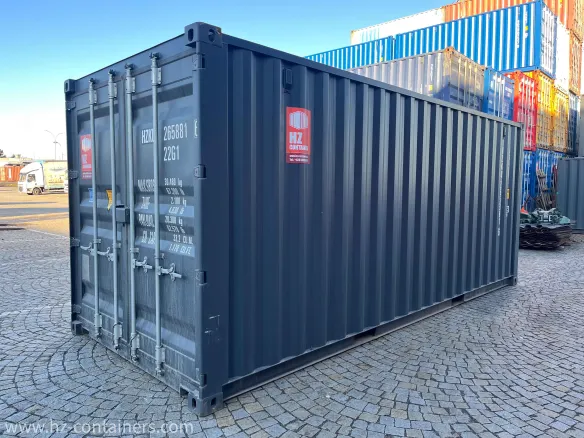
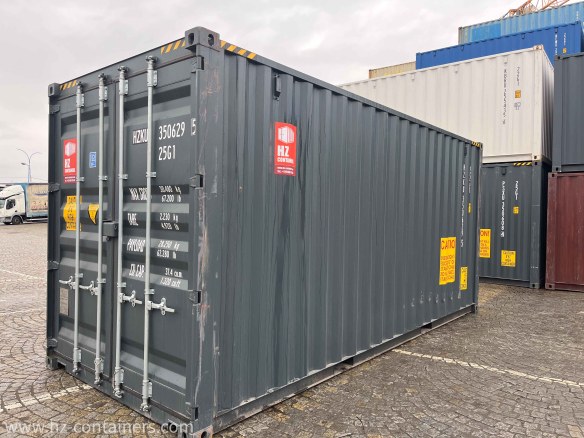
A transport container is a solid, standardized, and reusable transport unit, typically made from weather-resistant steel (Cor-ten), designed for safe cargo transportation and storage. A key characteristic is its intermodality – the ability to be transferred between maritime, rail, and road transport without unloading the contents. The standards for dimensions, strength, and construction are determined by the International Organization for Standardization (ISO), which enables their global compatibility.

Key features:
- Extreme resistance to weather and mechanical stress
- Standardized dimensions (length, width, height, load capacity)
- Unique identification code (ISO 6346)
- Corner elements for handling and stacking (ISO 1161)
- Possibility of modification for specific purposes
History and development of containerization
Pre-container era
Before the invention of containers, goods were transported in various packagings (“break bulk cargo”), which was time-consuming, expensive, and caused high losses.
Birth of the standard
Malcolm McLean is considered the father of modern containerization, who in 1956 realized the first ship for container transport Ideal X. In 1968, the first international standard ISO 668 was adopted, which unified container parameters and enabled their massive expansion.
Mass expansion
Thanks to standardization, millions of containers now exist, forming the backbone of global trade and logistics.
Construction and technical parameters
Materials and structural elements
| Element | Description |
|---|---|
| Main material | COR-TEN steel with patina against corrosion |
| Corner elements (corner castings) | Cast, according to ISO 1161, for crane handling, stacking, and securing |
| Walls and roof | Corrugated steel sheet (increases strength at low weight) |
| Floor | Plywood (28 mm, tropical hardwoods), sometimes bamboo or steel |
| Doors | Double-leaf, with robust lock and sealing against water and dust |
| Identification | ISO code: 3-letter owner code, 1 letter type, 6 digits, 1 check digit |
Dimensions and load capacities
| Container type | Length (m) | Width (m) | Height (m) | Tare (kg) | Max. load capacity (kg) | Volume (m³) |
|---|---|---|---|---|---|---|
| 20′ Standard (DV) | 6.058 | 2.438 | 2.591 | ~2,200 | ~28,280 | 33.2 |
| 40′ Standard (DV) | 12.192 | 2.438 | 2.591 | ~3,750 | ~26,730 | 67.7 |
| 40′ High Cube (HC) | 12.192 | 2.438 | 2.896 | ~3,900 | ~28,600 | 76.4 |
Special variants:
- High Cube: +1 foot in height
- Pallet Wide: Width optimized for euro pallets
- Reefer: Integrated cooling unit
- Open Top, Flat Rack, Tanktainer, Double Door, Open Side (see below)
Container types and their uses
Common transport types
| Container type | Typical use |
|---|---|
| Dry Van (DV) | Most consumer goods, machinery, materials |
| Reefer | Chilled/frozen food, pharmaceuticals, chemicals |
| Open Top | Oversized cargo, crane loading (machinery parts, building materials) |
| Flat Rack | Machinery, vehicles, building structures |
| Tanktainer | Liquids, gases, bulk powders |
| Open Side | Long objects, palletized goods |
| Double Door | Through-loading, building materials |
Specialized and innovative uses
Storage and asset protection
- Storage of tools, building materials, agricultural products
- Protection of sensitive equipment (e.g., server rooms, laboratories, archives)
Mobile facilities for industry and construction

- Offices, changing rooms, washrooms, and toilets (air-conditioned, with electricity and water)
- Technical rooms for site management, equipment, and technology
Residential and accommodation spaces
- Temporary accommodation for workers, military, humanitarian purposes
- Emergency shelters during disasters, field hospitals, quarantine units
- Student dormitories (e.g., Urban Rigger in Copenhagen)
- Modern modular housing (family homes, cottages, apartments)
Commercial and public facilities
- Cafes, bistros, fast food, bars (e.g., Starbucks, Manifesto Market Prague)
- Retail stands, pop-up shops, galleries
Recreation, sports, wellness
- Pools and hot tubs (e.g., ModPools)
- Saunas and wellness modules
- Garages and parking spaces
Special technical uses
- Technology containers for energy, water supply, testing equipment
- Agriculture: vertical farms, hydroponics, feed storage
- Mobile workshops, laboratories, testing rooms
- Data centers (mobile server rooms)
Infrastructure and innovation
- Bridges made from containers (temporary and permanent)
- Stages, stands, festival structures
- Fencing, barriers, soundproof walls
Overview of main areas of use – table
| Area of use | Examples/practical applications | Key properties of the container used |
|---|---|---|
| International logistics | Maritime, rail, road transport of goods, storage in terminals | Strength, standardization, stacking, durability |
| Construction and industry | Mobile facilities, warehouses, workshops, changing rooms, washrooms, offices, technical containers | Quick installation, mobility, safety |
| Housing and accommodation | Temporary/mobile homes, dormitories, work camps, emergency shelters, luxury villas | Modularity, ability to connect, insulation, quick construction |
| Trade and gastronomy | Cafes, bars, food courts, pop-up shops, markets (Manifesto) | Portability, design, speed of implementation |
| Recreation and wellness | Home pools, saunas, hot tubs, garages | Waterproofing, strength, possibility of modifications |
| Special projects | Vertical farms, data centers, energy modules, military bases, humanitarian aid | Durability, air conditioning, ability to transport in difficult terrain |
| Infrastructure | Bridges, stands, festival structures, fencing | Structural strength, flexibility, quick assembly |
Reasons for the popularity of secondary container use
- Price affordability (especially used containers)
- Easy transport and handling (possibility of relocation)
- Extreme durability (typically 20–30 years even in demanding conditions)
- Low maintenance (minimal need for repairs, resistance to vandalism)
- Speed of project implementation (compared to traditional construction)
- Ecological aspect (recycling and upcycling of decommissioned containers)
Most significant trends and innovations
- Cargotecture: Container architecture is gaining popularity in residential and commercial sectors. Designers create everything from simple cottages to luxury villas and student dormitories.
- Mobility and modularity: Containers can be easily connected, stacked, expanded, and moved according to changing user needs.
- Technological integration: Modern projects include air conditioning, solar panels, smart energy management, filtration, and security systems.
- Ecological solutions: Vertical farms, hydroponics, material recycling, solar power plants in containers.
- Emergency and humanitarian aid: Quick construction of hospitals, schools, accommodation centers in crisis areas.
- Temporary infrastructure: Festivals, sporting events, short-lived projects that require quick assembly and disassembly.
Examples of specific implementations
- Urban Rigger (Copenhagen): Floating student dormitory made of nine containers on a concrete pontoon
- Manifesto Market (Prague): Market and gastro zone made of container modules
- ModPools (Canada/USA): Pools made from 20′ and 40′ containers, usable as a hot tub
- Starbucks (USA): Chain of cafes in containers, possibility of relocation within 3 weeks
- Mobile hospitals and laboratories: Use in crisis areas, during epidemics or natural disasters
Most common questions and answers
How long does a transport container last?
With normal use in logistics, the lifespan is approximately 10–15 years; in secondary use (warehouse, house) up to 30 years and more.
What are the limits of load capacity and stacking?
A standard 20′ container can carry up to 28 tons of cargo and can be stacked up to 9 layers on a ship deck, which places extreme demands on strength and construction.
Is it possible to insulate a container?
Yes, containers can be subsequently insulated, equipped with air conditioning, heating, and electrical installation according to usage needs.
Is building permission required for container construction?
It depends on the purpose, location, and scope of modifications. For permanent structures, permission is usually required; for temporary structures (warehouses, mobile facilities), notification is often sufficient.
 Česká Lípa, Czech Republic
  FREE SHIPPING

Other container news...
Corner casting steel vs aluminum
Every shipping container in the world — all 40 million of them — rests on eight critical components. Corner castings are the load-bearing blocks at each corner of an ISO shipping container, and they are the universal interface between the container and every crane, twistlock, spreader, and chassis on the planet. When you lift a container, stack it nine high on a ship, or lock it to a truck trailer, every ton of force flows through these fittings.

Construction cabin – selection, tips, dimensions and prices
Every construction project – whether a family house, a development project or a reconstruction – starts with the infrastructure. No construction manager, craftsman or investor who needs an on-site office, a changing room for workers or a safe storage for tools can do without a quality construction cell. But navigating the offer is not easy: residential containers, sanitary cells, storage modules, rental, purchase, refurbished pieces… This guide will give you answers to all the essential questions in one place.
Storage container
A storage container is a lockable steel box designed for the safe and dry storage of materials, tools, goods or equipment. Originally created as a shipping container for maritime transport, its durability and versatility have found their way onto construction sites, corporate premises and private land.
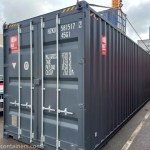
Shipping container 12m (40 ft)
A 12m shipping container is an investment that, if properly selected and cared for, will pay off in decades of trouble-free use. Whether you plan to use it as a warehouse, workshop, garage or the basis for a residential module — the key is careful selection of the condition, a thorough inspection before purchase and high-quality preparation of the base for placement. Take the time to compare offers, check the seller’s references and do not hesitate to personally inspect the container before buying. A properly selected 40-foot container will serve you reliably for many years.