
When Are Fees Charged in the Depot for Uncollected Containers?
This question relates to logistics and the transport industry and addresses the financial implications of cargo that remains uncollected at a port, depot, or customs warehouse. These charges arise when the free storage period, known as free time, allocated to a container in the depot expires, leading to additional charges such as demurrage, detention charges, or storage costs.
Uncollected containers, also referred to as abandoned shipping containers, can arise for various reasons, such as disputes between shipper and consignee, inability to pay import duties, or delays in customs clearance. These situations disrupt the supply chain and lead to increasing costs for shipping companies, shippers, and other interested parties.
Explanation of Key Terms
1. Free Time (Free Period)
Free time refers to the period during which a container can remain at a port, depot, or terminal without incurring additional charges. This free period varies depending on the shipping company, port operator, or region. For example:
- The typical free period at ports is 3–7 days.
- The period can be extended in advance based on shipping contracts.
Once the free period expires, demurrage charges or storage charges begin to accrue. Free time is essential for maintaining port efficiency and preventing congestion.
2. Demurrage Charges
Demurrage is a charge levied for a container remaining in a terminal or depot after the free period expires, while still loaded with cargo. This charge is applied to prevent port congestion and ensure timely movement of goods. According to Maersk, demurrage charges relate to the time when full containers are in the terminal, measured from their discharge until collection.
Why Are Demurrage Charges Applied?
- Compensation for the use of port space and facilities.
- Motivation for shippers and consignees to collect cargo quickly.
- Ensuring smooth operations and preventing port congestion.
Examples of Demurrage Rates
- Daily rates range between 75–350 USD per container, depending on the length of delay, port congestion, and regional regulations.
- Contracts often specify rates based on the type of cargo and shipping conditions.
3. Detention Charges
Detention charges apply when a container is removed from the port but is not returned within the specified period. Unlike demurrage, which applies to containers still in the terminal, detention charges relate to the use of a container outside the port. For example, consignees may face detention charges if they delay unloading and returning the empty container.
4. Customs Warehouse (Bonded Warehouse)
A customs warehouse is a secure storage facility where goods can be stored without immediate payment of customs duties. This is a common solution for uncollected or abandoned cargo, giving the shipper or consignee more time to resolve disputes or meet requirements. Customs warehouses are particularly useful in situations where payment of import duties or charges is delayed.
5. Abandoned Shipping Containers
If cargo remains uncollected for an extended period, it may be classified as abandoned cargo. This typically occurs when:
- The consignee cannot pay import duties or charges.
- The goods are damaged or no longer needed.
- Disputes arise regarding the shipment, such as disagreements over quality or payment terms.
Abandoned containers represent a significant challenge for port authorities and shipping companies, as they occupy valuable space and may require special handling or disposal.
Causes of Uncollected Containers
Uncollected or abandoned containers arise as a result of several logistical and financial issues, including:
- Customs Clearance Delays:
- Incomplete or incorrect documentation, such as errors in the bill of lading (B/L) or import permits, can delay customs clearance.
- Commercial Disputes:
- Disagreements between buyer and seller regarding the condition or value of goods often lead to the consignee refusing to take delivery of the shipment.
- Non-Payment of Import Charges:
- Importers may not be aware of all costs (e.g., tariffs, demurrage charges) or may be unable to pay them, leading to abandonment of goods.
- Missed Notifications:
- Incorrect contact details for the consignee may result in notifications (e.g., of arrival) going unanswered.
Who Bears Responsibility for Costs?
Financial responsibility for uncollected containers depends on the parties involved and the contractual terms specified in the shipping contract or Incoterms.
Responsibilities of Key Parties:
- Shipper (Exporter):
- May be responsible if the consignee fails or refuses to take delivery of the shipment.
- Often bears the costs of returning goods or securing alternative buyers.
- Consignee (Importer):
- Responsible for import tariffs, taxes, and any charges incurred after the container’s arrival.
- Freight Forwarders:
- Act as intermediaries but may be responsible if listed on the master bill of lading (MBL).
- Shipping Companies:
- Have a lien on the cargo and may take legal action to recover unpaid charges.
Consequences of Abandoned Containers
Containers designated as abandoned may be:
- Unpacked and Released.
- Sold at Auction.
- Disposed Of.
- Re-exported.
Recommended Steps
- Accurate documentation.
- Rapid communication.
- Contractual protection.

 Czech Republic, Nový Bor
  FREE SHIPPING


Other container news...

Corner casting steel vs aluminum
Every shipping container in the world — all 40 million of them — rests on eight critical components. Corner castings are the load-bearing blocks at each corner of an ISO shipping container, and they are the universal interface between the container and every crane, twistlock, spreader, and chassis on the planet. When you lift a container, stack it nine high on a ship, or lock it to a truck trailer, every ton of force flows through these fittings.

Construction cabin – selection, tips, dimensions and prices
Every construction project – whether a family house, a development project or a reconstruction – starts with the infrastructure. No construction manager, craftsman or investor who needs an on-site office, a changing room for workers or a safe storage for tools can do without a quality construction cell. But navigating the offer is not easy: residential containers, sanitary cells, storage modules, rental, purchase, refurbished pieces… This guide will give you answers to all the essential questions in one place.
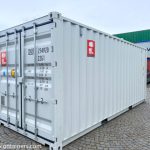
Storage container
A storage container is a lockable steel box designed for the safe and dry storage of materials, tools, goods or equipment. Originally created as a shipping container for maritime transport, its durability and versatility have found their way onto construction sites, corporate premises and private land.
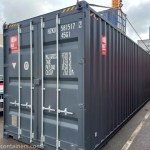
Shipping container 12m (40 ft)
A 12m shipping container is an investment that, if properly selected and cared for, will pay off in decades of trouble-free use. Whether you plan to use it as a warehouse, workshop, garage or the basis for a residential module — the key is careful selection of the condition, a thorough inspection before purchase and high-quality preparation of the base for placement. Take the time to compare offers, check the seller’s references and do not hesitate to personally inspect the container before buying. A properly selected 40-foot container will serve you reliably for many years.