
What is a WWT shipping container?
You are entering the world of buying shipping containers and constantly encounter the abbreviation “WWT”. You are not alone. This term is a cornerstone in the classification of used containers and understanding it is key to making the right choice. This article in our glossary will give you a comprehensive answer to the question: What is a WWT shipping container? We will walk you through the definition, characteristics, comparison with other types, and practical uses so you can make an informed decision when selecting a shipping container.
Basic Definition: What Does WWT Mean?
WWT is the abbreviation of the English term “Wind and Water Tight”, which translates to “Wind and Water Resistant”. It is the basic and most common classification for used shipping containers that are no longer certified for international maritime transport but still provide excellent protection against weather influences.
A container marked WWT guarantees that:
| Property | Description |
|---|---|
| Structural health | No holes in the steel walls, roof, or floor. |
| Watertightness | Rain or melting snow does not penetrate the interior. |
| Wind resistance | Protects the contents from strong wind and dust. |
| Functional doors and seals | Doors close properly; rubber seals prevent water and pests from entering. |
In essence, a wind‑water‑tight (WWT) container is a reliable, dry, and safe storage box. It is the baseline quality for any container intended for storage or further modification.
Detailed Characteristics of a WWT Shipping Container
When buying WWT shipping containers it is important to have realistic expectations:
Age and History
- A typical WWT container is 10–15 years old.
- It has completed dozens to hundreds of voyages across oceans on container ships.
- It has been exposed to extreme conditions: salt water, UV radiation, frost and heat.
- After completing service in international transport it is decommissioned and sold for secondary use, most often for storage.
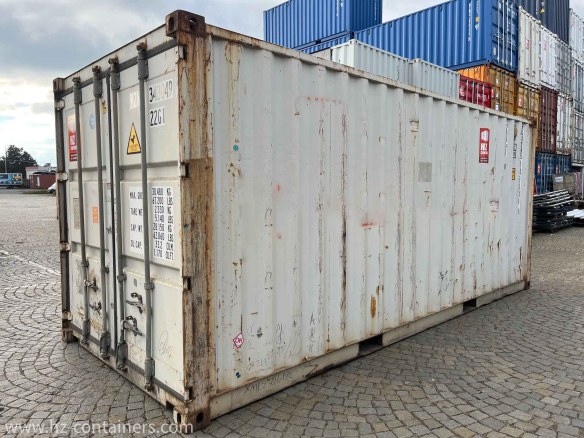
Visual Condition: Expect Signs of Use
| Type of wear | Detailed description |
|---|---|
| Surface corrosion | Common where the paint has been damaged. If it is not deep, it does not affect the structural strength of the container. |
| Dents | Caused by crane handling and port operations, usually do not affect functional properties. |
| Patches and repairs | Welded steel spots indicate professional repair of previous damage; quality of the repair is important. |
| Faded paint and logos | Fading is normal; original carrier logos often remain partially visible after years. |
Important: All these marks are normal and do not affect the main function of the container – protection from wind and water.
Structural Integrity
- The frame, corner castings, walls, and roof must be intact.
- The floor is usually 28 mm plywood (often tropical wood with high durability), must be solid, without major rot or holes.
- Floor load capacity is usually over 2 000 kg/m², allowing storage of heavier equipment.
Door and Seal Functionality
| Check | What must be met |
|---|---|
| Opening/closing | Should operate without excessive force; all locking mechanisms must be fully functional. |
| Rubber seal | Must be intact, not torn or missing, otherwise water ingress can occur. |
| Seal test | Close the door; if no light passes through, the container is watertight. |

Technical Parameters and Standards for WWT Containers
Dimensions and Weight
The most common standard sizes of WWT containers are:
| Container type | External dimensions (L × W × H) | Internal dimensions (L × W × H) | Empty weight | Maximum payload |
|---|---|---|---|---|
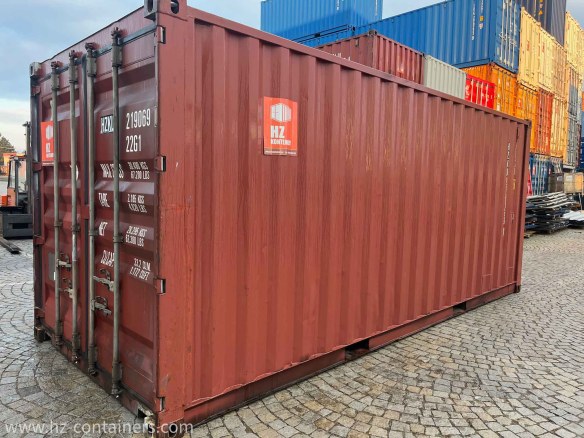
| 20’ DV | 6 058 × 2 438 × 2 591 mm | 5 898 × 2 352 × 2 393 mm | approx. 2 200 kg | up to 28 000 kg |
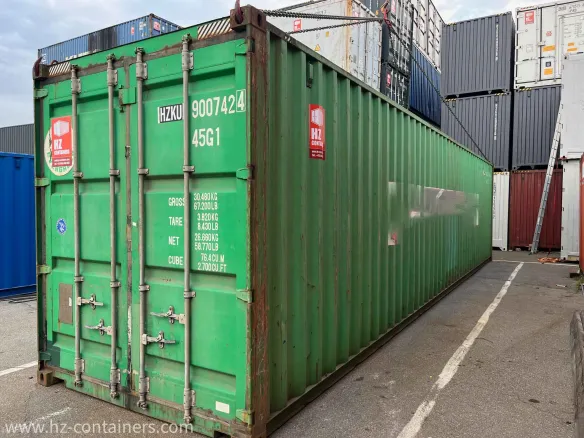
| 40’ DV | 12 192 × 2 438 × 2 591 mm | 12 032 × 2 352 × 2 393 mm | approx. 3 800 kg | up to 30 480 kg |
| 40’ HC | 12 192 × 2 438 × 2 896 mm | 12 032 × 2 352 × 2 698 mm | approx. 4 100 kg | up to 30 480 kg |
Note: All dimensions and payloads are indicative and may vary by manufacturer and year of production.
Materials
- Outer shell: highly durable Corten steel, resistant to weather and surface corrosion.
- Floor: water‑resistant plywood, often with a mold‑resistant surface treatment.
- Doors: double doors equipped with steel locks and rubber seals.
Standards and Inspections
- WWT is not a formal international certification (such as CSC for Cargo Worthy) but an industry standard. Exact conditions (what is considered WWT) may vary slightly between sellers.
- Reputable companies perform pre‑sale inspections of watertightness, floor condition, frame integrity, and door functionality.
Comparison: WWT vs. Other Container Quality Grades
Understanding the differences between the categories is essential for a correct decision.
| Quality Grade | Main Use | Key Differences and Characteristics |
|---|---|---|
| One‑Trip (OW) | Premium storage, residential projects | Almost new, minimal wear, highest price. |
| IICL | Export, long‑term leasing | Highest standard according to the Institute of International Container Lessors, suitable for long‑term deployment. |
| Cargo Worthy (CW) | International transport, export, construction | Must be WWT and have a valid CSC label for transport; meets strict structural standards. |
| Wind and Water Tight (WWT) | Storage, workshops, garages | Structurally sound, watertight, no CSC certification, typical cosmetic defects. |
| As‑Is | Scrap, repairs, very cheap storage | May have holes, damaged floor, non‑functional doors, no guarantee of watertightness or structural integrity. |
WWT vs. Cargo Worthy (CW): Key Difference
- WWT: Provides weather protection, not intended for sea transport (lacks a valid CSC label).
- CW: Certified for export and transport, also guarantees safety during stacking, lifting, and long‑term transport.
Practical Uses of WWT Containers: More Than Just Storage
Thanks to their robustness and affordable price, WWT containers are extremely versatile. Practical applications include:
Secure Storage Solutions (Site Storage)
- Storage of building materials and equipment
- Secured warehouses for companies (archives, supplies)
- Garages and workshops
- Personal storage during moving or renovation
Basis for Construction and Creative Projects
- Mobile offices and workshops (after conversion – insulation, windows, electricity)
- Garden sheds, tool houses, sales stands, pop‑up shops
- Living modules, tiny houses, shipping container homes (after extensive conversion and insulation)
Agriculture and Industry
- Storage of feed, seeds, and fertilizers (protects against moisture and pests)
- Covered bays for small machinery and equipment
- Technical rooms (e.g., for pumps, generators)
Maintenance and Lifespan of a WWT Container
Recommended Practices to Extend Lifespan
- Regularly inspect and, if necessary, paint areas with surface corrosion.
- Keep door seals clean; replace them if damaged.
- Protect the floor from prolonged moisture and aggressive chemicals.
- Pay attention to roof condition – repair small dents to prevent water pooling.
Renovation Options
- Professional repainting enhances aesthetic value and protects the metal.
- Install new seals or repair the floor as needed.
- Replace door mechanisms for easier handling.
Frequently Asked Questions (FAQ) about WWT Containers
Will my WWT container leak?
No. If you purchase from a verified seller who guarantees WWT, the container must not leak. It is recommended to perform a seal test before acceptance.
Can I use a WWT container for international cargo transport?
No. For transport you need a CW container with a valid CSC label. A WWT can be certified, but the process is costly.
Is it normal for a WWT container to have rust and dents?
Yes. These are cosmetic imperfections typical of used containers and do not affect functionality.
Is a WWT container resistant to rodents?
Yes. The steel construction and sealed doors make it highly resistant to rodents and insects.
WWT is not a formal certification – what does that mean?
Unlike CW or IICL, WWT is an industry standard whose exact criteria may vary slightly between sellers. Trust only vetted suppliers.
Comparative Table of Container Types
| Category | Watertight | Structural Integrity | CSC Certification | Export Capability | Typical Age | Price |
|---|---|---|---|---|---|---|
| One‑Trip (OW) | Yes | Excellent | Yes | Yes | 0‑2 years | Highest |
| IICL | Yes | Excellent | Yes | Yes | 2‑8 years | High |
| Cargo Worthy (CW) | Yes | Excellent | Yes | Yes | 8‑15 years | Higher |
| WWT | Yes | Sufficient | No | No | 10‑18 years | Medium |
| As‑Is | No | Uncertain | No | No | 15+ years | Lowest |
 Czech Republic, Uherské Hradiště
  FREE SHIPPING
Other container news...
Shipping container 12m (40 ft)
A 12m shipping container is an investment that, if properly selected and cared for, will pay off in decades of trouble-free use. Whether you plan to use it as a warehouse, workshop, garage or the basis for a residential module — the key is careful selection of the condition, a thorough inspection before purchase and high-quality preparation of the base for placement. Take the time to compare offers, check the seller’s references and do not hesitate to personally inspect the container before buying. A properly selected 40-foot container will serve you reliably for many years.
Construction container
A construction container is an investment in safety, order and comfort — whether it is protecting tools from thieves or providing a dignified environment for workers. There are three key decisions: type (storage, residential, sanitary, rubble), form of acquisition (rent vs. purchase) and legislative provision (occupation, building code).

Construction cabin – selection, tips, dimensions and prices
Every construction project – whether a family house, a development project or a reconstruction – starts with the infrastructure. No construction manager, craftsman or investor who needs an on-site office, a changing room for workers or a safe storage for tools can do without a quality construction cell. But navigating the offer is not easy: residential containers, sanitary cells, storage modules, rental, purchase, refurbished pieces… This guide will give you answers to all the essential questions in one place.
Storage container
A storage container is a lockable steel box designed for the safe and dry storage of materials, tools, goods or equipment. Originally created as a shipping container for maritime transport, its durability and versatility have found their way onto construction sites, corporate premises and private land.