
What are Super Freezer shipping containers most often used for?
To meet the extreme requirements for temperature maintenance and safety, the Super Freezer container must have maximally precise construction and technology.
Construction and Insulation Properties
| Parameter | Super Freezer Container | Standard Reefer Container |
|---|---|---|
| Construction Material | CORTEN steel, stainless steel | CORTEN steel |
| Insulation Type | Sandwich panels with PUR foam | PUR foam, smaller thickness |
| Insulation Wall Thickness | 100–120 mm (10–12 cm) | 70–80 mm (7–8 cm) |
| Floor Type | Aluminum, “T-floor” | Aluminum, flat |
| Door Insulation | Multi-layer, with sealing | Simpler insulation |
| Hermetic Closure | 4-point mechanism | 2–4 points |
Steel Construction:
- CORTEN steel provides high resistance to corrosion, extreme temperatures, and mechanical damage in demanding conditions of maritime transport.
Sandwich Panels with PUR Foam Core:
- Polyurethane foam is key to minimizing heat loss. In Super Freezers, insulation thickness reaches up to 12 cm, which is nearly double compared to standard containers.
Aluminum T-Floor:
- Allows even air circulation and ensures that even the bottom layers of goods are protected from heating.
- The “T” shape increases load capacity and facilitates cleaning.
Doors with Multiple Sealing:
- Double doors with several rubber seals and four-rod closure ensure hermetic tightness and prevent the entry of warm air and moisture.
Cooling System – The Heart of the Super Freezer Container
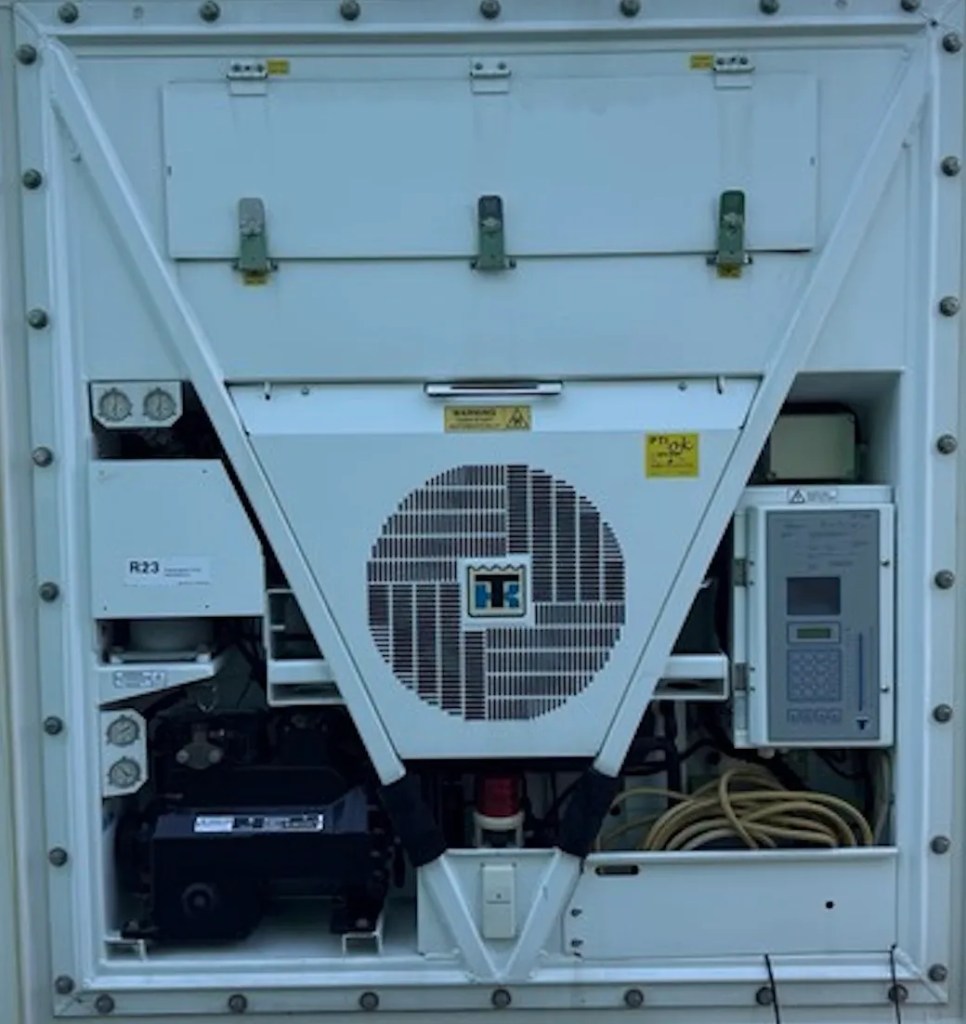
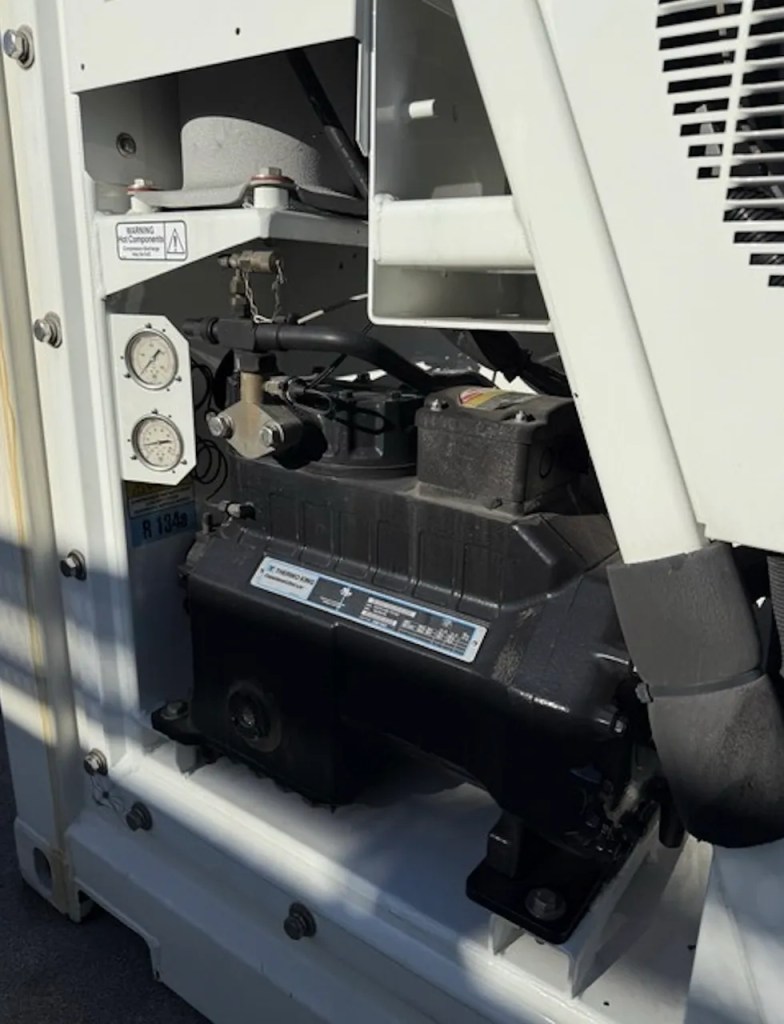
- Cooling Unit Manufacturers: Most commonly ThermoKing, Carrier, Daikin, or Star Cool.
- Compressor Type: Two-stage, designed for ultra-low temperatures.
- Refrigerants:
- For temperatures down to -60 °C, special refrigerants are used (e.g., R23, R508B, R170) that maintain efficiency even at extremely low temperatures (common refrigerant R134a is usable only down to approximately -30 °C).
- Power Supply:
- Standard 380 V / 50 Hz (CEE), power consumption 6–10 kW/h depending on set temperature and external conditions.
- For road transport, an external generator (“genset”) is required.
- Control and Monitoring:
- Microprocessor regulators allow temperature setting with precision to tenths of a degree, maintaining temperature with a maximum deviation of ±0.5 °C.
- Remote monitoring systems (telemetry) allow supervision of temperature, humidity, and operating parameters from anywhere in the world.
- All data can be archived for audit purposes (proof of cold chain maintenance).
Safety and Certification
- International Transport Standard CSC: Every Super Freezer container must have a valid CSC plate (Container Safety Convention), which guarantees the safety of construction, tightness, and cooling system.
- Pre-Trip Inspection (PTI): Before each expedition, rental, or sale, the container is tested for full functionality of the unit, door tightness, insulation integrity, and safety elements.
- HACCP/ISO Certification: For the transport of food and pharmaceutical products, compliance with quality management and safety standards is also required.
Main Areas of Use: Where is Super Freezer Indispensable?
Super Freezer containers are key for the transport and storage of goods with the highest requirements for quality and safety. Their extreme temperature range finds application especially in these industries:
Food Industry – Fish, Seafood, Premium Meat
Why is deep freezing key?
- It stops enzymatic and microbial processes that would otherwise lead to food degradation.
- Preserves color, texture, taste, and nutritional values of sensitive foods.
Typical Products:
- Tuna for sushi and sashimi (bluefin, yellowfin):
- Immediate freezing at -60 °C immediately after catch prevents oxidation, preserves freshness and market value.
- Fish processed this way can be safely transported to the other end of the world without loss of quality.
- Swordfish, mackerel, salmon, and other fatty fish:
- Deep freezing prevents fat rancidity and texture loss.
- Premium beef (Wagyu, Kobe):
- Marbled beef is preserved without loss of juiciness and taste through deep freezing.
- Ice cream and sorbets:
- Ultra-low temperatures prevent ice crystal formation and preserve creamy texture.
Pharmaceutical and Biotechnology Sector
- mRNA-based vaccines (e.g., Pfizer-BioNTech):
- Require storage and transport at temperatures of -60 °C to -80 °C.
- Super Freezer containers enable safe global distribution within the so-called “ultra-cold chain”.
- Blood plasma, stem cells, biological samples:
- Ultra-low temperatures prevent degradation and preserve sample viability for further use or research.
- Active Pharmaceutical Ingredients (API):
- Some APIs are extremely unstable at higher temperatures, so deep freezing is essential to maintain their efficacy.
Chemical Industry
- Organic peroxides and sensitive catalysts:
- Can be dangerous (explosive) or lose efficacy at higher temperatures.
- Special polymers, adhesives, and other compounds:
- Require storage and transport at ultra-low temperatures to prevent premature polymerization or degradation.
Scientific Research
- Biological, geological, environmental samples:
- Collection of samples in extreme conditions (polar expeditions, oceanographic research) requires immediate freezing and subsequent safe transport.
- Clinical trials and international research:
- Enables safe and auditable transfer of samples between laboratories and research centers worldwide.
Super Freezer vs. Standard Freezing Container: Key Differences
| Feature | Super Freezer Container | Standard Freezing/Cooling Container |
|---|---|---|
| Temperature Range | -40 °C to -60 °C (sometimes lower) | -25 °C to +25 °C |
| Primary Use | Premium fish, pharmaceuticals, API | Common frozen foods, fruit, vegetables |
| Cooling System | Two-stage compressor, R23/R508B | Single-stage compressor, R134a/R404A |
| Insulation | 10–12 cm PUR foam | 7–8 cm PUR foam |
| Energy Consumption | 6–10 kW/h | 4–6 kW/h |
| Acquisition Price | Higher | Standard |
| Service and Maintenance | Requires specialized service | Standard service |
| Certification | CSC, HACCP, ISO, PTI | CSC, basic |
Practical Aspects: Sales, Rental, and Operation
Sales and Rental
- Sales:
- Suitable for companies with regular need for ultra-low temperatures (fish exporters, pharmaceutical companies, laboratories).
- The acquisition price of a Super Freezer container is significantly higher (approximately 1.5–2 million CZK depending on size, manufacturer, and equipment).
- Rental:
- Flexible solution for one-time projects, seasonal peaks, or testing technology before investment.
- Rental often includes service support and the possibility of container replacement in case of failure.
Operational Requirements
- Stable Power Source:
- Need for continuous power supply (380 V/50 Hz) – in ports, on railways, and on roads.
- For transport outside the electrical grid, generators (gensets) are used.
- Professional Service and Maintenance:
- The cooling unit and electronics require regular professional service, which is important for maintaining warranty and transport safety.
- Monitoring and Record-Keeping:
- Remote monitoring of operational data allows immediate response to outages or temperature deviations.
Real-World Example – Practical Use:
Super Freezer containers are the standard, for example, in Japanese logistics for tuna export to world markets. Similarly, they were key during the global distribution of COVID-19 vaccines, where they made it possible to ensure an uninterrupted “ultra-cold chain” to the end recipient.
Energy Efficiency and Operating Costs
Modern Super Freezer containers are designed with emphasis on energy savings:
- Optimized insulation and sealing reduce heat loss and thus electricity consumption.
- Efficient electronics and compressors (for example, NoFrost technology in Liebherr laboratory devices) contribute to long-term lower operating costs and higher reliability.
- Annual energy consumption depends on the type of operation, averaging 7–10 MWh per year for a 40′ container at full capacity.
Future Trends and Innovations
- Remote Monitoring (IoT): Most new units allow online monitoring and parameter control via the internet.
- Green Refrigerants: Development is moving toward the use of more environmentally friendly refrigerants with lower GWP (Global Warming Potential).
- Service Automation and Predictive Maintenance: Manufacturers are implementing diagnostic algorithms that alert to the need for service before failure occurs.
Other container news...
Corner casting steel vs aluminum
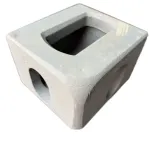
Every shipping container in the world — all 40 million of them — rests on eight critical components. Corner castings are the load-bearing blocks at each corner of an ISO shipping container, and they are the universal interface between the container and every crane, twistlock, spreader, and chassis on the planet. When you lift a container, stack it nine high on a ship, or lock it to a truck trailer, every ton of force flows through these fittings.

Construction cabin – selection, tips, dimensions and prices
Every construction project – whether a family house, a development project or a reconstruction – starts with the infrastructure. No construction manager, craftsman or investor who needs an on-site office, a changing room for workers or a safe storage for tools can do without a quality construction cell. But navigating the offer is not easy: residential containers, sanitary cells, storage modules, rental, purchase, refurbished pieces… This guide will give you answers to all the essential questions in one place.
Storage container
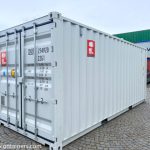
A storage container is a lockable steel box designed for the safe and dry storage of materials, tools, goods or equipment. Originally created as a shipping container for maritime transport, its durability and versatility have found their way onto construction sites, corporate premises and private land.
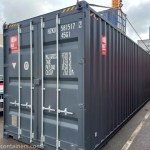
Shipping container 12m (40 ft)
A 12m shipping container is an investment that, if properly selected and cared for, will pay off in decades of trouble-free use. Whether you plan to use it as a warehouse, workshop, garage or the basis for a residential module — the key is careful selection of the condition, a thorough inspection before purchase and high-quality preparation of the base for placement. Take the time to compare offers, check the seller’s references and do not hesitate to personally inspect the container before buying. A properly selected 40-foot container will serve you reliably for many years.