
Understanding TEU in Shipping
In a globalized world of logistics and international maritime shipping, the concept of TEU (Twenty-foot Equivalent Unit) is a fundamental measure that enables standardization, planning, and billing of goods transport flows. TEU is the universal “language” of container shipping – it serves to compare the capacity of ships, ports, trains and road transport, and is a key performance indicator for the entire industry.
What is TEU? Basic Definition and Purpose
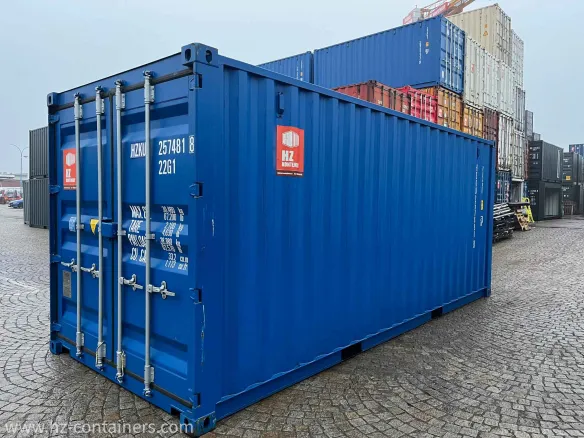
TEU (Twenty-foot Equivalent Unit) is a standardized unit for expressing capacity in container shipping. One TEU corresponds to the volume and dimensions of a standard 20-foot (6.09 m) ISO container.
Why is TEU key?
- It allows comparing shipment volumes, capacity of ships, railway trains and port terminals regardless of the actual distribution of different container sizes.
- It simplifies planning, management and billing throughout the entire transport chain.
- It is a globally recognized indicator of port performance (turnover in TEU), ship capacity (capacity in TEU) and the entire container market.
History and Significance of TEU Standardization
Containerization brought a revolution to world cargo shipping in the 1950s. Previously, shipping was labor-intensive, time-consuming and inefficient. A fundamental change was brought by American entrepreneur Malcolm McLean, who was behind the first intermodal containers – transport boxes that could be easily moved between ship, train and truck without handling the cargo.
The problem of different sizes: Different companies used different container dimensions, which complicated handling in ports and transshipment points.
Solution: ISO Dimension Standardization
- In the 1960s, the International Organization for Standardization (ISO) established container dimensions, the most common being the 20-foot container.
- The TEU is based on its dimensions as a comparison unit.
- TEU enabled rapid expansion of container shipping and became the foundation for globalization of trade.
Technical Parameters of TEU Container (20′ dry van) – Table
| Parameter | Value |
|---|---|
| External Length | 6 058 mm (6.06 m / 20 feet) |
| External Width | 2 438 mm (2.44 m / 8 feet) |
| External Height | 2 591 mm (2.59 m / 8 feet 6 inches) |
| Internal Length | 5 898 mm (5.90 m) |
| Internal Width | 2 352 mm (2.35 m) |
| Internal Height | 2 393 mm (2.39 m) |
| Door Width | 2 340 mm (2.34 m) |
| Door Height | 2 280 mm (2.28 m) |
| Internal Volume | 33 – 33.2 m³ |
| Tare Weight (empty container) | 2 200–2 300 kg |
| Max. Useful Load (payload) | 28 200 kg |
| Max. Gross Weight | 30 480 kg |
| Max. Number of Euro Pallets (120×80 cm) | 11 pcs (with alternating arrangement) |
| Typical Use | Dry goods, consumer goods, machinery, raw materials |
Note: Dimensions may vary slightly depending on the manufacturer or specific series. Always verify the specification of the specific unit.
Other Variants of 20-foot Containers
| Type | External Dimensions (L x W x H) | Internal Volume | Max. Useful Load | Specifics |
|---|---|---|---|---|
| 20′ Open Top | 5.90 x 2.34 x 2.35 m | 32 m³ | 28.2 t | Removable roof for top loading |
| 20′ Flat Rack | 5.97 x 2.36 x 2.24 m | – | 27.15 t | Collapsible/fixed ends, for heavy/bulky goods |
| 20′ Reefer | 5.45 x 2.29 x 2.25 m | 28 m³ | 27.49 t | Refrigerated, for temperature-sensitive goods |
| 20′ Tank | approx. 6.06 x 2.44 x 2.59 m | 21–26 m³ | depending on type | Liquids, gases, chemicals |
TEU Calculation in Practice
Conversion Key
- 1 × 20-foot container = 1 TEU
- 1 × 40-foot container = 2 TEU
- 45-foot container = 2.25 TEU
- 10-foot container = 0.5 TEU
FEU (Forty-foot Equivalent Unit) – abbreviation for forty-foot equivalent unit, 1 FEU = 2 TEU. In practice, it is often used for shipping prices and planning.
Example of Ship or Shipment Capacity Calculation:
| Container Type | Number of Units | Conversion to TEU | Total TEU |
|---|---|---|---|
| 20′ dry container | 50 | 1 | 50 |
| 40′ dry container | 100 | 2 | 200 |
| Total | 250 |
Comparison of Container Types and Variants – Table
| Container Type | Length (m) | Width (m) | Height (m) | Volume (m³) | Max. Load (t) | TEU Equivalent | Typical Use |
|---|---|---|---|---|---|---|---|
| 20′ dry van | 6.06 | 2.44 | 2.59 | 33 | 28.2 | 1 | General goods, raw materials |
| 40′ dry van | 12.19 | 2.44 | 2.59 | 67 | 28.8 | 2 | Larger volumes, lighter goods |
| 20′ high cube | 6.06 | 2.44 | 2.89 | 37 | 28.2 | 1 | Light/bulky cargo |
| 40′ high cube | 12.19 | 2.44 | 2.89 | 76 | 28.8 | 2 | Light/bulky cargo |
| 20′ open top | 6.06 | 2.44 | 2.59 | 32 | 28.2 | 1 | Non-standard, top-loaded |
| 20′ flat rack | 6.06 | 2.44 | 2.24 | – | 27.15 | 1 | Heavy, oversized goods |
| 20′ reefer | 6.06 | 2.44 | 2.59 | 28 | 27.49 | 1 | Chilled/frozen shipments |
TEU in Logistics and Economics
Where is TEU Used?
- Container Ships: Capacity is stated in TEU (e.g., ULCV = Ultra Large Container Vessel, >20 000 TEU).
- Ports: Performance and turnover in TEU per year (e.g., Shanghai >47 million TEU/year).
- Railways, Roads: Logistics, planning of train sets, terminals and cargo vehicles.
- Pricing: Maritime tariff for shipping (e.g., USD/TEU).

Significance and Benefits of TEU Standardization
- Comparability: Allows comparing capacity and performance across different types of transport and regions.
- Efficiency: Simplifies planning, billing and documentation.
- Indicator of World Trade: The development of TEU volumes is a barometer of the economy (growth/decline in TEU = growth/decline in global demand).
TEU in Numbers – Records and Trends
- Largest Container Ship (2024): Capacity over 24 000 TEU (e.g., MSC Irina).
- World’s Largest Ports: Shanghai, Singapore, Ningbo-Zhoushan (all over 30 million TEU/year).
- European Ports: Rotterdam, Antwerp, Hamburg (5–15 million TEU/year).
TEU in Practice: FCL, LCL and Customs Clearance
Types of Shipments
- FCL (Full Container Load): Entire container for one customer. Billed per TEU or FEU.
- LCL (Less than Container Load): Partial shipments sharing container space, billing according to share of volume/weight.
TEU and Customs Processes
- Standardization of containers (and TEU) accelerates customs clearance – clear identification, uniform documentation, faster inspection.
- Manifests clearly describe the contents of each TEU, which increases security and transparency.
Related Logistics and Technical Terms
| Term | Meaning |
|---|---|
| FEU | Forty-foot Equivalent Unit, 1 FEU = 2 TEU |
| ISO Container | Container complying with ISO 668 standards |
| High Cube | Container 1 foot higher than standard (height 2.89 m) |
| Reefer | Refrigerated container with built-in cooling unit |
| Flat Rack | Container with open sides and collapsible ends for heavy/oversized goods |
| Open Top | Top-open container for non-standard and difficult-to-handle shipments |
| Payload | Useful load – maximum weight of cargo in container |
| Tare Weight | Weight of empty container |
| Gross Weight | Total (gross) weight of container including cargo |
| Intermodal Transport | Transport of goods in one transport unit using multiple modes of transport (ship, train, road) |
Frequently Asked Questions (FAQ) on TEU
How many euro pallets fit in one TEU?
- Usually 11 pcs (120 x 80 cm), with alternating arrangement.
What is the maximum useful load in TEU?
- Typically 28 200 kg (varies depending on manufacturer and container type).
Are all 20-foot containers TEU the same?
- Dimensions are standardized according to ISO, but shipping container internal dimensions and weights may vary slightly depending on manufacturer and type (dry, open top, flat rack, reefer).

 Czech Republic, Třinec
  FREE SHIPPING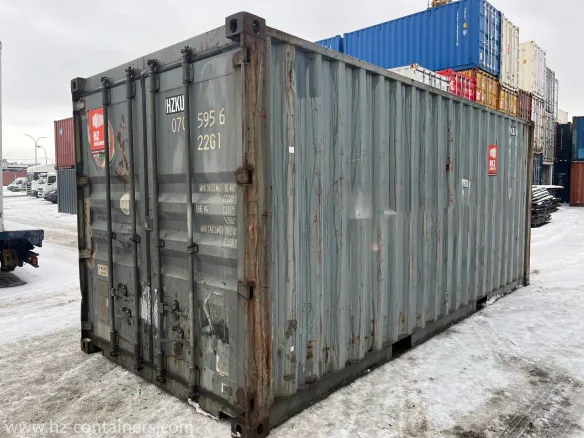

Other container news...
Corner casting steel vs aluminum
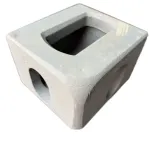
Every shipping container in the world — all 40 million of them — rests on eight critical components. Corner castings are the load-bearing blocks at each corner of an ISO shipping container, and they are the universal interface between the container and every crane, twistlock, spreader, and chassis on the planet. When you lift a container, stack it nine high on a ship, or lock it to a truck trailer, every ton of force flows through these fittings.

Construction cabin – selection, tips, dimensions and prices
Every construction project – whether a family house, a development project or a reconstruction – starts with the infrastructure. No construction manager, craftsman or investor who needs an on-site office, a changing room for workers or a safe storage for tools can do without a quality construction cell. But navigating the offer is not easy: residential containers, sanitary cells, storage modules, rental, purchase, refurbished pieces… This guide will give you answers to all the essential questions in one place.
Storage container
A storage container is a lockable steel box designed for the safe and dry storage of materials, tools, goods or equipment. Originally created as a shipping container for maritime transport, its durability and versatility have found their way onto construction sites, corporate premises and private land.
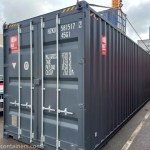
Shipping container 12m (40 ft)
A 12m shipping container is an investment that, if properly selected and cared for, will pay off in decades of trouble-free use. Whether you plan to use it as a warehouse, workshop, garage or the basis for a residential module — the key is careful selection of the condition, a thorough inspection before purchase and high-quality preparation of the base for placement. Take the time to compare offers, check the seller’s references and do not hesitate to personally inspect the container before buying. A properly selected 40-foot container will serve you reliably for many years.