
Container Recycling: Pathways to a Circular Economy in Shipping
1. Recycling of Shipping Containers: A New Era of Sustainability in Maritime Transport
In the past 48 hours, the topic of recycling shipping containers has come to the forefront of interest among both professionals and the general public. The reason is the growing pressure for a circular economy and sustainability in the field of maritime transport, which plays a key role in global trade. Shipping containers that no longer serve their original purpose are becoming a significant source of material and inspiration for innovations in architecture, business, and ecology. As recent reports show, container recycling not only helps reduce the environmental burden, but also opens the way to new forms of use that are in line with the principles of the circular economy. Maritime shipping can thus be one of the pioneers of sustainable development, if it can effectively integrate container recycling into its logistics and production processes.
2. Design, Art and Innovation: A Second Life for Containers
Shipping containers are not just anonymous steel boxes used for transporting goods. Their unique design, robustness, and modularity inspire architects, designers, and artists around the world. In recent months, and especially in current days, new projects are being recorded where retired containers are being transformed into modern living spaces, public galleries, or mobile cultural centres. In world metropolises and smaller cities alike, container structures are emerging that combine aesthetics with functionality and conserve natural resources. Artists, in turn, use containers as a canvas for their installations, drawing attention to themes of globalisation, ecology, and sustainable development. These projects not only bring new life to decommissioned containers, but also show how waste from modern society can be handled creatively and responsibly.
3. Sustainability and the Circular Economy: Practical Examples from Practice
According to the latest analyses and academic works in the field of the circular economy, container recycling has a fundamental impact on sustainable economic growth. It turns out that incorporating recycled materials back into the production cycle helps reduce the consumption of primary raw materials and significantly limits the amount of waste. In practice, this means that not only manufacturers, but also operators of logistics networks and ports are looking for new ways to make effective use of retired containers. For example, modular homes for seniors, recycled office spaces, and storage units are being created. These innovations are often supported by European legislation, which places emphasis on reducing the carbon footprint and promoting circular solutions in industry. The Czech Republic is beginning to establish itself as one of the leaders in the region in this regard, as confirmed by current projects and investments in the field of container recycling.
4. The Crisis in Shipping as a Catalyst for Change
In recent days, maritime transport has been subjected to significant complications due to geopolitical conflicts, for example in the region of Iran. Hundreds of thousands of containers were left “stranded” at sea, which led to increased pressure for the efficient use and recycling of available container capacity. This crisis showed how fragile the current model of global logistics is and how important it is to transition to more flexible and sustainable solutions. Recycling and reuse of containers are proving in this context to be a path not only to ecological, but also economic stability. Logistics companies are therefore increasingly focusing on take-back, renovation, and conversion of containers for new purposes, which can significantly reduce dependence on primary production and contribute to greater resilience of the entire maritime shipping system.
5. Container Homes: An Ecological and Economic Alternative for Housing
Current trends in housing clearly show growing interest in container homes. These structures, built from recycled shipping containers, offer not only lower acquisition costs, but also a significantly smaller ecological footprint compared to traditional building materials. Container housing is becoming particularly popular among young people and those who place emphasis on a sustainable lifestyle. Architects and developers are experimenting not only with individual modules, but also with entire container complexes that serve as student dormitories, social housing, or recreational facilities. The advantages include speed of construction, modularity, and the possibility of relocating entire units. In the Czech Republic, pilot projects focused on affordable and ecological housing for seniors are currently being implemented, which may have a positive impact on addressing the housing crisis and environmental challenges.
6. Business, Logistics and Humanitarian Aid: New Possibilities for Use
Recycled containers find application not only in the private sector, but also in the field of humanitarian aid and crisis management. Thanks to their durability, ease of transport, and versatility, they are an ideal solution for the rapid construction of emergency accommodation facilities, schools, or medical stations in areas affected by natural disasters or conflicts. Logistics entrepreneurs use containers for mobile warehouses, offices, or temporary production lines. This trend is also supported by new technologies that enable easier monitoring and management of containers throughout their entire lifecycle. Container recycling thus brings not only ecological, but also economic benefits in the form of lower material and transport costs.
7. Challenges and the Future: Legislation, Technology and Social Impact
Although container recycling brings a number of benefits, it faces several challenges in practice. One of the main ones is the inconsistent legislation on waste management and recycled materials, which complicates cross-border cooperation and investment in innovation. Another issue is the technical aspect – not all containers are suitable for reuse without costly renovation. Nevertheless, due to pressure from the European Union and growing public interest, further development of technologies focused on efficient recycling and lifecycle monitoring of containers is expected. The social impact of these changes is significant – from the creation of new jobs, through support for local communities, to the improvement of the environment in cities and rural areas alike. All indications are that container recycling will play a key role in the transition to a circular economy in the coming years, not only in maritime shipping.
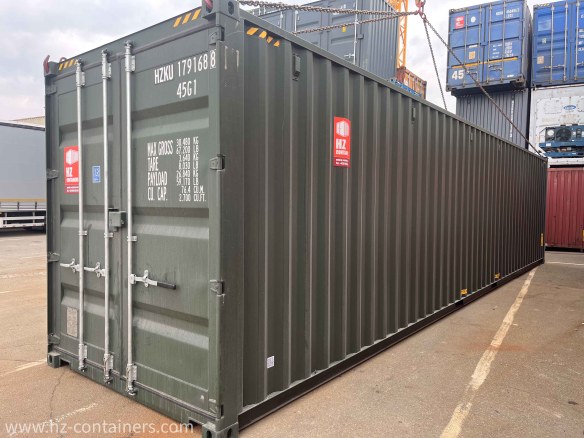
 Georgia, Tbilisi
  WITHOUT SHIPPING
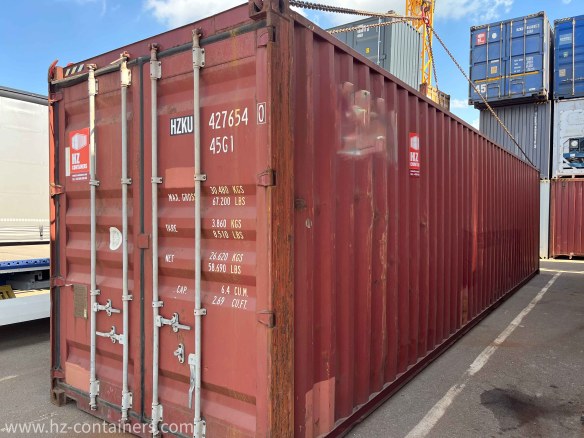
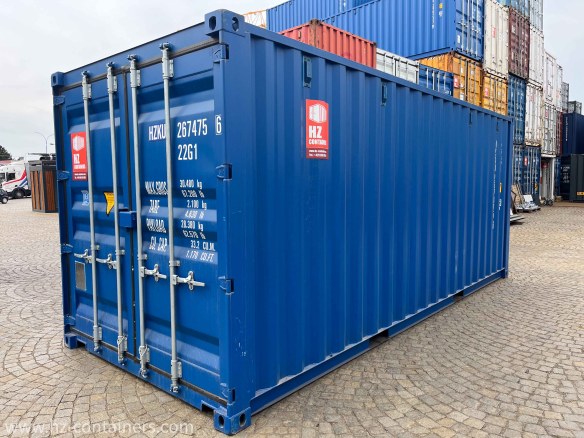
Other container news...

20 Foot shipping container cost
If you are researching the cost of a 20 foot shipping container, you have likely already encountered wildly different prices — from $999 listings online to quotes exceeding $5,500. That range is not a sign of inconsistency. It reflects real differences in container condition, location, delivery logistics, and the seller you are dealing with.
Side Opening container
A side opening container is an ISO-compliant intermodal shipping container engineered with full-length bi-fold doors along one of its long side walls, in addition to the standard cargo doors at one end. Unlike conventional containers that restrict access to a single set of rear doors, a side opening container — also widely called an open side container, open-sided shipping container, or side door container — provides unobstructed lateral access across the entire 20-foot or 40-foot length of the unit. This design transforms the container from a narrow tunnel into a wide-open space that forklifts can enter from the side, multiple workers can load simultaneously, and oversized cargo that would never fit through standard end doors can be placed without struggle.

40 Foot High Cube container cost
A 40 foot high cube container — often abbreviated as 40ft HC, 40′ HC, or 40-foot high cube — is one of the most common shipping container sizes sold on the secondary market. But if you are researching what a 40 foot high cube container costs, you have almost certainly noticed that prices are all over the map. One seller quotes $1,500. Another quotes $7,000. Both could be legitimate.

20 Foot container cost
If you have ever searched for a shipping container, you have almost certainly asked one question first: how much does a 20 foot container cost? The answer is not a single number. It is a range that spans from under $1,000 for a weathered, as-is unit to over $5,000 for a pristine, one-trip container — and that is before delivery, site preparation, or modifications enter the picture.