
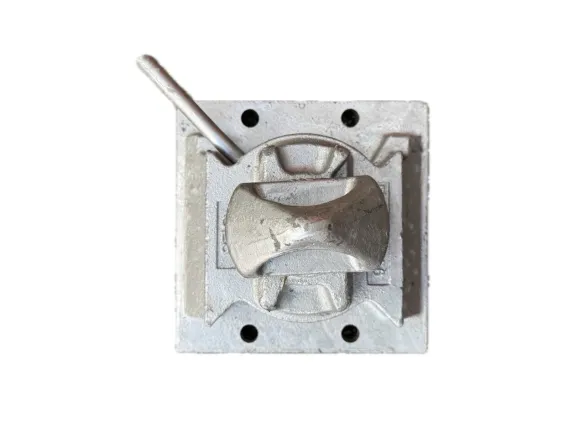
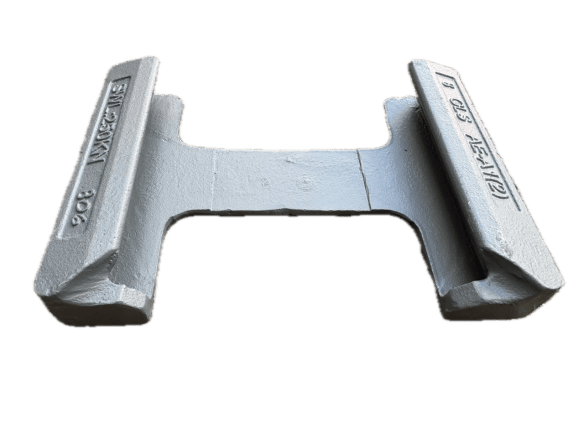
Twist Lock spare part
What is a Twist Lock?
Twist Lock is a standardized rotary joining mechanism that forms a basic element of modern intermodal transport. Its main purpose is the safe, fast and repeatable joining, stacking and handling of ISO shipping containers (standardized according to ISO 668 and ISO 1161). Without twist locks, efficient global trade as we know it today would not be possible.
A twist lock works together with the so‑called corner casting, a robust steel reinforcement located at each corner of the container. This combination enables:
- Safe stacking of containers to great heights (on ships typically 7–9 levels)
- Quick securing to transport vehicles – ships, trailers, railcars
- Efficient lifting and moving using cranes, reach stackers, straddle carriers and other equipment
Importance of the twist lock in logistics
- Ensures safety: Prevents movement, falling or separation of containers during transport and in extreme conditions (storm, abrupt braking, etc.)
- Standardizes processes: Allows the use of one technology across continents and all modes of transport
- Increases speed and efficiency: Automated, semi‑automatic and manual twist locks significantly speed up loading and unloading
The twist lock was invented in the 1950s by American engineer Keith Tantlinger. The patent was granted without licensing fees, enabling worldwide standardization.
Detailed description and principle of operation
A twist lock consists of two basic parts:
| Part | Description |
|---|---|
| Twist Lock | Active – the lock itself, mounted on transport vehicles or handling equipment. |
| Corner Casting | Passive – the fixed corner element of the container, with a precisely defined opening (per ISO 1161) into which the lock is inserted. |
Basic dimensions of the corner casting (per ISO 1161):
- Outer dimensions: 178 × 162 × 118 mm
- Oval hole: 124.5 mm (long axis), 63.5 mm (short axis)
Locking process:
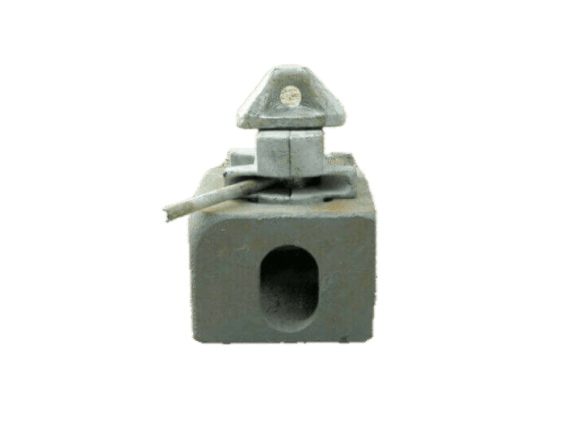
- The head of the twist lock is inserted into the oval hole of the container’s corner element.
- By turning the lever (manually, semi‑automatically or automatically) the head rotates 90°, creating a solid mechanical connection.
- The lock cannot be withdrawn until it is turned back to the release position.
Force transmission:
The entire container weight is transferred through the four corner elements to the twist locks, meaning each lock must withstand very large tensile, compressive and shear forces.
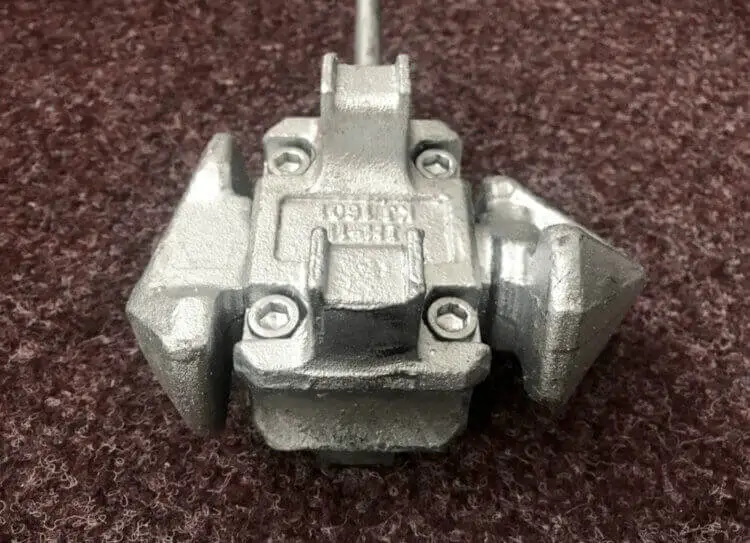
Anatomy and key components of a Twist Lock
A twist lock is a robust mechanism composed of several precisely engineered parts:
| Component | Function and technical information |
|---|---|
| Body (housing) | Holds all parts together, made of high‑strength steel with corrosion‑protective treatment (galvanizing, coatings). |
| Securing pin | Rotating head that inserts and locks into the corner casting. Usually oval for easy insertion and rotation. |
| Handle/lever | Used for operation – manual, semi‑automatic or internal mechanism in automatic types. |
| Guide sleeve | Ensures precise alignment of the twist lock with the corner casting opening, minimizing mis‑insertion risk. |
| Spring | Guarantees correct position and tension in semi‑automatic/automatic mechanisms. |
| Latch | Safety element that prevents accidental unlocking during transport. |
Materials and surface treatment
- Forged steel – highest fatigue, tensile and shear resistance
- Cast steel – used in some types, cheaper yet still very robust
- Surface treatment – hot‑dip galvanizing, special anti‑corrosion and wear‑resistant coatings (essential for marine environments)
Types of Twist Locks
Twist locks are classified by control method, construction and specific application. Selecting the right type is critical for safety and handling efficiency.
Classification by control method
| Type | Description and use |
|---|---|
| Manual | Fully hand‑operated. Cheapest, simplest to maintain, suitable for smaller operations, but slower and more error‑prone. |
| Semi‑automatic | Manually installed; after container joining the lock automatically locks. Release is manual (e.g., with a rope). |
| Fully automatic | Integrated into advanced spreaders and cranes, locking/unlocking without operator intervention. Most advanced, fastest, safest. |
Classification by construction and use
| Type | Application |
|---|---|
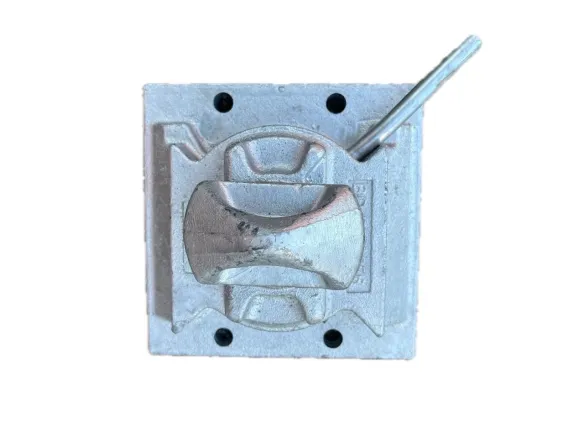
| Fixed | Permanently welded/bolted to ship, trailer frame, etc. – for repeated ISO container slots. |
| Retractable/insertable | Can be inserted into the floor, allowing universal use of the trailer (container/standard cargo). |
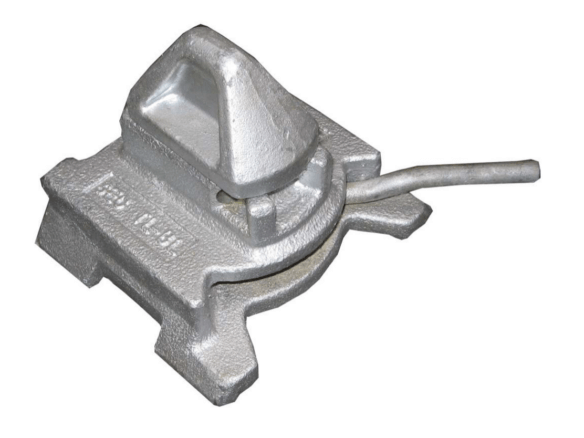
| Double‑ended | For vertical joining of two containers during stacking (double‑stack). Locking head on both ends. |
| Mid‑locks | Join two shorter containers (e.g., 2 × 20 ft) into one 40 ft unit so they can be stacked on 40 ft containers. |
Interaction with Corner Castings
Corner casting is a key part of every ISO container – a robust steel casting with a precisely defined opening. Their parameters are unified by standards:
| Standard | What it defines |
|---|---|
| ISO 1161 | Dimensions, shape, tolerances and material of corner castings |
| ISO 1496‑1 | Construction, strength, testing and safety requirements for containers and their corners |
Functions of the corner casting:
- Transfer of all forces (tension, compression, shear) between containers and twist locks
- Enables lifting, stacking and securing of the container on various transport modes
- Standardization ensures global compatibility
Force transmission in the twist‑lock – corner‑casting system
During stacking and transport, each twist lock carries the weight and forces of the whole column of containers. Therefore their load capacity is dimensioned with a large safety margin:
| Load type | Typical value (SWL) | Note |
|---|---|---|
| Tensile load | 200–250 kN | Safely handles 20–25 tonnes |
| Compressive load | > 250 kN | For multi‑level stacking |
| Shear forces | 50–100 kN | During tilts, braking, etc. |
Technical specifications and standards
Basic technical parameters of a twist lock
| Parameter | Typical value / Range |
|---|---|
| Material | Forged steel (grade 20Mn2, 40Cr, etc.), hot‑dip zinc coating |
| Maximum Breaking Load (MBL) | 500 kN (50 tonnes) |
| Safe Working Load (SWL) | 200–250 kN (20–25 tonnes) |
| Standards | ISO 1161, ISO 1496‑1, Lloyd’s, DNV‑GL, ABS certifications |
| Operating temperature | –40 °C to +80 °C |
| Service life | 5–15 years depending on usage and maintenance |
Test and certification requirements
- Every twist lock must pass load and fatigue testing.
- Production is subject to inspection and certification (e.g., Lloyd’s Register, DNV‑GL, ABS).
- All dimensions must comply with ISO 1161 to guarantee worldwide compatibility.
Practical use of twist locks
Maritime transport
- On board container ships: Securing containers to the deck and to each other (up to 10 layers).
- Used together with lashing rods and turnbuckles to increase stability in rough seas.
Road transport
- Trailers and chassis: Each container slot (20 ft, 40 ft, 45 ft) has 4 twist locks.
- Proper locking prevents container shift or fall during hard braking or an accident.
Rail transport
- Container wagons: Twist locks fix containers in the basic position and also during double‑stacking.
- In the USA, double‑stacking of two containers requires double‑ended twist locks.
Port and terminal handling
- Cranes, reach stackers, straddle carriers: Automatic twist locks on spreaders for rapid handling.
- Safety protocols include visual checks of proper locking (some locks have a colour indicator).
Maintenance, safety and common problems
Twist locks are exposed to extreme stresses – regular maintenance and inspection are essential.
Common issues
- Corrosion – especially in marine environments; can cause jamming or material weakening.
- Wear and cracks – frequent use and mechanical impacts.
- Mechanism jamming – debris, poor lubrication or deformation.
Recommended maintenance
- Regular visual inspections (each loading/unloading cycle)
- Cleaning and lubricating moving parts
- Immediate replacement of damaged or suspect components
- Staff training on proper use and fault detection
Innovations and future trends
Modern twist locks are increasingly equipped with sensors and IoT elements:
- Locking sensors – indicate correct lock/unlock status in real time (visually or via system)
- Load monitoring – data on acting forces for overload prevention and predictive maintenance
- Automation – fully automatic twist locks at the largest port terminals
- Eco‑friendly materials and coatings – longer life, lower environmental footprint
Frequently Asked Questions (FAQ)
What is the difference between left‑hand and right‑hand twist locks?
They are used in pairs so that levers do not interfere and the operator’s ergonomics are maintained.
How long does a twist lock last?
With regular maintenance, 5–15 years depending on environment and usage intensity.
Can twist locks be used outside container transport?
Yes, they are used in modular architecture, mobile structures, stages, emergency shelters, etc.
How many twist locks are needed on one container?
Always at least 4 (one on each corner); for stacking or combining shorter containers, special double/mid‑locks are required.
Where can I find the marking and certification of a twist lock?
Each twist lock bears the manufacturer’s marking, load rating, certification logo and the standard number (e.g., ISO 1161).
 Czech Republic
  WITHOUT SHIPPING
Other container news...

Obligation to Check Tightness When Selling a Reefer Container
Who is responsible for the refrigerant leak check when selling a refrigerated container? Find out what obligations the seller has at the time of handover and why they must provide a PTI report along with the technical data plate. Learn which regulatory requirements and F-gas record-keeping duties become the sole responsibility of the new owner.

New shipping containers
If you are currently considering purchasing a new shipping container, you are not alone. While just twenty years ago containers were used almost exclusively for maritime transport, today they have found their way into construction, storage, business, and even housing. This growing popularity brings with it a host of questions: Which type should you choose? How much does it cost? How do you recognize quality? How can you avoid falling victim to scammers?
New sea shipping containers
If you are currently considering purchasing a new shipping container, you are not alone. While just twenty years ago containers were used almost exclusively for maritime transport, today they have found their way into construction, storage, business, and even housing. This growing popularity brings with it a host of questions: Which type should you choose? How much does it cost? How do you recognize quality? How can you avoid falling victim to scammers?

6m shipping container
Are you thinking about buying a 6-meter shipping container but aren’t sure what to look for? You are not alone—this 20-foot container is the best-selling size on the Czech market, and the differences between various types, conditions, and prices can be significant. In this guide, you will find everything you need to know: from exact dimensions and a comparison of categories (such as “one-way,” refurbished, and “Cargo Worthy”) to current prices and shipping advice.