
Trademark HZ KONTEJNERY
When you start saying the name HZ KONTEJNERY, you probably picture one of the leading shipping container sellers in Central Europe. But what if you’re interested in something deeper — is the name HZ KONTEJNERY itself a registered trademark? This question is not just academic. Whether you are an entrepreneur who wants to verify whether you can safely cooperate with this company, or a competitor considering a similar name for your own business — the answer has practical consequences. In this article, we will look not only at the specific case of HZ KONTEJNERY, but also at the entire ecosystem of trademarks: what they are, how they work, and why they are crucial for every business.
What is HZ KONTEJNERY and what is the history of this company?
HZ KONTEJNERY is no newcomer to the market, even though its history goes back only a little over a decade. However, its growth and establishment on the European container market are remarkable.
Introduction of HZ KONTEJNERY s.r.o.
HZ KONTEJNERY s.r.o. was founded on April 9, 2015 and registered in the Commercial Register kept by the Municipal Court in Prague under file number C 240707. The company has been assigned Company ID 03975177 and VAT ID CZ03975177 (it is a VAT payer). Its official registered office is located at Slavníkova 2357/9, 169 00 Prague 6 – Břevnov, while the main operations and container depot are headquartered at the strategic address Průmyslová 154, 674 01 Třebíč in the TRADO complex.
This inland container depot (ICD — Inland Container Depot) serves as a modern logistics hub from which the company distributes containers to customers throughout the Czech Republic and abroad. The company operates websites on the domains hz-containers.com, hz-kontejnery.cz, and lodni-kontejner.cz.
What does the company do and what is its portfolio?
HZ KONTEJNERY s.r.o. specializes in the sale and rental of shipping containers of all types and sizes. Its portfolio includes:
- Shipping (transport) containers — standard 20-foot (6.1 m), 40-foot (12.2 m), and specialized sizes
- Residential containers — solutions for housing, recreational, and permanent use
- Office containers and site cabins — for construction sites and temporary offices
- Freezing and refrigerated containers — including so-called Super Freezer containers
- Custom containers — according to specific customer requirements
Thanks to an extensive network of partners and depots, the company can boast global presence — it delivers containers to the Czech Republic, Germany, Italy, the USA, and many other countries. Customers can choose from new and used containers in various quality classes (AS IS, Cargo Worthy, ONE TRIP).
Why is it important to know the trademark status of this company?
If someone searches for the phrase “HZ KONTEJNERY trademark”, there can be several reasons:
- Business cooperation — A potential partner wants to verify whether the company protects its brand professionally.
- Competitive environment — Another company in the container segment is considering a similar name and needs to know whether it would expose itself to legal risk.
- Educational interest — The owner of a smaller business wants to understand how brand protection works on a real example.
- Legal certainty — A customer wants to be sure they are buying from a legitimate and legally protected brand.
Regardless of the reason, it is crucial to understand that the commercial register and the trademark register are two completely different things.
Is the name HZ KONTEJNERY a registered trademark?
This is the core of the entire question. Let’s answer it systematically and based on verifiable public sources.
How to verify a trademark in official registers
Verifying whether a particular designation is a registered trademark requires searching multiple registers. The basic registers that need to be checked are:
| Register | Managed by | Territorial validity | Web address |
|---|---|---|---|
| TM Register SR | Industrial Property Office of the Slovak Republic (ÚPV SR) | Slovak Republic | wbr.indprop.gov.sk |
| TM Register CZ | Industrial Property Office of the Czech Republic (ÚPV ČR) | Czech Republic | isdv.upv.gov.cz |
| EUIPO (eSearch plus) | European Union Intellectual Property Office | Entire European Union | euipo.europa.eu |
| WIPO Global Brand DB | World Intellectual Property Organization | Global (Madrid System) | wipo.int |
Each of these registers is publicly accessible and allows free searching by name, applicant, application number, or class of goods and services.

What do the available public registers say about HZ KONTEJNERY
Based on a search conducted in publicly available registers, the following can be stated:
- Web registers of ÚPV SR (wbr.indprop.gov.sk): When searching for the phrase “HZ KONTEJNERY”, the system does not find any matching record. This means that in the Slovak trademark register, there is no registered word trademark with this name.
- ÚPV ČR registers (isdv.upv.gov.cz): Since the company is a Czech legal entity, it would logically have a trademark registered primarily in the Czech Republic. However, even in the Czech register, no publicly searchable record is found when searching for the phrase “HZ KONTEJNERY”.
- EUIPO (European Union): In the European trademark database, no matching result is found when searching for “HZ KONTEJNERY”.
- WIPO (international register): In the WIPO Global Brand Database, no international trademark is recorded with this name.
Important notice: The public unavailability of a record in online registers does not automatically mean that a trademark does not exist. It may be a freshly filed application that has not yet been published, or a technical limitation of the search interface. For definitive confirmation of the status, an official search would need to be conducted directly at the relevant office.
Practical significance of the findings for customers and competitors
What follows from this? HZ KONTEJNERY s.r.o. is duly registered in the commercial register — this gives it the right to use its business name in the Czech Republic. However, registration in the commercial register does not provide the same level of protection as a registered trademark. Without a registered trademark, the legal protection of the name is significantly weaker — it is limited mainly to protection against unfair competition under the Civil Code, not to the exclusive rights provided by the Trademark Act.
What is a trademark and how does it work?
To properly understand the significance of the entire topic, we must dive into the very essence of trademarks.
Definition of a trademark under Act No. 506/2009 Coll.
In the Slovak Republic, the issue of trademarks is regulated by Act No. 506/2009 Coll. on Trademarks as amended. Under this Act:
A trademark may be any designation, particularly consisting of words including personal names, drawings, letters, numbers, colors, the shape of goods or their packaging, or sounds, if such designation is capable of distinguishing the goods or services of one person from the goods or services of another person and is capable of being expressed in the trademark register in a way that enables the competent authorities and the public to clearly and precisely determine the subject matter of protection.
The key concept here is distinctive character. A designation must be unique enough that the consumer can associate it with a specific manufacturer or service provider. For example, the word “container” alone would not pass as a trademark because it describes the product itself. However, the combination “HZ KONTEJNERY” may have distinctive character — precisely because of the specific abbreviation “HZ” added to the generic word.
Main functions of a trademark in business
The Industrial Property Office of the Slovak Republic identifies four main reasons to protect intellectual property through a trademark:
- Product identification — A trademark allows the customer to immediately recognize who the product or service comes from.
- Increased protection against counterfeiting — A registered trademark gives the owner strong legal tools against counterfeiters.
- Building image and reputation — A strong brand inspires trust and is associated with quality.
- Stabilizing market position — A trademark creates a barrier to entry for competitors and strengthens the company’s position.
What can be a trademark — from logo to sound
The law distinguishes several types of trademarks that can be registered:
- Word trademark — Protects the text itself, e.g., “HZ KONTEJNERY”, regardless of font or color
- Figurative trademark — Protects a logo, graphic symbol, or visual element
- Combined trademark — Combines word and figurative elements
- Three-dimensional (3D) trademark — Protects the shape of a product or packaging
- Sound trademark — Typical jingle or melody (e.g., the sound when starting Windows)
- Motion, multimedia, holographic — Modern types of trademarks for the digital age
In the case of HZ KONTEJNERY, primarily a word trademark (protecting the name itself) and possibly a combined trademark (protecting the name together with the company’s logo) would come into consideration.
What is the difference between a business name and a trademark?
This is one of the most common misunderstandings among entrepreneurs. Many mistakenly believe that registering a company in the commercial register automatically protects its name in the same way as a trademark. The reality is, however, much more complex.
Business name vs. Trademark — comparison
| Criterion | Business name | Trademark |
|---|---|---|
| Purpose | Identifies a legal entity in legal relations | Identifies goods and services on the market and distinguishes them from competitors |
| Legal basis | Commercial Code / Civil Code | Act No. 506/2009 Coll. on Trademarks |
| Method of origin | Automatically by registration in the commercial register | By filing an application and successful registration in the TM register |
| Territorial validity | Only in the territory of the state where the company is registered | According to the type of registration: national, EU, international |
| Duration of protection | Without limitation (as long as the company exists) | 10 years with the possibility of repeated renewal |
| Possibility of transfer | Only together with the business | Yes, can be transferred independently of the business |
| Protection against misuse | Only through the institute of unfair competition | Direct statutory protection, exclusive right to use |
| Symbol | No specific symbol | ® (Registered) — indication of a registered TM |
Why registration in the commercial register is not enough
HZ KONTEJNERY s.r.o. is duly registered in the commercial register of the Czech Republic. This means that no other Czech company can be registered under exactly the same name. However, this is very limited protection:
- The commercial register does not address phonetic similarity — a company called “HZ Kontajnery” (without “KONTEJNERY” in capital letters) could be registered
- The commercial register does not protect against using the name as a brand on products
- The commercial register does not apply outside the country of registration — a completely different company with a similar name can be registered in Slovakia
- Even a domain (hz-containers.com) does not automatically mean protection — the domain registrar does not examine collisions with trademarks
Practical consequences of confusing these concepts
An entrepreneur who registers a company in the commercial register and starts building a brand without registering a trademark risks a scenario that occurs in practice more often than it would seem: after years of investing in marketing and building a good name, they find that someone else has registered a similar name as a trademark and can now prohibit their use of it. Retroactive registration is then complicated, expensive, and not always successful.
How to check if a company name is a registered trademark?
Verifying a trademark is a technical process that any entrepreneur can handle. Here is the exact procedure.
Step by step: Search in the Slovak register (ÚPV SR)
- Visit the page wbr.indprop.gov.sk — Web Registers of the Industrial Property Office of the Slovak Republic
- In the “Trademarks” section, select search
- Enter the search term (e.g., “HZ KONTEJNERY”) in the “Trademark wording” field
- Run the search and review the results
- For each record found, check:
- Applicant/owner — who owns the TM
- Classes of goods and services — for which products the TM is protected
- Procedural status — whether the TM is valid, in process, or has expired
How to search in the European EUIPO register
- Go to euipo.europa.eu and select “eSearch plus”
- Choose “Trade mark” search
- Enter the name in the “Trade mark name” field
- For advanced searching, use the TMview tool, which searches multiple national registers simultaneously
Searching in the international WIPO register
- Visit wipo.int and select “Global Brand Database”
- Enter the search term — the database covers trademarks from the Madrid System and several national registers
- For a more detailed search, select advanced search by classes, countries, and status
What to watch out for when interpreting search results
When interpreting results, several pitfalls should be kept in mind:
- An empty result does not mean 100% certainty — an application may be in the processing stage and not yet published
- A trademark applies only to specific classes — if “HZ KONTEJNERY” is registered for class 39 (transport, storage), it does not mean you cannot use it for a completely different type of business (e.g., a restaurant)
- Similarity is not identity — the law also protects against similar designations if there is a likelihood of confusion
What types of trademarks exist and which type applies to HZ KONTEJNERY?
Not every trademark is the same. The choice of the right type depends on what exactly you want to protect.
Overview of types of trademarks
| Type of TM | What it protects | Example |
|---|---|---|
| Word | The word or phrase itself regardless of visual appearance | “Nike”, “Coca-Cola”, “HZ KONTEJNERY” |
| Figurative | Graphic element, logo, symbol without text | Nike Swoosh logo, Apple apple |
| Combined | Combination of text and graphics | HZ CONTAINERS logo with typography and symbol |
| Three-dimensional (3D) | Shape of product or packaging | Coca-Cola bottle, Toblerone shape |
| Sound | Melody, jingle, sound effect | MGM jingle (lion roar), Harley-Davidson sound |
| Color | Specific color as a distinctive element | Purple color of Milka chocolate |
| Motion | Animated sequence | Pixar opening animation |
| Multimedia | Combination of image and sound | — |
| Holographic | Holographic element | Security features on banknotes |
Which type of trademark would be appropriate for HZ KONTEJNERY
For a company like HZ KONTEJNERY, two types would primarily come into consideration:
- Word trademark “HZ KONTEJNERY” — it would protect the name itself regardless of the font or color it is written in. This is the strongest form of protection because it covers any visual representation of the name.
- Combined trademark — it would protect the company logo including typography, colors, and graphic elements. This form is more visually specific but provides strong protection against visual imitation.
The ideal strategy for an established company would be a combination of both: a word TM to protect the name and a combined TM to protect the visual identity.
In which territory does a trademark apply and what does the territorial principle mean?
One of the most important concepts in the field of trademarks is the territorial principle. Failing to understand it can have fatal consequences.
National TM vs. European TM vs. International TM
| Criterion | National TM (ÚPV SR) | European TM (EUIPO) | International TM (WIPO) |
|---|---|---|---|
| Territorial validity | Only the Slovak Republic | All 27 EU Member States | Selected countries (up to 130+) |
| Registration office | ÚPV SR, Banská Bystrica | EUIPO, Alicante (Spain) | WIPO, Geneva (Switzerland) |
| Indicative fee | ~166 € (electronic) | ~850 € (basic) | From ~653 CHF + fees for individual countries |
| Period of validity | 10 years | 10 years | 10 years |
| Advantages | Lowest price, simplest process | Uniform protection throughout the EU, single application | Flexibility in country selection, single application |
| Disadvantages | Valid only in Slovakia | If rejected in one country, the whole may fail | Higher price, more complex process |
Territorial principle: Why a Slovak TM does not protect in the Czech Republic
The territorial principle means a simple but fundamental thing: a trademark is valid only in the territory where it was registered. If you register a trademark in Slovakia, its protection ends at the borders of the Slovak Republic. In the Czech Republic, Austria, Poland, or Hungary, it has no legal force.
For HZ KONTEJNERY, which is a Czech company with global ambitions, this means a specific thing: if it registered a trademark only at ÚPV ČR, it would not be protected in Slovakia. If it wants to protect its brand also in Slovakia, it must file a separate application at ÚPV SR, or use the European (EUIPO) or international (WIPO) route.
How to protect a brand in multiple countries simultaneously
For companies with cross-border operations, there are two effective paths:
- European Union trademark (EUTM) — A single application to EUIPO covers all 27 EU Member States. This is the ideal solution if you operate primarily within the European Union.
- Madrid System (WIPO) — Allows you to file a single international application and specify the particular countries in which you want protection. The advantage is flexibility — you can choose only the countries where you actually operate.
What benefits does trademark registration bring to business?
Registering a trademark is not just an administrative act — it is a strategic business decision with specific benefits.
5 main benefits of a registered trademark
- Exclusive right of use — Only the TM owner may use the designation for the registered goods and services. Any other entity needs their consent.
- Legal protection — The TM owner may seek prohibition of use, removal of the consequences of infringement, compensation for damages, and appropriate satisfaction.
- Increasing company value — A trademark is an intangible asset that can be valued, sold, licensed, or pledged. A strong brand can form a significant part of the company’s market value.
- Marketing tool — The ® symbol on a product or website signals professionalism, trustworthiness, and seriousness.
- Possibility of licensing and franchising — With a registered TM, you can grant licenses to third parties and create franchise networks.
Why HZ KONTEJNERY (or a similar company) should also register a TM
For a growing company with international operations, registering a trademark is more than just a formality — it is a necessity. Without it, it risks:
- Freeriding on the name — Another company may start using a similar name and benefit from the reputation of the original company
- Loss of control over the brand — Without registration, you cannot effectively prevent others from using your name
- Limited expansion options — When entering new markets, you may find that someone else has already registered your name
What happens if someone violates trademark rights?
A trademark is not just a piece of paper — it is an enforceable right. And its violation has specific consequences.
Legal consequences of infringement — from warning to litigation
Under Act No. 506/2009 Coll. (§ 13), the trademark owner may, in the event of infringement, seek:
- Prohibition of infringement — The court may order immediate termination of the use of the disputed designation
- Removal of consequences — Withdrawal of goods from the market, destruction of unauthorized products
- Compensation for damages — Including lost profits
- Appropriate satisfaction — Even non-pecuniary harm can be compensated
- Publication of the judgment — At the infringer’s expense
How to defend yourself if someone misuses your brand
Recommended procedure if infringement is suspected:
- Document the infringement — Take screenshots, save evidence, record dates
- Send a pre-litigation warning — A formal demand to cease infringement, often sufficient
- Use alternative dispute resolution — Mediation or arbitration can be faster and cheaper
- File a lawsuit in court — If the warning does not work, court proceedings follow
In the event that a company does not have a registered trademark, its defense options are significantly more limited — it must rely on general provisions on unfair competition, which are more difficult to prove and provide weaker protection.
How does trademark registration proceed in Slovakia?
If the case of HZ KONTEJNERY has inspired you to think about your own trademark, here is a practical guide.
9 steps to registering a trademark
- Search — Check whether the same or similar designation is already registered (Web Registers of ÚPV SR, EUIPO, WIPO)
- Choosing the type of trademark — Word, figurative, combined? Decide exactly what you want to protect
- Determining classes of goods and services — According to the international Nice Classification (45 classes), select for which products you want protection
- Filling out the application — On the official ÚPV SR form or electronically
- Paying the administrative fee — The basic fee for an individual TM is 166 € for electronic filing
- Formal examination — The office checks whether the application contains all the necessary elements
- Substantive examination — The office assesses whether the designation meets the legal conditions (distinctive character, not misleading, etc.)
- Publication of the application — After successful examination, the application is published in the ÚPV SR Bulletin
- Opposition proceedings and registration — If no opposition is filed within 3 months, the TM is registered in the register
How much does registration cost and how long does it take
| Item | Indicative amount |
|---|---|
| Administrative fee — electronic filing | 166 € |
| Administrative fee — paper filing | 332 € |
| Fee for each class beyond 3 classes | 33 € / class |
| Legal services (search, application preparation) | 140–400 € |
| Fast Track (accelerated proceedings) | Surcharge equal to the administrative fee |
The entire process from filing the application to registration takes standardly 6 to 12 months. When using accelerated proceedings (Fast Track), this period can be shortened to approximately 3–4 months.
The validity of a trademark registration is 10 years from the date of filing the application. After the expiration of this period, the validity can be repeatedly renewed for another 10 years — theoretically indefinitely, as long as the owner pays renewal fees.
What are the most common questions about trademarks and the HZ KONTEJNERY brand?
What is the HZ KONTEJNERY trademark?
The HZ KONTEJNERY trademark is a designation that, if registered, would represent a word trademark protecting the name of the company HZ KONTEJNERY s.r.o. Based on publicly available information from the registers of ÚPV SR, ÚPV ČR, EUIPO, and WIPO, there is currently no active registration of a trademark with this name. However, the company is duly registered in the commercial register of the Czech Republic under file number C 240707.
Is the name HZ KONTEJNERY protected?
The name HZ KONTEJNERY is protected within the scope of protection of the business name, which arises from registration in the commercial register. However, this protection is significantly narrower than the protection provided by a registered trademark. It does not entitle the owner to use the ® symbol and does not provide the exclusive right to use the designation in relation to goods and services to the extent that registration in the trademark register would provide.
How to find out if a company name is a registered trademark?
Verification consists of a search in several registers: (1) Web Registers of ÚPV SR (wbr.indprop.gov.sk) for Slovak TMs, (2) ÚPV ČR database (isdv.upv.gov.cz) for Czech TMs, (3) eSearch plus / TMview (euipo.europa.eu) for European TMs, and (4) Global Brand Database (wipo.int) for international TMs. Searching is free and publicly accessible. For definitive confirmation of the status, it is recommended to use the services of a patent attorney or lawyer.
What is the difference between a business name and a trademark?
A business name identifies a legal entity in legal relations and arises automatically from registration in the commercial register. A trademark identifies goods and services on the market and arises only on the basis of successful registration at the relevant office (ÚPV SR, EUIPO, WIPO). While a business name protects only against registration of the same company in the same register, a trademark provides the exclusive right to use the designation for registered goods and services and allows effective defense against misuse.
In which territory does a trademark apply?
A trademark applies exclusively in the territory where it was registered — this is the so-called territorial principle. A Slovak national TM is valid only in Slovakia, a European TM (EUTM) is valid in all 27 EU Member States, and an international TM (WIPO) is valid in the countries chosen by the applicant. A trademark registered in the Czech Republic does not automatically protect the brand in Slovakia.
How long is a trademark valid?
The validity of a trademark registration is 10 years from the date of filing the application. After the expiration of this period, the validity can be repeatedly renewed for another 10 years. A request for renewal can be filed at the earliest in the last year of validity and at the latest within 6 months after the expiration of validity (for a surcharge). Continuous renewal theoretically allows an unlimited period of protection.
What happens if someone violates trademark rights?
The trademark owner may seek: (1) prohibition of infringement, (2) removal of consequences (withdrawal of goods from the market), (3) compensation for damages including lost profits, (4) appropriate satisfaction, and (5) publication of the judgment at the infringer’s expense. In the event that a company does not have a registered trademark, its defense options are significantly limited.
How much does trademark registration cost in Slovakia?
The basic administrative fee for an individual trademark at ÚPV SR is 166 € for electronic filing (332 € for paper filing). In addition, fees are charged for each class of goods and services beyond three classes (33 € per class). If you use the services of a patent attorney or lawyer, the total costs range from approximately 300 to 600 €.
Can a company name be a trademark?
Yes, a company name can be registered as a word trademark, provided it meets the legal conditions — in particular, distinctive character. This means that the name must not be too generic or descriptive. For example, “Kontajnery s.r.o.” would probably not pass as a trademark, but “HZ KONTEJNERY” would, because the specific abbreviation “HZ” gives the designation sufficient uniqueness.
What does the ® symbol mean and when can it be used?
The ® symbol (from the English “registered”) indicates that a trademark is officially registered in the relevant register. This symbol may be used exclusively after the successful registration of a trademark — its use before or without registration is illegal in many countries and may be considered a deceptive business practice. For unregistered designations, the ™ symbol (“trademark”) is sometimes used, but it has no official legal force.
Other container news...

New shipping containers
If you are currently considering purchasing a new shipping container, you are not alone. While just twenty years ago containers were used almost exclusively for maritime transport, today they have found their way into construction, storage, business, and even housing. This growing popularity brings with it a host of questions: Which type should you choose? How much does it cost? How do you recognize quality? How can you avoid falling victim to scammers?

6m shipping container
Are you thinking about buying a 6-meter shipping container but aren’t sure what to look for? You are not alone—this 20-foot container is the best-selling size on the Czech market, and the differences between various types, conditions, and prices can be significant. In this guide, you will find everything you need to know: from exact dimensions and a comparison of categories (such as “one-way,” refurbished, and “Cargo Worthy”) to current prices and shipping advice.
Corner casting steel vs aluminum
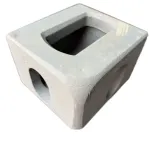
Every shipping container in the world — all 40 million of them — rests on eight critical components. Corner castings are the load-bearing blocks at each corner of an ISO shipping container, and they are the universal interface between the container and every crane, twistlock, spreader, and chassis on the planet. When you lift a container, stack it nine high on a ship, or lock it to a truck trailer, every ton of force flows through these fittings.

Construction cabin – selection, tips, dimensions and prices
Every construction project – whether a family house, a development project or a reconstruction – starts with the infrastructure. No construction manager, craftsman or investor who needs an on-site office, a changing room for workers or a safe storage for tools can do without a quality construction cell. But navigating the offer is not easy: residential containers, sanitary cells, storage modules, rental, purchase, refurbished pieces… This guide will give you answers to all the essential questions in one place.