
Shipping containers Hamburg Germany
Hamburg is one of the most interesting places in Europe for anyone considering buying a shipping container. It hosts the third largest container port on the continent, with millions of shipping containers passing through it every year. The enormous transshipment volume means that a vast stock of used shipping containers of all types, sizes, and quality grades accumulates in Hamburg’s depots and terminals — often at significantly more favorable prices than those found at Czech resellers. This guide will walk you through everything you need to know: from the history of the Port of Hamburg, through container types, to the specific process of purchasing and transport to the Czech Republic.
What are shipping containers and why is Hamburg a key European hub?
A shipping container — often also called a maritime container, transport container, or ISO container — is a standardized steel transport unit designed for the safe, efficient, and repeated transport of goods across all modes of transport: sea, rail, and road. The standardization of dimensions and construction according to ISO standards allows the same container to be loaded onto a ship in Shanghai, transferred onto a train in Hamburg, and then delivered by truck to a warehouse in Brno, without the need to reload the goods.
Definition: A shipping container is a standardized (ISO 668), robust steel box with uniform corner castings that enable safe gripping, stacking, and securing during transport.
The Port of Hamburg, historically known as “Germany’s gateway to the world,” is the largest seaport in Germany and the third largest container port in Europe (after Rotterdam and Antwerp). It lies on the Elbe River, approximately 110 kilometers from the North Sea, and its strategic location makes it an ideal entry gateway for goods heading to Central and Eastern Europe — including the Czech Republic.
Why Hamburg is essential for Czech importers and exporters
The Czech Republic, as a landlocked country, has no seaport of its own. Hamburg is its closest and most significant transshipment point. More than 480,000 containers travel annually between the Port of Hamburg and Czech terminals — primarily in Prague, Mělník, Pardubice, and Ostrava. This intensive two-way flow creates ideal conditions for buying used containers: shipping companies and terminal operators need to dispose of containers that are no longer suitable for international maritime transport, but still serve perfectly for storage, building modifications, or inland logistics.
What is the history and significance of the Port of Hamburg for shipping containers?
The Port of Hamburg has been in continuous operation since 1189, when Emperor Frederick I Barbarossa granted the city the privilege of free navigation on the Elbe. For centuries, it was a center of the Hanseatic League and prospered through trade in raw materials, textiles, and colonial goods. However, the real revolution came with containerization — the rise of standardized transport containers in the 1960s.
The first container ship arrived in Hamburg in 1967. Since then, the port has invested billions of euros in building specialized container terminals. While in the 1970s containers represented only a fraction of the cargo, today containerized cargo accounts for more than 98% of all transshipment volume at the Port of Hamburg.
Port of Hamburg in numbers
| Indicator | Value | Year |
|---|---|---|
| Total transshipment volume | approx. 120 million tons | 2024 |
| Container transshipment | 7.7 million TEU | 2024 |
| Containerization share | 98.6% | 2024 |
| Number of container terminals | 4 main | 2025 |
| Distance from Czech border | approx. 350 km (Děčín) | — |
| Annual transport volume CR–Hamburg | 480,000+ containers | 2018 |
TEU (Twenty-foot Equivalent Unit) is a standard unit for measuring container transport capacity. One 20-foot container = 1 TEU, one 40-foot container = 2 TEU. With nearly 8 million TEU, Hamburg ranks among the world’s top ports — and every container that arrives will eventually be retired and may end up for sale.
What types of shipping containers can be bought in Hamburg?
The wide range of goods transported through Hamburg means that you can find practically all existing container types in local depots. However, the most relevant categories for Czech buyers are as follows.
Standard containers (Dry Van) — 20’DC and 40’HC
The most common and most available type. A closed steel box with double-wing doors on one side. Used for transport and storage of dry goods. The designations DC (Dry Cargo) and HC (High Cube) differ in height:
- 20’DC (20 feet, approx. 6 m): External dimensions 6.06 × 2.44 × 2.59 m. Ideal for smaller site cabins, tool storage, mobile sales stands.
- 40’HC (40 feet High Cube, approx. 12.2 m): External dimensions 12.19 × 2.44 × 2.89 m. Offers extra height compared to the standard 40’DC (2.59 m). The most frequently offered type in Hamburg — highest demand, widest supply, reasonable price.
Special containers available on the Hamburg market
Refrigerated and freezer containers (Reefer) — equipped with an integrated cooling unit. 20′ and 40′ variants are predominantly available in Hamburg. Used reefer containers are often sold with a non-functional cooling unit — they then serve as excellently insulated storage spaces.
Insulated containers (Thermo, Insulated) — have no built-in cooling unit, but a thick insulation layer (typically polyurethane). Suitable for storing temperature-sensitive materials, wine, food.
Open Top — a container with a removable tarpaulin roof. Ideal for oversized cargo that cannot be loaded through the doors.
Flat Rack — foldable end walls, no roof. For heavy and bulky machines, vehicles, construction materials.
Tank containers — specialized tanks for liquids and gases. Rather exceptional for a typical buyer, but available in Hamburg.
Comparison of container types — dimensions, use, indicative prices in Hamburg
| Container type | External dimensions (l × w × h) | Internal volume | Common use | Indicative price (used, CW) |
|---|---|---|---|---|
| 20’DC | 6.06 × 2.44 × 2.59 m | 33.2 m³ | Storage, workshop, stand | €1,800–2,800 |
| 20’HC | 6.06 × 2.44 × 2.89 m | 37.4 m³ | Storage with higher ceiling | €2,500–3,500 |
| 40’DC | 12.19 × 2.44 × 2.59 m | 67.7 m³ | Large-capacity storage | €2,500–3,800 |
| 40’HC | 12.19 × 2.44 × 2.89 m | 76.4 m³ | Building modifications, housing, warehouse | €3,200–4,800 |
| 20′ Reefer | 6.06 × 2.44 × 2.59 m | 28.0 m³ | Cold storage | €3,500–6,500 |
| 40′ Reefer HC | 12.19 × 2.44 × 2.89 m | 67.0 m³ | Large-capacity cooling | €5,500–10,000 |
| 20′ Open Top | 6.06 × 2.44 × 2.59 m | 32.0 m³ | Oversized cargo | €2,300–3,500 |
Prices are indicative, as of 2025/2026 and apply to containers in Cargo Worthy quality ready for pickup at a depot in Hamburg. The actual price depends on the specific condition, seasonality, current demand, and purchase volume.
What dimensions of shipping containers are available?
Shipping containers are manufactured in precisely standardized dimensions defined by ISO 668. For a buyer, it is key to distinguish between external dimensions (decisive for transport and handling), internal dimensions (for calculating usable space), and door opening dimensions (for assessing what fits inside the container).
Difference between standard (DV) and High Cube (HC) design
A standard container (sometimes designated DV — Dry Van) has an external height of 2,591 mm (8 feet 6 inches). The High Cube variant adds 300 mm more — the external height is 2,896 mm (9 feet 6 inches). This seemingly small difference actually means 12% more internal volume, which is essential when planning installations, racking systems, or residential conversions.
Complete overview of shipping container dimensions
| Type | External l × w × h (m) | Internal l × w × h (m) | Door opening w × h (m) | Volume (m³) | Load capacity (kg) | EUR pallet capacity |
|---|---|---|---|---|---|---|
| 10’DC | 3.05 × 2.44 × 2.59 | 2.83 × 2.35 × 2.39 | 2.34 × 2.28 | 15.9 | 10,000 | 5 |
| 20’DC | 6.06 × 2.44 × 2.59 | 5.90 × 2.35 × 2.39 | 2.34 × 2.28 | 33.2 | 28,000 | 11 |
| 20’HC | 6.06 × 2.44 × 2.90 | 5.90 × 2.35 × 2.69 | 2.34 × 2.58 | 37.4 | 28,000 | 11 |
| 40’DC | 12.19 × 2.44 × 2.59 | 12.03 × 2.35 × 2.39 | 2.34 × 2.28 | 67.7 | 28,800 | 25 |
| 40’HC | 12.19 × 2.44 × 2.90 | 12.03 × 2.35 × 2.69 | 2.34 × 2.58 | 76.4 | 28,600 | 25 |
| 45’HC | 13.72 × 2.44 × 2.90 | 13.56 × 2.35 × 2.69 | 2.34 × 2.58 | 86.1 | 29,600 | 27 |
In Hamburg, the most frequently available sizes are 20’DC, 40’DC, and 40’HC. 10′ and 45′ containers are less common and usually at a higher unit price.
What do shipping container quality grades (IICL, CW, AS IS) mean?
When buying a used shipping container in Hamburg, you will encounter quality grade designations. This is an internationally recognized classification system that determines the condition of the container and what it is still suitable for.
Overview of quality grades
IICL 5/6 (Institute of International Container Lessors) — the highest standard for used containers. Inspection under IICL standards is the most rigorous in the industry: the container is practically as new, without damage or corrosion, with fully functional doors, sealing, and intact flooring. In Hamburg, IICL 6 containers sell for approximately 70–85% of the price of a new container. Suitable for demanding building modifications (housing, offices) where you don’t want to deal with hidden defects.
Cargo Worthy (CW) — the container is fully certified for international maritime transport. It may have minor cosmetic defects (small dents, surface rust, repaired parts), but its structural integrity is preserved. Door sealing is functional, flooring is intact. For ordinary storage and most building projects, it offers the best value for money.
Wind and Water Tight (WWT) — the container is completely sealed, resistant to wind and water. However, it may have visible repairs, rusty areas, replaced panels. It is no longer certified for maritime transport, but it is entirely sufficient for outdoor storage, construction materials, or less demanding modifications.
AS IS — sold “as it stands,” without guarantees. It may have damaged doors, rust, holes, non-functional sealing. The price is the lowest and corresponds to the risk. Suitable for projects where the container will be significantly modified (cutting out windows, doors, joining modules) or as a temporary construction site storage.
Comparison of quality grades — condition, price, suitable use
| Grade | Age | Floor condition | Corrosion | Tightness | CSC certification | Indicative price (40’HC) | Suitable use |
|---|---|---|---|---|---|---|---|
| IICL 6 | 0–3 years | As new | Minimal/none | Perfect | Valid | €4,800–6,500 | Housing, offices, demanding projects |
| Cargo Worthy | 3–8 years | Good, minor repairs | Light surface | Fully tight | Valid | €3,200–4,800 | Storage, workshops, common modifications |
| WWT | 8–15 years | Repaired, functional | Medium, repaired | Tight | Invalid/expired | €2,200–3,500 | Exterior warehouses, less demanding projects |
| AS IS | 15+ years | May be damaged | Significant, possible | May not be tight | No | €1,400–2,500 | Rough modifications, temporary use |
How much do shipping containers cost in Hamburg?
The price of a shipping container in Hamburg is influenced by several interconnected factors. Hamburg, as a port with enormous container turnover, naturally has lower prices than inland locations — the cost of initial transport from the port to the interior is eliminated.
Main factors influencing the price
- Size and type — 40’HC is more expensive than 20’DC, but calculated per cubic meter, it works out more favorably.
- Quality grade — the difference between AS IS and IICL 6 can be as much as threefold.
- Depot location — containers in depots directly at the Port of Hamburg (Altenwerder, Burchardkai) are cheaper than those that have already traveled to inland warehouses — but harder to access for individual pickup.
- Seasonality — in spring and summer, prices rise (construction season, higher demand). In autumn and winter, you can buy 10–20% cheaper.
- Purchase volume — when buying 5 or more containers, a volume discount of 5–15% can be negotiated.
Indicative container prices in Hamburg (as of 2025/2026)
| Type / Grade | AS IS | WWT | Cargo Worthy | IICL 6 | New |
|---|---|---|---|---|---|
| 20’DC | €900–1,400 | €1,400–1,900 | €1,800–2,800 | €3,000–4,200 | €4,500–5,500 |
| 20’HC | €1,300–1,800 | €1,800–2,500 | €2,500–3,500 | €3,800–4,800 | €5,200–6,200 |
| 40’DC | €1,200–2,000 | €2,000–2,800 | €2,500–3,800 | €4,000–5,500 | €5,500–7,000 |
| 40’HC | €1,400–2,500 | €2,200–3,500 | €3,200–4,800 | €4,800–6,500 | €6,500–8,000 |
All prices are exclusive of VAT (19% in Germany) and without transport. When purchasing from the Czech Republic as the VAT payer, reverse charge can be applied — you pay VAT in the Czech Republic.
Which container terminals make up the Port of Hamburg?
The Port of Hamburg is not a single monolithic entity, but a system of specialized terminals. To understand the shipping container market in Hamburg, it is useful to know the main players — the container depots with the best prices are located in the vicinity of the terminals.
HHLA — the dominant operator
The company Hamburger Hafen und Logistik AG (HHLA) operates three of the four main container terminals in the port:
Container Terminal Burchardkai (CTB) — the largest and historically first Hamburg container terminal (opened 1968). With a capacity of nearly 45,000 TEU of storage area and 1,400 meters of quay, it handles large container ships of the Megamax class (24,000+ TEU). It is currently undergoing extensive automation of storage blocks.
Container Terminal Altenwerder (CTA) — the most technologically advanced German terminal, opened in 2002 on a greenfield site. A pioneer of automation — 84 automatic crane systems ensure container stacking without human operators. CTA is also the world’s first climate-neutral container terminal. All handling equipment is powered by electricity from renewable sources.
Container Terminal Tollerort (CTT) — a smaller but strategically significant terminal specializing in Chinese shipping companies. In 2022, the Chinese state shipping company COSCO acquired a stake in CTT, which triggered political discussion about Germany’s strategic interests.
Eurogate Container Terminal Hamburg
The second largest operator after HHLA. Eurogate operates its own container terminal in the western part of the port and competes with HHLA both in volume and in prices.
Comparison of container terminals in Hamburg
| Terminal | Operator | Capacity (TEU) | Quay (m) | Automation | Specialization |
|---|---|---|---|---|---|
| CTB (Burchardkai) | HHLA | ~45,000 | 1,400 | Modernization in progress | Megamax ships, long-distance trade |
| CTA (Altenwerder) | HHLA | ~30,000 | 1,400 | Fully automated | High-tech, ecological operation |
| CTT (Tollerort) | HHLA (minority COSCO) | ~12,000 | 800 | Semi-automatic | Chinese shipping lines |
| Eurogate Hamburg | Eurogate | ~25,000 | 1,200 | Partial | Mediterranean and Asian lines |
How does the purchase and pickup of a shipping container in Hamburg work step by step?
Buying a shipping container directly from a Hamburg depot is the most cost-effective option, but it requires good preparation and orientation in the process. Here is a proven procedure.
Step 1: Define your requirements
Even before contacting sellers, clarify:
- Size: 20′, 40’DC, or 40’HC?
- Quality grade: IICL 6 for representative projects, CW for universal use, WWT for purely storage purposes, AS IS for radical rebuilds.
- Budget: Calculate not only the container price, but also transport (€800–1,500 by truck to the Czech Republic), administrative fees, and a reserve for possible modifications.
- Timeline: A week or two for selection and reservation, additional days for transport.
Step 2: Find the offer
The best prices are found with sellers who have their own depot in the Port of Hamburg or in its immediate vicinity. Proven ones include:
- HZ Containers — an international seller with an offer in Czech, represented in several countries including Germany. They have the option of selling containers directly from Hamburg depots.
Step 3: Reservation and payment
After selecting a specific container, you will receive a proforma invoice from the seller. The standard is payment in advance by bank transfer. Most sellers in Hamburg accept payment in euros, or in Czech koruna at the current exchange rate. After the payment is credited, the seller issues a delivery note and release order — a document authorizing you or your carrier to pick up the container at the depot.
Step 4: Pickup at the depot
To pick up a container at a Hamburg depot, you will need:
- Release order from the seller
- Proof of payment (confirmation of bank transfer)
- Identification document (ID card or passport)
- Vehicle registration number, if you are arriving with your own carrier
Depots at the Port of Hamburg have standardized working hours (typically Mon–Fri 7:00–16:00, some also Saturday morning). Before traveling, always check the opening hours of the specific depot — the Port of Hamburg is vast and individual depots may have different operating hours.
How does the transport of a shipping container from Hamburg to the Czech Republic work?
Transport of a container from Hamburg to the Czech Republic is a separate logistical operation, and its cost can represent a significant part of the total investment — for a cheaper 20’DC container, easily 30–50% of the final price.
Truck transport
The most common and most flexible option. Specialized trucks with a hook loader or a container low-loader will deliver the container to a specific address in the Czech Republic.
- Transport time: 1–2 days from pickup at the depot
- Price: €800–1,500 depending on distance (cheaper to Prague, more expensive to the Ostrava region) and current diesel prices
- Advantages: Door-to-door delivery, flexibility, no further transshipment
- Disadvantages: Higher price, limited capacity during carrier peak season
Rail transport
Hamburg is connected to a dense European rail network, and container trains regularly connect the port with Czech terminals.
- Routes: Hamburg → Mělník (closest terminal to Prague), Hamburg → Pardubice, Hamburg → Ostrava. Services are offered by Metrans, Rail Cargo Group, HHLA Pure.
- Price: €700–1,000 for a 40′ container (Hamburg–Mělník/Brno route), shorter domestic legs within the Czech Republic are more expensive
- Transport time: 2–5 days including handling at terminals
- Advantages: Lower price for larger volumes, more environmentally friendly
- Disadvantages: Need to arrange transport from the Czech terminal to the final address (“last mile” by truck, +€200–400)
Comparison of truck and rail transport
| Parameter | Truck transport | Rail transport |
|---|---|---|
| Price (40’HC, Hamburg → Central Bohemia) | €1,000–1,500 | €700–1,000 + last mile |
| Transport time | 1–2 days | 2–5 days |
| Minimum volume | 1 container | 1 container |
| Delivery to address | Yes, directly | No, transport from terminal required |
| Ecological footprint | Higher | Lower |
| Suitable for | Individual containers, urgent | More containers, cost savings |
What to watch out for when buying a used shipping container in Hamburg?
Buying a used container, especially remotely from abroad, requires caution. Here is a checklist and an overview of the most common problems.
Pre-purchase checklist
- CSC plate — verify validity (if relevant to you) and whether it corresponds to the described quality grade.
- Floor condition — the plywood floor impregnated against pests should be even, without soft spots, without signs of mold or rot. Any patches must be professionally done.
- Door tightness — the rubber gasket must be intact, flexible, and fully seated around the entire perimeter. Damaged sealing can be replaced (approx. €100–200), but it indicates neglected maintenance.
- Corrosion — surface rust is normal, but perforating corrosion (holes, weakened areas in corners or along the bottom frame) is a serious problem. Check especially the bottom support beam (forklift pocket) and corner castings.
- Door mechanism — both leaves must open and close freely, locking mechanisms must be functional, rods not bent.
- Markings — the container bears a unique BIC code (four letters + seven digits). Using this code, the origin and age of the container can be traced.
How to read codes and markings on containers
Every shipping container bears standardized markings according to ISO 6346. Example:
- HZKU — owner code (prefix registered with BIC — Bureau International des Containers)
- 123456 — container serial number
- 7 — check digit (verifiable by mathematical algorithm)
- 45G1 — type code: 45 = 40 feet High Cube, G = general purpose, 1 = with ventilation openings
The age of the container can also be determined — for newer containers, it is embossed on the CSC plate.
Warranties and complaints
- CW and IICL containers — reputable sellers provide a warranty on structural integrity (typically 6–12 months) and tightness.
- AS IS — you buy without guarantees. Any defect after the transfer is your risk.
- Complaints — handled under German commercial law. Document defects with photographs immediately after delivery and report in writing.
What is the future of shipping containers and the Port of Hamburg?
The Port of Hamburg is investing heavily in modernization and expansion to maintain competitiveness against Rotterdam and Antwerp. For the container buyer, this has interesting implications.
Terminal modernization
- CTB expansion — automation of storage blocks is to be completed by 2028. New storage capacities will increase the total terminal capacity to nearly 45,000 TEU.
- New berths — the Port of Hamburg is planning the construction of two new berths that will allow the handling of even larger ships.
- Digitalization — deployment of AI for congestion prediction, autonomous vehicles for horizontal container transport.
Environmental initiatives
CTA Altenwerder has been certified as a climate-neutral terminal since 2019. All cranes and vehicles are electric, powered by renewable sources. HHLA has set a goal of carbon neutrality for all its terminals by 2030. For the buyer, this means that even buying a used container from Hamburg can be presented as part of a sustainable circular economy — you are giving a second life to a steel structure that would otherwise go to scrap.
Impact of geopolitics on prices and availability
Shipping container prices in Hamburg, as anywhere else, are subject to global influences:
- Sino-American relations — trade wars and tariffs affect the flow of goods and thus the demand for containers.
- European carbon policy (EU ETS) — the extension of emission allowances to maritime transport from 2024 is gradually making transport more expensive and may increase the pressure to retire older containers — more supply on the market, lower prices.
- COSCO entry into CTT — Chinese investment in Hamburg infrastructure strengthens the flow of goods from Asia, which in the long term ensures a stable supply of containers for sale.
Trends — containers as a building unit
The growing popularity of container architecture (residential houses, offices, restaurants, pop-up stores) is increasing the demand for high-quality IICL containers. Thanks to its location and volume, Hamburg is an ideal source. The trend is toward greater professionalization of the market: specialized companies are emerging offering ready-made container modules — insulated, with electrical installations, windows, and doors.
Frequently asked questions
How long does the transport of a shipping container from Hamburg to the Czech Republic take?
Truck transport usually takes 1 to 2 days from pickup at the depot. The actual drive from Hamburg to Prague takes approximately 6–8 hours, but you need to allow for administration and handling of the container at the port. Rail transport takes 2 to 5 days, including handling at terminals and possible onward truck transport to the final address.
How does the purchase of a shipping container work?
First, define the required type, size, and quality grade. Then find the offer with sellers with a depot in Hamburg, request current photos and a price quote. After selecting a specific piece, you make the payment, receive a release order, and arrange transport — either through the seller or your own carrier. After delivery of the container to the destination, check its condition against the delivery note.
Where to buy shipping containers in Hamburg?
The main sellers in Hamburg are HZ Containers. The most favorable prices are usually in depots near the Altenwerder and Burchardkai container terminals.
Is a new or used shipping container better?
For most buyers, a used container in Cargo Worthy (CW) quality is the optimal choice — it offers full functionality and structural integrity at 40–60% of the price of a new one. A new (One Trip) container is suitable only for representative projects (housing, offices, gastro operations) where every detail matters.
What does IICL quality mean?
IICL stands for Institute of International Container Lessors — an international organization that sets the most rigorous standards for inspection and classification of used containers. A container with an IICL 5 or IICL 6 rating is practically as new, without damage or corrosion, and with fully functional mechanisms. It is suitable for demanding building projects.
What are the dimensions of shipping containers?
The most common dimensions: 20’DC (6.06 × 2.44 × 2.59 m, internal volume 33.2 m³), 40’DC (12.19 × 2.44 × 2.59 m, 67.7 m³) and 40’HC (12.19 × 2.44 × 2.89 m, 76.4 m³). The High Cube variant adds 30 cm in height compared to the standard design.
Can the price of a shipping container be negotiated?
Yes, especially when purchasing multiple pieces. Volume discounts range between 5 and 15%. Even when buying a single container, it is worth asking about current special offers or containers with minor cosmetic defects at a preferential price.
How to verify the age of a container?
On the CSC safety plate, the date of manufacture is indicated for newer containers. For older types, the date can be estimated from the serial number — using online databases or by asking the seller. Reputable sellers state the age of the container in the offer description.
Do I need a building permit for a shipping container?
In the Czech Republic, it depends on the method of use. A storage container placed on land usually does not require a building permit, provided it is not permanently attached to the ground and serves as a temporary structure. When planning a conversion to a residential space or permanent building, a building permit is generally required — always consult with the local building authority.
How long does a shipping container last?
The lifespan of a shipping container depends on the quality, use, and maintenance. A maritime container in demanding transport will last 8–12 years, after which it is retired to a second life. As a storage unit, with proper maintenance (painting, seal repair), it will last 20–30 years or more. The steel structure is extremely durable — the main enemies are corrosion from below (contact with moist ground) and neglected roof maintenance.

 Hamburg, Germany
  WITHOUT SHIPPING


Other container news...

New sea shipping containers
If you are currently considering purchasing a new shipping container, you are not alone. While just twenty years ago containers were used almost exclusively for maritime transport, today they have found their way into construction, storage, business, and even housing. This growing popularity brings with it a host of questions: Which type should you choose? How much does it cost? How do you recognize quality? How can you avoid falling victim to scammers?
New shipping containers
If you are currently considering purchasing a new shipping container, you are not alone. While just twenty years ago containers were used almost exclusively for maritime transport, today they have found their way into construction, storage, business, and even housing. This growing popularity brings with it a host of questions: Which type should you choose? How much does it cost? How do you recognize quality? How can you avoid falling victim to scammers?

6m shipping container
Are you thinking about buying a 6-meter shipping container but aren’t sure what to look for? You are not alone—this 20-foot container is the best-selling size on the Czech market, and the differences between various types, conditions, and prices can be significant. In this guide, you will find everything you need to know: from exact dimensions and a comparison of categories (such as “one-way,” refurbished, and “Cargo Worthy”) to current prices and shipping advice.
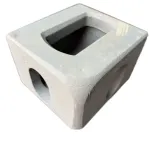
Corner casting steel vs aluminum
Every shipping container in the world — all 40 million of them — rests on eight critical components. Corner castings are the load-bearing blocks at each corner of an ISO shipping container, and they are the universal interface between the container and every crane, twistlock, spreader, and chassis on the planet. When you lift a container, stack it nine high on a ship, or lock it to a truck trailer, every ton of force flows through these fittings.