
Shipping Container in Green Color RAL 6007
What is a Shipping Container in Green Color RAL 6007?
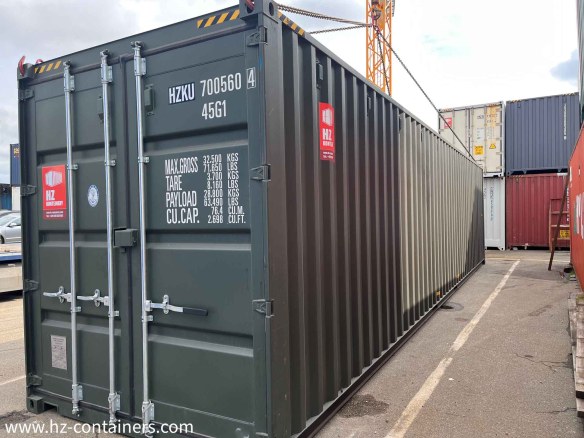
A shipping container in green color RAL 6007 is a standardized transport unit, typically of the 20ft General Purpose type (also known as a universal 20-foot container), whose outer surface is covered with a protective coating in a precisely defined shade of RAL 6007 – dark bottle green. This specific shade is not only an aesthetic choice, but primarily a functional protection that fundamentally affects the lifespan, usability, and integration of the container into the environment.
The RAL 6007 container combines robust Corten steel construction, precise color specification according to international RAL standards, and wide range of applications from global logistics to modular buildings such as shipping container homes, warehouses, workshops, and residential projects. The popularity of the RAL 6007 shade stems from its universal appearance, high resistance to dirt, and ability to naturally blend into both natural and urban environments.

Detailed Definition and Context
1. Shipping Container: Construction, Standards, and Types
Structural Properties
- Material: The basis is Corten steel (COR-TEN), a special alloy with high resistance to atmospheric corrosion. The surface patina protects the steel from further rusting.
- Floor: Most containers have a floor made of 28mm waterproof plywood (Marine Plywood), capable of withstanding point loads up to 3,000 kg/m².
- Dimensions:
- 20′ (6.058 m × 2.438 m × 2.591 m)
- 40′ (12.192 m × 2.438 m × 2.591 m)
- Smaller (e.g., 6′, 8′, 10′) and larger sizes exist for special purposes
- Doors: Double-leaf doors with robust locking bars, equipped with rubber sealing and the option to install a lockbox (lock protection).
- ISO Corners: Corner fittings allow safe stacking and handling by crane or forklift.
- Ventilation: Standard ventilation openings prevent condensation and facilitate air circulation.
Standardization
- ISO 6346: The standard establishes systematic marking and coding of containers, enabling their tracking within global intermodal transport.
- CSC Plate: Every container intended for international transport must be equipped with a safety plate confirming compliance with structural and safety requirements.
Container Types
| Type | Use | Characteristics |
|---|---|---|
| General Purpose (Dry Van) | Standard transport/warehouses | Most common, closed construction |
| High Cube | Larger volume | 30 cm higher than standard |
| Open Top | Bulk and oversized cargo | Open roof, tarpaulin |
| Reefer | Refrigerated goods | Insulation + cooling unit |
| Flat Rack | Heavy, oversized cargo | No walls/roof, collapsible ends |
2. Green Color & Coating Significance
Protective Function
- Corrosion Protection: Quality coating protects Corten steel from corrosion caused by rain, snow, salt water, and UV radiation. Especially in coastal areas, the lifespan of the coating is crucial for long-term use.
- Maintenance Reduction: Properly applied coating minimizes the need for frequent repairs and extends the container’s lifespan.
Identification, Branding, and Environmental Integration
- Branding: Major shipping companies use typical colors (e.g., Maersk blue, Evergreen green, Hapag-Lloyd orange) for quick fleet identification.
- Aesthetics: Dark bottle green RAL 6007 is desired for an inconspicuous appearance in nature, near family homes, on farms, or in parks.
- Safety: Special colors (yellow, red) signal containers for storing hazardous materials.
Advantages of RAL 6007 Shade
- Effective masking of dirt and scratches
- Universal use in natural and industrial environments
- Popular for corporate and private projects
3. RAL 6007: Standardization and Properties
What is RAL?
- RAL: German color standardization system (Reichs-Ausschuss für Lieferbedingungen), since 1927. Each shade has a four-digit numerical code and precisely defined composition.
- RAL 6007 (Bottle Green): Saturated, dark green color, officially “bottle green.” Allows precise shade matching across manufacturers and subsequent modifications, which is key for fleet appearance or multiple containers in one location.
Comparison with Other Green Shades
| Designation | Name | Description and Use |
|---|---|---|
| RAL 6005 | Moss Green | Lighter, blends more with grass |
| RAL 6007 | Bottle Green | Darker, universal, masks dirt |
| RAL 6011 | Reseda Green | Lighter, less commonly used |
Technical Specifications and Painting Process
Structural Details (Example 20′ GP Container RAL 6007)
| Parameter | Value |
|---|---|
| External dimensions | 6.058 × 2.438 × 2.591 m |
| Internal dimensions | approx. 5.898 × 2.352 × 2.393 m |
| Weight (tare) | approx. 2,200–2,400 kg |
| Payload capacity | up to 28,000 kg |
| Floor | 28 mm waterproof plywood |
| Wall material | Corrugated Corten steel |
| Doors | Double-leaf, sealed, lockbox |
| Ventilation | Min. 2–4 ventilation openings |
| Stackability | Standard up to 7 layers |
Industrial Container Painting Process
1. Surface Preparation
- Removal of dirt, rust, old labels, and paint residue – using sandblasting/shot blasting (minimum cleanliness SA2.5), or sanding and wire brushes.
- Degreasing the surface – using special degreasers, ensuring coating adhesion.
- Repair of minor damage – filling and sanding “hot spots” (welds, corners).
- Thorough drying – painting only on dry surfaces!
2. Primer Coat
- Anti-corrosion base – typically two-component epoxy or zinc-enriched primer, providing active cathodic protection.
- Special attention – bare metal, welds, and corrosion-damaged areas.
3. Top Coat
- Color according to RAL 6007 – polyurethane or acrylic-polyurethane paints with high resistance to UV, salt, and chemicals are used.
- Spray application – for uniform, professional appearance; brush only for details.
- Number of coats – typically 2–3 coats for optimal coverage.
4. Coating Thickness and Quality Control
- Dry Film Thickness (DFT): 80–120 microns is the standard for long lifespan.
- Quality Control: Thickness measurement and visual inspection.
5. Additional Protection
- Roof: Often application of bituminous/epoxy coating additionally (increased protection against standing water).
- Interior: Light colors for better illumination (often RAL 7035).
6. Types of Paints Used
| Paint Type | Properties and Use |
|---|---|
| Two-component epoxy | Excellent adhesion, anti-corrosion effect |
| Polyurethane | High resistance to UV, mechanical damage |
| Acrylic | More eco-friendly, lower VOC, suitable for interior spaces |
| Marine | Designed for extreme climatic conditions |
Significance and Use of Containers in RAL 6007 Color
Logistics and Storage
- New (one-trip) containers: After one voyage, in perfect technical and visual condition, with intact RAL 6007 coating. Ideal for long-term storage and further modifications.
- Rental fleets: Companies choose RAL 6007 for uniform, representative appearance and easy maintenance (dirt is barely visible).
- Mobile warehouses: Safe and durable containers for construction, businesses, and households. Emphasis on quick securing (lockbox, massive locks).
Conversion and Alternative Uses
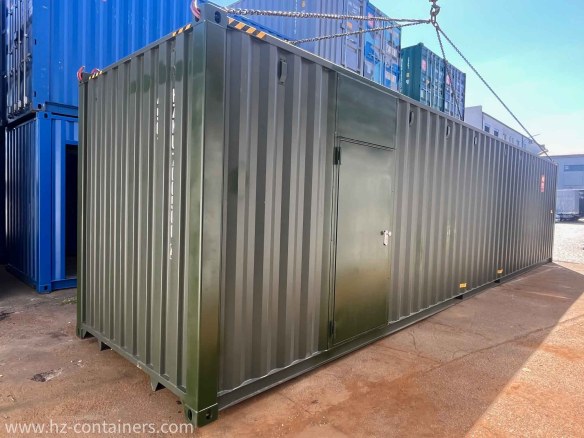
- Modular offices and workshops: Quick construction, aesthetic integration into green spaces and industrial areas.
- Pop-up shops, cafes: Modern appearance, high durability, branding options.
- Garden sheds, tool storage: RAL 6007 color allows inconspicuous integration into gardens, parks, or farms.
- Housing: Foundation for container homes, cottages, recreational facilities.
Additional Advantages
- Safety: Robust construction, stacking capability, high load capacity, easy locking.
- Maintenance Minimization: Dark green paint effectively masks dirt and minor scratches.
- Ecology: Recyclability, repeated use, reduced need for new building materials.
Comparison with Other Popular Colors (Container Colors)
| Color (RAL) | Name | Typical Use, Properties |
|---|---|---|
| RAL 5010 | Gentian Blue | Common shipping color for major carriers, highly visible |
| RAL 7016 / 7035 | Anthracite / Gray | Modern, industrial aesthetics, light gray for interior |
| RAL 9003 / 1015 | White / Beige | Refrigerated containers (heat reflection), neutral colors |
| RAL 3020 | Traffic Red | Warning, easily recognizable in land transport |
| RAL 6005 | Moss Green | Lighter green, blends more with grass |
| RAL 6007 | Bottle Green | Universal, masks dirt, suitable for nature integration |
Related Terms and Standards
- Corten Steel: Special steel alloy with controlled formation of protective rust layer (patina), reduces the need for frequent painting.
- ISO 6346: Standard for marking and identification of intermodal containers.
- One-Trip Container: Container after one voyage, nearly new, ideal for long-term use or conversions.
- CSC Plate: Container safety plate for international transport, mandatory for use in logistics.
- IICL 6: Inspection and quality standard for containers, guaranteeing excellent technical condition.
 Czech Republic, České Budějovice
  FREE SHIPPING

Other container news...

Obligation to Check Tightness When Selling a Reefer Container
Who is responsible for the refrigerant leak check when selling a refrigerated container? Find out what obligations the seller has at the time of handover and why they must provide a PTI report along with the technical data plate. Learn which regulatory requirements and F-gas record-keeping duties become the sole responsibility of the new owner.

New shipping containers
If you are currently considering purchasing a new shipping container, you are not alone. While just twenty years ago containers were used almost exclusively for maritime transport, today they have found their way into construction, storage, business, and even housing. This growing popularity brings with it a host of questions: Which type should you choose? How much does it cost? How do you recognize quality? How can you avoid falling victim to scammers?
New sea shipping containers
If you are currently considering purchasing a new shipping container, you are not alone. While just twenty years ago containers were used almost exclusively for maritime transport, today they have found their way into construction, storage, business, and even housing. This growing popularity brings with it a host of questions: Which type should you choose? How much does it cost? How do you recognize quality? How can you avoid falling victim to scammers?

6m shipping container
Are you thinking about buying a 6-meter shipping container but aren’t sure what to look for? You are not alone—this 20-foot container is the best-selling size on the Czech market, and the differences between various types, conditions, and prices can be significant. In this guide, you will find everything you need to know: from exact dimensions and a comparison of categories (such as “one-way,” refurbished, and “Cargo Worthy”) to current prices and shipping advice.