
Role of the customs office in shipping containers
Customs authorities and their procedures are essential for efficient and safe international trade in shipping containers. Understanding customs processes, complying with international regulations, and using modern technology and experts can contribute significantly to successfully navigating customs challenges.
Customs authorities play a key role in the handling of shipping containers. Their role is not only to ensure the smooth flow of cross-border movement of goods, but also to protect the economic and security interests of the country. Every container that crosses the border has to undergo customs control, which includes verifying documentation, checking the contents and ensuring that the goods comply with all applicable regulations. Customs also ensures that all import and export duties and taxes are correctly calculated and paid.
Customs clearance process
Customs clearance begins with the shipping company submitting a customs declaration that contains detailed information about the goods being shipped. This declaration includes details such as the value of the goods, their origin, classification and quantity. The customs office then checks this information carefully and may request additional documents or carry out a physical inspection of the container. The speed and efficiency of the customs clearance process often depends on the accuracy and completeness of the documentation provided.
The importance of international regulations
International trade and container transport is subject to a number of regulations that help standardise processes and ensure that trade runs smoothly and safely. These regulations include, for example, the Incoterms rules, which define the obligations of the seller and buyer during transport, and the Union Customs Code, which harmonises customs procedures within the European Union. Compliance with these regulations is key to avoiding delays and reducing the risk of fines or other penalties.
Simplified customs procedures
To simplify and speed up the customs process, some companies can use simplified customs procedures. These procedures, such as issuing a simplified customs document for free circulation (SAD) or electronic customs declarations, allow for faster and less complex customs control. Companies that regularly trade with international partners often seek Authorised Economic Operator (AEO) status, which provides them with a number of customs procedural advantages.
Key challenges and solutions
One of the main challenges in customs clearance is the complexity and constant evolution of international trade rules. Customs must constantly update their knowledge and procedures to comply with the latest regulations. Modern technologies, such as automated systems for processing customs declarations and real-time container tracking, play a key role in addressing these challenges. These technologies not only streamline processes, but also increase the security and accuracy of customs clearance.
Benefits of working with experts
For companies involved in international trade, it is often beneficial to work with customs experts. These experts can provide valuable advice and assistance in navigating the complex world of customs regulations. With their expertise, companies can minimize the risks associated with customs inspections and optimize their logistics processes.
Similar articles behind our site

Corner Cubes For Shipping Container – HZ CONTAINERS.com – HZ CONTAINERS.com
The corner blocks for the shipping container are an important spare part. The container corner element has been a standard feature since their manufacture.

Shipping Container Seal – HZ CONTAINERS.com – HZ CONTAINERS.com
Seal for shipping container
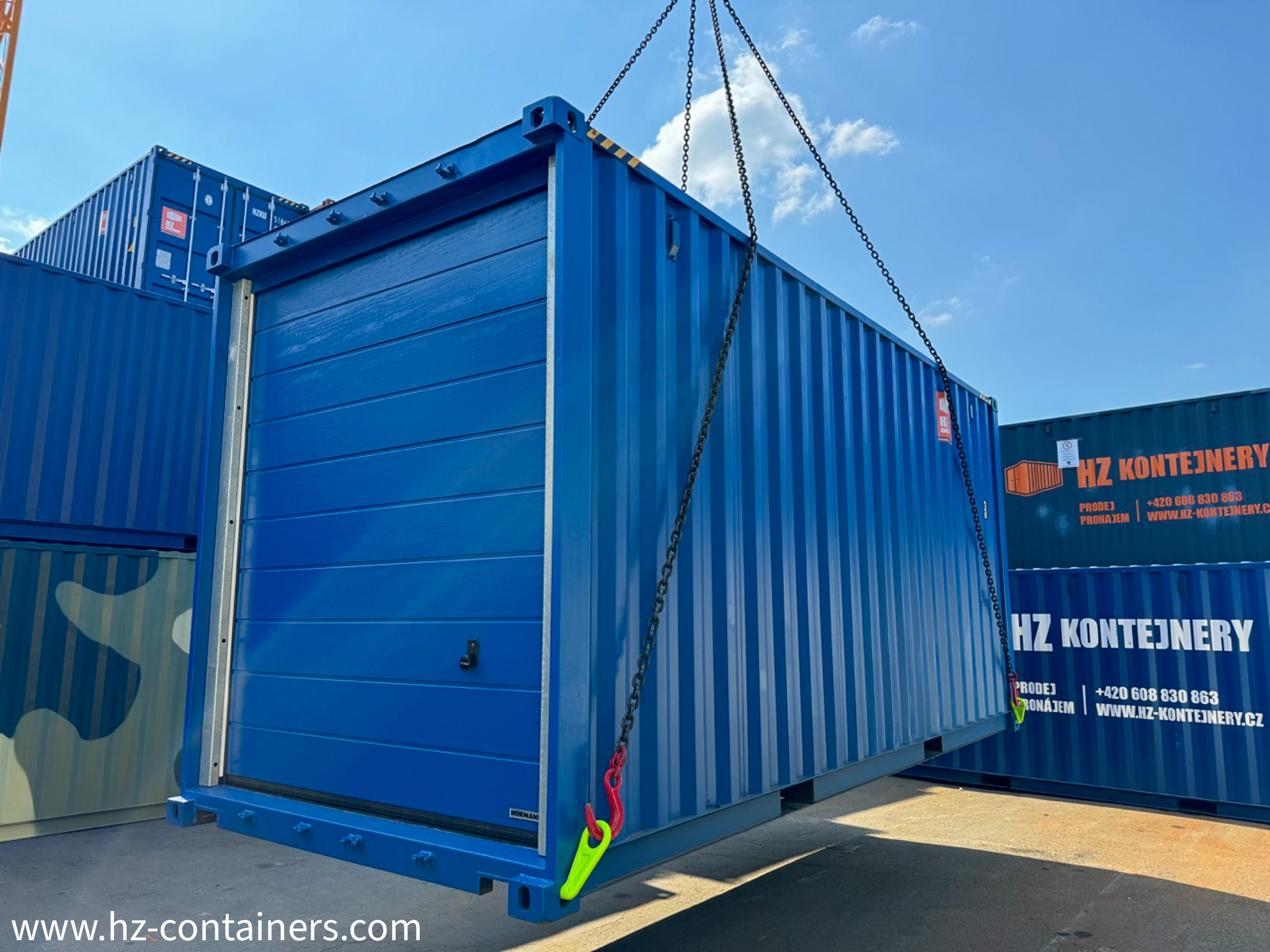
Shipping container lifting lugs – HZ CONTAINERS.com – HZ CONTAINERS.com
Shipping container lifting lugs
Other container news...

High Cube container specifications
A high cube container — also referred to as an HC container, HQ container, or high-cube — is an intermodal shipping container that stands one foot taller than the standard ISO container. While a standard general-purpose container measures 8 feet 6 inches (2.59 m) in external height, a high cube container extends to 9 feet 6 inches (2.89 m). This extra 12 inches of vertical clearance translates into approximately 10–15% more cubic capacity without altering the container’s footprint — the same length and width are maintained, meaning the container occupies the same floor space on a vessel, chassis, or storage yard.
Shipping container parts
A shipping container looks like a simple steel box from the outside, but it is an assembly of dozens of precisely engineered shipping container parts — each governed by international standards, each designed to survive decades of ocean transit, crane lifts, and stacking loads that would crush an ordinary structure. Whether you are buying a used container, planning a container home, troubleshooting a repair, or simply building your logistics vocabulary, understanding every individual component is the difference between making an informed decision and an expensive mistake.

40 Foot Container Dimensions
If you have ever booked ocean freight, planned a warehouse layout, or designed a modular building project, you have asked the same question: what are the exact 40 foot container dimensions — and what do they mean for what you can actually load? The numbers are standardized worldwide, but the practical implications of those numbers are surprisingly nuanced. A 40-foot container is not simply 40 feet of usable space, and its weight limits are not what most people assume. This guide covers every measurement, every weight rating, and every loading consideration you need to make informed decisions about the world’s most common shipping container.
Quick Answer: A standard ISO 40-foot shipping container measures 12.19 m (40 ft) long × 2.44 m (8 ft) wide × 2.59 m (8 ft 6 in) high externally and provides approximately 67.7 m³ (2,390 ft³) of usable internal volume. The maximum gross weight is 30,480 kg (67,200 lbs), with a typical payload capacity of approximately 26,700–26,800 kg (58,900–59,000 lbs).

Cargo worthy container
If you have ever shopped for a used shipping container, you have almost certainly encountered the term cargo worthy — often abbreviated as CW or CWO (Cargo Worthy Only). It is one of the most important classifications in the container industry, yet it is also one of the most misunderstood. A cargo worthy container is not a container that looks new. It is not necessarily a container that has a valid CSC plate. And it is definitely not the same as a wind and watertight container. This guide explains what cargo worthy really means — from its technical definition and historical origins to the precise structural criteria, inspection process, cost implications, and common misconceptions that trip up even experienced buyers.