
Lifespan of Shipping Containers and Factors Affecting Its Length
What is the Lifespan of a Shipping Container?
The lifespan of a shipping container represents the period during which this specially constructed box is capable of safely and reliably performing its primary or secondary function. This duration is not fixed – it is the result of a series of variables that determine how long a container will withstand extreme conditions of transport, storage, or even residential use.
Two Main Phases of Lifespan
| Phase | Description | Typical Duration | Conditions and Specifics |
|---|---|---|---|
| Active service in international transport | Container serves in maritime transport, is exposed to salt water, UV radiation, handling in container ports, temperature fluctuations. Must meet strict safety and certification standards (particularly CSC). | 10–15 years | Greatest stress, faster wear, regular inspections, service and repairs. |
| Secondary use on land | After decommissioning from transport, it is used for static purposes – warehouse, workshop, garage, modular buildings (e.g., residential homes, offices). | 25–40+ years | Less extreme conditions, lifespan depends mainly on location and maintenance. |
The total lifespan of a quality and well-maintained shipping container can exceed 40 years, making it an exceptionally sustainable and recyclable product with low environmental impact.
Materials and Construction: The Pillar of Longevity
Corten (COR-TEN) Steel
The construction of a shipping container is designed for maximum durability through the use of a special alloy steel called Corten or COR-TEN. This alloy contains copper, chromium, nickel, and phosphorus, which gives it a unique property of forming a protective patina on the surface that significantly slows corrosion. Natural “rusting” is not degradation, but rather a protective shield.
| Property | Advantage |
|---|---|
| High tensile strength | Resistance to deformation even under high loads. |
| Wall thickness 1.6–2.0 mm | Robust, withstands impact loads well. |
| Self-renewing patina | Slows the progression of corrosion, extends lifespan. |
Most containers on the market are manufactured in China, which covers over 95% of global production. The quality of Corten steel and welds directly affects the lifespan of the container.
Load-bearing Frame and Corner Castings

The most important parts are the massive load-bearing frame (made of closed steel profiles) and corner castings according to ISO 1161, which allow stacking of up to 9 containers on top of each other and safe handling (cranes, spreaders, forklifts). The quality of these structural details is crucial for structural integrity and longevity.
Floor – Marine Plywood
The floor is made of extremely durable plywood 28–32 mm thick, usually made from tropical wood (apitong, keruing) or bamboo. It is laid on steel cross-beams and impregnated against moisture, rot, and pests. The floor load capacity is up to 30,000 kg per area, allowing safe storage of even heavy goods.
Doors and Seals
The double-leaf doors are equipped with massive hinges, four to five locking bars, and double sealing made of EPDM rubber, which ensures water-tightness and air-tightness.
Key Factors Affecting the Lifespan of a Shipping Container
Environment and Location
- Salty and humid environment: Accelerates corrosion, especially on the roof, corners, and bottom profiles.
- Dry inland: Corrosion progresses more slowly, containers last longer here.
- Substrate: A container should never stand directly on the ground. Moisture from the soil accelerates corrosion of the bottom and floor. Ideal are concrete pads, gravel, or wooden beams.
Method of Use and Load
- Static use: Minimal wear.
- Regular transport: Increased risk of damage to welds, surface protection, dents, and scratches.
- Type of cargo: Aggressive chemicals or bulk materials can damage internal protection and shorten lifespan.
Level and Regularity of Maintenance
Proper and regular maintenance can extend lifespan by decades. Neglect (especially corrosion prevention) conversely leads to rapid degradation.
Quality of Manufacturing
- Welding: Poor quality welds are a common place for corrosion to develop.
- Steel: Correct thickness and certification of Corten steel.
- Coatings: Quality primer and topcoat from manufacturing.
Most Common Types of Damage and Their Impact on Lifespan
According to statistics and expert articles:
- Rusted side walls and roof (most often in places where water accumulates)
- Leaking door seals
- Non-closing door handles
- Broken or heavily soiled floor
Most of these defects arise from normal wear and require timely intervention by a repair unit. Some defects do not exclude transport of less sensitive goods, but significantly reduce the lifespan of the container.
Maintenance as the Key to Extending Lifespan: Practical Guide
Regular Inspections
- At least 1–2 times per year
- Check:
- External surface (scratches, dents, beginning corrosion)
- Roof (standing water, leaves, dents)
- Doors and seals (functionality, rubber damage)
- Interior and floor (moisture, mold, rot)
Corrosion Prevention and Repair
- Mechanical cleaning (wire brush, grinder)
- Degreasing
- Application of primer anti-corrosion coating (epoxy, two-component)
- Application of topcoat (polyurethane, resistant to UV and weather effects)
Care of Doors and Seals
- Lubrication of hinges and bars (2 times per year)
- Replacement of seals when damaged
Overall Coating Renewal
- Recommended interval: every 5–15 years (depending on environment and original quality)
- Renewal not only improves appearance but mainly restores protection against corrosion and extends lifespan
Impact of Modifications and Container Selection on Lifespan
Modifications and Repairs
- Any intervention in the structure (cutting an opening, joining) means disruption of the protective layer and must be professionally treated.
- Each new opening must be reinforced with a steel frame.
- All cut edges and welds must be immediately painted with quality anti-corrosion paint.
- New elements (windows, doors) must be professionally sealed.
Container Selection
| Container Type | Description | Suitable Use | Approximate Lifespan |
|---|---|---|---|
| One-Trip | New, after one journey from manufacturing | Construction, housing, sensitive storage | 40+ years |
| Cargo Worthy (CW) | Used, still meets transport standards | Storage, modifications | 20–30 years |
| Wind & Watertight (WWT) | Older, tight, without valid CSC | Static storage | 15–25 years |
| As-Is | Without warranty, often damaged | Undemanding or DIY repairs | Individual |
Lifespan in Numbers and Practice
- Average lifespan of a standard Dry Van container type in global operation: 10–12 years (active service in transport)
- Average age of containers in circulation: up to 15 years (many with repeated repairs)
- Estimated lifespan on land (static use, good conditions): 25–40+ years
- Investment in maintenance extends lifespan sometimes by decades
Examples of Innovative Uses and Recycling
- Housing from containers: With proper modification, the lifespan of a residential container is comparable to traditional buildings.
- Mobile offices, workshops, garages: With minimal maintenance, they last for decades.
- Recycling and ecological footprint: Decommissioned containers are often reused for construction, thereby minimizing waste and carbon footprint.
 Česká Lípa, Czech Republic
  FREE SHIPPING
Other container news...

The OPNBar leverage tool
The OPNBar leverage tool is a professional-grade, multi-purpose hand tool designed specifically for the shipping container and trucking industry. Manufactured by Shipping Container Safety International (SCS International) and proudly Made in the USA, the OPNBar is fundamentally a 3-in-1 trucker tool that combines a shipping container door leverage bar, a tire thumper, and a 5th wheel pull hook into a single, compact steel implement. The name “OPNBar” is a direct reference to its primary function: it is the bar that “opens” containers.

40 Foot Container Dimensions
If you have ever booked ocean freight, planned a warehouse layout, or designed a modular building project, you have asked the same question: what are the exact 40 foot container dimensions — and what do they mean for what you can actually load? The numbers are standardized worldwide, but the practical implications of those numbers are surprisingly nuanced. A 40-foot container is not simply 40 feet of usable space, and its weight limits are not what most people assume. This guide covers every measurement, every weight rating, and every loading consideration you need to make informed decisions about the world’s most common shipping container.
Quick Answer: A standard ISO 40-foot shipping container measures 12.19 m (40 ft) long × 2.44 m (8 ft) wide × 2.59 m (8 ft 6 in) high externally and provides approximately 67.7 m³ (2,390 ft³) of usable internal volume. The maximum gross weight is 30,480 kg (67,200 lbs), with a typical payload capacity of approximately 26,700–26,800 kg (58,900–59,000 lbs).
Shipping container wheels
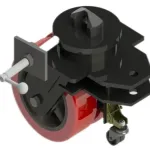
Moving a 12-meter-long steel box that weighs up to 67,200 pounds was, for decades, exclusively a job for a crane and a licensed operator. That reality has changed. Shipping container wheels — an umbrella term covering a family of mobility solutions — now let a single person reposition a 20ft or 40ft container across a yard, warehouse, or construction site without calling in heavy equipment. This guide covers every aspect of container wheel systems: what they are, how they work, the types available, what they cost, and how to choose the right kit for your container.
Can You Modify a 40ft High Cube Container?
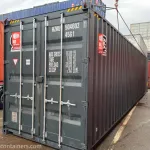
The short answer is yes — you absolutely can modify a 40ft high cube container, and it is one of the most popular container types for modification projects worldwide. But the real question is not whether you can modify one; it is how to do it correctly, safely, legally, and within budget. This guide answers every dimension of that question, drawing on engineering principles, real-world pricing data, and the collective experience of thousands of modified container projects.
Key Takeaway: A 40ft high cube container offers 320 square feet of floor space with an extra foot of ceiling height compared to a standard container — making it the ideal canvas for offices, workshops, homes, retail spaces, and industrial applications. The extra height is particularly valuable when you add insulation and still want comfortable headroom.