
How to Weld the Corner Castings of a Shipping Container
What are Corner Castings in Shipping Containers?
Corner castings are fundamental structural components located at the corners of every ISO-certified shipping container. These components, manufactured from cast steel (often from Corten steel), are critical for structural strength and functionality of containers. They enable safe lifting, transportation, stacking, or securing of containers.
Every standard shipping container has eight corner castings—four at the top corners and four at the bottom corners. These castings contain standardized holes designed for lifting, stacking, and transportation equipment, ensuring global compatibility.
Corner castings comply with the ISO 1161 standard, which is an international standard that specifies their dimensions, strength, and functionality. This standardization is essential for ensuring worldwide interoperability, which enables seamless transportation of containers on ships, trains, trucks, and by cranes.
Why are Corner Castings Important?
Corner castings perform several key functions:
- Structural strength: They provide key strength points for the container and prevent deformation during transportation or stacking.
- Lifting and transportation: Standardized holes allow cranes, forklifts, and other equipment to safely lift and handle containers.
- Safe stacking: Containers can be safely stacked using twist-locks or stacking pins, with corner castings ensuring proper alignment.
- Global compatibility: The ISO 1161 standard ensures universal compatibility, enabling containers to connect with international transportation infrastructure.
Materials Used for Corner Castings
Corner castings are typically manufactured from cast steel, which is known for its strength, weldability, and durability.
Why Cast Steel?
- Strength and durability: Cast steel offers high tensile strength that withstands large loads during stacking and lifting.
- Weldability: It easily joins with other steel components, which is necessary for repairs and modifications.
- Machinability: The precise tolerances specified by ISO 1161 can be achieved through precision milling.
- Corrosion resistance: If manufactured from Corten steel, cast steel resists corrosion, extending the lifespan of containers.
Although aluminum was considered for lighter applications, cast steel remains the dominant choice due to its excellent mechanical properties and heat resistance.

Standard Dimensions of Corner Castings
According to ISO 1161 standard, corner castings have the following dimensions:
- Overall dimensions: 178 mm x 162 mm x 118 mm.
- Hole dimensions: Include oval (stadium) holes, pad eyes, and stacking holes, all designed with precise tolerances for universal equipment compatibility.
Welding Corner Castings: How to Weld the Corner Castings of a Shipping Container
Welding corner castings on a shipping container or structural frame is a critical process in repairs, modifications, or custom manufacturing. It is necessary to use proper techniques and materials to ensure durability and structural strength.
Preparation Steps
- Material cleaning: Remove rust, paint, and contaminants. Surface preparation can be done using sandblasting, wire brushes, or abrasive tools.
- Alignment: Align the corner casting with the structure and ensure minimal gaps for a strong weld.
- Preheating: At low temperatures or for specific alloys, preheat to 80 °C–100 °C to reduce the risk of cracking.
Welding Techniques
- MIG welding: Offers precision and ease of use, ideal for cast steel.
- Flux-cored arc welding: Suitable for outdoor conditions or less clean materials.
- Manual arc welding (SMAW): Commonly used for heavy applications; electrodes such as 7018 or 6010 are recommended.
Selection of Welding Wire
- For Corten steel: Use copper-alloyed wire resistant to weathering.
- For carbon steel: Standard A18 or 70S2 wires are effective.
Key Recommendations
- Full penetration welds: Ensure maximum strength by performing full penetration welds.
- Post-weld heat treatment: Heat treat at 550 °C to relieve stress and increase durability.
- Inspection: Perform non-destructive testing (e.g., magnetic particle inspection or penetrant testing) to detect weld defects.
Common Challenges in Welding Corner Castings
- Material compatibility: Ensure that welding materials match the properties of cast steel.
- Cracking: Preheating and controlled cooling can prevent cracking during welding.
- Outdoor conditions: Wind and weather can affect weld quality; flux-cored wires are more suitable in these conditions.
How to Identify Corner Castings According to ISO Standard
To verify compliance with ISO 1161 standard:
- Find the ISO marking on the casting or container.
- Measure the steel thickness around the stadium hole (≥18 mm).
- Compare the dimensions and shapes of holes with ISO 1161 diagrams.
Non-standard corner castings may look like those complying with ISO standard, but may cause compatibility issues due to inaccurate dimensions.
Uses of Corner Castings
- Container modifications: Essential when converting containers into offices, homes, or storage units.
- Lifting systems: Safe attachment points for hooks, twist-locks, and domino clamps.
- Custom structures: Used in modular buildings, container bridges, and mobile workshops.
Frequently Asked Questions
Are all corner castings the same?
No, there are four types: Top Left (TL), Top Right (TR), Bottom Left (BL), and Bottom Right (BR). The differences lie in the shapes and placement of holes to enable stacking and lifting.
How do I attach additional structures to corner castings?
Domino clamps and twist-locks are commonly used for attachment without welding or drilling.
What certifications are required for corner castings?
Compliance with ISO 1161 standard is mandatory for all corner castings on ISO-certified shipping containers. Manufacturers must provide certificates verifying material composition, mechanical properties, and inspection.
Can corner castings be repaired?
Yes, minor defects can be removed by grinding, while deeper defects may require welding. Always perform inspection after repair to ensure safety and compliance.

 Czech Republic
  WITHOUT SHIPPING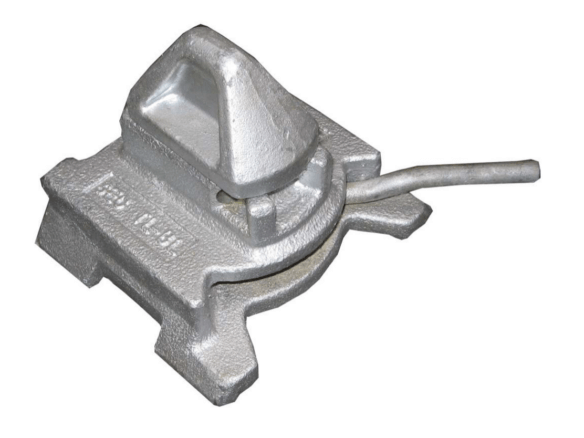

Other container news...

Obligation to Check Tightness When Selling a Reefer Container
Who is responsible for the refrigerant leak check when selling a refrigerated container? Find out what obligations the seller has at the time of handover and why they must provide a PTI report along with the technical data plate. Learn which regulatory requirements and F-gas record-keeping duties become the sole responsibility of the new owner.

New shipping containers
If you are currently considering purchasing a new shipping container, you are not alone. While just twenty years ago containers were used almost exclusively for maritime transport, today they have found their way into construction, storage, business, and even housing. This growing popularity brings with it a host of questions: Which type should you choose? How much does it cost? How do you recognize quality? How can you avoid falling victim to scammers?
New sea shipping containers
If you are currently considering purchasing a new shipping container, you are not alone. While just twenty years ago containers were used almost exclusively for maritime transport, today they have found their way into construction, storage, business, and even housing. This growing popularity brings with it a host of questions: Which type should you choose? How much does it cost? How do you recognize quality? How can you avoid falling victim to scammers?

6m shipping container
Are you thinking about buying a 6-meter shipping container but aren’t sure what to look for? You are not alone—this 20-foot container is the best-selling size on the Czech market, and the differences between various types, conditions, and prices can be significant. In this guide, you will find everything you need to know: from exact dimensions and a comparison of categories (such as “one-way,” refurbished, and “Cargo Worthy”) to current prices and shipping advice.