
How many shipping containers have been produced so far?
The exact number of shipping containers that have ever been produced cannot be precisely determined, as production is continuous and old containers are continuously decommissioned. Current estimates and data from industry statistics for 2024 state that the global shipping container fleet exceeds 40 million units. In 2024, approximately 28.2 million TEU (twenty-foot equivalent units) were transported worldwide within the United States alone, which is the second highest annual volume in history (source: hz-containers.com). Overall, around 250 million containers are transported globally each year (source: World Shipping Council, Lodní noviny).
The number of containers produced can be seen as a dynamic figure that constantly changes depending on the state of global trade, fleet renewal, recycling, and innovations in logistics.
The standard unit of measurement is TEU (Twenty-foot Equivalent Unit) – a twenty-foot container. Commonly used containers are 20 or 40 feet long, with a 40-foot container equivalent to 2 TEU.

Contents
- What is a shipping container?
- Definition and purpose
- History and emergence of containerization
- Key features and types
- Global container fleet: Numbers and facts
- Total number and measurement in TEU
- Lifespan, recycling, and container losses
- Production of shipping containers
- Where and from what are containers made?
- Manufacturing process and innovations
- Container transport ecosystem
- Container ships and shipping companies
- Container ports and main routes
- Role of leasing companies
- Shipping container market and its dynamics
- Market size and growth factors
- Impact of global events on the number of containers
- Conclusion
1 . What is a shipping container?
A shipping container is a standardized, reusable steel box designed for intermodal transport of goods(i.e., without transshipment of the cargo itself when changing means of transport). It is a fundamental building block of globalized logistics.
Definition and purpose
The purpose of a container is cargo unitization – combining smaller shipments into one large, safely transportable unit. The container protects goods from damage, weather conditions, and theft. Thanks to standardization, it allows for easy stacking, handling, and transport between ship, train, and truck.
Advantages of containerization:
- Reduction in transport costs (up to 70% compared to traditional loading)
- Significant acceleration of transshipment and handling
- Substantial increase in cargo safety
- Support for the development of global trade
History and emergence of containerization
Before the 1950s, maritime transport of goods was lengthy, expensive, and inefficient. The breakthrough came in 1956 when Malcom McLean launched the first container ship. This led to rapid standardization (ISO 668, ISO 6346) and the widespread adoption of containers.
Milestones of containerization:
| Year | Event |
|---|---|
| 1956 | First container ship (McLean) |
| 1968 | First ISO standards for containers |
| 1980 | Global expansion of container transport |
| 2000+ | Significant market growth, innovations (refrigerated, tank containers, smart containers) |
Key features and types
| Parameter | Standard value | Note |
|---|---|---|
| Material | Corten steel | High corrosion resistance |
| Main dimensions | 20′ x 8′ x 8’6″ / 40′ x 8′ x 8’6″ | High Cube: height 9’6″ |
| Payload capacity | 21 600–30 480 kg | According to type and length |
| Floor | Bamboo, tropical wood, plywood | Chemically treated |
| Corner elements | 8x Corner Casting | For lifting, connecting, securing |
| Identification | ISO 6346 (4+6 characters) | Worldwide tracking |
Main types:
- Standard (Dry Van)
- Refrigerated (Reefer)
- Open Top
- Flat Rack
- Tank Container (liquids, gases)
- Specialized (Side Door, Double Door, Office, etc.)
2 . Global container fleet: Numbers and facts
Total number and measurement in TEU
- Estimated number of containers (2024): 40–45 million units
- Annually transported: approx. 250 million containers (all types, multi-source)
- Volume in TEU (USA, 2024): 28.2 million TEU
- Worldwide fleet (TEU): over 50 million TEU
TEU in practice:
| Container type | Length (ft) | TEU |
|---|---|---|
| Standard | 20 | 1 |
| Standard | 40 | 2 |
| High Cube | 40 | 2 |
| Specialized | various | various |
Capacity of the largest ships: over 24,000 TEU on a single ship (2024).
Lifespan, recycling, and container losses
Lifespan:
- Average lifespan in maritime transport: 10–15 years
- After service: further use (storage, construction, architecture, recycling)
- Annually decommissioned: 1–2% of the fleet
Recycling and further use:
- 70% end up as scrap and for recycling
- 30% used as warehouses, living spaces (shipping container homes, container houses), workshops, swimming pools, emergency shelters
Container losses at sea:
- 2024: 576 containers lost (source: Lodní noviny, WSC)
- 10-year average: 1,274 containers annually
- Relative losses: 0.0002% of transported containers
- Main cause of increase in 2024: rerouting of routes due to the security situation in the Red Sea, stormy weather off the Cape of Good Hope
3 . Production of shipping containers
Where and from what are containers made?
- 90% of production: China (Shenzhen, Tianjin, Shanghai, Dalian, Qingdao)
- Materials: Corten steel (1.5–2 t per 20′ container), tropical wood or bamboo for the floor, special marine paints
- Annual global production (estimate 2023/2024): 3–4 million new containers
Manufacturing process and innovations
Steps of production:
- Cutting sheets and pressing corrugated profiles
- Welding walls, roof, frame, and corners
- Painting with anti-corrosion coatings (up to 3 layers)
- Installation of floor and doors (seals, locks, latches)
- Final marking (ISO code) and leak test
Innovations:
- Smart containers: GPS tracking, IoT sensors for temperature, humidity, shocks
- New eco-friendly coatings and floors (lower VOC emissions)
- Design optimization for easier recycling
4 . Container transport ecosystem
Container ships and shipping companies
| Company | Capacity (TEU, 2024) |
|---|---|
| MSC | 4.8 million |
| Maersk | 4.2 million |
| CMA CGM | 3.6 million |
| COSCO | 3.0 million |
| Hapag-Lloyd | 1.8 million |
- TOP 10 companies control over 80% of the market
- Largest ships (Ultra Large Container Vessels): 400 m length, 60 m width, up to 24,000 TEU
Container ports and main routes
| Port | Volume (TEU, 2024) |
|---|---|
| Shanghai | 47 million |
| Singapore | 37.5 million |
| Ningbo-Zhoushan | 31.1 million |
| Rotterdam | 14.3 million |
| Hamburg | 8.7 million |
- Main routes: Asia – Europe, Asia – USA, Asia – South America
- New challenges 2024: rerouting of routes due to geopolitical tensions (Red Sea, Suez, Panama)
Role of leasing companies
| Leasing company | Market share (%) |
|---|---|
| Triton International | 29 |
| Textainer Group | 17 |
| Florens | 12 |
| Others | 42 |
- Leasing companies hold over 50% of all containers (flexibility for shippers)
- Short-term and long-term leases
- Leasing supports rapid fleet renewal and innovation
5 . Shipping container market and its dynamics
Market size and growth factors
- Market value (2021): 7 billion USD
- Expected growth (2028): up to 16 billion USD
- Main growth factors:
- Demand for goods (e-commerce, globalization, developing markets)
- Need for fleet renewal (aging, recycling)
- Imbalance of trade flows (empty containers, repositioning, new production)
Impact of global events on the number of containers
- 2020–2022: Pandemic crisis – extreme container shortage, transport prices up to 10x higher
- 2024: Geopolitical tensions – rerouting of routes, increased operating costs, longer transport durations
- Environmental pressures: Emission reduction, ecological recycling, smart technologies
Table: Impact of crises on container availability
| Year | Event | Impact on containers |
|---|---|---|
| 2020 | Covid-19 | Shortage, high prices |
| 2021 | Suez blockade | Delays, port congestion |
| 2024 | Red Sea, Africa | New routes, higher losses at sea |

 Czech Republic, Kuřim
  FREE SHIPPING


Other container news...
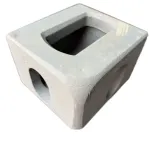
Corner casting steel vs aluminum
Every shipping container in the world — all 40 million of them — rests on eight critical components. Corner castings are the load-bearing blocks at each corner of an ISO shipping container, and they are the universal interface between the container and every crane, twistlock, spreader, and chassis on the planet. When you lift a container, stack it nine high on a ship, or lock it to a truck trailer, every ton of force flows through these fittings.

Construction cabin – selection, tips, dimensions and prices
Every construction project – whether a family house, a development project or a reconstruction – starts with the infrastructure. No construction manager, craftsman or investor who needs an on-site office, a changing room for workers or a safe storage for tools can do without a quality construction cell. But navigating the offer is not easy: residential containers, sanitary cells, storage modules, rental, purchase, refurbished pieces… This guide will give you answers to all the essential questions in one place.
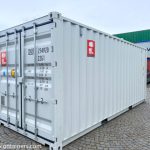
Storage container
A storage container is a lockable steel box designed for the safe and dry storage of materials, tools, goods or equipment. Originally created as a shipping container for maritime transport, its durability and versatility have found their way onto construction sites, corporate premises and private land.
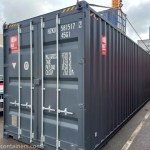
Shipping container 12m (40 ft)
A 12m shipping container is an investment that, if properly selected and cared for, will pay off in decades of trouble-free use. Whether you plan to use it as a warehouse, workshop, garage or the basis for a residential module — the key is careful selection of the condition, a thorough inspection before purchase and high-quality preparation of the base for placement. Take the time to compare offers, check the seller’s references and do not hesitate to personally inspect the container before buying. A properly selected 40-foot container will serve you reliably for many years.