
How Many Lifting Eyes Are Inside a Shipping Container?
Shipping containers are indispensable in global trade because they offer safe, efficient, and standardized storage solutions for transporting goods across oceans, railways, and roads. Inside these containers is a crucial element that ensures the stability of loaded cargo: lifting eyes or lashing points. These securing points, often in the form of lifting rings, bars, or rods, are strategically placed inside the container to secure cargo during transport and prevent its movement or damage.
This dictionary entry covers details about lifting eyes, their placement inside containers, and their role in ensuring cargo safety. We will also look at the typical number of lifting eyes in standard containers and their specifications.
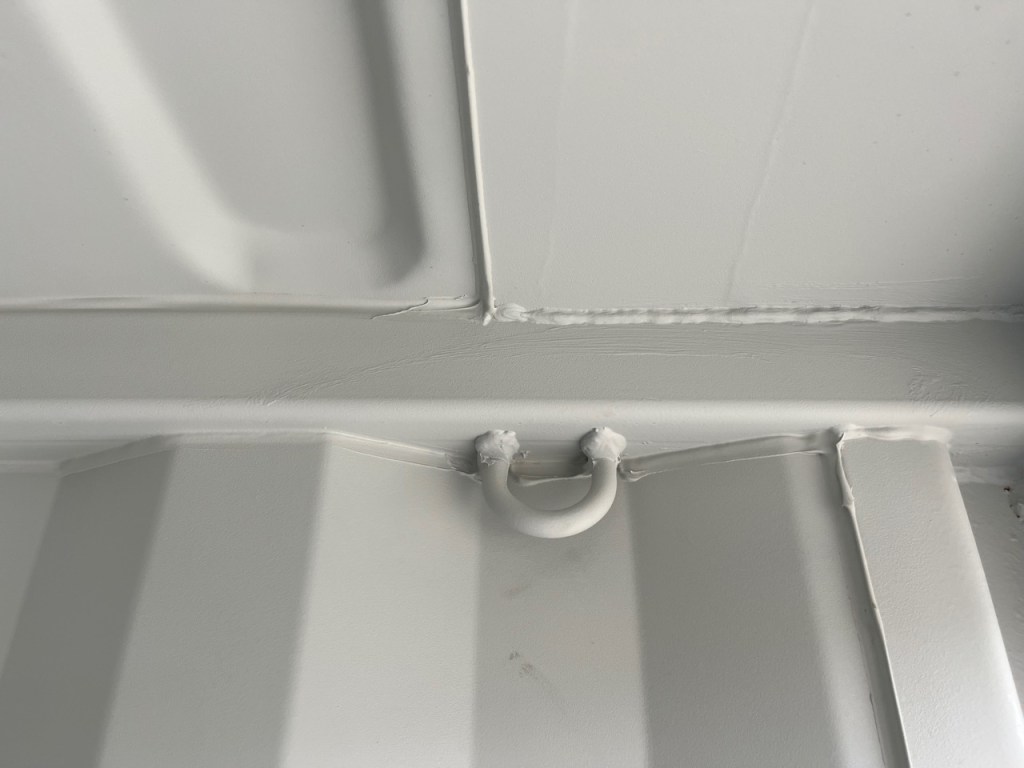
What Are Lifting Eyes or Lashing Points?
Lifting eyes, referred to in English as lifting eyes, are metal elements welded or fastened to the inner walls, floors, and sometimes ceilings of a shipping container. These eyes serve as anchors for securing ropes, straps, or chains that are used to secure cargo.
Lifting eyes are typically made of high-strength steel and are designed to withstand significant tension and shear forces. Their durability ensures that even during rough ocean voyages or uneven road conditions, cargo remains safely in place.
International Standards: The International Maritime Organization (IMO) and the International Organization for Standardization (ISO) regulate lifting eyes in containers to ensure global uniformity and safety.
Purpose of Lifting Eyes
The main purpose of lifting eyes inside a container is to:
- Secure cargo: Prevent movement, sliding, or overturning of cargo during transport.
- Protect goods: Minimize the risk of cargo damage due to sudden stops, acceleration, or external forces.
- Efficient loading: Provide a structured framework for securing systems.
- Ensure safety: Reduce the probability of accidents during transport caused by unsecured cargo.
By securely anchoring cargo, lifting eyes contribute to maintaining the structural integrity of both the container and its contents.
How Many Lifting Eyes Are Inside a Container?
Standard Shipping Containers
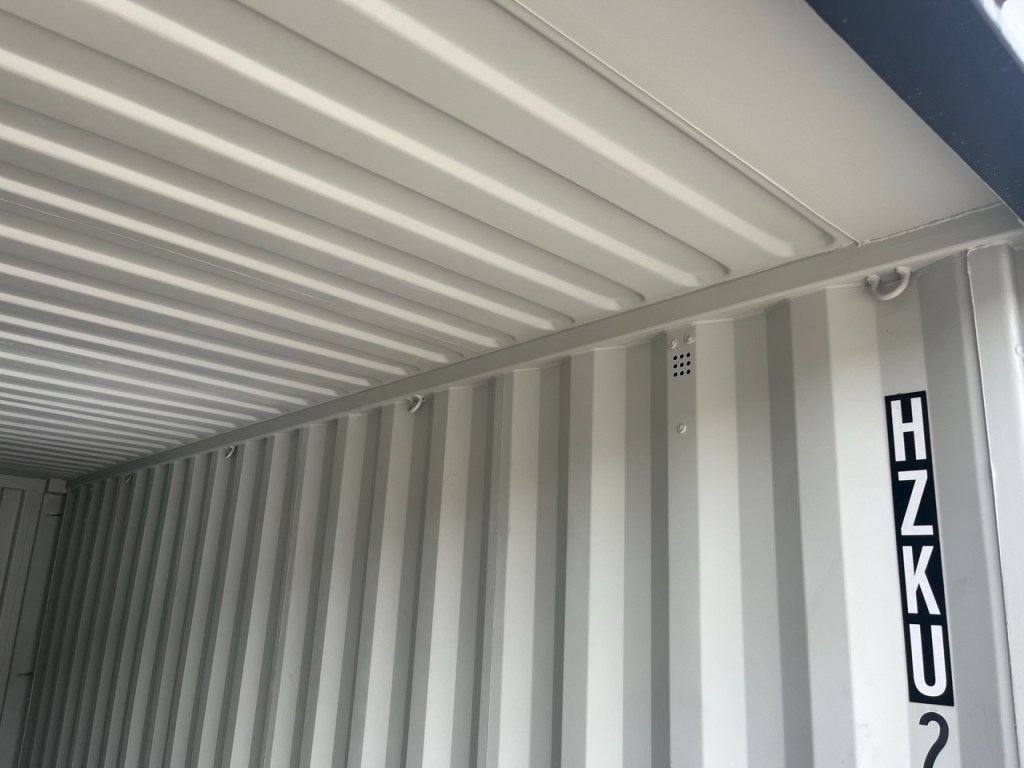
The number of lifting eyes varies depending on the type, size, and manufacturer of the container. However, standardized guidelines ensure consistency in the placement and strength of lifting eyes.
- 20-foot containers (6.1 meters):
- Top and bottom rails: Usually 5 lifting rings are welded to each side of the top side rail and bottom side rail, totaling 20 lifting eyes for the side walls.
- Corner posts: On the recessed front and rear corner posts, there are typically 3–5 lifting bars or rods.
- Front and rear panels: On the top beam and bottom threshold in recessed reinforcements, 3–5 lifting rings are welded.
- Corners: Additional lifting eyes or rods may be placed in all four corner castings for securing special cargo.
- 40-foot containers (12.2 meters):
- The double length compared to a 20-foot container means these containers often contain 10 lifting points on each side rail, totaling 40 lifting points on the side walls.
- Like 20-foot containers, lifting eyes are also present in corner posts, on the top beam, and bottom threshold.
Variations
The exact number of lifting eyes may vary depending on:
- Container design (e.g., high cube, refrigerated, or flat rack containers).
- Modifications made for specific transport requirements.
- Damage or missing lifting points, especially in older containers.
Placement of Lifting Eyes
Lifting eyes are strategically placed to maximize cargo stability:
- Side walls:
- Eyes are welded along the top side rail and bottom side rail of the container. They are usually recessed into the corrugated steel panel to avoid interfering with cargo space.
- Corner posts:
- Lifting bars or rods are integrated into the front and rear corner posts for securing cargo in vertical or diagonal configurations.
- Front and rear panels:
- Recessed panels often contain lifting eyes near the top beam and rear door frame for securing cargo at the ends of the container.
- Ceiling (optional):
- In some specialized containers, additional lifting eyes may be installed on the ceiling for special requirements, such as cargo suspension.
- Floor and corner castings:
- Lifting eyes or twist-lock mechanisms may be present on the container floor or in corner castings for securing heavy cargo.
Strength of Lifting Eyes
Maximum Load (MSL) of lifting eyes varies, but general specifications are:
- Lower lifting eyes: MSL 1,000 daN (decanewtons) or more, equivalent to approximately 1 ton of force.
- Upper lifting eyes: MSL 500 daN, equivalent to approximately half a ton of securing capacity.
However, the overall strength of the lashing system depends on the weakest link. Even when using robust straps, cargo safety depends on the strength and integrity of the lifting eyes.
Types of Lifting Eyes
- Lifting rings:
- Circular or oval rings welded to the container structure.
- Commonly used to attach ropes or straps.
- Lifting bars/rods:
- Horizontal or vertical bars installed in recessed panels or corner posts.
- Provide additional anchoring options for securing larger cargo.
- Twist lock mechanisms:
- Located in corner castings and used primarily to secure containers to transport vehicles or during stacking in transit.
 Czech Republic
  WITHOUT SHIPPING


Other container news...

Obligation to Check Tightness When Selling a Reefer Container
Who is responsible for the refrigerant leak check when selling a refrigerated container? Find out what obligations the seller has at the time of handover and why they must provide a PTI report along with the technical data plate. Learn which regulatory requirements and F-gas record-keeping duties become the sole responsibility of the new owner.

New sea shipping containers
If you are currently considering purchasing a new shipping container, you are not alone. While just twenty years ago containers were used almost exclusively for maritime transport, today they have found their way into construction, storage, business, and even housing. This growing popularity brings with it a host of questions: Which type should you choose? How much does it cost? How do you recognize quality? How can you avoid falling victim to scammers?
New shipping containers
If you are currently considering purchasing a new shipping container, you are not alone. While just twenty years ago containers were used almost exclusively for maritime transport, today they have found their way into construction, storage, business, and even housing. This growing popularity brings with it a host of questions: Which type should you choose? How much does it cost? How do you recognize quality? How can you avoid falling victim to scammers?

6m shipping container
Are you thinking about buying a 6-meter shipping container but aren’t sure what to look for? You are not alone—this 20-foot container is the best-selling size on the Czech market, and the differences between various types, conditions, and prices can be significant. In this guide, you will find everything you need to know: from exact dimensions and a comparison of categories (such as “one-way,” refurbished, and “Cargo Worthy”) to current prices and shipping advice.