
40ft High Cube container price
If you are researching the 40ft high cube container price, you have probably already noticed that the numbers vary wildly — anywhere from $1,200 to over $7,000. That range is not a mistake. It reflects a market where condition, geography, and timing collide to produce dramatically different outcomes for buyers. One person in Houston pays $1,800 for a wind-and-watertight unit delivered to their door, while another in Denver pays $5,500 for the same grade. This guide exists to close that information gap. By the time you finish reading, you will know exactly what drives these prices, what you should realistically budget, and how to avoid the traps that cause buyers to overpay.
What Is a 40ft High Cube Container and Why Does It Cost What It Does?
Before you can understand the price, you need to understand the product. A 40ft high cube container is not simply a “taller box.” It is a specific engineered asset with a defined lifecycle, a global supply chain, and a market that behaves more like a commodity than a retail product.
Understanding the 40ft High Cube Container
A 40ft high cube shipping container is an intermodal steel container built to ISO specifications. It measures 40 feet long, 8 feet wide, and 9 feet 6 inches tall on the exterior — a full foot taller than the standard 8-foot-6-inch container. These containers are manufactured primarily in China, constructed from Corten steel (a weathering steel alloy that resists corrosion), and designed to survive decades of ocean transit, rail handling, and truck transport.
The “high cube” designation is not a marketing term. It is an ISO category — officially designated as 1AAA for 40-foot high cube containers — and every unit is built to the same dimensional tolerances regardless of which factory produced it. The interior height of approximately 8 feet 10 inches (2,700 mm) is what makes these units desirable for storage, workshop conversions, and container home projects. That extra vertical clearance accommodates shelving, lighting, insulation, and ductwork without making the space feel cramped.
The lifecycle of a 40ft high cube container typically begins on a container ship, where it spends 10 to 15 years in active ocean freight service. After retirement from maritime use, these containers enter the secondary market, where they are purchased by dealers, resellers, and end users for storage, conversion, or continued domestic shipping.
Standard vs. High Cube: The Dimensions That Drive Value
The price difference between a standard 40ft container and a 40ft high cube container is not arbitrary. It reflects real differences in material cost, manufacturing complexity, and market demand. The table below breaks down the measurable differences.
| Specification | 40ft Standard Container | 40ft High Cube Container |
|---|---|---|
| Exterior Length | 40 ft (12.19 m) | 40 ft (12.19 m) |
| Exterior Width | 8 ft (2.44 m) | 8 ft (2.44 m) |
| Exterior Height | 8 ft 6 in (2.59 m) | 9 ft 6 in (2.89 m) |
| Interior Length | 39 ft 4 in (12.03 m) | 39 ft 4 in (12.03 m) |
| Interior Width | 7 ft 7 in (2.35 m) | 7 ft 7 in (2.35 m) |
| Interior Height | 7 ft 10 in (2.39 m) | 8 ft 10 in (2.70 m) |
| Internal Volume | ~2,390 cu ft (67.7 m³) | ~2,700 cu ft (76.4 m³) |
| Tare Weight | ~8,000 lbs (3,630 kg) | ~8,750 lbs (3,970 kg) |
| Max Gross Weight | 67,200 lbs (30,480 kg) | 67,200 lbs (30,480 kg) |
| Typical Price Premium | Baseline | +$200–$600 over standard |
The extra cubic capacity — roughly 310 additional cubic feet — translates to about 13% more interior volume. For a buyer using the container as a workshop or storage unit, that extra foot of ceiling height is often the difference between fitting standard shelving racks and having to custom-build everything. The additional steel in the corner posts and side rails adds approximately 750 pounds of tare weight, which is why high cube containers are slightly heavier than their standard counterparts despite having the same maximum gross weight rating.
Key insight: On the used market, the 40ft high cube container is often the most abundant size available. This paradox — the largest common container being among the cheapest per square foot — occurs because global trade produces a surplus of 40ft high cubes relative to domestic demand. In many U.S. markets, a used 40ft high cube container can actually cost less than a used 20ft standard container, simply because there are more of them available.
How Much Does a 40ft High Cube Container Cost in 2026?
The answer depends on one primary variable: condition grade. Every container in the secondary market is assigned a grade that describes its structural integrity, watertightness, and suitability for different purposes. Understanding these grades is the single most important step in predicting what you will pay.
New (One-Trip) 40ft High Cube Container Prices
A “new” container in the secondary market is technically a one-trip container. It was manufactured in China, loaded with cargo, shipped across the ocean once, and then sold upon arrival rather than being sent back empty. These containers have minimal wear — perhaps a few minor scuffs on the paint — and are functionally indistinguishable from a factory-new unit.
In 2026, a new one-trip 40ft high cube container typically costs between $3,500 and $7,000, with the most common price point landing around $4,200 to $5,500 including delivery to your property. The variance depends heavily on your location relative to major ports. Buyers near port cities like Los Angeles, Houston, Savannah, and Newark frequently see prices at the lower end of this range, while buyers in inland states like Colorado, Kansas, or Montana can expect to pay $1,000 to $2,000 more.
Some dealers sell IICL-certified containers — units that meet the strict inspection standards of the Institute of International Container Lessors. These are the highest-quality one-trip containers available and command a premium, typically starting around $4,500 and reaching $7,000 depending on the market. Most one-trip containers come with a 10-year structural warranty and a 5 to 10-year leak-free warranty when purchased from reputable dealers.
Used 40ft High Cube Container Prices by Condition Grade
The used market is where the real price variation lives. A used 40ft high cube container can cost anywhere from $1,200 to $5,000 depending on its condition grade. Here is the complete breakdown for 2026.
| Condition Grade | Description | Typical Age | Price Range (2026) | Best For |
|---|---|---|---|---|
| IICL / One-Trip | Manufactured within 1 year; one cargo voyage; near-perfect condition | 0–1 year | $3,500–$7,000 | Container homes, offices, premium storage, international shipping |
| Cargo Worthy (CW) | Structurally sound; passes marine survey for international shipping; minor dents and surface rust acceptable | 5–12 years | $1,800–$3,500 | Shipping cargo, long-term storage, conversions requiring certification |
| Wind & Watertight (WWT) | Structurally intact; doors seal; no roof leaks; visible cosmetic wear, dents, rust patches; NOT certified for ocean freight | 10–18 years | $1,500–$2,500 | On-site storage, workshops, non-maritime uses |
| As-Is / Economy | Sold without guarantees; may have structural issues, door problems, or floor damage; varies widely | 15–25+ years | $800–$1,800 | Temporary storage, demolition projects, scrap, budget conversions |
The gap between Cargo Worthy and Wind & Watertight is often the most confusing for first-time buyers. A CW container can be loaded onto a ship and insured for international transit. A WWT container cannot. However, visually, a WWT container may look nearly identical to a CW unit — the difference is often in the paperwork and a more rigorous inspection, not in obvious structural defects. If you are buying a container for on-land storage, paying the CW premium is usually unnecessary. A WWT container from a reputable dealer will protect your belongings from weather and theft just as effectively as a CW unit, at a savings of $300 to $1,000.
Important: Not all dealers sell As-Is containers. Many reputable companies — including Container Management, Inc. and Container One — explicitly refuse to sell As-Is grade units because the quality is too inconsistent to guarantee. If you see a 40ft high cube container listed for under $1,000, it is almost certainly As-Is, and you should inspect it in person before purchasing.
What Factors Actually Drive 40ft High Cube Container Prices?
The sticker price you see online is the starting point, not the final number. Several interconnected factors move that number up or down, sometimes by thousands of dollars.
Container Condition and Age
Condition is the dominant factor. A one-trip container costs roughly two to three times as much as an As-Is unit of the same dimensions. But within the used categories, age is a poor predictor of condition. A 15-year-old container that spent its life on low-impact domestic rail routes may be in far better shape than an 8-year-old container that endured rough ocean transits and aggressive forklift handling. This is why the grading system exists — it evaluates the actual state of the container, not its birth certificate.
Geographic Location and Port Proximity
Location is the second-largest price driver. The United States has major container ports in Los Angeles/Long Beach, New York/New Jersey, Savannah, Houston, Seattle/Tacoma, Norfolk, Charleston, and Oakland. If you live within 100 miles of one of these ports, you are in a buyer’s market. Containers flow into these ports continuously, creating a surplus that depresses local prices.
If you live in an inland state — particularly in the Mountain West or Upper Midwest — you are paying for the transportation of that container from the nearest port to a regional depot, and then from the depot to your property. That double transportation cost can add $500 to $2,000 to the total price. This is why a WWT 40ft high cube container might cost $1,500 in Houston but $3,200 in Denver.
Market Supply, Demand, and Steel Prices
The shipping container market is directly tied to global trade volumes and steel prices. When global trade is booming, shipping lines hold onto their containers longer, reducing the number of units entering the secondary market and driving used prices up. When trade slows, surplus containers flood the market and prices drop. The COVID-19 pandemic illustrated this dramatically: in 2020–2021, container prices spiked as supply chains seized up. By 2023–2024, as trade normalized and new containers entered the market, prices fell substantially.
Steel prices play a similar role. Corten steel is the primary material in container manufacturing, and when global steel prices rise, the cost of new containers increases, which in turn pulls used container prices upward. The Chinese container manufacturing sector — which produces roughly 80% of the world’s shipping containers — sets the baseline for global pricing.
Special Modifications and Customizations
A standard dry container with double cargo doors at one end is the baseline product. Any deviation from this standard adds cost. Common modifications include:
- Double-door containers (doors at both ends): +$500–$1,500
- Side-door / open-side containers: +$1,000–$3,000
- Insulation and climate control: +$2,000–$8,000
- Windows, personnel doors, and ventilation: +$500–$2,000 per opening
- Paint and refinishing: +$500–$2,000
If you plan to convert a container into a living space or office, you should budget for modifications on top of the base container price. Many dealers offer modification services, but independent fabricators are often less expensive.
How Does a 40ft High Cube Price Compare to Other Container Sizes?
The 40ft high cube container has a unique position in the pricing ecosystem. It is frequently the best value per square foot of any standard container size.
| Container Size | New (One-Trip) Price | Used (WWT) Price | Interior Volume | Cost per Cubic Foot (Used WWT) |
|---|---|---|---|---|
| 10ft Standard | $2,500–$4,000 | $1,500–$2,500 | ~560 cu ft | $2.68–$4.46 |
| 20ft Standard | $2,500–$4,500 | $1,300–$2,000 | ~1,170 cu ft | $1.11–$1.71 |
| 40ft Standard | $4,000–$6,000 | $1,500–$2,300 | ~2,390 cu ft | $0.63–$0.96 |
| 40ft High Cube | $3,500–$7,000 | $1,500–$2,500 | ~2,700 cu ft | $0.56–$0.93 |
| 45ft High Cube | $5,000–$9,000 | $3,000–$5,500 | ~3,040 cu ft | $0.99–$1.81 |
The 40ft high cube container consistently delivers the lowest cost per cubic foot of any standard container size on the used market. This is why it is the most popular choice for storage, workshops, and conversion projects. The 20ft container costs less in absolute dollars but delivers significantly less space for the money. The 10ft container — while convenient for tight spaces — is the most expensive per cubic foot by a wide margin because it is a niche product with limited supply.
An interesting market quirk: because 40ft high cube containers are so abundant, they sometimes sell for less than 40ft standard containers in the same condition grade. This happens when a particular port has a surplus of high cubes and a shortage of standards. It is always worth checking both options before buying.
What Hidden Costs Should You Budget for Beyond the Sticker Price?
The price you see advertised is rarely the price you pay. Several additional costs stack on top of the container itself, and failing to account for them is the most common budgeting mistake buyers make.
Delivery Fees: What to Expect
Delivery is the single largest hidden cost. Moving a 40-foot, 8,750-pound steel box from a depot to your property requires a specialized tilt-bed trailer or a flatbed truck with a crane or forklift at the delivery site. Delivery costs vary dramatically based on distance.
- Local delivery (within 50 miles of depot): $150–$500
- Regional delivery (50–200 miles): $500–$1,200
- Long-distance delivery (200+ miles): $1,200–$3,000+
Some dealers include delivery in their advertised price. Others quote the container and delivery separately. Always confirm whether the price you are quoted includes delivery to your specific zip code. Most reputable dealers — including Container One, Eveon Containers, and CHS Container Group — will give you an all-in price when you enter your zip code.
The delivery method also matters. Tilt-bed trailers can slide the container directly onto the ground, requiring no customer assistance but needing roughly 130 feet of straight, unobstructed space for a 40-foot unit. If your site cannot accommodate a tilt-bed truck, you will need a crane or forklift, which adds $200–$500 to the delivery cost.
Site Preparation and Groundwork
A 40ft high cube container weighs nearly 9,000 pounds empty and can exceed 67,000 pounds when fully loaded. It cannot sit directly on soft soil, grass, or asphalt without sinking and creating drainage problems. Proper site preparation includes:
- Gravel pad or concrete piers: $200–$1,000 depending on site conditions
- Railroad ties or concrete blocks for leveling: $50–$300
- Grading and drainage work: $0–$2,000 for difficult sites
The container needs to sit level so the doors open and close properly. Even a slight twist in the frame can cause the doors to bind. A simple gravel pad at least 6 inches deep, extending slightly beyond the container footprint, is the minimum recommended foundation.
Modification and Customization Expenses
If you are buying a container for anything beyond basic storage, budget for modifications. Cutting openings for doors and windows requires reinforcing the frame with steel headers — the corrugated walls of a container are structural, and removing sections without reinforcement can compromise the entire unit. Electrical work, insulation, and interior finishing are additional costs that can easily exceed the price of the container itself for conversion projects.
Permits and Regulatory Costs
Many municipalities require permits for placing a shipping container on residential or commercial property. Zoning restrictions vary widely: some cities prohibit containers entirely, others allow them only in industrial zones, and some require screening or paint color restrictions. Permit fees typically range from $50 to $500, but the real cost is often the time spent navigating the approval process. Check with your local planning department before purchasing.
Where Can You Buy a 40ft High Cube Container and Get the Best Price?
The container market has several distinct sales channels, each with different pricing, service levels, and risks.
Direct from Shipping Lines vs. Container Resellers
Shipping lines (Maersk, MSC, Hapag-Lloyd, COSCO, etc.) occasionally sell retired containers directly, but they typically deal in bulk — hundreds of units at a time. For a single-container buyer, a container reseller or dealer is almost always the practical choice. Resellers buy containers in bulk from shipping lines, inspect and grade them, and sell individual units to the public.
The advantages of buying from a reputable dealer include:
- Accurate condition grading with warranties
- Delivery coordination
- Customer support and return policies
- The ability to see photos of the actual container before purchase
The downside is that dealers mark up containers by 20–40% over wholesale prices. However, for a single-container buyer without the ability to inspect units at a port depot, that markup buys peace of mind.
Online Marketplaces and Auctions
Platforms like eBay, Craigslist, and Facebook Marketplace list containers at prices that sometimes undercut dealers by 20–30%. The risk is correspondingly higher. Private sellers may misrepresent the condition, offer no warranty, and provide no delivery assistance. Container auctions at port depots can yield excellent deals — sometimes as low as $800–$1,200 for a WWT 40ft high cube container — but you must arrange your own transportation and accept the container as-is.
Tips for Negotiating the Best Price
The container market is negotiable, especially for used units. Here are strategies that work:
- Ask for the cash price. Dealers often have a lower price for buyers who pay by wire transfer or cash rather than credit card, saving 2–3% on processing fees.
- Buy during the off-season. Container demand peaks in spring and summer, when construction and moving activity is highest. Buying in late fall or winter can yield discounts of 5–15%.
- Request a discount for multiple units. Even buying two containers instead of one can trigger a volume discount.
- Compare quotes from 3–5 dealers. The same grade container can vary by $500–$1,000 between dealers in the same region, simply because of differences in inventory levels and overhead.
- Ask about “yard specials.” Dealers sometimes have containers with cosmetic issues — ugly paint, prominent dents, surface rust — that function perfectly but are harder to sell. These units are often discounted by 10–20%.
Is a 40ft High Cube Container Worth the Investment?
The value of a 40ft high cube container depends entirely on what you do with it. For the right use case, the return on investment is exceptional. For others, renting or building a traditional structure may make more sense.
Renting vs. Buying: A Cost-Benefit Analysis
Renting a 40ft high cube container typically costs $100–$200 per month, plus a delivery and pickup fee of $150–$400 each way. If you need the container for more than 18–24 months, buying is almost always cheaper than renting. At a purchase price of $2,000–$3,000 for a used WWT unit, the break-even point against renting at $150/month is roughly 13–20 months. After that, the container is effectively free.
Furthermore, a purchased container retains residual value. A 10-year-old container bought today for $2,500 may still sell for $1,200–$1,800 in five years, making the net cost of ownership very low. Rental payments, by contrast, are pure expense with no asset at the end.
Common Use Cases and ROI
- On-site construction storage: A 40ft high cube container replaces a $200–$400/month off-site storage unit permanently. Break-even within 12 months.
- Workshop or hobby space: Building a comparable 320-square-foot stick-built structure costs $15,000–$40,000. A container workshop with basic modifications costs $5,000–$10,000.
- Container home: A completed container home costs $150–$300 per square foot, competitive with traditional construction in many markets, with the added benefits of faster build time and industrial aesthetic.
- Farm and agricultural storage: Containers are rodent-proof, weatherproof, and require no foundation, making them ideal for storing feed, equipment, and supplies on rural properties.
Common Misconceptions About 40ft High Cube Container Pricing
Misconception #1: “New containers are always better.” A one-trip container is pristine, but for on-land storage, a WWT container at half the price provides 95% of the functionality. The extra money buys aesthetics, not utility.
Misconception #2: “Smaller containers are cheaper.” While a 20ft container has a lower absolute price, the 40ft high cube container is almost always cheaper per square foot. If you have the space, the larger container is the better value.
Misconception #3: “Online listed prices are the final price.” Advertised prices rarely include delivery, tax, or site preparation. Always request an all-in quote delivered to your zip code.
Misconception #4: “Container prices are stable.” The container market is cyclical. Prices can swing 20–30% within a single year based on trade volumes, steel prices, and seasonal demand. Timing your purchase can save hundreds of dollars.
Misconception #5: “You need a Cargo Worthy container for storage.” Unless you are shipping the container internationally, a WWT container is sufficient. The premium for CW certification is wasted on a storage-only application.
How Can You Inspect a 40ft High Cube Container Before Buying?
If you are buying a used 40ft high cube container, an inspection — either in person or through detailed photos from the dealer — is essential.
What to Look for in a Used Container
- Roof integrity. Stand inside the container with the doors closed. Look for any pinholes of light coming through the roof. Even small holes indicate rust-through that will leak.
- Door operation. Both cargo doors should open and close smoothly without excessive force. The locking bars should engage fully and the rubber gaskets should be intact and pliable, not cracked or missing.
- Floor condition. The marine-grade plywood floor should be solid throughout. Tap it with a hammer — soft spots or spongy areas indicate rot. Check for chemical stains, which may indicate previous cargo spills.
- Corner posts. The four corner castings are the structural backbone of the container. Look for severe rust, cracks, or deformation. Surface rust is normal; rust that has eaten through the steel is not.
- Wall condition. Minor dents are cosmetic. Dents deeper than 1–2 inches, especially on the corrugated ridges, may indicate structural damage. Check that the walls are not bowed inward or outward.
- Undercarriage. The cross-members beneath the floor should be straight and free of heavy rust. If the container has been sitting on soil, check for rot at the bottom of the side rails.
Red Flags That Should Lower the Price
- Evidence of patch repairs on the roof. A patched roof is a temporary fix that will eventually fail.
- Doors that do not close completely. This usually indicates the frame is twisted, a condition that is difficult and expensive to correct.
- A strong smell of chemicals or mold. This can indicate previous cargo contamination or long-term water intrusion.
- Severe rust on corner castings. Replacement is possible but expensive — $300–$800 per corner.
- Missing or damaged door gaskets. Replacement gaskets cost $50–$150, but the underlying door frame may also be compromised.
A reputable dealer will provide detailed photos of the actual container you are buying — not stock photos — and will disclose any known issues. If a dealer refuses to provide photos or is evasive about condition, walk away.
Frequently Asked Questions
What is the cheapest 40ft high cube container available?
The cheapest 40ft high cube containers are As-Is grade units, which can sell for as little as $800–$1,200. However, these containers are sold without any warranty, may have structural problems, damaged floors, or non-functioning doors, and are typically sold for scrap value or very basic storage. For a functional container that will reliably protect your belongings from weather, expect to pay at least $1,500 for a WWT-grade unit from a dealer.
How much does delivery cost for a 40ft high cube container?
Local delivery (within 50 miles of the depot) typically costs $150–$500. Regional delivery (50–200 miles) ranges from $500–$1,200. Long-distance delivery beyond 200 miles can cost $1,200–$3,000 or more. Many dealers include local delivery in their advertised price. Always confirm whether delivery is included before comparing quotes.
Can I negotiate the price of a 40ft high cube container?
Yes. The container market is negotiable, particularly for used units. Paying by cash or wire transfer, buying during the off-season (fall/winter), purchasing multiple units, and asking about cosmetically imperfect “yard specials” are all effective ways to negotiate a lower price. Savings of 5–15% are common.
How long does a 40ft high cube container last?
A well-maintained 40ft high cube container can last 25–30 years or more in on-land storage use. Corten steel is designed to resist atmospheric corrosion, and the marine-grade plywood floor is treated to resist rot and insects. The primary factors that shorten container lifespan are prolonged contact with wet soil (which rusts the undercarriage), roof damage that allows water intrusion, and exposure to saltwater spray in coastal environments. A one-trip container placed on a gravel pad can easily last 30+ years with minimal maintenance.
Are 40ft high cube containers cheaper than 40ft standard containers?
Sometimes. Because 40ft high cube containers are the most abundant container type on the secondary market, they occasionally sell for less than 40ft standard containers of the same condition grade. This happens when a particular region has a surplus of high cubes. It is always worth checking both options — you may get more space for less money.
What is the difference between cargo worthy and wind and watertight?
A Cargo Worthy (CW) container has passed a marine survey and is certified for international ocean shipping. It is structurally sound, watertight, and accepted by all major steamship lines. A Wind & Watertight (WWT) container is also structurally sound and sealed against weather, but it has not passed — or can no longer pass — the marine survey required for ocean freight. For on-land storage, a WWT container is almost always sufficient and costs $300–$1,000 less than a CW unit of the same size.
How much weight can a 40ft high cube container hold?
A 40ft high cube container has a maximum gross weight of 67,200 pounds (30,480 kg). Subtracting the tare weight of approximately 8,750 pounds (3,970 kg), the maximum payload is approximately 58,450 pounds (26,510 kg). In practice, the floor is rated to support a forklift with a maximum axle load of roughly 12,000 pounds, so concentrated heavy loads should be distributed across the floor.
Do 40ft high cube container prices vary by season?
Yes. Container demand follows the construction and moving seasons, peaking in spring and summer (March through August). Prices are typically 5–15% higher during these months. The best time to buy is late fall through early winter (October through January), when demand is lower and dealers are more willing to negotiate. This seasonal pattern is consistent across most U.S. markets.
Other container news...
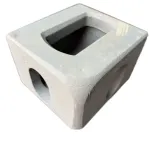
Corner casting steel vs aluminum
Every shipping container in the world — all 40 million of them — rests on eight critical components. Corner castings are the load-bearing blocks at each corner of an ISO shipping container, and they are the universal interface between the container and every crane, twistlock, spreader, and chassis on the planet. When you lift a container, stack it nine high on a ship, or lock it to a truck trailer, every ton of force flows through these fittings.

Construction cabin – selection, tips, dimensions and prices
Every construction project – whether a family house, a development project or a reconstruction – starts with the infrastructure. No construction manager, craftsman or investor who needs an on-site office, a changing room for workers or a safe storage for tools can do without a quality construction cell. But navigating the offer is not easy: residential containers, sanitary cells, storage modules, rental, purchase, refurbished pieces… This guide will give you answers to all the essential questions in one place.
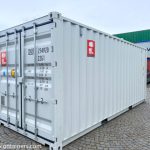
Storage container
A storage container is a lockable steel box designed for the safe and dry storage of materials, tools, goods or equipment. Originally created as a shipping container for maritime transport, its durability and versatility have found their way onto construction sites, corporate premises and private land.
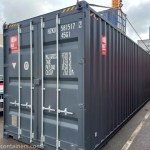
Shipping container 12m (40 ft)
A 12m shipping container is an investment that, if properly selected and cared for, will pay off in decades of trouble-free use. Whether you plan to use it as a warehouse, workshop, garage or the basis for a residential module — the key is careful selection of the condition, a thorough inspection before purchase and high-quality preparation of the base for placement. Take the time to compare offers, check the seller’s references and do not hesitate to personally inspect the container before buying. A properly selected 40-foot container will serve you reliably for many years.