
Width of a Shipping Container
What is Shipping Container Width?
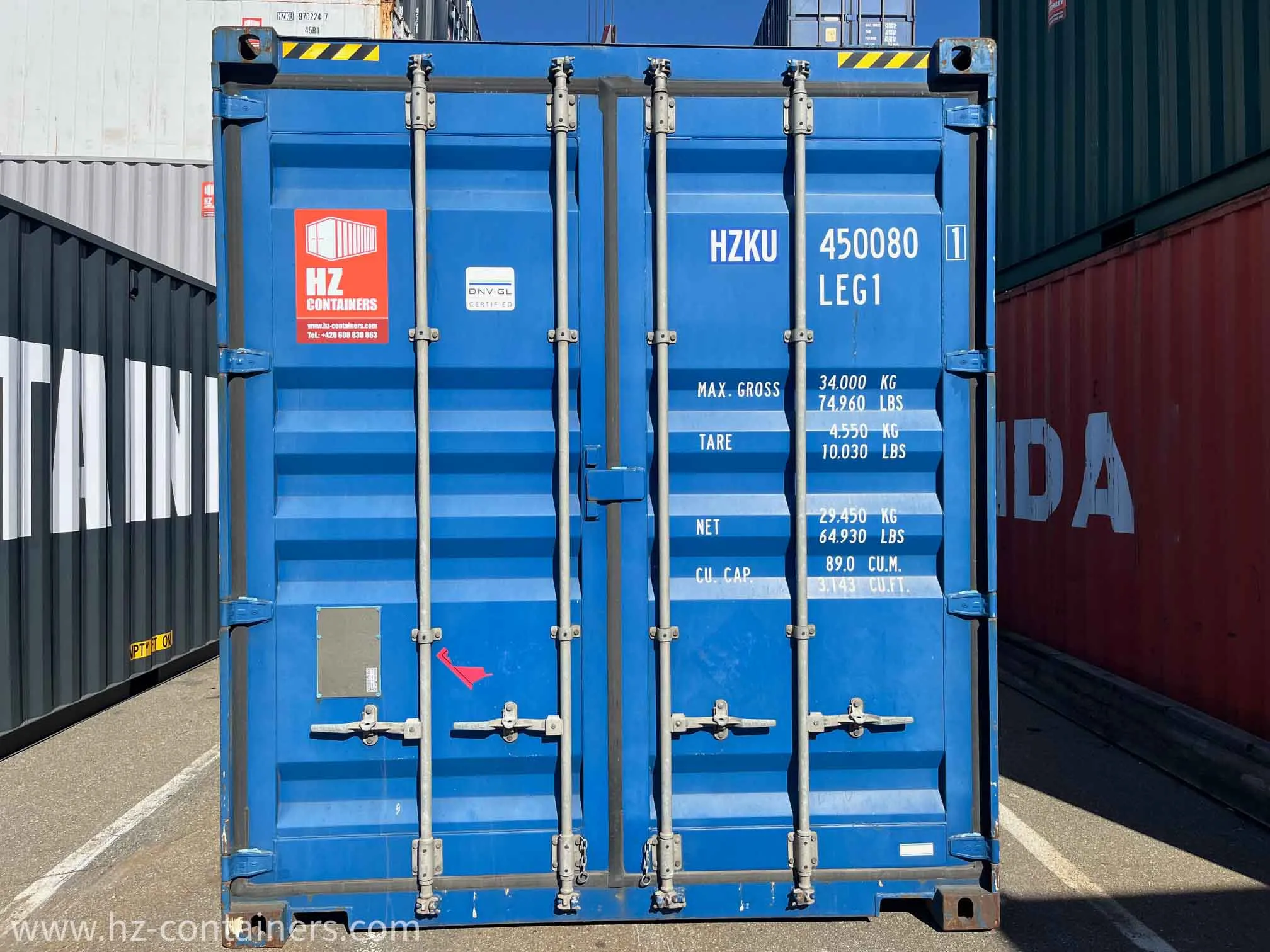
Width of a shipping container is a fundamental technical and logistical parameter that determines how containers can be transported, stacked, handled, and utilized in industry and construction. It is the horizontal dimension of the container measured on the shorter side. The standard external width of ISO containers, valid worldwide, is 8 feet (2,438 mm = 2.44 m). This value is defined by the ISO 668 standard and forms the basis of the global intermodal transport system, as it enables compatibility between maritime, rail, and road transport.
Why Was This Specific Width Chosen?
- Historical context: The 8-foot dimension was chosen in the 1950s by the American company Sea-Land and subsequently adopted as a fundamental parameter of international standardization.
- Design and operational reasons: The shipping container width of 2.44 m corresponds to most road regulations for vehicle width in Europe, North America, and Asia. It also enables efficient use of space on ships, railway cars, and in terminals.
- Interoperability: Standardization means that containers can be easily transferred between different types of transport without the need to unload cargo.
All ISO containers – whether standard shipping, refrigerated, open top, open side, or specialized – always have the same external width. The exception is special “pallet wide” containers, which have a slightly greater width to optimize for European pallets.
Article Structure
- Why is standard width key? ISO 668 and safety
- External vs. internal width: Technical details and impact on capacity
- Specialties: Pallet Wide containers, European and other standards
- Dimensions table: Overview of common and special container types
- Practical impact in logistics, construction, and design
- Related terms and terminology
- Conclusion and recommended further articles
Why Is Standard Width Key? ISO 668 Standard and Safety
ISO 668 and Its Significance
The ISO 668 standard is the fundamental document that establishes the dimensions, maximum weights, and marking of intermodal containers. This standardization enables:
- Stackability: Corner castings are always in the same positions, which allows safe stacking of containers on ships, in warehouses, and on railway cars.
- Safety: Twist-lock mechanisms fit precisely into the corners of each container, preventing shifting during transport, even under extreme conditions at sea.
- Handling efficiency: All handling equipment (cranes, reach stackers, portal vehicles, trailers) is designed for this width. Any deviation would require special equipment.
- Space optimization: Ships, trains, and warehouses are designed to maximize the use of standardized dimensions.
Overview of Key ISO 668 Points
| Parameter | Value |
|---|---|
| External width | 2,438 mm (8 feet) |
| Tolerance | ±5 mm |
| Standard | ISO 668, ISO 6346 |
| Compatibility | All major transport types |
| Exceptions | Special Pallet Wide containers (see below) |
Source: HZ Containers
External vs. Internal Width: An Important Difference
Technical Details
- External width: 2,438 mm (8 feet), applies to all ISO containers.
- Internal width: Typically 2,350 mm, but varies depending on construction and container type.
Why Is Internal Width Smaller?
- Internal width is affected by the thickness of steel walls (usually 1.6–2.0 mm), sheet profiling, and the presence of reinforcements.
- In refrigerated (reefer) containers, wall thickness is greater due to insulation, so internal width is approximately 2,280 mm.
- In standard containers, the internal dimension is optimized for two euro pallets placed side by side (2 × 800 mm = 1,600 mm + gaps).
Practical Significance
Knowledge of internal shipping container width is key for:
- Planning the number and layout of pallets, boxes, and goods.
- Efficient use of cargo space and minimization of unused volume.
- Minimization of cargo movement during transport (safety).
| Container Type | External Width | Internal Width | Note |
|---|---|---|---|
| Standard 20’/40′ | 2,438 mm | 2,350 mm | |
| Reefer 20’/40′ | 2,438 mm | 2,280 mm | Due to insulation |
| Pallet Wide | 2,490 mm | 2,440 mm | For European pallets (see below) |
Specialties: Pallet Wide Containers and European Dimensions
Pallet Wide (PW) Containers
These containers were developed especially for the European market, where the euro pallet with dimensions of 1,200 × 800 mm dominates. A standard ISO container allows only two euro pallets to be loaded side by side, but with a gap – ideally, the full width would be utilized.
Pallet Wide Container Parameters:
- External width: 2,490 mm
- Internal width: 2,440 mm
- Use: Ideal for transporting 2 × 1,200 mm, i.e., three euro pallets in width without gaps, thereby increasing storage density and reducing costs.
- Doors: The door width is also larger (up to 2,440 mm).
Legal and Operational Limitations
- PW containers are not always permitted for international transport outside Europe, as they may exceed the maximum permitted width for road transport in some countries.
- However, they are very common domestically within the EU.
Other European Variants
- In the past, so-called “Binnenkonteiner” were used on railways in Germany, with widths up to 2,500 mm for maximum efficiency.
- However, these containers are not compatible with the ISO standard.
Dimensions Table: Overview of Common and Special Container Types
| Type | External Dimensions (L x W x H, cm) | Internal Dimensions (L x W x H, cm) | Door Dimensions (W x H, cm) | Empty Weight (kg) | Max. Payload (kg) |
|---|---|---|---|---|---|
| 20′ GP | 605 x 244 x 259 | 590 x 235 x 239 | 234 x 229 | 2,250 | 28,230 |
| 20′ GP HC | 605 x 244 x 289 | 590 x 235 x 270 | 234 x 259 | 2,300 | 28,180 |
| 20′ PW | 605 x 249 x 259 | 590 x 244 x 239 | 244 x 229 | 2,300 | 28,100 |
| 40′ GP | 1,219 x 244 x 259 | 1,204 x 235 x 239 | 234 x 229 | 3,780 | 26,512 |
| 40′ GP HC | 1,219 x 244 x 289 | 1,204 x 235 x 270 | 234 x 259 | 3,968 | 27,600 |
| 40′ PW | 1,219 x 249 x 259 | 1,204 x 244 x 239 | 244 x 229 | 3,850 | 28,100 |
| 40′ PW HC | 1,219 x 249 x 289 | 1,204 x 244 x 270 | 244 x 259 | 3,917 | 28,583 |
| 45′ HC | 1,372 x 244 x 289 | 1,356 x 235 x 270 | 234 x 259 | 4,800 | 27,700 |
| 20′ Reefer | 605 x 244 x 259 | 544 x 228 x 226 | 228 x 226 | 2,905 | 27,575 |
| 40′ Reefer | 1,219 x 244 x 259 | 1,158 x 228 x 226 | 228 x 226 | 4,900 | 25,645 |
(Source: HZ Containers)
Extended Types and Their Significance
- Open Top: For cargo exceeding door height, possibility of loading from above with a crane.
- Tunnel: Doors on both ends for quick loading.
- Reefer: Refrigerated containers for food, pharmaceuticals, etc., with smaller internal width due to insulation.
- Open Side: Long side doors for non-standard cargo.
Practical Impact of Standardized Width
Logistics and Planning
- Transport optimization: Carriers can precisely plan the number of containers on a ship, train, or trailer.
- Efficient space utilization: Most storage and transport systems are designed for a container width of 2.44 m.
- Road restrictions: Greater width would require special permits (PW containers have limits outside the EU).
Construction and Architecture
- Cargotecture (container architecture): Modular systems where the shipping container width of 2.44 m defines the basic room dimensions.
- Connection options: Containers can be connected lengthwise and transversely for larger spaces; to achieve greater width, containers are often divided and re-welded.
Handling and Safety
- Corner standardization: Twist-lock mechanisms ensure stability and safety during stacking.
- Unified equipment: Standardization means that all handling equipment is compatible worldwide.
Related Terms and Terminology
| Term | Meaning |
|---|---|
| TEU | Twenty-foot Equivalent Unit – standardized unit of capacity, 1 TEU = volume of a 20′ container |
| ISO container | Container complying with ISO standards (particularly ISO 668) |
| CSC label | Identification and safety label according to the International Convention for Safe Containers |
| Intermodal transport | Transport of containers by multiple types of transport without cargo transshipment |
| Tare Weight | Empty weight of the container |
| Payload | Useful load – maximum permitted cargo weight |
| Max Gross Weight | Maximum total weight (tare + payload) |
| Pallet Wide | Container with greater width for optimizing euro pallet transport |
| High Cube | Container with increased height (2.90 m instead of 2.59 m) |
| Reefer | Refrigerated container with insulation and cooling equipment |
The standardized shipping container width of 2,438 mm (8 feet) is one of the pillars on which modern global logistics stands. Thanks to this value, it is possible to connect world markets, reduce transport costs, and ensure safety and interoperability across continents. The development of European variants such as Pallet Wide shows how different market needs are reflected in technical innovations. Understanding this dimension and its impacts is key not only for logistics professionals, but also for architects, developers, and everyone who uses containers in practice.

 Czech Republic, Hradec Králové
 FREE DELIVERY


