ISO 830 Standard
In the global world of trade and logistics, precision and clarity are key. Every day, millions of shipping containers move across seas, railways, and roads. It is essential that all participants – from manufacturers, carriers, insurers, to customs officials – use the same language. This is where the ISO 830 standard comes into play, serving as a fundamental building block of standardized communication in the field of container transport.
This glossary page is your comprehensive guide to the ISO 830 – Freight Containers standard, its purpose, key definitions, and significance throughout the entire ecosystem of ISO standards for transport containers. Additionally, you will find deep technical details that common articles do not mention.
Purpose and Significance of ISO 830 Standard
ISO 830, with the full name Freight containers — Vocabulary, is an international standard issued by the International Organization for Standardization (ISO). It is a fundamental document that unifies and defines the terminology used in container transport.
- Ensures unified terminology – everyone knows what “corner fitting,” “flat rack container,” “tare,” etc. mean.
- Prevents misunderstandings – critical for safety and efficiency.
- Supports automation and digitalization – for example, in shipment tracking systems or automatic container sorting.
The latest version, ISO 830:2024, reflects developments in the field: new types of containers, digitalization (smart containers), environmental requirements, and more.
Basic Concepts According to ISO 830
The standard divides terminology into several main areas:
The Concept of “Container”
According to ISO 830, a container is a device that is:
- of permanent character and suitable for repeated use,
- specially designed to facilitate the transport of goods by one or more modes of transport without unloading the contents,
- enables easy securing, handling, and transport thanks to precisely defined corner fittings,
- has a minimum area of 14 m² (or 7 m² when equipped with upper corner fittings).
This definition clearly distinguishes containers from ordinary packaging, pallets, or vehicles.
Freight Container (Shipping Container)
- Internal volume of at least 1 m³
- Used synonyms: shipping container, cargo container
- Does not include vehicles or ordinary packaging
Intermodal Container
- Can be transferred between different modes of transport without unloading the contents (ship, train, truck)
- All ISO containers are intermodal
ISO Container
- Manufactured according to applicable ISO standards (particularly ISO 668, ISO 1161, ISO 6346, ISO 1496)
- Guarantees compatibility worldwide
Smart Container
- New in ISO 830:2024
- Equipped with sensors, telematics, capability to track location, temperature, humidity, vibrations, and door opening
- Data can be monitored in real-time through global systems
Classification and Types of Containers According to ISO 830/ISO 6346
ISO 830 and ISO 6346 introduce a systematic method of classifying containers using a four-digit code:
| Position | Meaning | Example |
|---|---|---|
| 1-2 | Length and height code | “22” = 20 feet, height 8’6″ |
| 3-4 | Container type and characteristics | “G1” = dry container with ventilation |
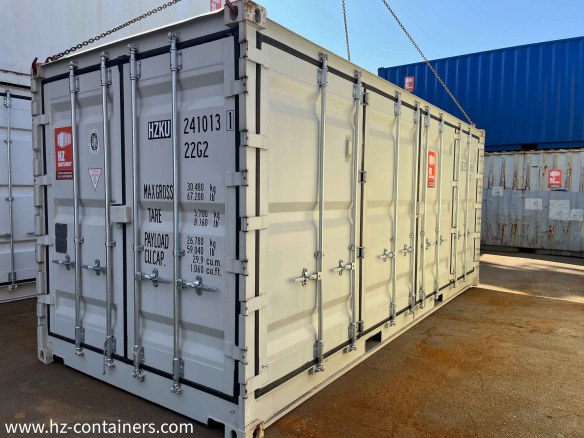
A code such as 22G1 designates a standard 20-foot container for general use.
Main Container Types:
| Type | Code (example) | Description |
|---|---|---|
| General Purpose (Dry Van) | G1, G0 | Fully enclosed, most common, suitable for general cargo |
| Open Top | U0, U1 | Without fixed roof, loading from above |
| Flat Rack (Platform) | P1, P3 | Open frame, for heavy and oversized cargo |
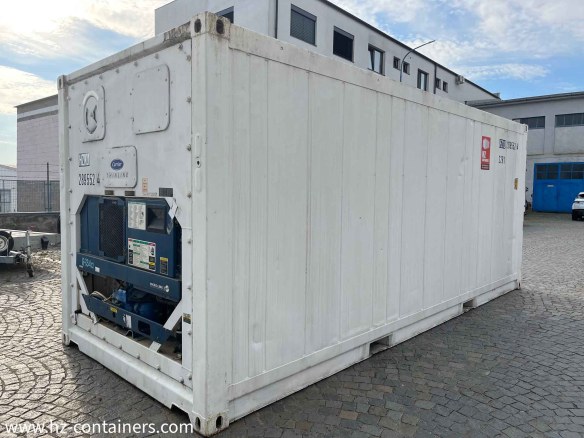
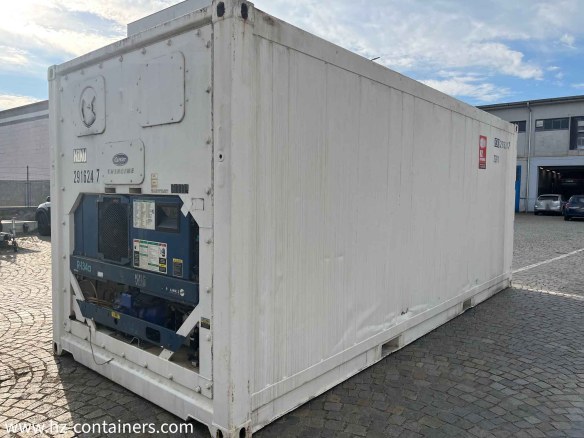
| Reefer (Refrigerated/Thermal) | R0, R1 | Insulated, with cooling unit, for temperature-sensitive goods |
| Tank Container | T1, T2 | Tank in frame, for liquids, gases, bulk powders |
| Dry Bulk | B0, B1 | For bulk materials, e.g., grain, with filling and emptying openings |
Extended Types According to ISO:
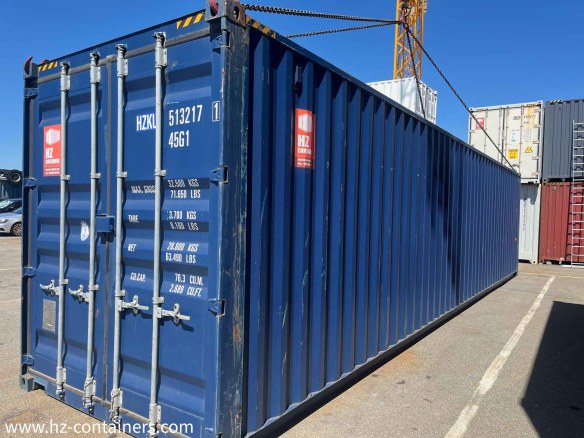
- High Cube (HC): increased height (9’6″ instead of 8’6″)
- Double Door: doors on both ends
- Side Door: side doors for special handling
Container Construction and Components
Frame and Basic Structure
Each ISO container is composed of a solid steel structure designed for high loads and repeated use:
- Bottom frame: two longitudinal beams, cross members, foundation for the floor
- Top frame: ensures rigidity and stability
- Corner posts: transfer pressure during stacking
Corner Fittings (Corner Castings, ISO 1161)
The most important element for worldwide compatibility!
- 8 corner fittings on each container (4 at bottom, 4 at top)
- Precisely defined dimensions and placement according to ISO 1161
- Enables:
- Lifting with crane (spreaders)
- Stacking containers on top of each other
- Securing on ship, rail car, chassis (twistlock)
Walls, Roof, and Floor
- Walls and roof: corrugated steel sheet (most commonly COR-TEN), resistant to corrosion, structural rigidity
- Floor: layered waterproof plywood (28 mm thick), attached to cross members, resistant to forklift loads
- Insulation: only in thermal and some specialized types
Doors
- Standard double-leaf doors on one end
- Solid locking mechanism (4 bars, 2 locks)
- Rubber sealing – ensures water-tightness and dust-tightness
- In some types: side doors, doors on both ends
Dimensions, Weights, and Marking
Dimensions (ISO 668)
| Type | External Length | External Width | External Height |
|---|---|---|---|
| 20′ Standard | 6,058 mm | 2,438 mm | 2,591 mm |
| 40′ Standard | 12,192 mm | 2,438 mm | 2,591 mm |
| 40′ High Cube | 12,192 mm | 2,438 mm | 2,896 mm |
| 45′ High Cube | 13,716 mm | 2,438 mm | 2,896 mm |
- Width is always 8 feet (2.44 m)
- High Cube: increased height for greater volume
Weights
- Tare: weight of empty container (20′: 2,100–2,400 kg, 40′: 3,700–4,200 kg)
- Useful Load (Payload): difference between maximum gross weight and tare (20′: up to 28,000 kg, 40′: up to 30,480 kg)
- Maximum Gross Weight: e.g., 30,480 kg for 20′ and 40′ (depending on type)
Marking and Identification (ISO 6346)
| Element | Description | Example |
|---|---|---|
| Owner code | 3 letters | “HZK” |
| Equipment code | 1 letter | “U” |
| Serial number | 6 digits | “123456” |
| Check digit | 1 number | “7” |
| Complete code | Combination of the above | “HZKU1234567” |
- Must be legible on all sides
- Contains codes for type/size, maximum weight, tare, useful load
Related Standards and Their Significance
| Standard | Topic | Practical Significance |
|---|---|---|
| ISO 830 | Vocabulary, terminology | Creates the basic language in the container field |
| ISO 668 | Dimensions, weights, classification | Every ISO container must meet these parameters |
| ISO 6346 | Coding, identification, marking | System for marking and tracking containers |
| ISO 1161 | Corner fittings | Enables global compatibility and safety |
| ISO 1496 | Technical requirements, testing | Establishes design parameters and tests |
| ISO 9897 | Design parts, components | Details on individual parts and repairs |
Technical Details and Interesting Facts
Materials and Lifespan
- COR-TEN steel: self-regenerating against weathering, extends lifespan
- Floor plywood: waterproof bonded, often from tropical woods (e.g., meranti, keruing)
- Container lifespan in maritime transport: 10–15 years, in secondary use (warehouses, construction) often over 25 years
Safety and Testing (ISO 1496)
- Static and dynamic tests: pressure during stacking, lifting, torsional strength
- Water-tightness: each container must be completely water-tight when tested with high-pressure stream
- Locks and security: ability to be locked with standard container padlocks
Modern Trends
- Smart containers: GPS, IoT sensors, telematics – higher security, real-time tracking
- Ecology: recycling old containers into building modules, minimizing emissions during manufacturing
Frequently Asked Questions (FAQ)
What exactly is ISO 830 standard?
It is a basic vocabulary and glossary of container transport terminology. It is a binding communication standard for the entire industry.
Is its use mandatory?
ISO standards are formally voluntary, but in practice, adhering to the terminology is necessary for participation in global container transport.
What is the difference between “shipping container” and “freight container”?
In common usage, they are interchangeable. “Freight container” is the technical term in ISO standards, “shipping container” is more colloquial.
What is the lifespan of a container?
In maritime transport 10–15 years, with further use (e.g., warehouse, construction) even 25+ years.
 Czech Republic, Prague
  FREE SHIPPING