
Shipping containers
Shipping containers, are robust, reusable containers specifically designed for the safe and efficient transport of goods across various modes of transportation, including ships, trains, and trucks. These containers play a key role in global logistics and supply chains, facilitating the smooth transfer of cargo worldwide. The concept of containerization revolutionized global trade by enabling easier and more efficient transportation of goods, allowing for transfers between different types of transportation without the need for unloading the cargo.

What is a shipping container?
A shipping container is a standardized metal box made of high-strength steel, used for the safe storage and transport of goods worldwide. They are designed to facilitate handling, storage, and transportation of goods without the need for repeated unloading. Due to their robust construction and standardized dimensions, they allow for efficient and safe cargo transport, both over land and by water or air. They are highly resistant to weather conditions and capable of withstanding the challenging conditions of intermodal freight transport. Intermodal transport refers to the smooth transition of containers between different modes of transport without the need to load and unload cargo inside. ISO containers, or Intermodal containers, meet the specifications of the International Organization for Standardization, ensuring their interoperability and safety in global transportation systems.
Shipping containers are also known by various names, such as: freight containers, marine containers, cargo containers, conex boxes, and ISO containers. The term “ISO container” is derived from the International Organization for Standardization, which sets dimensional and construction standards for these containers to ensure their interoperability and safety in global transportation systems.
Shipping containers represent an essential element of modern international trade. Their standardization, robust construction, and flexibility enable efficient and safe transport of goods worldwide. With the growing importance of global trade and technological innovations, it is expected that the role of shipping containers will continue to grow, contributing to further streamlining of transportation processes.
History of shipping containers
The concept of containerization began as early as the 18th century with the use of wooden barrels for transport. However, the first modern shipping container was developed by pioneer Malcolm McLean in 1956 with the launch of the Ideal X ship, which was designed for transporting standardized containers, revolutionizing the shipping industry. McLean was an American entrepreneur who changed the way goods are transported. Thanks to the standardization of container dimensions, the handling of goods became significantly simplified, and transportation speed increased. The adoption of ISO standards in the 1950s further standardized the dimensions and specifications of shipping containers, facilitating their wide use and integration into international logistics networks. McLean’s invention allowed for the easy transfer of containers between trucks, trains, and ships, significantly reducing labor costs and increasing efficiency.
Types of shipping containers
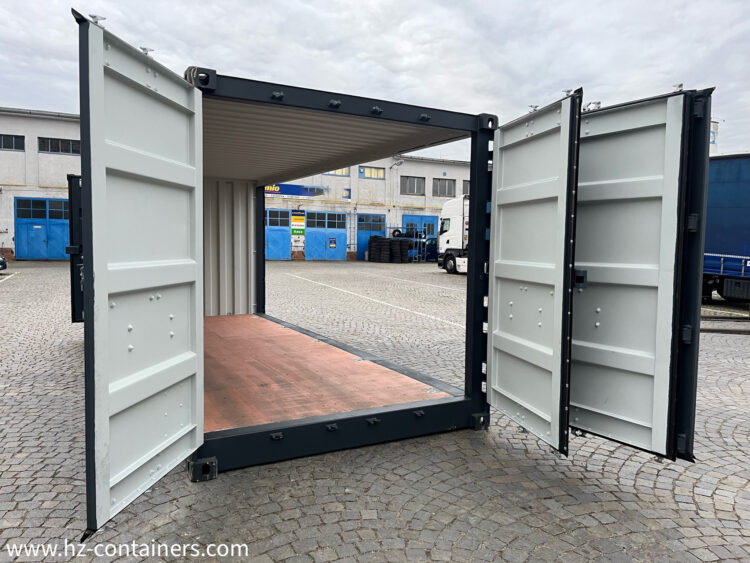
There are several types of shipping containers, which differ in their purpose and construction:
- Standard dry cargo containers (Dry Van): The most commonly used type of container, suitable for transporting dry goods.
- Refrigerated, refrigerated, and freezing containers (Reefer): Equipped with a cooling system, they are used for transporting goods that require controlled temperature, such as pharmaceutical products or perishable foods.
- Open top containers (Open Top): Have an open top, making it easier to load and unload heavy and bulky items.
- Flat rack containers (Flat Rack): Have no side walls or roof, making them ideal for transporting oversized cargo.
- Double door containers (Double door containers): Have doors at both ends for easy loading and unloading.
- Side door containers (Side door containers): Allow for side access for loading wide goods.
- Tank containers (Tank Container): Used for transporting liquids, powders, and gases.
- Bulk containers (Bulk containers): Designed for transporting bulk and heavy materials.
- Low cube containers (Low Cube): Used for very heavy materials such as coal, stone, and gravel.
Standard sizes
The most common sizes of shipping containers are 20 feet and 40 feet in length, commonly referred to as Twenty-foot Equivalent Units (TEU) and Forty-foot Equivalent Units (FEU). These standardized sizes allow for efficient stacking and transport across various modes of transportation. The dimensions and durability of these containers are standardized to ensure safe and uniform stacking on ships and railway cars.
Construction and features
Shipping containers are primarily made from high-strength steel, ensuring their durability against harsh maritime environments. They are equipped with:
- Lockable doors: Heavy locks to secure the contents and prevent unauthorized access.
- Ventilation: To prevent condensation and damage to goods.
- Securing points: For securing cargo during transport.
- Forklift pockets: For easy handling and movement of containers.

Regulatory Standards
Shipping containers used for international transport must meet the standards of the International Convention for Safe Containers (CSC) to ensure they comply with safety and structural requirements. Containers are regularly inspected to maintain their certification for transport, as stated by the Container Safety Convention organization.
The Importance of Shipping Containers in International Trade
Shipping containers play a key role in international trade. They enable efficient and cost-effective transport of large quantities of goods over long distances. Due to their standardized dimensions, containers can be easily transferred between different modes of transport, such as ships, trains, and trucks, ensuring smooth goods flow and minimizing the risk of cargo damage.
Advantages of Using Shipping Containers
In addition to transport and storage, shipping containers have gained popularity for alternative applications. They are used in the construction of modular homes, temporary shops, and even swimming pools, thanks to their durability and adaptability.
Shipping containers offer a range of benefits:
- Efficiency: The standardized dimensions of containers allow for easy handling and storage, speeding up the loading and unloading process.
- Safety: The robust construction of containers protects goods from damage during transport.
- Flexibility: Containers can be used for transporting various types of cargo, including dry goods, liquids, and temperature-controlled goods.
- Cost Reduction: Thanks to efficient handling and transport, the use of containers can lower overall shipping costs.
- Durability: Built to withstand extreme conditions and repeated use.
- Versatility: They can be repurposed for various unconventional uses, such as storage units, shipping container homes, and offices.
SHIPPING CONTAINERS FOR SALE – FULL OFFER HERE
The Future of Shipping Containers
With the continuous growth of global trade, the importance of shipping containers is expected to keep rising. Innovations in container technology, such as smart containers equipped with sensors for monitoring temperature and humidity, may further enhance transport efficiency and safety.
Shipping containers are indispensable in modern logistics, providing a cost-effective, safe, and efficient means of transporting goods worldwide. Their standardized design and versatility have not only revolutionized the shipping industry but have also opened the door for innovative uses beyond traditional transport, highlighting their significance in global trade and sustainable practices.