
Why are photos of the shipping container from the depot not possible?
Photographic documentation of shipping containers in depots is often limited or completely prohibited. This fact may seem surprising at first, but the reasons range from operational restrictions, security concerns, privacy protection, to legal and logistical aspects. This article explores key issues and provides a comprehensive look at the problem of the impossibility of taking photographs of shipping containers in depots.
What is a shipping container and a container depot?
Shipping Container
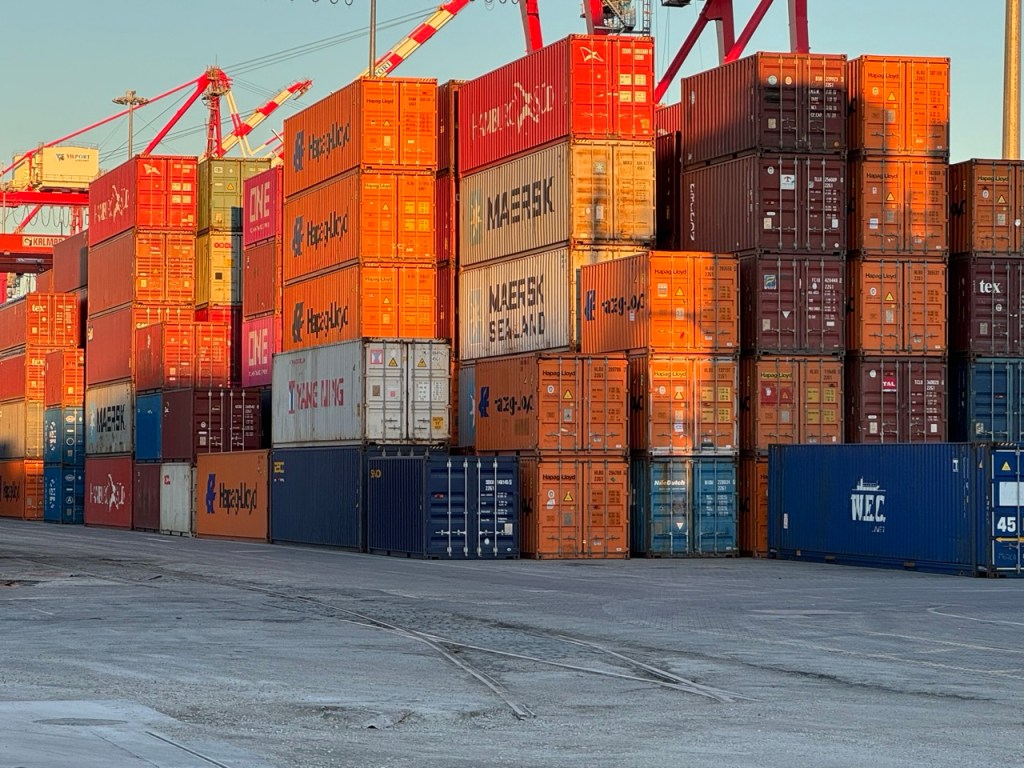
Shipping containers are standardized transport units that allow efficient transportation of goods by sea, rail, or road. These containers are robust, weather-resistant, and their design allows for easy handling. There are several types of containers:
- 20-foot containers (20 ft): Ideal for heavy cargo such as minerals, metal products, or cement.
- 40-foot containers (40 ft): Suitable for bulky cargo such as furniture or textiles.
- High Cube (HC) containers: Offer higher capacity due to greater height.
- Refrigerated containers (Reefers): Used for transporting goods requiring regulated temperatures.
- Special containers: Such as containers for transporting liquids or open containers for oversized cargo.
Container Depot
A container depot is a specialized logistics facility where shipping containers are stored, repaired, and distributed. Depots are a key link in the global logistics chain, and their functions include:
- Storage: Containers are securely stored until their next use.
- Repairs and maintenance: Damaged containers are repaired here.
- Redistribution: Containers are assigned to different transport routes and vehicles.
For example, the container depot in Hamburg processes up to 120 TEU (Twenty-foot Equivalent Units) of cargo daily, demonstrating its key role in logistics.
Why is photography not allowed in container depots?
1. Safety reasons
Container depots are highly active logistics centers with heavy machinery movement, such as cranes and forklifts. Photography may disrupt safety measures and endanger workers.

- Example: A photographer standing near the container handling area may unintentionally enter a dangerous zone.
2. Property and privacy protection
Many containers contain valuable or sensitive goods. Photography may reveal their contents or logistics procedures, which could be exploited.
- Confidentiality: The contents of containers are often protected by contractual terms between the sender and recipient.
- Theft protection: Photographs may be misused to plan thefts.
3. Legal restrictions
Depots are private spaces with clear rules. Unauthorized photography may be considered a violation of the law.
- Trade secrets: Logistics processes in depots are often protected as trade secrets.
- GDPR: The publication of photographs of employees may violate data protection legislation.
4. Operational efficiency
Photography in depots can disrupt the smooth flow of operations, affecting employee productivity and overall efficiency.
5. Risk of misuse of photographs
Photographs may be misused for unauthorized surveillance of logistics processes or planning illegal activities.
Alternative methods of documentation
- Official photographs from the depot operator
Depot operators often offer official photographic documentation for commercial purposes. If the depot is able to photograph a container, high fees are charged for these services, up to 200 € for photographing one container. - Photography outside the depot
It is possible to take photographs during loading or on public roads. - Virtual documentation
Some companies offer approved virtual tours.

 Slovakia, Žilina
  FREE SHIPPING


Other container news...

Shipping Containers Bremerhaven Germany
Bremerhaven is one of the world’s most important container shipping hubs. This northern German port handles millions of container units a year and serves as a key gateway for goods flowing from Asia to Europe – and vice versa. In the following guide, we take a detailed look at everything you need to know about shipping containers in Bremerhaven: from history and technical parameters to comparisons with Hamburg to practical information on transport to the Czech Republic.

Shipping containers Bonn Germany
Shipping containers represent one of the most significant innovations in the history of global logistics. These standardized steel transport units today form the backbone of international trade – approximately 95% of all world cargo is transported by sea, and the vast majority of that in containers. For Czech entrepreneurs, tradespeople and individuals who are considering buying or renting a shipping container, Germany – and specifically the Bonn and North Rhine-Westphalia (NRW) region – represents an extremely attractive market with a wide range of options, competitive prices and excellent logistics infrastructure.

Shipping containers Berlin Germany
Shipping containers Berlin, Germany represent an increasingly attractive alternative to purchasing on the domestic market for Czech entrepreneurs, tradespeople and private individuals. Berlin is not only the capital of the largest European economy, but also a natural logistics hub with excellent accessibility from the Czech Republic and connections to northern German ports, led by Hamburg. This combination creates a highly competitive market where shipping, maritime and storage containers of all types, sizes and conditions can be purchased at prices that often exceed the Czech offer. In this article you will find everything you need to know – from an overview of Berlin sellers, through container types and certifications, to practical instructions on how to transport a shipping container from Berlin to your home.

40 Foot High Cube Container Dimensions
Everything you need to know about 40 foot high cube container dimensions — interior and exterior measurements, door sizes, weight capacity, pallet loading, and how the high cube compares to a standard 40-foot container. Full specifications in feet, inches, and meters.