
Where are CORNER CASTINGS for shipping containers used?
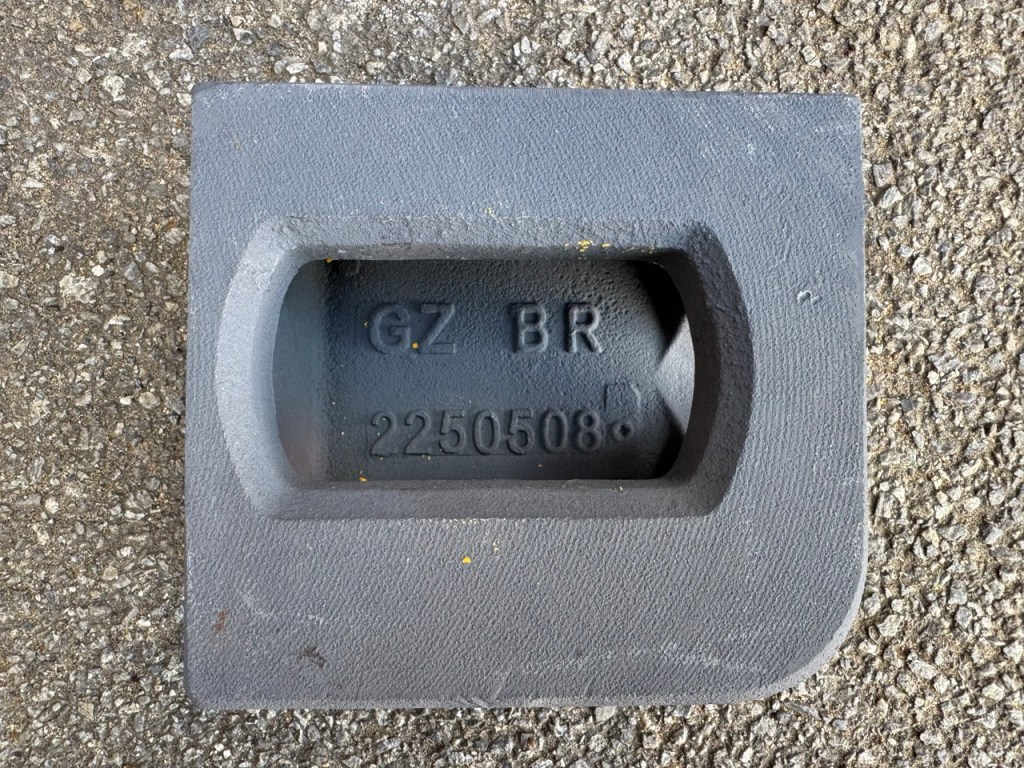
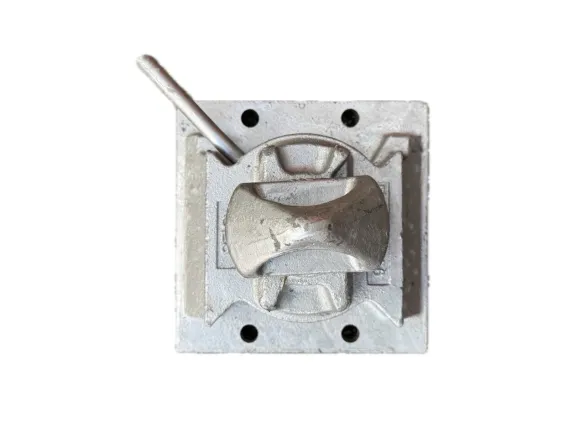
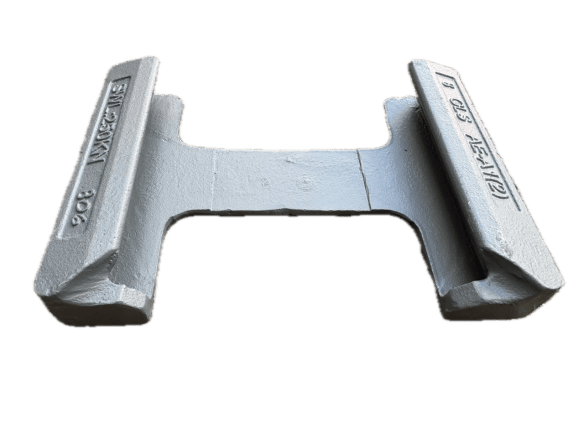
Corner casting, also called corner element or corner block, is an essential component of every standardized cargo container according to ISO standards.
Corner castings form the eight corners of a container and are the only points by which a container can be safely handled, stacked and firmly secured to a transport vehicle or to other containers.
Key properties of corner castings
| Property | Specification |
|---|---|
| Material | Cast carbon steel (e.g., SCW490), for low temperatures down to –40 °C |
| Dimensions | 178 × 162 × 118 mm |
| Weight | approx. 11 kg / piece |
| Wall thickness | approx. 19 mm (3/4 ”) |
| Standard | ISO 1161 |
| Certification | GL, BV, CCS, ABS, RINA, LR, NK, DNV, etc. |
| Surface finish | Raw, painted |
Corner castings transfer all static and dynamic loads on the container throughout its service life – from stacking, through crane lifting, to transport by sea, rail and road.
History and key role of ISO 1161
Standardisation of corner castings is the basis of modern global logistics. Thanks to this harmonisation, containers from different origins worldwide can be handled without risk of incompatibility.
ISO 1161 – basic facts
- First edition: 1968, current version: ISO 1161:2016
- Scope: Dimensions, shape, strength requirements and functional properties for corner and centre fittings for series 1 containers
- Key parts of the standard:
- Dimensioning: Precise outer dimensions and hole tolerances
- Strength requirements: Minimum load capacity for stacking, lifting and securing
- Testing: Prescribed destructive and non‑destructive tests, including defect inspection, mechanical properties and impact resistance at low temperatures
- Marking: Each corner casting must be marked with type (TL, TR, BL, BR) and a serial number
Significance
Without this standard, interoperability between containers, cranes, trains, ships and trucks from different manufacturers and countries would not be possible.
Anatomy and typology of corner elements (Corner Castings)
Each ISO container has eight corner elements, divided into four types:
| Type | Location | Marking on part | Specific opening shape |
|---|---|---|---|
| Top Left | Upper left corner | TL | Acorn opening on the short side |
| Top Right | Upper right corner | TR | Acorn opening, mirrored |
| Bottom Left | Lower left corner | BL | Semi‑circular opening on the short side |
| Bottom Right | Lower right corner | BR | Semi‑circular opening, mirrored |
Each element is marked with its type code inside the opening, ensuring easy identification during maintenance and replacement.
Opening types: side (stadium/discorectangle), front (acorn/shield), top/bottom (circular stacking).
Overview of openings and their functions
| Opening | Location | Function |
|---|---|---|
| Side (stadium) | Long/short wall | Allows horizontal securing of twist locks, bridge fittings |
| Front (acorn/shield) | Short side, top only | For hooks and crane spreaders |
| Top/bottom (circular) | Top/bottom | Stacking, twist locks, stacking cones |
Materials and manufacturing process
Why cast steel?
Cast carbon steel is essential because of the following properties:
- High strength and toughness: Resists extreme loads and material fatigue
- Weldability: Corner castings are welded to the container frame, requiring excellent weldability
- Low‑temperature performance: Retains properties down to –40 °C (e.g., SCW490)
- Good machinability: After casting, they are machined to precise dimensions
Material specifications
| Property | Value / Specification |
|---|---|
| Material | Cast carbon steel (SCW490, S355J2G3, Q345B, etc.) |
| Yield strength | min. 355 MPa |
| Tensile strength | min. 490 MPa |
| Elongation | min. 22 % |
| Impact test | min. 27 J at –40 °C |
Surface treatment
- Raw (for further painting)
- Primer (corrosion protection)
- Galvanising (special applications)
Comparison with aluminium
| Property | Cast steel (SCW490) | Aluminium (alloys) |
|---|---|---|
| Strength | Very high | Lower |
| Weldability | Excellent | Limited (depends on alloy) |
| Melting point | approx. 1370 °C | approx. 660 °C |
| Weight | Higher | Lower |
| Corrosion resistance | Lower (requires paint) | Excellent |
| Cost | Lower | Higher |
Aluminium is used only for special containers and aerospace applications.
Main functions and applications of corner castings
Lifting and handling in logistics
- Port gantry cranes: Spreaders automatically lock the corner elements with twist locks
- Mobile cranes, reach stackers, forklifts: Adapters ensure safe lifting
- Critical safety rule: A fully loaded container may be lifted only by its corner castings
Securing during transport
- Maritime transport: Twist locks join containers to each other and to the ship’s deck
- Rail wagons: Corner elements fit into locks on the chassis
- Road transport: Twist locks on the container chassis keep the container firmly in place while driving
Stacking
- Enable safe stacking of up to eight fully loaded containers one on another
- The elements carry the weight of the containers above them
- Accessories used: Stacking cones, twist locks
Inter‑container connection
- Bridge fittings: Horizontal linking of multiple containers into larger units (modular buildings, shipping container homes, container houses, festival stages, etc.)
- Load‑bearing function: Corner elements serve as anchorage points for additional structures (stairs, walkways)
Modifications and secondary uses (Cargotecture)
- Construction: Anchoring to foundations, joining multiple containers, load‑bearing points for additional floors/roofs
- Storage units: Essential for handling and secure placement
- Mobile workshops, tech units: Equipment mounted on corner elements
- Temporary installations: Quick assembly/disassembly at festivals, events
- Creative uses: Pools, bridges, artistic installations
Inspection, maintenance and safety of corner castings
Typical defects and inspection criteria
| Damage type | Manifestations and risks |
|---|---|
| Cracks | Appear mainly around welds under mechanical overload |
| Deformation | From impact (e.g., crane) or careless handling |
| Corrosion | Especially in aggressive marine environments |
Inspection and maintenance
- Regular inspections: Every container must undergo periodic checks (e.g., CSC certification)
- Retirement criteria: Any crack, deep corrosion or deformation requires repair or replacement
- Part replacement: The damaged casting is cut off and replaced with a new, certified piece (requires professional welding)
Safety requirements
- Testing: Mandatory destructive and non‑destructive tests (including casting defect inspection, impact test at –40 °C, tensile test)
- Marking: Every corner casting must be clearly marked with a serial number and type (TL, TR, BL, BR)
Technical specifications and digital representation
Overview of standard parameters
| Parameter | Value |
|---|---|
| Dimensions | 178 × 162 × 118 mm |
| Wall thickness | approx. 19 mm (3/4 ”) |
| Weight | approx. 11 kg / piece |
| Material | Cast carbon steel (SCW490 etc.) |
| Surface finish | Raw / painted |
| Certification | ISO 1161, GL, BV, CCS, ABS, LR, etc. |
Purchasing, pricing and logistics of corner castings
Price of corner castings
- Price depends on: manufacturer, certification, surface finish, quantity
- Pricing: Container dealers often offer corner castings as spare parts
Purchasing criteria
- Always require ISO 1161 certification if the container is to be used in international transport
- Beware of cheap, non‑certified imitations (lower strength, poor hole tolerances)
- Packaging: 100 pieces per pallet, 250 sets per 20′ container
Overview of corner casting usage in practice
| Application | Description and significance |
|---|---|
| Handling and lifting | Only allowed point for lifting a loaded container |
| Stacking | Carries weight of up to 8 containers in a column |
| Securing to chassis | Twist locks and locks on rail, road, ship |
| Connecting containers | Bridge fittings, modular constructions |
| Fixation to building structure | Anchoring to foundations in container building |
| Repairs and maintenance of containers | Important parameter when buying a used container |
| Creative use | Basis for pools, bridges, pop‑up architecture |
 Czech Republic
  WITHOUT SHIPPING


Other container news...

New sea shipping containers
If you are currently considering purchasing a new shipping container, you are not alone. While just twenty years ago containers were used almost exclusively for maritime transport, today they have found their way into construction, storage, business, and even housing. This growing popularity brings with it a host of questions: Which type should you choose? How much does it cost? How do you recognize quality? How can you avoid falling victim to scammers?
New shipping containers
If you are currently considering purchasing a new shipping container, you are not alone. While just twenty years ago containers were used almost exclusively for maritime transport, today they have found their way into construction, storage, business, and even housing. This growing popularity brings with it a host of questions: Which type should you choose? How much does it cost? How do you recognize quality? How can you avoid falling victim to scammers?

6m shipping container
Are you thinking about buying a 6-meter shipping container but aren’t sure what to look for? You are not alone—this 20-foot container is the best-selling size on the Czech market, and the differences between various types, conditions, and prices can be significant. In this guide, you will find everything you need to know: from exact dimensions and a comparison of categories (such as “one-way,” refurbished, and “Cargo Worthy”) to current prices and shipping advice.
Corner casting steel vs aluminum
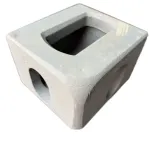
Every shipping container in the world — all 40 million of them — rests on eight critical components. Corner castings are the load-bearing blocks at each corner of an ISO shipping container, and they are the universal interface between the container and every crane, twistlock, spreader, and chassis on the planet. When you lift a container, stack it nine high on a ship, or lock it to a truck trailer, every ton of force flows through these fittings.