
What is the statics of a shipping container?
What is the statics of a shipping container?
Statics of a shipping container is a science and technical discipline focused on the distribution and transfer of forces within the container structure, especially in a static state (no movement). It includes analysis of stress, deformation, load‑bearing capacity and behavior under load during transport, handling, stacking and subsequent use, for example in construction or as storage space. Shipping containers are not just simple steel boxes – they are sophisticated self‑supporting monocoque structures that must meet strict International Organization for Standardization (ISO) standards and the requirements of the CSC (Convention for Safe Containers) agreement.
Key points of statics:
- All vertical loads (container’s own weight, cargo weight, weight of stacked containers, snow, etc.) are transferred through the steel frame and especially the four massive corner posts and corner castings.
- Walls and roof made of corrugated sheet increase rigidity and protect against horizontal forces (wind, impacts).
- Static integrity is crucial not only for transport but also for use in container constructions, where it can be compromised by structural modifications.
Main standards and certifications for the statics of shipping containers
| Standard / Certification | Area of Use | Main Requirements |
|---|---|---|
| ISO 1496 | Dimensions, load capacity | Minimum load capacity, durability during stacking |
| ISO 668 | Types and dimensions | Standardization of dimensions and fittings |
| CSC (IMO) | Structural safety | Periodic inspection and approval |
| EN 1993 (Eurocode 3) | Steel structures | Design and assessment for construction |
Key structural elements and their role in statics
Frame and corner elements (Corner Castings)
Frame
The frame is made of longitudinal members, cross members and four corner posts (corner posts), which are the most important load‑bearing parts of the container. These elements allow stacking of up to 8–9 fully loaded containers on top of each other (according to ISO 1496).
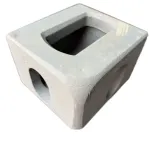
Corner elements (corner castings):
- Steel castings with holes for twist‑locks.
- Allow safe crane lifting, stacking and anchoring to chassis or foundations.
- According to ISO 1161 they must withstand static and dynamic loads (e.g., during sea transport in a storm).
Typical dimensions and parameters of corner castings (per ISO 1161)
| Dimension (mm) | Weight (kg) | Material | Quantity per container |
|---|---|---|---|
| approx. 178 × 162 × 118 | 10–12 | S355J2+N | 8 |
Important: Any damage to corner posts or corner castings means a serious threat to the container’s statics!
Walls and roof
Walls and roof are made of corrugated (profiled) sheet, most often of high‑strength COR‑TEN steel (grade S355–S450). Profiling significantly increases local load‑bearing capacity against bending.
- Corrugation of the sheet: Increases rigidity, prevents buckling and distributes forces into the frame.
- COR‑TEN steel: Surface oxidation forms a protective patina that prevents deeper corrosion – normal surface rust is therefore not a problem (unlike deep corrosion, which leads to material loss).
Roof is the weakest part – typically designed for about 200–300 kg/m², which corresponds to the weight of several people, not heavy cargo.
Floor
Composition:
- Steel cross members (joists), longitudinal members and a plywood or bamboo surface (typically 28–30 mm thick, resistant to water, fungi and pests).
- Some new containers have floors made of steel sheet or aluminum profiles (e.g., for refrigerated containers).
Floor load capacity of a standard container:
- 20 ft and 40 ft: typically 3 500–5 500 kg on point load (e.g., forklift axle).
- Total payload up to 26 000–28 000 kg (depending on type and manufacturer).
Floor load capacity by container type
| Container type | Floor load (kg/point) | Max. payload (kg) |
|---|---|---|
| 20’ ISO | 5 460 | 28 000 |
| 40’ ISO | 5 460 | 26 000 |
| High Cube | 5 460 | 26 000 |

Types of containers and their specific statics
Standard container (General Purpose)
- 20 ft: Shorter, stiffer, less prone to bending.
- 40 ft: Longer, requires even load distribution.
High Cube (HC)
- Height +300 mm compared to standard.
- Higher walls are structurally reinforced due to greater risk of side bending.
- Inside more volume, but slightly lower rigidity under extreme side load.
Open Top
- No fixed roof, rigidity ensured by a more massive top frame.
- Common for loading heavy or oversized cargo from the top.
- Overall torsional rigidity is lower than that of a standard container.
Reefer (Refrigerated)
- Walls made of sandwich construction (steel/aluminum – polyurethane insulation – stainless steel).
- Floor usually aluminum with T‑profiles for airflow.
- Higher weight, but frame construction equally robust as standard.
Pallet Wide, 10 ft and others
- Pallet Wide: Width approx. 2 462 mm (for two Euro pallets side by side).
- 10 ft containers: Very robust and compact, but usually without ISO certification for stacking on ships.
Loading, load capacity and factors affecting static integrity
Basic weight terms:
- Tare: Own weight of an empty container (20 ft approx. 2 200–2 400 kg, 40 ft approx. 3 600–3 900 kg).
- Payload: Useful load (maximum cargo that can be transported).
- Gross Weight: Maximum allowable weight (Tare + Payload), typically 30 480 kg for 20 ft and 40 ft ISO containers.
Factors influencing statics
Condition of the container
- Damage to main components: Frame deformation, bent corner posts, deep corrosion.
- Water ingress: Floor damage, mold growth.
- Loss of squareness: Affects ability to stack safely.
Modifications and cut‑outs
- Cutting out part of walls: Requires compensation of lost rigidity by adding steel frames (edge reinforcements, cross members, etc.).
- Intervention in the main frame: Always requires static analysis and professional reinforcements!
Improper stacking and supports
- Stacking only corner to corner (corner castings)!
- Support on all four corners, never only on the axis or side walls.
Statics in the context of container constructions
- Multi‑story buildings: Each container must safely transmit loads from upper floors. Assessment according to Eurocode (EN 1993) is required.
- Connecting multiple containers: Removing walls between containers requires creating a new shared frame that will carry all forces.
- Change of force transmission: Every opening, window or door interrupts the force flow – requiring reinforcement.
Practical recommendations for maintaining statics
- Before purchasing a used container: Thoroughly inspect all corner posts, corner castings, frame, floor and walls for damage and corrosion.
- Any modification: Have it assessed by a structural engineer. Compensate cuts with new steel profiles.
- Stacking: Follow manufacturer guidelines, stack only corner to corner.
- Foundations: Use base plates or piles under all four corners.
Related terms
- CSC Plate: Certification of container suitability for transport and stacking.
- ISO container: Standardized dimensions, materials and construction.
- Twist Lock: Mechanism for secure connection of containers.
- Payload, Tare, Gross Weight: Basic load capacity terms.
 Czech Republic, Třebíč
  FREE SHIPPING

Other container news...

New sea shipping containers
If you are currently considering purchasing a new shipping container, you are not alone. While just twenty years ago containers were used almost exclusively for maritime transport, today they have found their way into construction, storage, business, and even housing. This growing popularity brings with it a host of questions: Which type should you choose? How much does it cost? How do you recognize quality? How can you avoid falling victim to scammers?
New shipping containers
If you are currently considering purchasing a new shipping container, you are not alone. While just twenty years ago containers were used almost exclusively for maritime transport, today they have found their way into construction, storage, business, and even housing. This growing popularity brings with it a host of questions: Which type should you choose? How much does it cost? How do you recognize quality? How can you avoid falling victim to scammers?

6m shipping container
Are you thinking about buying a 6-meter shipping container but aren’t sure what to look for? You are not alone—this 20-foot container is the best-selling size on the Czech market, and the differences between various types, conditions, and prices can be significant. In this guide, you will find everything you need to know: from exact dimensions and a comparison of categories (such as “one-way,” refurbished, and “Cargo Worthy”) to current prices and shipping advice.
Corner casting steel vs aluminum
Every shipping container in the world — all 40 million of them — rests on eight critical components. Corner castings are the load-bearing blocks at each corner of an ISO shipping container, and they are the universal interface between the container and every crane, twistlock, spreader, and chassis on the planet. When you lift a container, stack it nine high on a ship, or lock it to a truck trailer, every ton of force flows through these fittings.