
Stackability of Shipping Containers
What is stackability of shipping containers?
Stackability of shipping containers is one of the most fundamental properties of the modern container system. It enables efficient vertical stacking of shipping containers on top of each other – whether for sea transport, terminal storage, or modular construction. This principle is possible only because of strict standardization of dimensions, construction, and globally accepted norms, including ISO 668 and related technical specifications.
Key facts:
- Standard containers can usually be stacked up to 6 to 9 tiers (depending on type, age, and location of use).
- Stackability ensures not only maximum space utilization but also the safety of cargo, personnel, and infrastructure.
- The basic load‑bearing structure of each container allows significant loads from the upper tiers to be transferred directly into the frame and corners of the lower containers.
In practice, containers are designed to support the huge weight of fully loaded containers placed above them. Without this capability, the efficiency of maritime and intermodal transport, as well as storage, would be considerably lower and more expensive.
Basic principles of stackability
Table: Standardized container dimensions according to ISO 668
| Container type | Length (mm) | Width (mm) | Height (mm) | Internal length (mm) | Internal width (mm) | Internal height (mm) | Capacity (m³) | Payload (kg) | Tare weight (kg) |
|---|---|---|---|---|---|---|---|---|---|
| 20′ Standard (1C) | 6058 | 2438 | 2591 | 5867 | 2330 | 2350 | approx. 33 | 21 800 – 28 000 | 2 200 – 2 500 |
| 40′ Standard (1A) | 12192 | 2438 | 2591 | 11980 | 2330 | 2320 | approx. 67 | up to 26 000 | 3 900 – 4 000 |
| 40′ High Cube (1AAA) | 12192 | 2438 | 2896 | 11988 | 2330 | 2655 | approx. 70 | up to 26 000 | 4 100 |
Note: The length of a 40‑foot container is exactly twice that of a 20‑foot container, which allows combined stacking.
Structural integrity
- Frame and corner posts: The container is built with a robust steel frame, often using Corten steel, which is resistant to corrosion. The main load is transferred through the corner posts, to which the upper and lower frames are attached.
- Corrugated steel: The side walls and roof are made of corrugated steel, increasing stiffness and resistance to side pressure.
- Floor: The floor consists of thick plywood (27–45 mm) on steel crossbars, designed to withstand point loads and forklift handling.
- Corner castings: Each container has eight solid steel corner castings with holes for twist‑lock bolts and handling.
Securing mechanisms (Twist‑lock)
- The twist‑lock is a metal lock that inserts into the holes in the corner castings of two stacked containers. When turned, it securely connects them, preventing horizontal shift and stack collapse.
- Twist‑locks are a basic safety element on ships, in ports, and in warehouses, especially with multiple layers.
Payload, stacking and CSC label
Every container intended for transport must have a valid CSC label (Convention for Safe Containers), which defines:
- Tare weight: Weight of the empty container.
- Max. payload: Maximum cargo weight.
- Max. gross weight: Sum of tare and payload.
- Maximum stacking load (stacking test load): Maximum weight that can be safely stacked on the upper frame of the container (e.g., 192 000 kg – equivalent to 8–9 fully loaded containers).
Example – payloads:
| Container type | Tare weight | Max payload | Max gross weight |
|---|---|---|---|
| 20′ Standard | 2 200–2 500 kg | 21 800–28 000 kg | 24 000–30 480 kg |
| 40′ Standard | 3 900–4 000 kg | up to 26 000 kg | 30 400 kg |
| 40′ High Cube | 4 100 kg | up to 26 000 kg | 30 400 kg |
Stackability in practice: transport vs. storage
Stacking during maritime transport
- Stack height: On large container ships, containers are typically stacked 6–9 tiers high on deck and up to 10–12 tiers in the hold.
- Dynamic forces: Stacks must withstand vibrations, ship movement, wind, and waves. Therefore, reliable twist‑lock securing and anchoring rods are essential.
- Placement: Heavier containers are placed at the bottom, lighter ones on top. Stowage planning software determines placement for vessel stability and safety.
Stacking during land storage
- Usual limit: For static storage on solid, level ground, a safe height is usually 2–3 containers high. Higher stacks require a static engineering assessment and a firm, even surface (concrete, compacted gravel).
- Base: A quality foundation is essential – uneven or soft ground leads to uneven loading and risk of deformation or collapse.
- Securing: For 2–3 layers, twist‑locks are recommended, especially in windy areas or when containers are empty or light.
- Accessibility: Arrange placement according to access frequency – frequently opened containers should be placed at the bottom with doors freely accessible.
Impact of modifications on stackability
Most common alterations and their impact:
- Racks, shelves: No significant effect on stacking if the maximum floor and frame load is not exceeded.
- Ventilation systems: Professionally made openings do not compromise frame payload, but amateur alterations can reduce strength.
- Air‑conditioning, heating: Add weight; openings for units must not damage main load‑bearing elements.
- Side doors, large windows: Significantly weaken wall structure and reduce stacking capacity – such modified containers should never be placed in the lower tier of a stack and should be evaluated by a specialist.
Related terminology
- ISO container: Container manufactured in accordance with ISO standards (primarily ISO 668).
- TEU (Twenty‑foot Equivalent Unit): Basic volume unit in container transport, equivalent to a 20‑foot container.
- Conex box: Originally a military term for a shipping container, now a synonym for any shipping container.
- Cargo Worthy (CW): Designation for a container approved for transport, meeting all technical and safety requirements.
- Wind and Water Tight (WWT): Container resistant to wind and water, suitable for storage; may not always be approved for transport.
- One‑Trip Container: Nearly new container used only once for transport from the manufacturing plant, ideal for premium storage.
Safety aspects of stacking
Principles of safe stacking
- The bottom container must always be in the best technical condition, without damage to the frame or corners.
- Never stack containers of different types (20′ on 40′) unless the corner castings match precisely.
- Heavier containers always belong at the bottom, lighter ones on top.
- A damaged container (frame deformation, torn corner castings) must never be used in the bottom layer of a stack.
- When storing outdoors, consider local wind conditions – twist‑locks may be required even for lower stacks.
Frequently asked questions (FAQ)
How high can shipping containers be safely stacked during storage?
Usually 2–3 layers on a solid, level base. Higher stacks are allowed only after a structural assessment and appropriate securing measures.
Can a 20‑foot container be stacked on a 40‑foot container?
No, the corner castings would not align and the load would not be transferred correctly. The correct arrangement is two 20‑foot containers side‑by‑side on one 40‑foot container.
Is it possible to stack a High Cube on a standard container?
Yes, the corner castings are compatible; the only difference is height. Pay attention to overall stack height (clearance, stability).
Must the bottom container always be heavier than the one above?
Yes, for maximum stability and safety the rule is: heavier containers at the bottom.
What if a container is damaged?
It must not be used in the bottom layer of a stack. A damaged structure poses a risk of collapse and endangers safety.
Why is stackability so important?
- Efficiency: Maximizes use of limited space in ports, on ships, and in warehouses.
- Safety: Proper stacking minimizes the risk of accidents and cargo damage.
- Standardization: Enables global interoperability among different transport modes (ship, rail, truck).
- Economics: Reduces transport and storage costs, allows rapid handling and efficient logistics.

 Czech Republic, Jihlava
  FREE SHIPPING
Other container news...
Corner casting steel vs aluminum
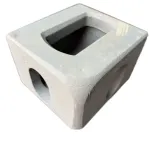
Every shipping container in the world — all 40 million of them — rests on eight critical components. Corner castings are the load-bearing blocks at each corner of an ISO shipping container, and they are the universal interface between the container and every crane, twistlock, spreader, and chassis on the planet. When you lift a container, stack it nine high on a ship, or lock it to a truck trailer, every ton of force flows through these fittings.

Construction cabin – selection, tips, dimensions and prices
Every construction project – whether a family house, a development project or a reconstruction – starts with the infrastructure. No construction manager, craftsman or investor who needs an on-site office, a changing room for workers or a safe storage for tools can do without a quality construction cell. But navigating the offer is not easy: residential containers, sanitary cells, storage modules, rental, purchase, refurbished pieces… This guide will give you answers to all the essential questions in one place.
Storage container
A storage container is a lockable steel box designed for the safe and dry storage of materials, tools, goods or equipment. Originally created as a shipping container for maritime transport, its durability and versatility have found their way onto construction sites, corporate premises and private land.
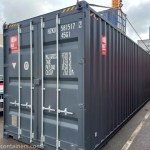
Shipping container 12m (40 ft)
A 12m shipping container is an investment that, if properly selected and cared for, will pay off in decades of trouble-free use. Whether you plan to use it as a warehouse, workshop, garage or the basis for a residential module — the key is careful selection of the condition, a thorough inspection before purchase and high-quality preparation of the base for placement. Take the time to compare offers, check the seller’s references and do not hesitate to personally inspect the container before buying. A properly selected 40-foot container will serve you reliably for many years.