
Spare Part – Corner Fittings – corner element
What are corner elements (Corner Fittings / Corner Castings)?
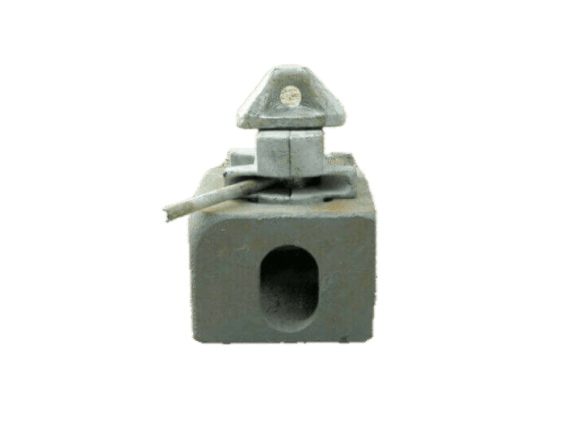
Corner elements (Corner Fittings or Corner Castings) are one of the most important structural parts of every shipping container built to the ISO standard. They consist of eight robust, precisely cast steel blocks with defined holes at each corner of the container – four on the top, four on the bottom. These so‑called corner castings are the universal interface between the container and all lifting, stacking and securing devices used in global transport.
Key features:
- Standardization: All dimensions, shapes and tolerances are precisely defined by ISO 1161, ensuring compatibility with equipment worldwide.
- Function: Enable lifting, stacking, joining and fixing of containers on ships, railways, road chassis and in ports.
- Replaceable part: If damaged or worn, a corner fitting can be cut out and replaced with a certified new part without having to retire the whole container.
Importance in logistics:
Without these elements, efficient, safe and rapid transport of goods in containers – the backbone of world trade – would not be possible.
Basic concepts and terminology
Corner Fitting vs. Corner Casting
- Corner Casting: Refers to the manufacturing process (steel casting).
- Corner Fitting: Highlights the functional aspect (element for joining and securing).
- Both terms are used synonymously in practice.
ISO 1161 – Foundation of global interoperability
The standard ISO 1161:2016 defines:
- Exact dimensions: Typically 178 mm (length) × 162 mm (height) × 118 mm (width), with tolerances up to ±1 mm.
- Shape and size of openings: Each opening (stacking, side, end) has a precisely defined size and shape.
- Material requirements: Cast steel, most commonly Corten or ASTM A27 Grade 70‑36.
- Strength: Must withstand forces generated when lifting up to 30–35 t and stacking up to 9–10 layers of containers.
- Compatibility: Allows handling of containers anywhere in the world with the same equipment.
Role in intermodal transport
Corner fittings are the only points where a container contacts:
- Lifting equipment (cranes and spreaders)
- Stacking devices (twist locks)
- Road chassis and railway wagons
- Securing accessories during transport or modification
Thanks to them, goods can be moved in a single closed unit across different transport modes without transshipment.
Anatomy of a corner fitting
Four unique types of corner fittings on a container
| Position on container | Designation | Description |
|---|---|---|
| Left top corner | TL (Top Left) | 2 pieces per container |
| Right top corner | TR (Top Right) | 2 pieces per container |
| Left bottom corner | BL (Bottom Left) | 2 pieces per container |
| Right bottom corner | BR (Bottom Right) | 2 pieces per container |
Each type has a unique orientation of openings to ensure correct installation and function. The designation (e.g., TL, TR) is usually embossed on the part.
Overview and function of openings
| Opening | Location | Shape (per ISO 1161) | Main function |
|---|---|---|---|
| Stacking | Top/bottom face | Rectangle (stacking hole) | Allows twist‑lock connection during stacking and lifting |
| Side | Long side | “Stadium” oval (side hole) | For side manipulation, lifting, attaching accessories |
| End | Short side | Upper: “acorn”/shield, Lower: oval | Upper: guides lifting hooks; Lower: fixes to chassis and lashing |
Note: Only the correct opening permits safe use of a specific handling or securing device.
Material, production and certification
Material composition and properties
- Standard material: Cast Corten steel or ASTM A27 Grade 70‑36 (high‑tensile, certified steel).
- Alternatives: Stainless steel and aluminium are available for special applications, but steel is the standard.
- Reasons for choosing steel:
- Extreme tensile and compressive strength
- High toughness even at low temperatures
- Excellent weldability (for replacement and repair)
- Good corrosion resistance (Corten, or surface treatments)
- Cost‑effectiveness
Comparison: Steel vs. Aluminium
| Property | Steel (Corten/ASTM) | Aluminium |
|---|---|---|
| Strength | Very high | Lower |
| Toughness | Excellent even in frost | Limited |
| Fire resistance | High (t > 1300 °C) | Low (t ≈ 660 °C) |
| Corrosion | Requires protection, Corten is resistant | Does not rust, but oxidises |
| Weldability | Excellent | Inferior |
| Cost | Lower | Higher |
Manufacturing process
- Casting: Steel is poured into precise molds according to ISO.
- Cooling and machining: After removal from the mold, critical dimensions are machined.
- Inspection: Each piece is checked for dimensional accuracy and defects (visual and ultrasonic).
- Certification: Products are often certified by independent authorities (Lloyd’s Register, Bureau Veritas, ABS, DNV‑GL, ISO 9001) – guaranteeing quality and compliance.
Certifications and approvals
- ISO 1161 – basic standard for all corner castings
- Common additional certifications: Lloyd’s Register, Bureau Veritas, ABS (American Bureau of Shipping), DNV‑GL (ISO 9001)
- Significance: Certifications are frequently required by carriers, builders or state inspectors to ensure safety.

Functions and practical applications
Overview of main functions
| Function | Description and use |
|---|---|
| Lifting | Cranes and spreaders – twist locks fit into the upper openings, enabling safe handling. |
| Stacking | Manual or semi‑automatic twist locks connect upper and lower corner fittings when piling containers. |
| Securing | Fixation to chassis, railway wagons or ship decks via twist locks in the lower corners. |
Handling and securing in transport
- Maritime transport: Containers are stacked up to 9–10 layers; corner fittings bear all loading forces.
- Rail transport: Containers are locked to special railcars via the lower corner fittings.
- Road transport: Fixation to chassis using twist locks that engage the lower holes.
Additional applications beyond transport
- Container houses and constructions: Corner castings serve as anchor points for assembling modular buildings.
- Modifications and accessories: Staircases, platforms, consoles, awnings, etc., can be securely attached to these fittings.
- Mobile units: Special superstructures (workshops, offices, generators) are equipped with corner fittings for easy handling.
Corner fitting as a spare part
Most common causes of damage
- Corrosion: Especially in aggressive, salty or humid environments.
- Mechanical damage: Impact during handling, deformation from over‑loading or accidents.
- Material fatigue: After many years of intensive use, particularly with frequent handling.
- Wear of openings: Weakening of walls due to repeated use of twist locks and hooks.
Inspection and maintenance
- Regular safety checks (e.g., according to the CSC – Convention for Safe Containers).
- Inspection of welds, absence of cracks, corrosion and correct opening dimensions.
- Every damaged fitting must be replaced with a certified new part.
Corner fitting replacement process
- Removal: Cutting out the damaged fitting with a plasma cutter or grinder.
- Preparation: Cleaning and aligning the contact surface of the frame.
- Installation: Precise placement and welding of the new corner fitting (in accordance with ISO 1161).
- Verification: Inspection of welds and dimensions, application of anti‑corrosion coating.
A correctly performed replacement fully restores the structural strength and safety of the container.
Related components and equipment
| Equipment name | Description and function |
|---|---|
| Twist Lock | Basic device for vertical and horizontal fixation of containers to each other and to chassis. |
| Bridge Fitting | Horizontal connection of two containers side‑by‑side (e.g., when building larger units). |
| Lifting Spreader | Crane device that attaches to the four upper corner fittings. |
| Container Chassis | Trailer with twist locks for safe road transport. |
| Securing accessories | Examples: Domino clamps, special hooks, lashing gear for secure anchoring and modifications. |
 Czech Republic
  WITHOUT SHIPPING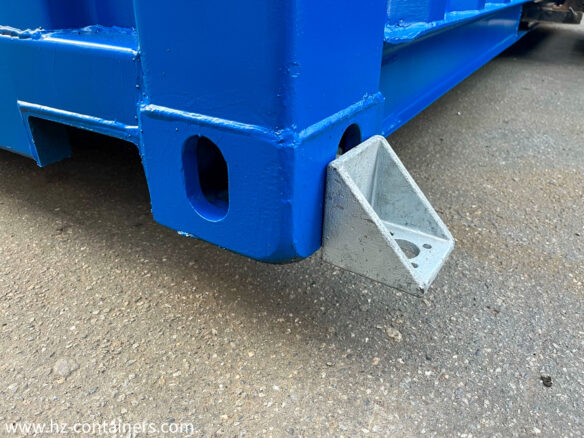


Other container news...

Obligation to Check Tightness When Selling a Reefer Container
Who is responsible for the refrigerant leak check when selling a refrigerated container? Find out what obligations the seller has at the time of handover and why they must provide a PTI report along with the technical data plate. Learn which regulatory requirements and F-gas record-keeping duties become the sole responsibility of the new owner.

New shipping containers
If you are currently considering purchasing a new shipping container, you are not alone. While just twenty years ago containers were used almost exclusively for maritime transport, today they have found their way into construction, storage, business, and even housing. This growing popularity brings with it a host of questions: Which type should you choose? How much does it cost? How do you recognize quality? How can you avoid falling victim to scammers?
New sea shipping containers
If you are currently considering purchasing a new shipping container, you are not alone. While just twenty years ago containers were used almost exclusively for maritime transport, today they have found their way into construction, storage, business, and even housing. This growing popularity brings with it a host of questions: Which type should you choose? How much does it cost? How do you recognize quality? How can you avoid falling victim to scammers?

6m shipping container
Are you thinking about buying a 6-meter shipping container but aren’t sure what to look for? You are not alone—this 20-foot container is the best-selling size on the Czech market, and the differences between various types, conditions, and prices can be significant. In this guide, you will find everything you need to know: from exact dimensions and a comparison of categories (such as “one-way,” refurbished, and “Cargo Worthy”) to current prices and shipping advice.