
Shipping containers for sale
Shipping container for sale is one of the most versatile, durable, and cost-effective investments you can make — whether you need secure on-site storage, a base for a custom build, or a reliable unit for cargo transport. But with prices ranging from less than $1,000 to more than $7,500 depending on size, grade, and location, knowing what to buy and where to buy can save you thousands and help you avoid costly mistakes.
You have probably been searching for shipping containers for sale and found yourselves in a flood of options: 20-foot, 40-foot, high cube, one-trip, cargo worthy, wind and water tight. Each term represents a real difference in price, quality, and suitability. This guide is designed to cut through every layer of this complexity. By the time you finish reading it, you will know exactly which container fits your needs, what you should pay for it, how to inspect it, and how to have it delivered to your location without surprises.
What is a shipping container and why should you buy one?
Where did shipping containers come from?
The modern shipping container traces its origin to the frustration of one man with inefficiency. In 1956, a North Carolina truck entrepreneur named Malcolm McLean watched cargo being loaded onto a ship piece by piece in the Port of Newark, and realized that standardizing the cargo box itself — rather than handling individual crates and barrels — would transform world trade. He bought a steamship company, refitted a tanker to carry 58 of his newly designed containers, and on April 26, 1956, the Ideal X set sail from Newark to Houston. Loading costs dropped from $5.86 per ton to $0.16 per ton.
Within a decade, the International Organization for Standardization (ISO) established universal container specifications, and the intermodal shipping container was born — capable of moving seamlessly between ships, trains, and trucks. Today, an estimated 40 million shipping containers circulate worldwide, carrying approximately 90% of the world’s non-bulk cargo. When you buy a shipping container for sale, you are buying a piece of infrastructure that built the modern global economy.

What are shipping containers made of?
A shipping container is a steel box built to withstand some of the harshest conditions on Earth. The frame and walls are made of Corten steel — a weather-resistant steel alloy that, when exposed to the elements, forms a protective rusty patina that actually prevents deeper corrosion rather than meaning disintegration. The floor is typically 28mm (1 1/8 inch) marine plywood, treated during manufacture with pesticides and fungicides for resistance to rot, insects, and moisture. Each container corner has a corner casting — a reinforced steel block with oval openings that enables container stacking, locking them to each other, and crane lifting them around the world.
Every container also has a CSC plate (Container Safety Convention), a permanently attached metal plate that serves as the container’s passport. It states the manufacturer, date of manufacture, maximum gross weight, stacking capacity, and date of the last safety inspection. If you are buying a container for international shipping, the CSC plate must be current. If you are buying for storage, it is less critical but still valuable as proof of the container’s origin and specifications.
Common uses of shipping containers
The versatility of a shipping container for sale is what makes it such a compelling purchase. The same steel box that crosses oceans can serve almost any stationary purpose you can imagine:
| Use | Recommended Container Grade | Typical Size |
|---|---|---|
| Residential / commercial storage | Wind & Water Tight (WWT) | 20 foot or 40 foot |
| Tool and equipment storage on construction site | Wind & Water Tight (WWT) | 20 foot |
| International maritime transport | Cargo Worthy (CW) only | 20 foot or 40 foot |
| Container house construction | New / One-Trip | 40 foot High Cube |
| Pop-up shop or food service | New / One-Trip | 20 foot or 40 foot |
| Agricultural machinery and feed storage | WWT or CW | 40 foot |
| Office conversion | New / One-Trip | 40 foot or 40 foot HC |
| Workshop or hobby space | WWT or CW | 20 foot or 40 foot |
| Emergency / humanitarian storage | CW | 20 foot |
| Multi-container commercial building | New / One-Trip | Mix of 20 foot and 40 foot |
A 20-foot container has roughly the same floor area as a standard single-car garage. A 40-foot container gives you double that — comparable to a spacious two-car garage. This is useful to keep in mind when imagining how much you can store.
How much does a shipping container cost in 2026?
Container prices are not static — they behave more like a commodity, fluctuating with steel prices, global trade volumes, seasonal demand, and your distance from major ports. Prices also rose significantly during the 2020–2022 supply chain crisis and have since stabilized. The ranges below reflect the continental US market in mid-2026.
Prices of new (One-Trip) containers
A new one-trip shipping container has made exactly one loaded voyage: from the factory (typically in China) to a port in the United States. It is the closest to factory-fresh that you can buy on the open market. Expect nearly perfect paint, clean floors, tight door seals, and no prior cargo history that would leave chemical or odor residues.
- 20-foot new One-Trip: $2,000 – $5,500 with delivery, depending on location
- 40-foot new One-Trip (standard): $3,000 – $5,500 with delivery
- 40-foot new High Cube One-Trip: $3,500 – $7,500 with delivery
New containers typically carry the strongest warranties — up to 10 years on construction and 10 years on leaks from the best suppliers. If you are building a container home, running food-grade storage, or launching a customer-facing retail operation, the premium for new is almost always justified.
Prices of used containers by grade
The used container market is much more diverse, and grade plays a huge role:
- Used 20-foot Cargo Worthy (CW): $1,400 – $2,100
- Used 20-foot Wind & Water Tight (WWT): $1,300 – $1,825
- Used 40-foot Cargo Worthy (CW): $1,650 – $2,100
- Used 40-foot Wind & Water Tight (WWT): $1,425 – $1,850
- Used 40-foot High Cube Cargo Worthy: $1,800 – $2,200
- Used 40-foot High Cube Wind & Water Tight: $1,500 – $2,100
- As-Is (any size): $500 – $2,000
The difference between a used CW container and a new one-trip often makes $1,000 or more. For a storage application where appearance doesn’t matter, those savings are pure value. For a conversion project, however, factor in the cost of rust removal, painting, and floor repairs — they can quietly erase the savings.
What affects shipping container prices?
Location is the single biggest variable. If you live within 50 miles of a major port (Los Angeles/Long Beach, New York/Newark, Houston, Savannah, Seattle/Tacoma), you will pay less because the container does not have to travel far from where it entered the country. If you live in the Midwest, Mountain West, or rural areas hundreds of miles from a port, expect a premium — both for the container and for delivery.
Market conditions also play a role. Steel prices, global shipping demand, and the import-versus-export balance in a given region all affect container availability. When imports exceed exports, containers pile up in ports and used container prices fall. When exports surge, containers leave the country and local supply tightens, pushing prices up.
Seasonal demand also plays a role. Construction season (spring through early fall) sees prices rise slightly because contractors and builders are buying containers for job sites. Winter can be a better time to buy if you are flexible.
Complete shipping container price table
| Size and container type | New (One-Trip) | Used — Cargo Worthy | Used — Wind & Water Tight | Used — As-Is |
|---|---|---|---|---|
| 10 foot standard | $2,500 – $4,000 | Rare — $2,000+ | Rare — $1,500+ | $500 – $1,200 |
| 20 foot standard | $2,000 – $5,500 | $1,400 – $2,100 | $1,300 – $1,825 | $500 – $1,500 |
| 40 foot standard | $3,000 – $5,500 | $1,650 – $2,100 | $1,425 – $1,850 | $700 – $2,000 |
| 40 foot High Cube (HC) | $3,500 – $7,500 | $1,800 – $2,200 | $1,500 – $2,100 | $800 – $2,000 |
| 45 foot High Cube | $4,000 – $8,000 | $2,000 – $3,500 | $1,800 – $3,000 | Limited availability |
The prices listed apply to the continental United States in mid-2026. Delivery is typically not included in these base prices unless the seller states otherwise. Always verify whether the quoted price includes delivery to your specific ZIP code.
What size shipping container should you buy?
Dimensions and capacity of a 20-foot container
The 20-foot shipping container is the workhorse of the industry. It is the most commonly available size and the easiest to deliver to tight residential or urban locations.
| Specification | 20 foot standard |
|---|---|
| External dimensions | 20′ L × 8′ W × 8’6″ H |
| Internal dimensions | 19’4″ L × 7’8″ W × 7’10” H |
| Internal volume | 1,169 cubic feet (33.1 m³) |
| Door opening | 7’8″ W × 7’6″ H |
| Empty weight (tare) | ~4,900 lbs (2,220 kg) |
| Maximum payload | ~62,350 lbs (28,280 kg) |
| Floor area | ~150 square feet (14 m²) |
A 20-foot container is ideal for single-property storage, small business inventory, or as a secure lockable container on a construction site for tools and materials. Its shorter length means it requires only about 60 feet of straight, level access for delivery — manageable on most residential driveways or job sites.
Specifications of a 40-foot standard container
Doubling the length gives you more than double the usefulness. A 40-foot standard container offers the same width and height as the 20-foot, but payload capacity actually decreases slightly because the container itself weighs more.
| Specification | 40 foot standard |
|---|---|
| External dimensions | 40′ L × 8′ W × 8’6″ H |
| Internal dimensions | 39’5″ L × 7’8″ W × 7’10” H |
| Internal volume | 2,385 cubic feet (67.5 m³) |
| Door opening | 7’8″ W × 7’6″ H |
| Empty weight (tare) | ~8,200 lbs (3,720 kg) |
| Maximum payload | ~59,040 lbs (26,780 kg) |
| Floor area | ~305 square feet (28.3 m²) |
A 40-foot container is a popular choice when you need serious volume: storing business inventory, securing construction materials for larger projects, or housing vehicles and large equipment. Delivery requires approximately 100 feet of straight access — which can be challenging on residential streets with tight turns or overhead obstacles.
40-foot High Cube containers
High cube (HC) adds exactly one foot of extra internal height. It may not sound like much, but it transforms the usability of the space.
| Specification | 40 foot High Cube |
|---|---|
| External dimensions | 40′ L × 8′ W × 9’6″ H |
| Internal dimensions | 39’5″ L × 7’8″ W × 8’10” H |
| Internal volume | 2,694 cubic feet (76.3 m³) |
| Door opening | 7’8″ W × 8’6″ H |
| Empty weight (tare) | ~8,700 lbs (3,945 kg) |
That extra foot of height is key if you plan to convert the container into a living space, because it allows room for floor insulation, ceiling insulation, HVAC, and lighting — all while maintaining a comfortable clear height. High cubes are also preferred for storing tall equipment or stacking pallets higher. They typically command a 10–20% premium over standard-height containers in the same condition.
Other container sizes
While 20-foot and 40-foot units dominate the market, other sizes exist as well:
- 10-foot containers are manufactured (not cut from larger units) and serve specialized roles — compact job site storage, residential sheds, or tight urban locations. They are, however, less common and may actually cost more than a used 20-foot container due to their rarity.
- 45-foot High Cube containers offer maximum internal volume and are popular for large-scale conversion projects or as a base for multi-container builds.
- 53-foot containers exist almost exclusively in the domestic intermodal market and are rarely sold to consumers.
If you are torn between a 20-foot and a 40-foot container and can accommodate the larger size, the 40-foot almost always offers better value per square foot. The price difference is often only 25–40% more for 100% more space.
What are the grades and conditions of shipping containers?
Understanding container grades is the single most important part of buying a used shipping container for sale. Grades are not optional labels — they define structural integrity, legal usability, and value.
New / One-Trip containers
A One-Trip container has made one loaded voyage from the manufacturer to a US port. It was built within the last 12–24 months and arrives with factory paint, clean marine plywood, tight door seals, and minimal handling marks. These containers still carry the manufacturer’s original CSC plate and often the original shipping line branding on the doors.
One-Trip containers are the best choice when appearance matters: container homes, retail pop-ups, office conversions, and any project where imperfections would have to be fixed anyway. They also offer the strongest warranties — up to 10 years on construction and 10 years on leaks from top suppliers like Container One and Eveon.
Cargo Worthy (CW) containers
A Cargo Worthy container has been inspected by a certified marine surveyor and found to meet all structural standards for international shipping. It bears a valid CSC plate and will be accepted for transport by all major shipping lines. CW containers are typically 5–15 years old.
Expect some surface rust, minor dents, and cosmetic wear. The floor will be solid, the doors will open and seal properly, and the container will be structurally sound and stackable. CW containers are the right choice if you need the option to ship cargo in the future, or if you simply want the assurance of a certified, inspected unit even for storage purposes.
Wind & Water Tight (WWT) containers
A Wind and Water Tight container keeps rain, snow, and wind out. The door seals are functional and the container has no holes or gaps that would let water in. However, a WWT container does not have a valid CSC certification and cannot be used for international shipping without recertification — and recertification is rarely cost-effective for an individual container.
WWT containers are the most popular grade for on-site storage. They tend to be older than CW units (10–20 years), have more visible rust and dents, and may show signs of previous repairs. They are not airtight — condensation can still form inside due to temperature and humidity changes — but they will keep your things dry. For a contractor storing tools, a farmer storing feed, or a homeowner storing seasonal items, a WWT container is almost always the right economic choice.
AS-IS containers
Bought as-is, you get exactly what the name suggests: the container in its current condition, with no warranties of any kind. It may have rusted-through holes, damaged flooring, broken door hinges, or structural issues. The price is the lowest you will find — sometimes as low as $500 — but the risk is entirely on your side.
As-Is containers are best suited for buyers with the ability to perform their own repairs, or for projects where the container will be so extensively cut and modified that the starting condition barely matters.
IICL and Multi-Trip containers
Between one-trip and cargo worthy sits the IICL (Institute of International Container Lessors) grade. These containers have made multiple ocean voyages but have been maintained to the highest industry standard. They are cleaner and newer than most CW containers, but less expensive than one-trip units. IICL containers are typically available only from larger dealers and leasing companies, not from every local depot.
Comparison table of grades
| Grade | Structural integrity | Appearance | Typical age | Certifiable for shipping? | Best for | Price premium (vs. As-Is) |
|---|---|---|---|---|---|---|
| New / One-Trip | Excellent | Like new | 0–2 years | Yes | Homes, offices, retail, food storage | Highest |
| IICL (Multi-Trip) | Excellent | Very good | 2–8 years | Yes | Premium storage, sensitive cargo | High |
| Cargo Worthy (CW) | Verified | Worn but solid | 5–15 years | Yes (if CSC is current) | Active shipping, premium storage | Medium |
| Wind & Water Tight (WWT) | Functional | Visible wear | 10–20+ years | No | General storage, construction, farm | Low |
| As-Is | Unknown | May be rough | 15–25+ years | No | DIY projects, parts, scrap | None (base) |
How should you inspect a shipping container before buying?
Whether you visit a depot in person or buy a shipping container for sale online with delivery, knowing what to check — and what questions to ask — can save you from purchasing a unit full of problems.
What to check on the exterior
Start by walking around the container. Surface rust is normal, especially on used units, and Corten steel is designed for it. What you are looking for is rust-through — holes or deeply pitted areas where the steel has lost structural thickness. Pay particular attention to the roof; water collects on top of containers and roof rust-through is one of the most common and most expensive problems. If you cannot climb up, ask the seller for photos of the roof or a video walkthrough.
Check all four corner posts. They bear the weight when containers are stacked. Dents are acceptable; deep bends, cracks, or heavy corrosion are not. Check the door seals (rubber gaskets around the door frame) — they should be intact and flexible, not cracked, brittle, or missing in sections. Open and close both doors fully. They should swing freely and close cleanly. Stiff doors can often be lubricated, but doors that do not fully close are a sign of frame damage.
Look at the CSC plate attached to the doors. It tells you the date of manufacture, date of last inspection, and maximum ratings. A faded or missing CSC plate does not matter for storage, but matters for shipping.
What to look for inside the container
Enter the container with the doors open and let your eyes adjust. A simple and effective test is the light test: close the doors behind you (bring someone with you, or prop them slightly open for safety) and look for any points of light penetrating through the walls or roof. Every point of light is a hole where water can enter.
Methodically examine the floor. Walk heel to toe across the entire surface. Marine plywood that is delaminating will feel spongy or soft to the touch. Look for dark stains indicating prior water damage, chemical stains, or oil leaks from previous cargo. Smell the interior — a strong chemical or mold odor may mean the container is unsuitable for storing sensitive items without significant remediation.
Check the door threshold, where the door meets the floor. This area takes the most abuse from forklift traffic and is a common failure point in older containers.
Warning signs and common scams to avoid
The used container market has its share of bad actors. Here are the most common pitfalls:
- Fresh paint over hidden damage. A container with an unusually glossy, even paint job on a used unit may be hiding rust-through or structural repairs. Reputable sellers do not paint containers before sale unless they are selling refurbished units, and they disclose it.
- Misgrading. Some sellers list WWT containers as “cargo worthy” because the term sounds impressive. If you need a CW container, verify that it has a current CSC plate and ask if it has been examined. If the seller cannot provide documentation, it is probably not cargo worthy.
- Deposit scams. Be wary of sellers who demand a large deposit via wire transfer or cash app before you see the container. Where possible, use credit cards and work with established companies that have verifiable addresses, reviews, and physical inventory.
- Inflated delivery fees. Some sellers quote an attractive container price and then inflate delivery to make their margin back. Always request a delivered price upfront — ideally through a ZIP code calculator on their website.
Pre-purchase checklist
| Area | What to check | Pass if | Fail / warning if |
|---|---|---|---|
| Roof | Rust, holes, dents | Only surface rust, no holes | Any rust-through, visible daylight |
| Corner posts | Structural integrity, cracks | Straight, only surface rust | Bent, cracked, or heavily corroded |
| Walls | Dents, rust, repairs | Minor dents, surface rust | Holes, deep pitting, patches hiding damage |
| Door seals | Rubber gaskets | Intact, flexible, no gaps | Cracked, missing sections, hardened |
| Door function | Open/close/latch | Smooth operation, latches engage | Sticking, misalignment, do not close |
| Floor | Delamination, stains, soft spots | Solid across entire surface, no stains | Spongy areas, chemical stains, holes |
| Light test | Holes and gaps | Complete darkness | Any light visible through walls/roof |
| Interior odor | Chemicals, mold, pests | Neutral or mild steel smell | Strong chemical, mold, or pest odor |
| CSC plate | Presence, date, ratings | Present, readable | Missing (if shipping is required) |
| Vents | Function, screen | Open, intact screens | Blocked, missing screens (pest entry) |
Where can you buy a shipping container?
Local container dealers and depots
The most reliable way to find a shipping container for sale is through a local dealer with a physical depot. You can inspect the container in person, verify its condition, and often save significantly on delivery because you are near their facility. Local dealers also have reputations they must protect — they rely on word-of-mouth referrals and repeat business, which motivates them to deal honestly.
Search for “shipping container for sale near me” or “conex box dealer [your city]” and visit the facility before committing. Even if you ultimately order online, knowing what a real container of that grade looks like in person is valuable calibration.
How does shipping container delivery work?
Delivery methods and equipment
Most containers are delivered on a roll-off truck (also called a rollback or tilt-tray). The truck backs into position, tilts its bed, and the container gently slides to the ground — like a dump truck operating in slow motion, under full control. For tight spaces, some companies use forklifts unloaded from the delivery truck, or in extreme cases a crane or side loader (a specialized trailer with onboard cranes that can place the container perpendicular to the truck).
Ask your supplier what method they use and whether the quoted price includes placement at a specific location or only drop-off at the curb.
Site preparation requirements
The biggest mistake first-time buyers make is failing to prepare the delivery site. A delivery truck with a 20-foot container needs approximately 60 feet of straight, level access at least 12 feet wide, with 14 feet of clearance height (so the container fits on the tilted bed). For a 40-foot container, you need close to 100 feet of straight access.
The ground itself must support both the delivery truck (which can weigh 30,000+ lbs) and the container. Common solutions include:
- Gravel bed: 4–6 inches of compacted gravel provides drainage and load distribution. The most popular and cost-effective solution.
- Concrete blocks or railroad ties: Placed at each corner to slightly elevate the container off the ground, preventing the floor from sitting in a puddle of water and allowing airflow under the container.
- Concrete slab: The most permanent and most expensive option. Required for some residential building permits.
- Level ground: The most basic option. The ground should be firm, well-drained, and level within 1–2 inches across the entire container footprint.
Delivery costs and timeline
Shipping container delivery costs vary primarily by distance from the supplier’s depot to your location:
| Delivery distance | Estimated price range | Typical timeline |
|---|---|---|
| Local (0–50 miles) | $100 – $300 | 1–3 business days |
| Regional (50–150 miles) | $250 – $600 | 2–5 business days |
| Extended (150–300 miles) | $500 – $1,000 | 3–7 business days |
| Long distance (300+ miles) | $800 – $1,500+ | 5–10+ business days |
Some national suppliers include the first 50–100 miles of delivery in the advertised container price. Others quote the container and delivery separately. Always verify whether the price you see is an “all-in” delivered price — and provide your exact ZIP code, not just your city, to get an accurate quote.
What legal and zoning issues should you know about?
Do you need a permit for a shipping container?
The answer depends entirely on where you live. In rural and agricultural zones, shipping containers used for storage are often allowed without any paperwork — they are considered sheds or barns. In suburban residential zones, however, many municipalities classify a shipping container as a temporary structure requiring a permit, or prohibit it outright as an “accessory structure” that does not match the aesthetics of the neighborhood.
Before buying a shipping container for sale, call your local planning or zoning office (or search your city/county website for “accessory structure” or “shipping container” regulations). Ask specifically:
- Are shipping containers permitted as accessory structures in my zoning district?
- Is a permit required, and if so, what is the application process?
- What are the setback requirements from the property line?
- Are there size or height restrictions?
- Must the container be screened from view?
If you are in a neighborhood with a homeowners association (HOA), check their rules as well. Many HOAs explicitly prohibit shipping containers regardless of what the municipality allows.
Can you live in a shipping container?
Yes, you can legally live in a shipping container home — but only if it meets local building codes. Container homes must meet the same structural, electrical, plumbing, insulation, ventilation, and egress standards as any conventionally built home. That means engineered foundations, professionally installed systems, and inspections at every stage.
The International Residential Code (IRC) does not explicitly address container homes, which means the approval process often falls to local building officials on a case-by-case basis. Some states and cities are more welcoming than others. California, Texas, Oregon, and Colorado have several permitted container home projects. In more conservative jurisdictions, expect a longer approval process and be prepared to hire an architect or engineer familiar with alternative building methods.
Site placement considerations
Beyond the legal question, think practically about where the container will sit. Place it on elevated ground where water drains away. Leave at least 3–4 feet of clearance around the doors so you can open them fully and access the container with a dolly, cart, or forklift. If the container is visible from the street or neighboring properties, consider whether a coat of paint or strategic landscaping will prevent it from becoming a point of friction with neighbors — even in areas where containers are legal, neighbor complaints are the most common trigger for enforcement action.
What are the most common questions about buying a shipping container?
How long does a shipping container last?
A well-maintained shipping container can last 25 years or more in stationary storage. Corten steel resists corrosion for decades, and the marine plywood floor, if kept dry, holds up remarkably well. The most common failure points are the roof (if water is allowed to pool), the door seals (which dry out within 10–15 years), and the floor (if repeatedly exposed to standing water). A One-Trip container properly placed on a gravel bed with good drainage can easily outlast its owner’s needs.
Is it better to buy or rent a shipping container?
If you need a container for more than 12–18 months, buying is almost always more cost-effective. Typical rental costs for a 20-foot container range from $75–$150 per month, which means a used $1,500 container pays for itself in 10–20 months. Renting makes sense for short-term projects (seasonal storage, a single construction phase, a temporary retail pop-up) where you want the container removed when you are done. It also shifts the delivery and pickup logistics to the rental company.
What is a CSC plate and why does it matter?
The CSC plate is a metal identification plate permanently attached to every shipping container built to ISO standards. It states the container’s ownership code, serial number, date of manufacture, maximum gross weight, maximum stacking weight, and the date of its last periodic examination. For international shipping, the CSC plate must be current (examinations are required at intervals not exceeding 30 months). For storage, the CSC plate is informational but not legally required.
Can I modify a shipping container after buying it?
Yes — and people do so extensively. Common modifications include cutting openings for doors and windows, adding insulation and drywall, installing electrical and plumbing systems, welding on shelves or racks, and painting. Every cut into a Corten steel container, however, weakens its structural integrity, especially if you remove sections of the corrugated walls. For large openings (roll-up doors, wide window walls), you should reinforce the frame with steel tubing or an I-beam. For container homes, always work with a structural engineer.
How much weight can a shipping container hold?
A 20-foot standard container has a maximum gross weight of approximately 67,200 lbs (30,480 kg). Subtracting the container’s own weight (tare: ~4,900 lbs), the maximum payload is about 62,350 lbs (28,280 kg). A 40-foot standard container has a similar maximum gross weight (~67,200 lbs), but a heavier tare (~8,200 lbs), leaving a maximum payload of about 59,040 lbs (26,780 kg). These values assume the container is supported across the entire floor area. Concentrated loads (heavy machinery on small wheels) should be spread with steel plates or wood.
Are shipping containers waterproof?
When new or well-maintained, shipping containers are water-resistant — not fully waterproof or airtight. Door seals seal against rain, but a long-lasting downpour can overwhelm aging seals. Containers also “breathe” through small ventilation openings for pressure equalization, which means moisture and condensation can build up inside, especially in humid climates or when temperature swings are extreme. For moisture-sensitive storage, consider adding a passive vent or a small solar-powered fan to improve airflow.
What is the difference between a shipping container and a storage container?
In common use, the terms overlap heavily — and many sellers use them interchangeably. Technically, a shipping container (or conex box) is built to ISO specifications for intermodal transport and has corner castings, a CSC plate, and the structural strength needed for ocean voyages. A storage container may refer to the same ISO container used for storage, or it may refer to a lighter-duty unit (typically with roll-up doors, lighter steel thickness, and no corner castings) purpose-built for stationary storage and unsuitable for transport. If you see a very low price for a “storage container,” verify whether you are getting a real ISO shipping container or a lighter alternative.
Does a used container come with a warranty?
It depends on the seller and the grade. New one-trip containers from reputable national suppliers often come with a 5–10 year structural warranty and a separate warranty on watertightness. Cargo worthy and WWT used containers may carry a limited warranty (30 days to 1 year) covering door function and watertightness. As-Is containers by definition carry no warranty. Always ask what is covered, for how long, and what the claims process looks like before you buy.
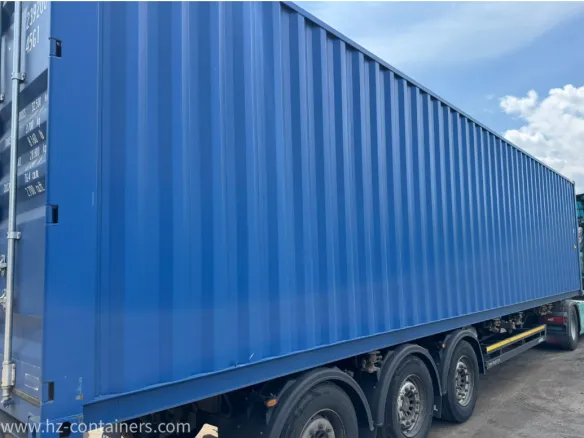
 Czech Republic, Rumburk
  FREE SHIPPING
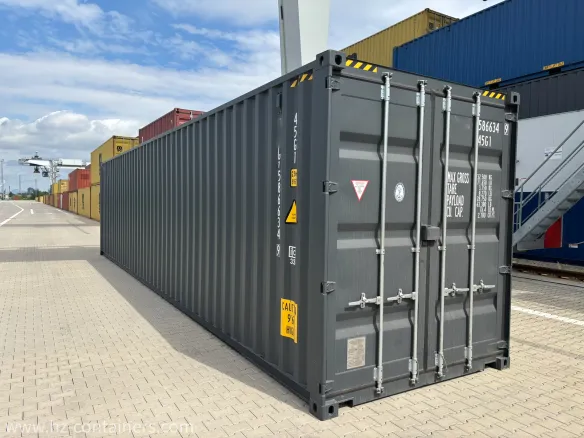


Other container news...
40 Foot High Cube container cost
A 40 foot high cube container — often abbreviated as 40ft HC, 40′ HC, or 40-foot high cube — is one of the most common shipping container sizes sold on the secondary market. But if you are researching what a 40 foot high cube container costs, you have almost certainly noticed that prices are all over the map. One seller quotes $1,500. Another quotes $7,000. Both could be legitimate.
20 Foot container cost
If you have ever searched for a shipping container, you have almost certainly asked one question first: how much does a 20 foot container cost? The answer is not a single number. It is a range that spans from under $1,000 for a weathered, as-is unit to over $5,000 for a pristine, one-trip container — and that is before delivery, site preparation, or modifications enter the picture.
Buy shipping containers
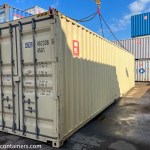
Buying a shipping container means purchasing a standardized steel intermodal box — typically 10, 20, or 40 feet long — for use as ground-level storage, job site equipment housing, cargo transport, or architectural conversion. The right container can last decades. The wrong one can leak, rust through, or fail inspection the day it arrives. This guide covers every step of the process, from understanding what you’re actually buying to inspecting it in person and preparing your site for delivery.

20 Foot shipping container cost
If you are researching the cost of a 20 foot shipping container, you have likely already encountered wildly different prices — from $999 listings online to quotes exceeding $5,500. That range is not a sign of inconsistency. It reflects real differences in container condition, location, delivery logistics, and the seller you are dealing with.