
Reefer shipping containers
Definition: A reefer shipping container (short for refrigerated container – cooled container) is an intermodal cargo container equipped with an integrated cooling unit that maintains a precise, controlled internal temperature for the transport of temperature-sensitive cargo by sea, rail, and road.
What is a reefer shipping container?
A reefer shipping container is essentially a mobile cold room built to ISO (International Organization for Standardization) specifications. Unlike a standard dry container, which merely protects cargo from weather and physical damage, a reefer actively manages the internal environment – temperature, humidity, and ventilation – to preserve perishable or temperature-sensitive goods during transport.
The term “reefer” originated as a nautical abbreviation for refrigerated vessel or container and has since become the universally recognized name in logistics, transport, and supply chain management. You will also encounter the abbreviation RF container for reefer containers in shipping documentation and container markings.
A reefer does not cool cargo down from ambient temperature. Instead, it maintains a pre-set temperature. Goods must be pre-cooled or pre-frozen before loading. This distinction is one of the most important operational facts about reefer containers – and one of the most frequently misunderstood.
Standard reefer containers can maintain temperatures between approximately -30 °C and +30 °C (-22 °F to 86 °F), while specialized super freezer units can pull temperatures down to -70 °C (-94 °F). This range makes reefer containers indispensable for everything from frozen seafood and fresh produce to life-saving pharmaceuticals and temperature-sensitive chemicals.
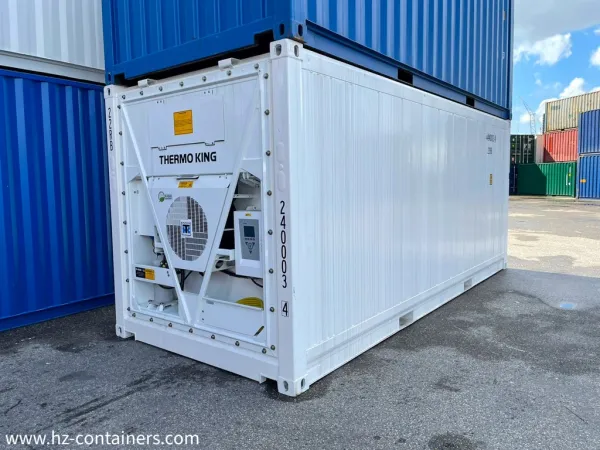
Where did the reefer container come from? History of refrigerated transport
The history of the reefer container is inseparable from centuries of human effort to transport perishable goods over long distances without spoilage.
Early attempts: ice, salt, and insulation
In the early 19th century, carriers placed ice and salt under and around cargo in insulated holds. This method slowed spoilage but was impractical beyond short coastal routes. Livestock often died in transit and meat spoiled before reaching its destination. Global trade in perishable goods was essentially impossible at scale.
Refrigeration breakthroughs (1867–1877)
The first patent for a refrigerated rail car was granted to J.B. Sutherland of Detroit in 1867. His design used ice stored at both ends of a specially constructed boxcar – primitive, but an important step.
Then came two French engineers who changed everything. In 1876, Charles Tellier – now remembered as the “Father of Cold” – built the first mechanical ether-based refrigeration system capable of maintaining 0 °C. His units were small enough that three fit on the steamship Le Frigorifique. A year later, in 1877, Ferdinand Carré refined Tellier’s design with a compression refrigeration system. Carré’s system proved dramatically effective: it successfully shipped 150 tons of frozen meat from Sydney to the United Kingdom in 50 days without spoilage. The era of intercontinental refrigerated transport had begun.
The era of specialized reefer ships (1900–1950)
In the early 20th century, specially built refrigerated cargo ships – known as reefer ships – entered service. The Port Morant, launched in 1901, was among the first vessels designed specifically to carry bananas at controlled temperature using CO₂-based refrigeration machines. These specialized vessels dominated the perishable trade for decades.
Parallel development occurred in the 1930s when Fred Jones, an American inventor, created the first portable refrigeration unit that could be mounted on trucks. His invention opened the door to road-based cold chain logistics and laid the conceptual groundwork for the standalone reefer container.
The container revolution (1950–1970)
The introduction of standardized intermodal shipping containers by Malcolm McLean in 1956 transformed global trade. Early containers, however, were intended only for dry cargo. It took another decade for the refrigerated container as we know it to emerge. In 1969, the first purpose-built reefer container ships were introduced by OCL (Overseas Containers Limited) and ACT (Associated Container Transportation). These vessels had special power sockets built into their decks – called reefer points – that allowed reefer containers to operate during sea transport.
By the 1970s, standardized reefer containers with their own integrated refrigeration units had emerged. Each container could be plugged into the ship’s power, terminal power, or an attached generator set (genset), making the cold chain truly intermodal for the first time. This system – a container with its own refrigeration unit, plugged into external power at every stage of the journey – remains the fundamental architecture of reefer transport today.
Key historical milestones
| Year | Milestone | Significance |
|---|---|---|
| 1867 | First patent for refrigerated rail car (J.B. Sutherland) | Laid the concept of mobile refrigerated transport |
| 1876 | Tellier’s mechanical ether-based refrigeration system | First system capable of holding 0 °C on a ship |
| 1877 | Carré’s compression refrigeration | Enabled the first successful long-distance transport of frozen meat |
| 1901 | Port Morant – first specialized banana reefer ship | Purpose-built vessels for the cold chain enter service |
| 1930 | Fred Jones invents portable refrigeration unit for trucks | Road refrigeration becomes viable |
| 1956 | Malcolm McLean introduces standardized shipping containers | The container revolution begins |
| 1969 | First purpose-built reefer container ships (OCL, ACT) | Reefer capacity integrated into container shipping |
| 1970 | Standardized standalone reefer containers proliferate | Birth of the modern intermodal cold chain |
How does a reefer container work?
Understanding how a reefer container operates requires looking beyond the obvious fact that it “cools things” and exploring the sophisticated interplay of airflow, thermodynamics, and environmental control that makes it work.
Bottom air delivery system
A reefer container does not simply blow cold air into the box. It uses a precisely engineered bottom air delivery system powered by the principle of convection.
Here is how the cycle works:
- Warm air inside the container is drawn into the refrigeration unit mounted on the front wall.
- Inside the unit, two powerful fans pull the air across the evaporator, where it is cooled.
- The cooled air is driven down behind a vertical partition on the inner front wall.
- Cold air flows under the cargo and enters the main container space through ventilation openings cut into the T-profile floor – often called T-bar flooring or T-decking.
- Cold air circulates around the cargo, absorbing heat and naturally rising as it warms.
- Warmed air is drawn back into the front of the container, where it re-enters the refrigeration unit and the cycle repeats.
This recirculating design is energy-efficient because the air inside the container is almost always closer to the target temperature than outside air. For cargo that requires fresh air exchange – such as fruits and vegetables that respire and consume oxygen – the reefer draws in outside air through a fresh air vent to prevent oxygen depletion and allows gases like ethylene and carbon dioxide to escape.
The pre-cooling requirement: a critical distinction
Important: A reefer maintains temperature; it does not reduce the temperature of the cargo.
If you load warm cargo into a reefer set to -20 °C, the refrigeration unit will struggle – and likely fail – to cool the cargo down to the target temperature. The airflow system is designed to maintain temperature, not to chill quickly. All cargo must be pre-cooled to the required transport temperature before loading. Failure to follow this procedure is one of the most common causes of cargo damage and claims in the cold chain.
The power question: how are reefer containers powered?
Reefer containers require a continuous supply of three-phase electrical power, typically 380–460 volts. At sea, they connect to the vessel’s dedicated power points. In port terminals, they connect to shore power through reefer container socket stations. During inland transport by road or rail, they can draw power from the vehicle’s electrical system or from a genset – a portable diesel or electric generator, either add-on (mounted on the chassis) or underslung (integrated in the container’s chassis).
For highly sensitive cargo such as pharmaceuticals, backup power systems are essential. A power interruption lasting even a few hours in high ambient temperatures can compromise an entire shipment.
What are the key components of a reefer container?
A reefer container is much more than a cooled box. Its internal systems represent a sophisticated industrial assembly. Here are the main components, what they do, and why each one matters.
| Component | Function | Why it matters |
|---|---|---|
| Refrigeration unit | Houses the compressor, condenser, evaporator, and fans that generate and circulate cooled air | The heart of the entire system; failure means total loss of cargo |
| T-profile floor (T-decking) | Grooved aluminum floor that channels cold air beneath the cargo | Without unobstructed airflow through these channels, cooling fails |
| Internal fans | Circulate air throughout the container to maintain even temperature | Prevent hot spots and ensure uniform cooling across all cargo |
| Controller / microprocessor | Sets and adjusts temperature, humidity, ventilation, and alarm thresholds | The “brain” – enables precise environmental control |
| Data logger | Records supply air temperature, return air temperature, defrost activity, on/off events, and alarms | Provides the audit trail required for regulatory compliance, especially for food and pharmaceuticals |
| Fresh air vent | Allows controlled intake of outside air and release of internal gases (CO₂, ethylene) | Essential for living cargo (fruits, vegetables, plants) that respire |
| Evaporator | Absorbs heat from the air passing through it and cools the air stream | The main cooling surface; also removes moisture (dehumidification) |
| Condenser | Releases absorbed heat to the surrounding environment | Typically air-cooled; water-cooled models also exist |
| Dehumidification system | Controls relative humidity inside the container | Different cargoes require different humidity levels; excess moisture causes mold and packaging damage |
| Drainage system | Removes excess condensation and defrost water | Prevents water accumulation, flooding, and insect entry |
| Genset (generator set) | Provides electrical power when no grid power is available | Critical for intermodal transshipments and remote locations |
| Voltage transformer (optional) | Allows operation at voltages up to 200 V | Provides flexibility when connecting to different regional power grids |
What are the dimensions and specifications of reefer containers?
Reefer containers are manufactured to ISO standards, although dimensions can vary slightly by manufacturer, age, and owner. The specifications below represent the most common configurations in the global fleet.
20ft reefer container
| Specification | Metric | Imperial |
|---|---|---|
| Internal length | 5.44 m | 17.9 ft |
| Internal width | 2.29 m | 7.5 ft |
| Internal height | 2.27 m | 7.5 ft |
| Door opening width | 2.23 m | 7.3 ft |
| Door opening height | 2.10 m | 6.9 ft |
| Tare weight | 3,080 kg | 6,790 lbs |
| Payload (useful load) | 27,400 kg | 60,417 lbs |
| Volume capacity | 28.3 m³ | 999 cu ft |
40ft reefer container
| Specification | Metric | Imperial |
|---|---|---|
| Internal length | 11.56 m | 37.9 ft |
| Internal width | 2.28 m | 7.5 ft |
| Internal height | 2.25 m | 7.4 ft |
| Door opening width | 2.29 m | 7.5 ft |
| Door opening height | 2.26 m | 7.4 ft |
| Tare weight | 4,800 kg | 10,584 lbs |
| Payload (useful load) | 27,700 kg | 61,079 lbs |
| Volume capacity | 59.3 m³ | 2,093 cu ft |
40ft High Cube reefer container
| Specification | Metric | Imperial |
|---|---|---|
| Internal length | 11.58 m | 38.0 ft |
| Internal width | 2.29 m | 7.5 ft |
| Internal height | 2.40 m | 7.9 ft |
| Door opening width | 2.29 m | 7.5 ft |
| Door opening height | 2.57 m | 8.4 ft |
| Tare weight | 4,480 kg | 9,880 lbs |
| Payload | 29,520 kg | 65,080 lbs |
| Volume capacity | 67.3 m³ | 2,380 cu ft |
45ft Palletwide reefer container
| Specification | Metric | Imperial |
|---|---|---|
| Internal length | 11.57 m | 38.0 ft |
| Internal width | 2.27 m | 7.4 ft |
| Internal height | 2.55 m | 8.4 ft |
| Tare weight | 4,850 kg | 10,694 lbs |
| Payload | 29,150 kg | 64,276 lbs |
| Volume capacity | 67.0 m³ | 2,365 cu ft |
Note: The 45ft Palletwide format accommodates standard European EUR-pallets two side-by-side without wasted space, making it the preferred choice for many cold chain routes between Europe and Asia.
What are the different types of reefer containers?
Not all reefer containers are created equal. The global fleet includes several specialized variants, each designed for specific cargo requirements.
| Type | Temperature range | Primary use | Key feature |
|---|---|---|---|
| Standard reefer container | -30 °C to +30 °C | Chilled and frozen foods, general perishables | Workhorse of the cold chain; covers most use cases |
| Super freezer container | Up to -70 °C | High-value seafood (tuna), cryogenic pharmaceutical storage, specialty chemicals | Cryogenic insulation and compressor capacity |
| Controlled Atmosphere (CA) reefer container | Standard range + atmosphere control | Fresh produce requiring extended shelf life (apples, avocados, berries) | Actively regulates O₂, CO₂, and ethylene levels to slow ripening |
| Dual-chamber / Twin-Room reefer container | Independent for each chamber | Mixed cargoes requiring two different temperature settings | Divided into two compartments with independent temperature control |
| Tank reefer container | Varies by liquid | Bulk liquid food products, chemicals | Internal tank in a refrigerated frame |
| Offshore DNV 2.7-1 reefer container | Standard range | Offshore oil and gas platforms, remote mining camps | Certified to DNV 2.7-1 standard for extreme conditions and lifting |
| Ex-proof reefer container | Standard range | Transport of volatile or flammable materials | Specially sealed electrical components to prevent ignition |
Controlled Atmosphere technology: a closer look
Controlled Atmosphere (CA) technology deserves special attention because it represents one of the most significant advances in reefer container design. Rather than merely cooling the cargo, it actively manages the gaseous composition of the air inside the container.
Fresh produce continues to respire after harvest – consuming oxygen and releasing carbon dioxide, water vapor, heat, and ethylene. Ethylene in particular accelerates ripening and aging. A CA reefer reduces oxygen levels (typically to 2–5%), raises carbon dioxide levels (typically to 2–20%), and removes ethylene from the air. This dramatically slows the metabolism of the products and extends shelf life by weeks or even months compared to a standard reefer.
Leading CA technologies include Thermo King’s Magnum Plus Optima and Maersk Container Industry’s Star Cool CA system. These systems enable the transport of highly perishable fruits and vegetables – for example Peruvian asparagus to Europe or Chilean cherries to China – that would not be possible in a standard reefer.
How does a reefer container differ from a dry container?
The difference between a reefer and a dry container goes far beyond the mere presence of a refrigeration unit. The comparison below shows how these two container types differ in every dimension that matters for cargo planning.
| Dimension | Reefer container | Dry container |
|---|---|---|
| Temperature control | Active: -30 °C to +30 °C (standard); -70 °C (super freezer) | None: cargo is exposed to ambient temperature |
| Power requirement | Requires continuous three-phase power 380–460 V | Not required |
| Insulation | Fully insulated walls, floor, ceiling, and doors | Uninsulated steel construction |
| Internal dimensions | Slightly smaller than dry equivalent (insulation and T-profile floor reduce space) | Maximum internal volume for given external dimensions |
| Floor design | Aluminum T-profile panels with ventilation channels | Flat plywood or steel floor |
| Tare weight | Heavier (e.g., 40ft: ~4,800 kg) | Lighter (e.g., 40ft: ~3,750 kg) |
| Purchase price (used) | 7,900–40,000 USD depending on size, age, and condition | 2,000–5,000 USD |
| Shipping rate | 50–100% higher than rates for dry containers | Base rate |
| Suitable cargo | Perishables, pharmaceuticals, chemicals, flowers, premium goods | General cargo: electronics, textiles, machinery, non-perishables |
| Operational complexity | Requires cold chain planning, power continuity, pre-cooling, monitoring | Simple loading, no special requirements |
| Regulatory burden | FDA, EU, and other temperature compliance requirements for food/pharma | Minimal beyond standard customs regulations |
What is a Non-Operating Reefer (NOR)?
A Non-Operating Reefer (NOR) is a reefer container with its refrigeration unit turned off. It is used to transport dry cargo – essentially functioning as an insulated dry container. NOR shipments are an important tool for solving empty container repositioning. When trade imbalances leave a surplus of empty reefer containers in one location and a shortage in another, shipping lines can offer NOR capacity for dry cargo at competitive rates, rather than repositioning empty containers.
NOR containers, however, are not identical to dry containers. Their insulated construction adds weight, which reduces the net payload. And because reefer containers have historically carried moist, organic cargo, NOR containers require careful inspection for mold, odor, or contamination before being used for dry goods.
How to properly load cargo into a reefer container?
Cargo stowage is probably the most operationally critical aspect of using a reefer container. Improper loading disrupts airflow, creates hot spots, and can ruin an entire shipment – regardless of how well the refrigeration unit functions.
Golden rules for cargo stowage in a reefer container
- Pre-cool the cargo, not the container. Pre-cooling an empty container is counterproductive. When you open the doors to load, warm, humid outside air rushes in, which condenses on the cold surfaces and triggers unnecessary defrost cycles. Instead, pre-cool the goods in a dedicated cold store and load them into the container at ambient temperature.
- Observe load lines. Every reefer has red load lines marked at the ceiling and on the floor near the doors. Cargo must not exceed the ceiling line or extend past the floor line. Exceeding these lines blocks the return air path and restricts the refrigeration unit’s airflow.
- Cover the floor completely. Cold air enters through the T-profile floor. Gaps in floor coverage create “chimneys” – paths of least resistance where cold air short-circuits directly to the return intake without cooling the cargo. If your cargo does not cover the entire floor, fill the gaps with approved dunnage or heat-treated plywood, leaving the ventilation channels clear.
- Align ventilation paths. Boxes and cartons should have ventilation holes, and these holes must be aligned vertically to create continuous air channels from floor to ceiling. Misaligned holes block airflow and create dead zones.
- Stack strategically by cargo type.
- Chilled cargo (meat, dairy, fresh produce): Air must flow through the cargo to carry away heat, moisture, and gases. Leave deliberate channels for vertical airflow.
- Frozen cargo (pre-frozen goods): Stack tightly without gaps. Air should flow around the outside of the cargo, not through it. Blocking internal airflow helps the cargo retain its low temperature.
- Distribute weight evenly. Uneven weight distribution stresses the container’s structure and can disrupt the T-profile floor’s air channels.
- Secure the cargo. Cargo shifting during transport can block air passages or damage the container’s interior. Use straps, air bags, or braces as needed.
How much does a reefer container cost?
Reefer container prices vary dramatically depending on size, age, condition, and location. The figures below represent approximate price ranges based on US market conditions.
Purchase price ranges
| Container type | New | Used (Cargo-Worthy) | Used (storage only) |
|---|---|---|---|
| 20ft standard reefer container | 14,500–25,000 USD | 6,000–12,000 USD | 4,000–7,000 USD |
| 20ft dual-voltage reefer container | 20,000–30,000 USD | 8,000–15,000 USD | 5,000–8,000 USD |
| 40ft standard reefer container | 25,000–40,000 USD | 7,000–15,000 USD | 5,000–9,000 USD |
| 40ft High Cube reefer container | 30,000–45,000 USD | 8,000–18,000 USD | 6,000–10,000 USD |
| Super freezer container | 40,000–80,000+ USD | 15,000–35,000 USD | Niche market |
Factors affecting price
- Refrigeration unit brand and operating hours: Carrier Transicold, Thermo King, Daikin, and Star Cool units have different residual values. Units with fewer operating hours command higher prices.
- Age: Containers older than 10–12 years lose value quickly, though well-maintained units can remain operational for 15–20 years.
- Cargo-worthy certification: A container certified as cargo-worthy (CW) costs significantly more than one sold “as is” for stationary storage.
- Location: Prices are higher in inland areas far from major ports, where delivery costs are substantial.
- Market conditions: New container prices fluctuate with steel prices, manufacturing capacity, and global trade volumes.
Note: These prices apply to the container itself as an asset. Shipping rates for reefer cargo run 50–100% above dry container rates, with additional surcharges for power, temperature monitoring, and port fees for connecting reefer containers.
What are common misconceptions about reefer containers?
Several persistent myths about reefer containers lead to costly mistakes. Here are the most important ones to set straight.
Misconception #1: “A reefer can chill warm cargo.”
As explained in the operations section, reefer containers maintain temperature – they do not reduce it. Loading warm cargo into a reefer set to -20 °C will not produce frozen cargo; it will produce damaged cargo. Pre-cooling is essential.
Misconception #2: “Once the temperature is set correctly, the rest doesn’t matter.”
Temperature is just one variable. Humidity, ventilation, and gaseous composition (for produce) are equally important. A reefer set to the correct temperature but with the wrong humidity setting can destroy sensitive cargo through condensation, mold, or desiccation.
Misconception #3: “A NOR container is the same as a dry container.”
A non-operating reefer adds 500–1,000 kg of extra tare weight compared to a dry container, reducing the payload. Its insulated walls also mean it cannot be repaired with standard dry container parts. And residual moisture or odor from previous refrigerated cargo can contaminate dry goods.
Misconception #4: “Once the container is sealed, it’s done and can be forgotten.”
Modern reefer containers have sophisticated monitoring systems precisely because conditions can change. Power interruptions at the port, equipment failures, and door seal failures do happen. Continuous monitoring – either through onboard data loggers or remote telemetry – is standard practice, not optional.
Misconception #5: “All reefer containers are essentially the same.”
The difference between a standard reefer, a controlled atmosphere reefer, and a super freezer is as significant as the difference between a passenger car, a refrigerated truck, and a cryogenic transport vehicle. Choosing the wrong type for the cargo is preventable, but a common mistake.
What does the future hold for reefer container technology?
The reefer container industry is in the midst of a technological transformation, driven by sustainability mandates, digitalization, and increasingly demanding supply chains.
IoT and real-time monitoring
The integration of Internet of Things (IoT) sensors into reefer containers is already underway. Modern smart reefer containers transmit real-time data on temperature, humidity, location, door status, and shocks to cloud platforms accessible to shippers, carriers, and consignees. This is shifting the industry from reactive problem-solving (“the cargo arrived spoiled – what happened?”) to proactive intervention (“container temperature #XYZ is fluctuating – verify immediately”).
Digital twins
Emerging research points toward digital twin technology – virtual models of individual containers and their cargo that simulate thermal behavior in real time. A digital twin could, for example, predict how a pharmaceutical shipment will respond to ambient temperatures of 45 °C during transit through the Suez Canal, allowing shippers to proactively optimize settings.
Sustainable cooling
The environmental footprint of reefer containers is under increasing scrutiny. Three trends are converging:
- Alternative refrigerants with lower Global Warming Potential (GWP) are replacing traditional hydrofluorocarbons (HFCs).
- Energy-efficient compressor designs reduce energy consumption per container.
- Electrification of port infrastructure allows reefer containers to run on grid power while stationary at port instead of diesel gensets, reducing emissions and noise.
Blockchain for cold chain transparency
Blockchain technology is being explored for creating immutable, auditable temperature records that follow a shipment from origin to destination. For high-value pharmaceuticals and food products, this could meet regulatory requirements more efficiently than paper or isolated digital records.
Automation and artificial intelligence
Automated monitoring of reefer containers in container terminals – where hundreds of reefer containers may be stacked simultaneously – is replacing manual inspection rounds. AI-based analytics can detect anomalies in power consumption or temperature trends before a human operator would notice them, reducing spoilage and claims.
The global reefer container market for pharmaceuticals alone is estimated to grow from approximately 4.35 billion USD in 2025 to over 12.1 billion USD by 2033, driven by the expansion of biologics, vaccines, and temperature-sensitive therapies. This growth will accelerate the adoption of all the technologies described above.
Frequently asked questions
What is a reefer container?
A reefer container (short for refrigerated container) is an intermodal shipping container equipped with an integrated refrigeration unit that maintains a controlled internal temperature for the transport of temperature-sensitive cargo such as food, pharmaceuticals, and chemicals.
How does a reefer container work?
A reefer container operates on a bottom air delivery system. The refrigeration unit draws in warm air, cools it, and blows it under the cargo through the T-profile floor. The cold air circulates around the cargo, absorbs heat, rises, and is drawn back into the unit to be cooled again. This continuous convection cycle maintains the desired temperature.
What is a reefer shipping container used for?
Reefer containers are used to transport temperature-sensitive goods, including frozen and chilled meat, seafood, fruits, vegetables, dairy products, pharmaceuticals, vaccines, flowers, plants, premium wines, artwork, and certain chemicals that require a stable temperature environment.
What are the dimensions of a reefer container?
Common reefer container dimensions include 20ft (internal: 5.44 m × 2.29 m × 2.27 m), 40ft (internal: 11.56 m × 2.28 m × 2.25 m), 40ft High Cube (internal: 11.58 m × 2.29 m × 2.40 m), and 45ft Palletwide variants. Internal dimensions are slightly smaller than equivalent dry containers due to insulation and the T-profile floor.
How much does a reefer container cost?
Used reefer containers typically cost between 4,000 and 18,000 USD depending on size, age, and condition. New units range from approximately 14,500 USD for a 20ft model to 45,000+ USD for a 40ft High Cube. Super freezers and specialized reefer containers command higher prices. Monthly rentals range from 600 to 1,500 USD.
How does a reefer container differ from a dry container?
A reefer has active temperature control, full insulation, a T-profile floor, and requires continuous electrical power. A dry container has none of these features. Reefers cost 50–100% more to ship and are heavier (higher tare weight), reducing the net payload compared to dry containers of the same external dimensions.
What is a Non-Operating Reefer (NOR)?
A Non-Operating Reefer (NOR) is a reefer container with its refrigeration unit turned off, used to transport dry cargo. NOR shipments help shipping lines reposition empty reefer containers from surplus to deficit locations without wasting a voyage. NOR containers are heavier than dry containers and require inspection for moisture or odor before use.
How are reefer containers powered?
Reefer containers require three-phase electrical power of 380–460 V. At sea, they connect to the vessel’s dedicated power points. In port, they use shore power. During inland transport, they can connect to the truck’s electrical system or to an add-on/underslung generator set (genset). Continuous power is critical for temperature-sensitive cargo.
What is controlled atmosphere in a reefer container?
Controlled Atmosphere (CA) is an advanced reefer technology that actively manages oxygen, carbon dioxide, and ethylene levels inside the container – in addition to temperature and humidity. By reducing oxygen and ethylene and increasing CO₂, CA systems dramatically slow the ripening of fresh produce and extend shelf life by weeks compared to standard reefer containers.
Can a reefer container be used for storage?
Yes. Reefer containers are widely used for stationary cold storage – in restaurants, food processing plants, pharmaceutical warehouses, at events, and in remote camps. When used for storage, the container must remain connected to a reliable power source. Used reefer containers sold for stationary storage are typically cheaper units that are no longer certified as cargo-worthy for maritime transport.
What temperature range can a reefer container maintain?
Standard reefer containers maintain temperatures between approximately -30 °C and +30 °C (-22 °F to 86 °F). Specialized super freezer containers can maintain temperatures as low as -70 °C (-94 °F). The specific range depends on the refrigeration unit model and whether the container is equipped for cryogenic operation.
Why is it important to pre-cool cargo before loading a reefer container?
A reefer is designed to maintain temperature, not reduce it. Loading warm or ambient-temperature cargo into a reefer overloads the cooling system, creates uneven cooling, and can damage the cargo. All goods must be brought to the required transport temperature in a dedicated cold store before loading.
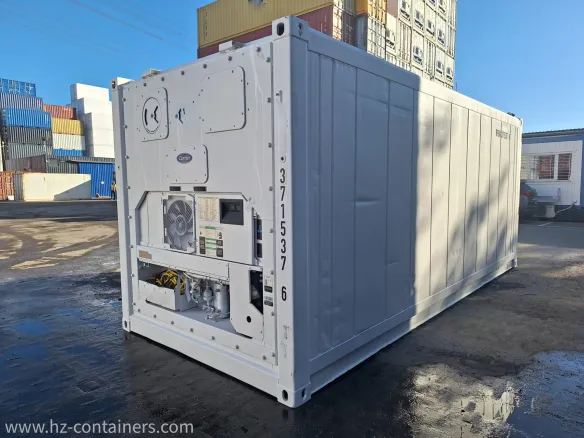
 Hamburg, Germany
  WITHOUT SHIPPING

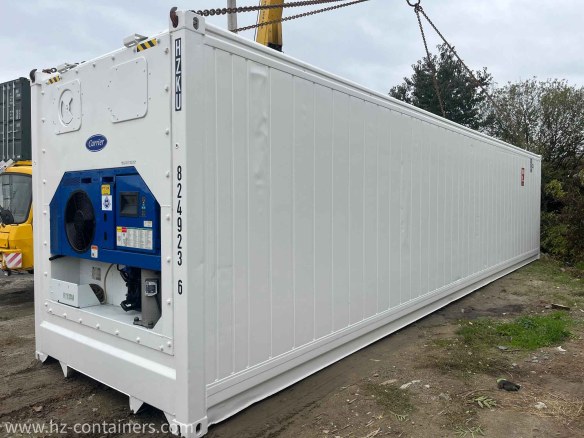
Other container news...
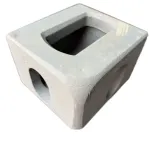
Corner casting steel vs aluminum
Every shipping container in the world — all 40 million of them — rests on eight critical components. Corner castings are the load-bearing blocks at each corner of an ISO shipping container, and they are the universal interface between the container and every crane, twistlock, spreader, and chassis on the planet. When you lift a container, stack it nine high on a ship, or lock it to a truck trailer, every ton of force flows through these fittings.

Construction cabin – selection, tips, dimensions and prices
Every construction project – whether a family house, a development project or a reconstruction – starts with the infrastructure. No construction manager, craftsman or investor who needs an on-site office, a changing room for workers or a safe storage for tools can do without a quality construction cell. But navigating the offer is not easy: residential containers, sanitary cells, storage modules, rental, purchase, refurbished pieces… This guide will give you answers to all the essential questions in one place.
Storage container
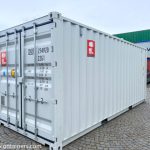
A storage container is a lockable steel box designed for the safe and dry storage of materials, tools, goods or equipment. Originally created as a shipping container for maritime transport, its durability and versatility have found their way onto construction sites, corporate premises and private land.
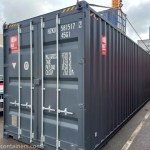
Shipping container 12m (40 ft)
A 12m shipping container is an investment that, if properly selected and cared for, will pay off in decades of trouble-free use. Whether you plan to use it as a warehouse, workshop, garage or the basis for a residential module — the key is careful selection of the condition, a thorough inspection before purchase and high-quality preparation of the base for placement. Take the time to compare offers, check the seller’s references and do not hesitate to personally inspect the container before buying. A properly selected 40-foot container will serve you reliably for many years.